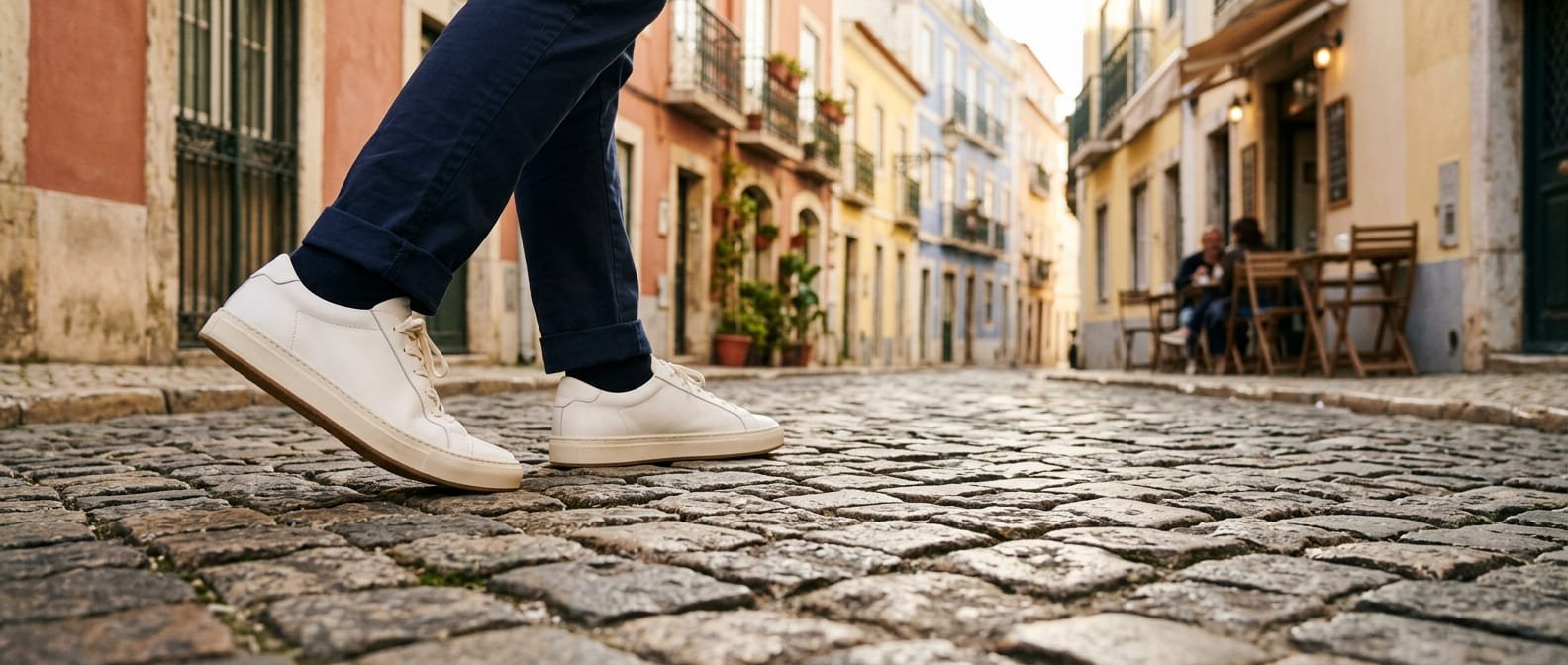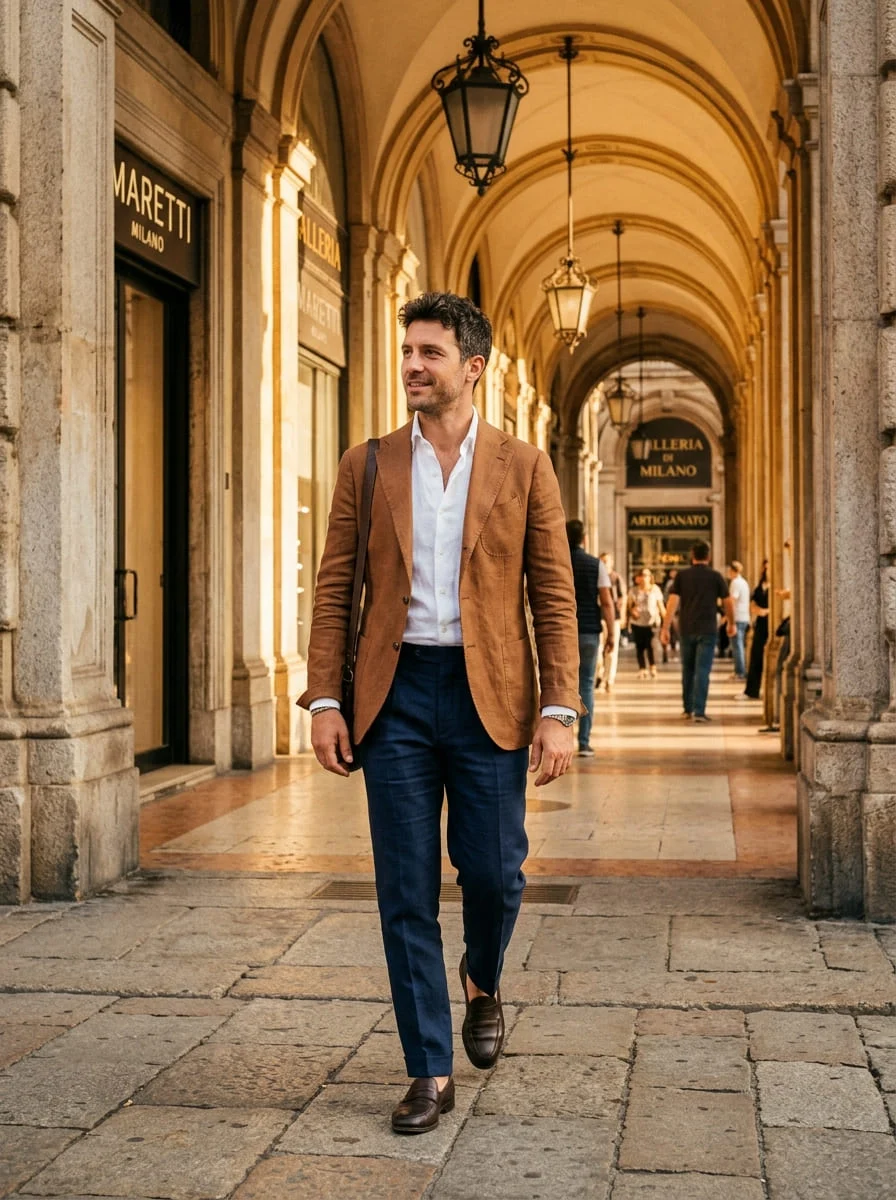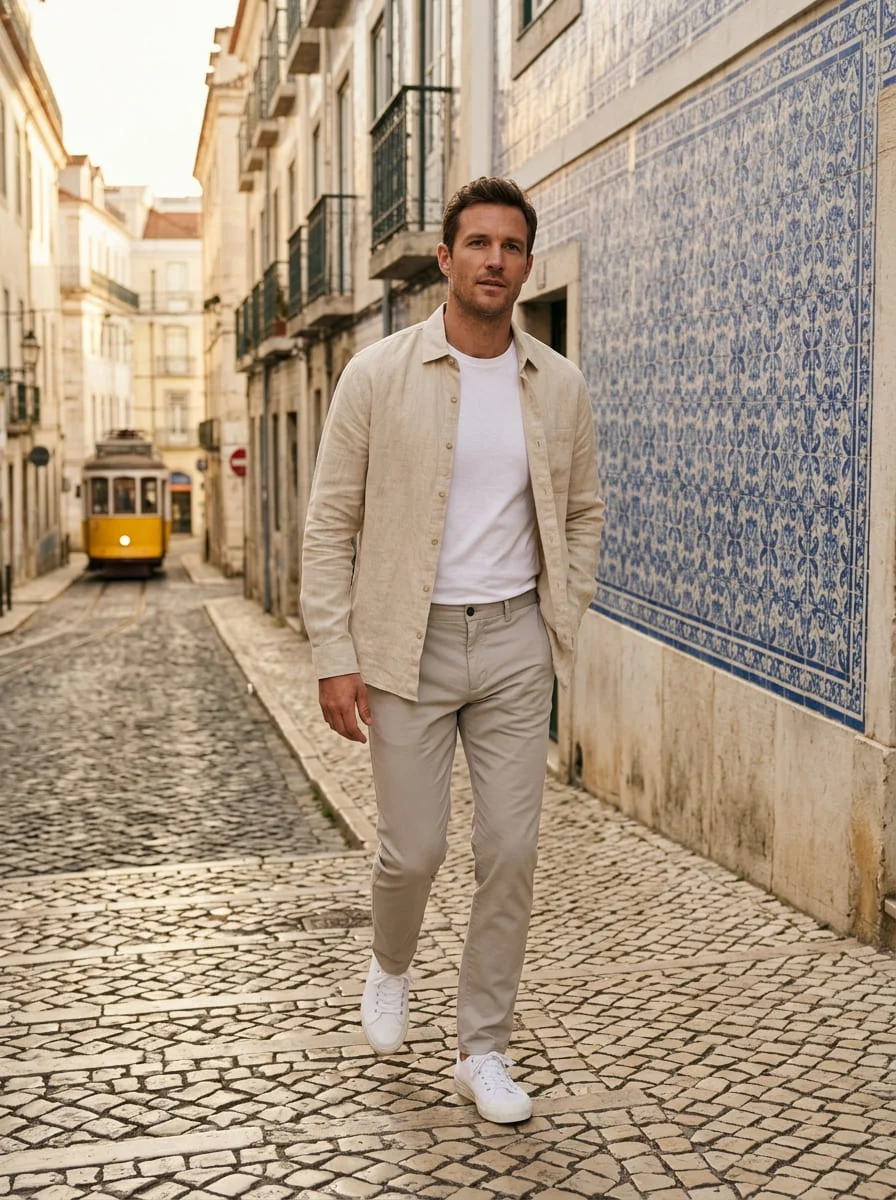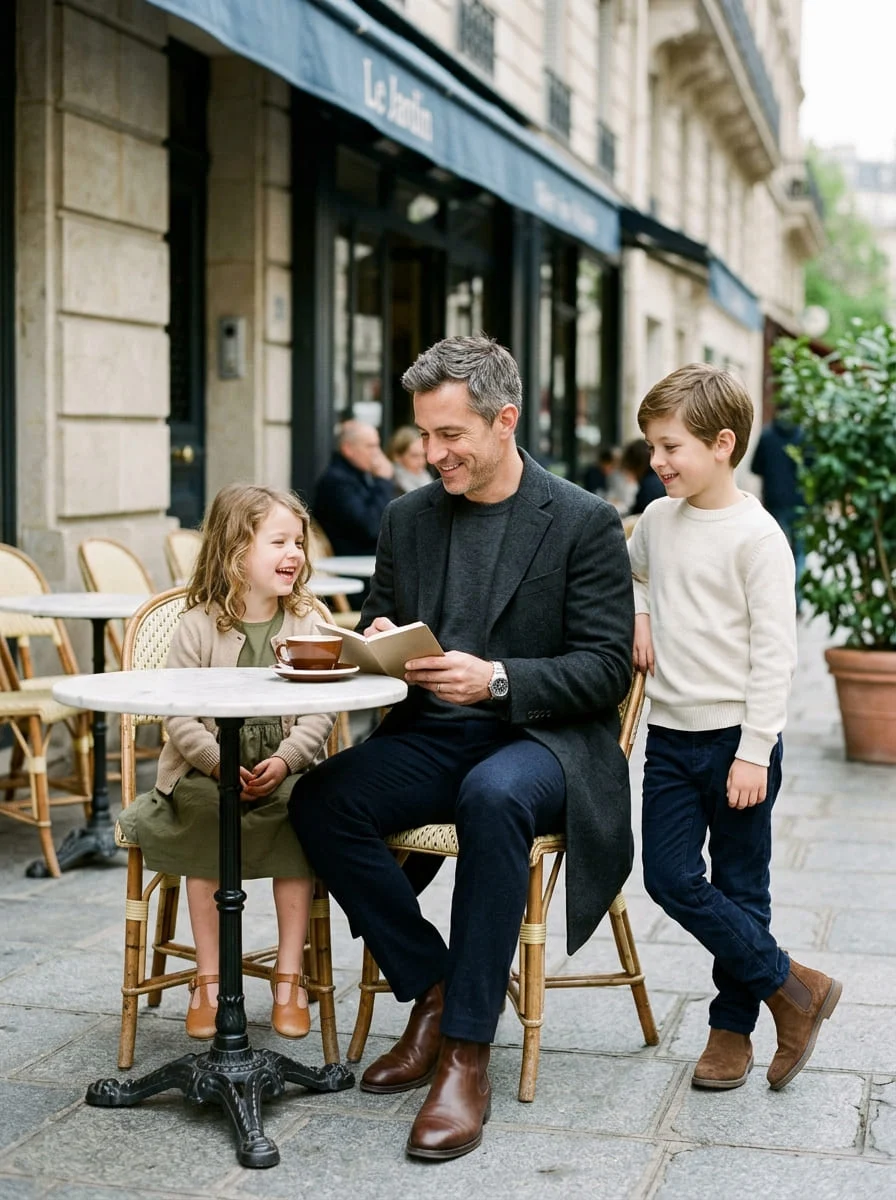

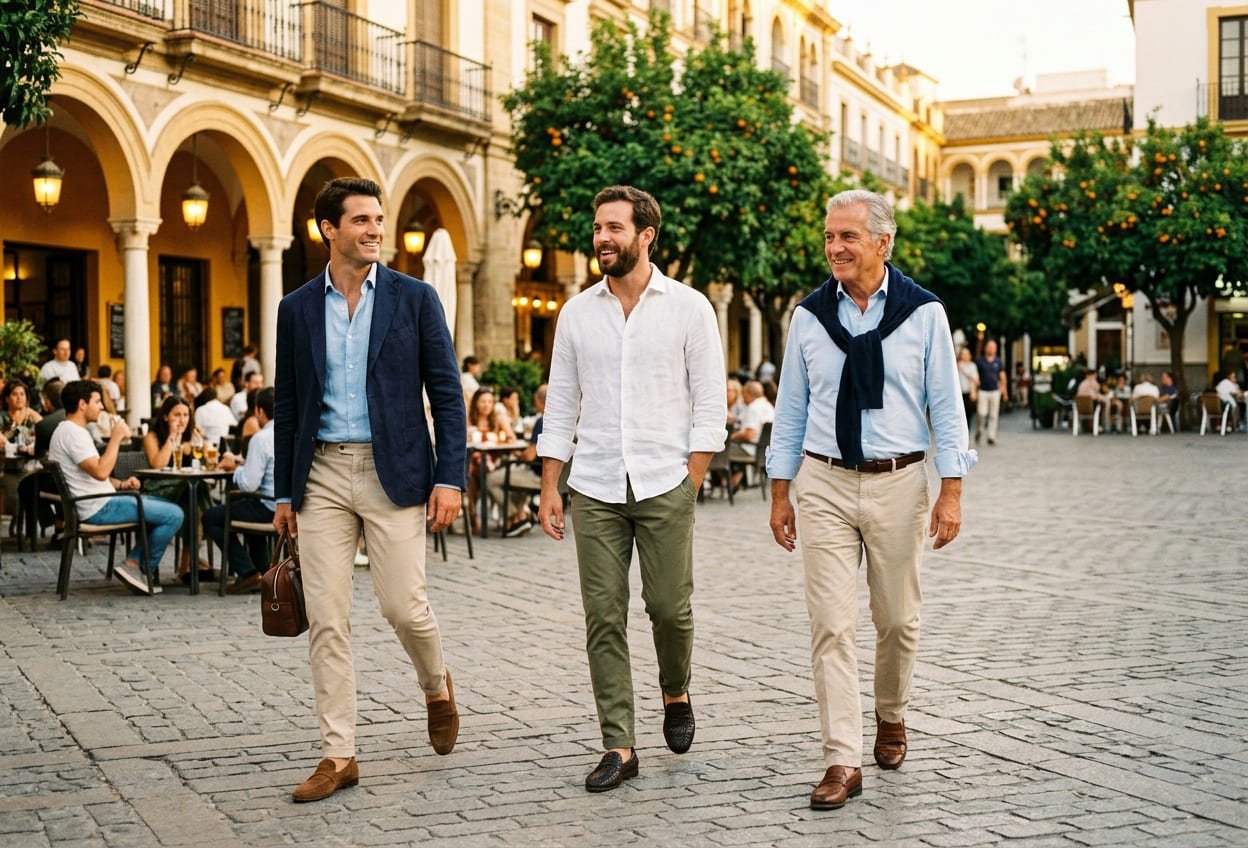


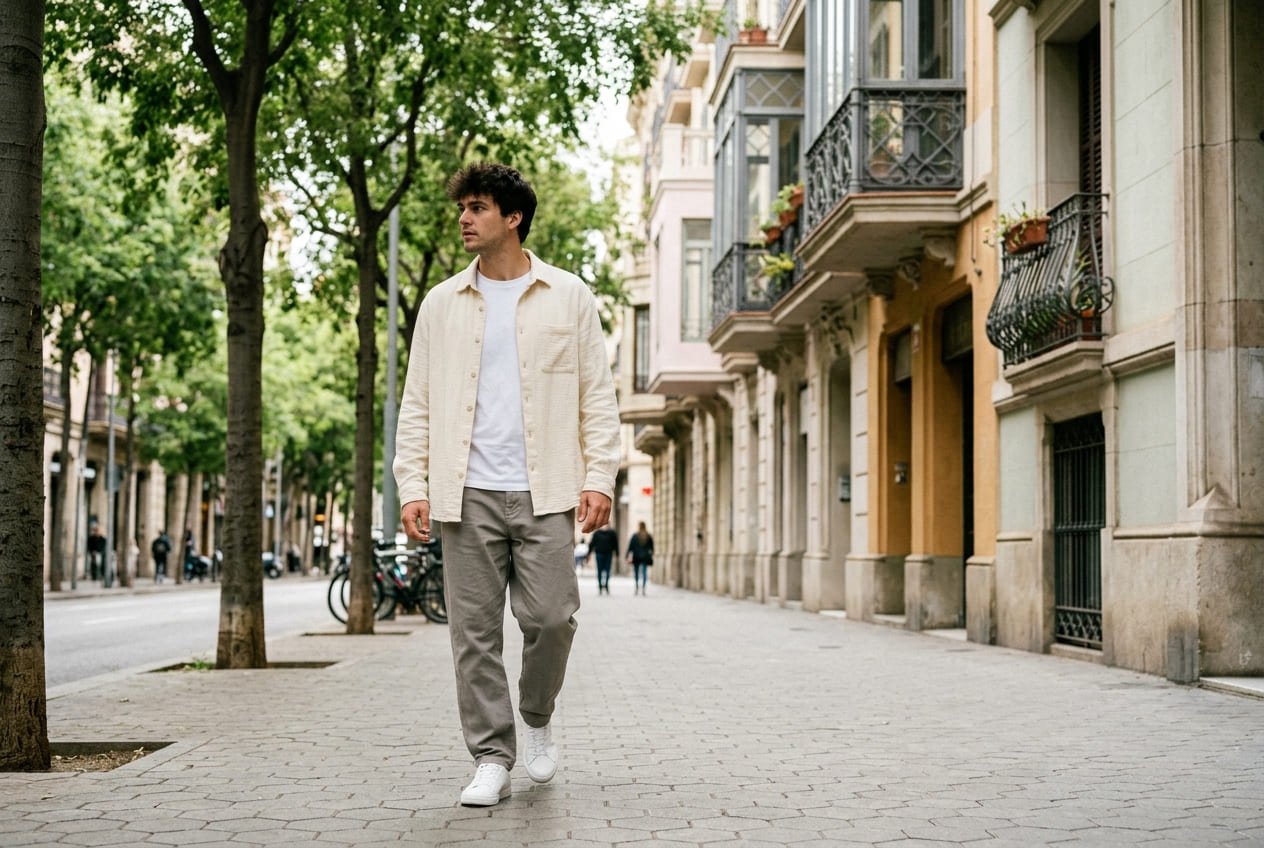

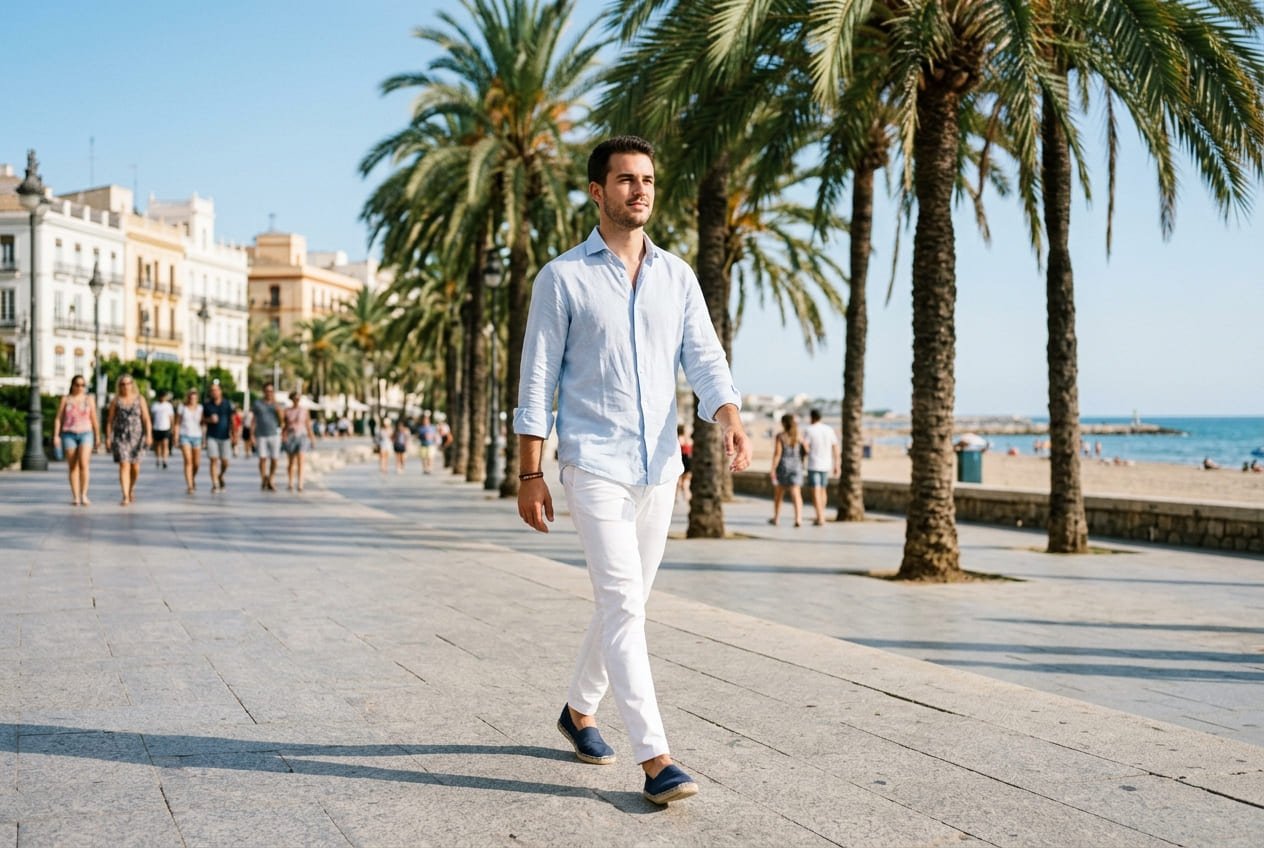
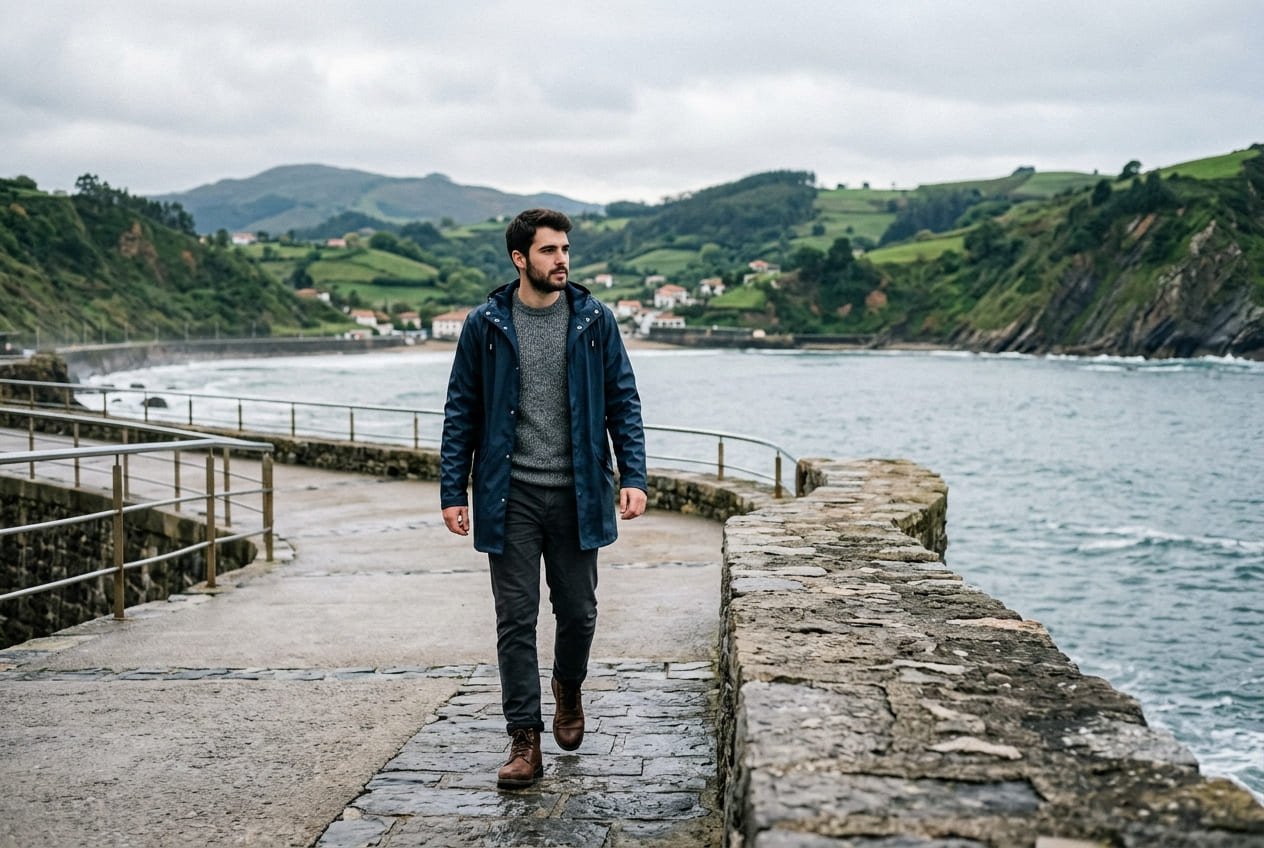

Spain fashion is easy to recognise and hard to copy. Walk through Madrid, Seville or Bilbao at eight in the evening and you’ll see it: people of every age dressed neatly for the street, in clothes that fit, with proper shoes and very little that looks careless. Spanish fashion isn’t about expensive labels or loud trends. It’s about being presentable, dressing for the climate and treating the evening walk and the late dinner as occasions worth dressing for. This guide explains how people dress in Spain today, how style changes between cities and seasons, what to wear each month, the traditional clothing behind it all, how the Spanish fashion industry works, and the practical details of sizes, labels and dress codes.
Spanish fashion at a glance
- Neat and put-together. Spaniards use the word arreglado: tidy, groomed and dressed with care.
- Smart casual is the default. Shirts, polos, knitwear, chinos, dark jeans and leather shoes.
- Fit matters. Clothes are worn closer to the body than in northern Europe or North America.
- Shoes are noticed. Leather shoes, loafers and clean trainers. Sports shoes are for sport.
- Colour follows the season. Navy, white, beige and earth tones in summer, with darker, richer shades in winter.
- Evenings are dressed up. People change before the evening walk and dinner.
- Beachwear stays at the beach.
- Children are dressed smartly, especially on Sundays and at family events.
- Regional differences are real. The cool, wet north dresses very differently from Andalusia.
How people dress in Spain
Everyday fashion
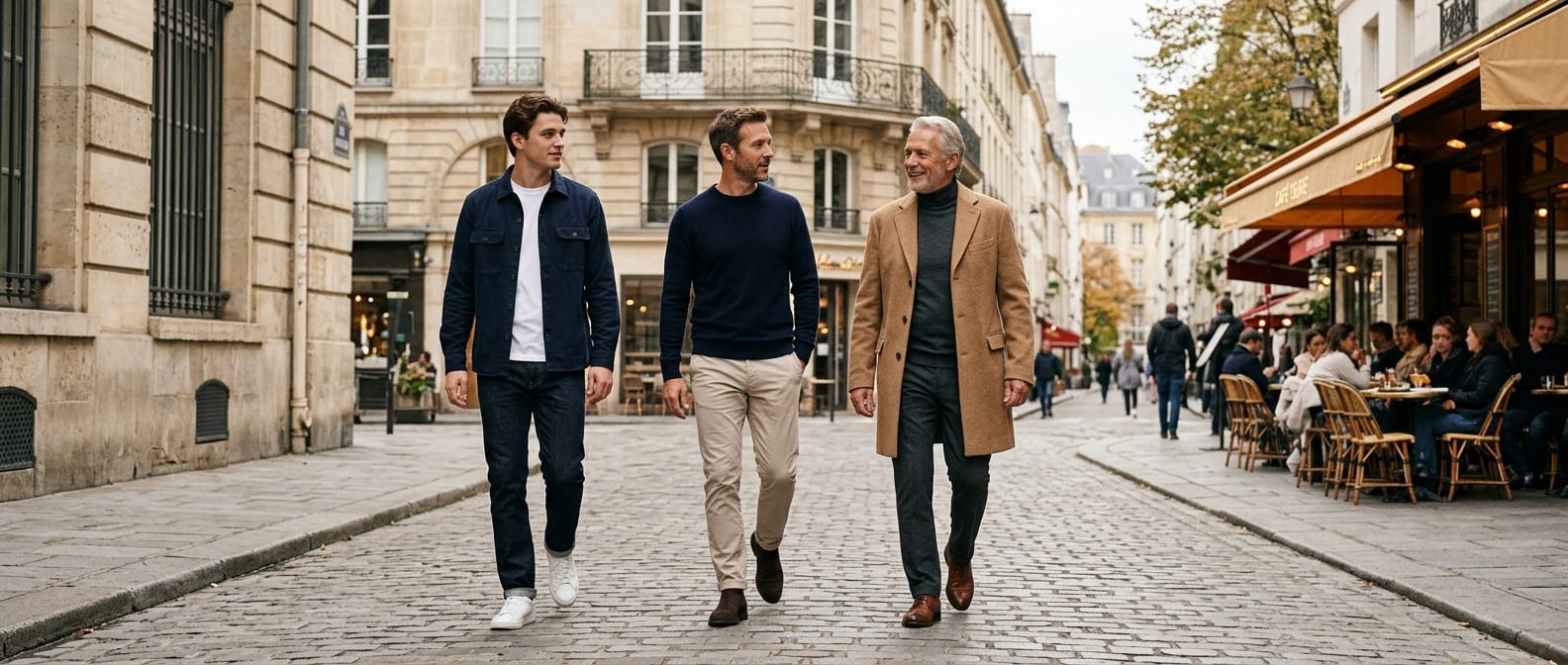
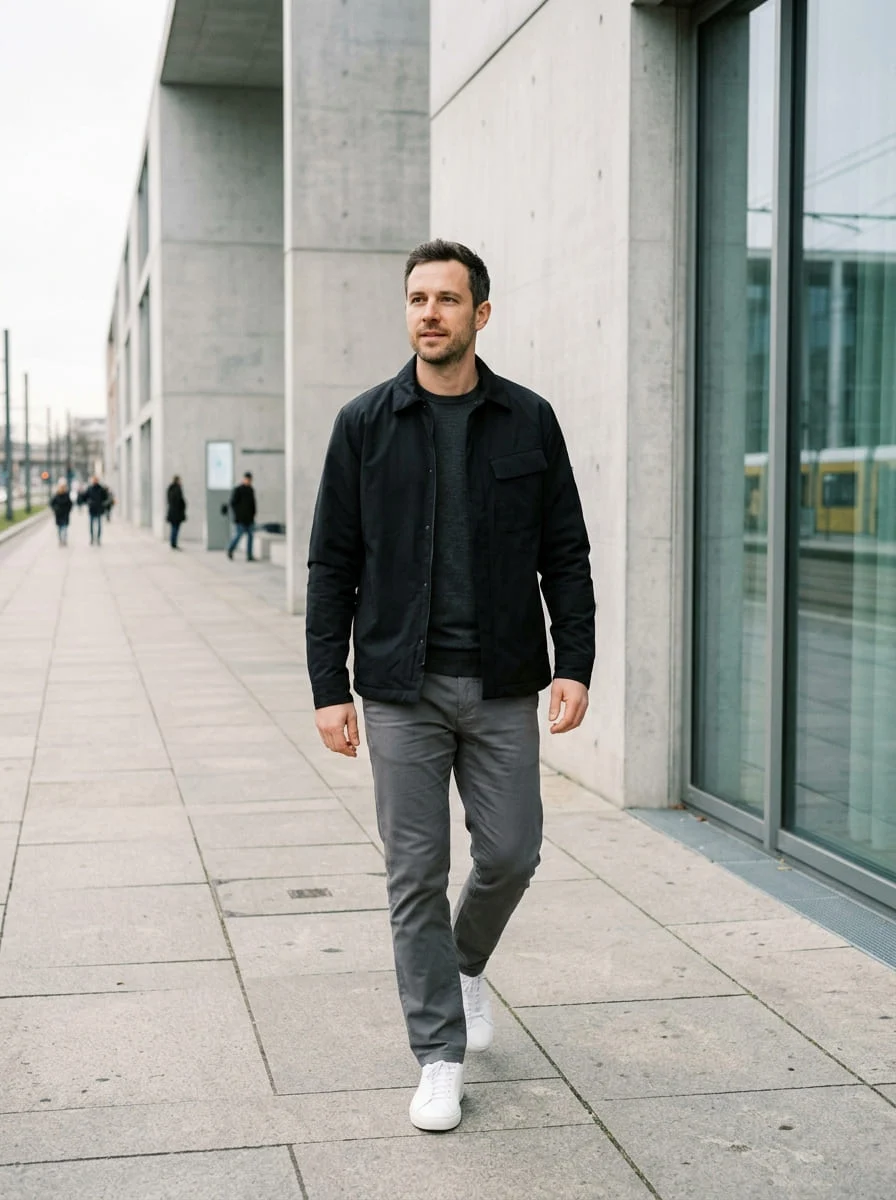
What do people wear in Spain on an ordinary day? Mostly simple, well-kept clothes: a shirt or polo, a fine jumper over the shoulders or under a jacket, chinos or dark jeans and leather shoes or plain trainers. Sportswear, gym leggings and flip-flops are rare away from the gym and the beach. Clothes are ironed, shoes are clean, and hair is tidy.
The evening
Daily life runs late. Shops reopen in the late afternoon, the evening walk (the paseo) fills the streets from about seven, and dinner often begins after nine. Many people go home and change first. This is why Spanish street style looks smarter in the evening than in the morning.
Age and dress
Older Spaniards are often the best dressed people on the street: men in pressed trousers, shirts and jackets, even in summer. Younger people follow international trends, with trainers, relaxed denim and oversized shapes, but they still tend to look deliberate.
Dressing for the weather, not the calendar
Spaniards dress by season more than by temperature. On a sunny 20 °C day in March, locals are still in jackets and scarves while visitors wear shorts. If you want to blend in, dress a little warmer and smarter than the forecast suggests.
Men’s fashion in Spain
How do men dress in Spain? The typical Spain men outfit is smart casual with a Mediterranean touch.
- Shirts: plain, striped or fine-check cotton, often in blue or white, with sleeves rolled in summer.
- Polos and knitwear: a polo by day, and a fine jumper draped over the shoulders in the evening.
- Trousers: chinos in navy, beige, olive and, in summer, brighter shades such as red, green or mustard. Dark jeans are common.
- Jackets: unstructured blazers, quilted jackets, quilted gilets and light padded jackets in the cooler months.
- Shoes: loafers, suede shoes, boat shoes, espadrilles and plain leather trainers.
- Tailoring: suits are slim and neat. Navy and grey dominate in offices.
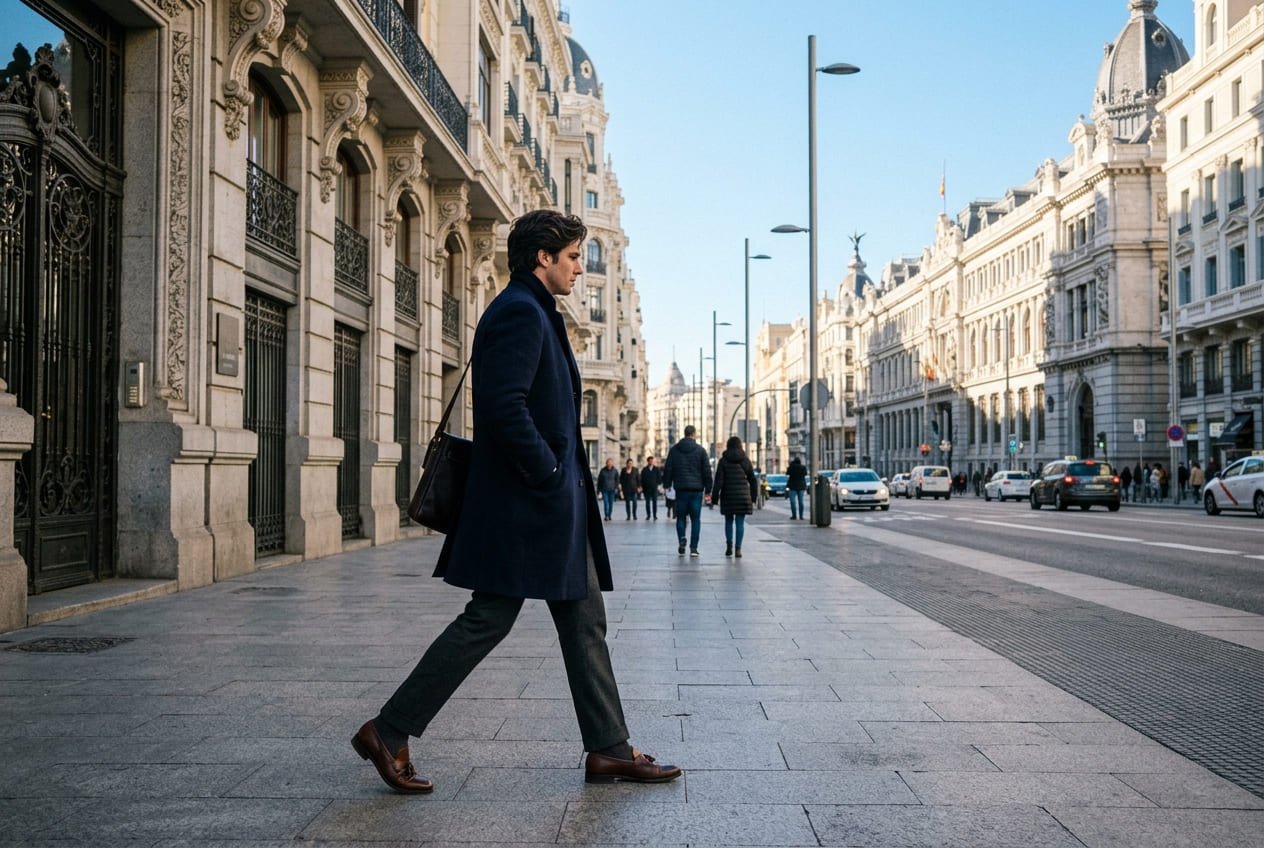
- Navy unstructured blazer Jacket
- Light-blue cotton shirt Shirt
- Beige chinos Trousers
- Brown suede loafers Shoes
For a wider comparison with France, Italy and northern Europe, read our guide to European men’s fashion. The dress code itself is explained in smart casual for men.
Spain street style: Madrid, Barcelona and beyond
Madrid fashion
Madrid is the most classic and polished of the big cities. In the Salamanca district you’ll see tailoring, loafers and quilted jackets. Malasaña and Chueca are younger and more experimental, with vintage clothing, streetwear and independent designers. Madrid street style changes sharply with the seasons, because summers are very hot and winters are properly cold.
Barcelona fashion
Barcelona is more relaxed and design-led. Expect clean lines, neutral colours, trainers and a mix of skate, surf and architectural influences. The neighbourhoods of El Born and Gràcia are known for small independent shops.
Seville and Andalusia
The south is the most traditional and the most dressed-up. Men wear pressed shirts and trousers even in the heat, and families dress formally for Sunday lunch, Holy Week and the spring fairs.
Valencia and the Mediterranean coast
Light, colourful and relaxed: linen, cotton, espadrilles and sandals.
The north
In the Basque Country, Cantabria, Asturias and Galicia, the weather is cooler and wetter. Style is understated and practical, with good knitwear, raincoats and leather boots. San Sebastián and Bilbao are among the smartest cities in Spain.
What to wear in Spain, month by month
Spain is larger and more varied than most visitors expect. The table uses typical daytime highs for Madrid and Seville. The northern coast is cooler and wetter all year, and the Mediterranean coast is milder in winter.
| Month | Madrid | Seville | What to wear |
|---|---|---|---|
| January | about 10 °C | about 16 °C | Wool coat, jumper, scarf and boots in Madrid. A jacket and knit in the south |
| February | about 12 °C | about 18 °C | Coat and layers. Light jacket in Andalusia |
| March | about 16 °C | about 21 °C | Light jacket, jumper, long trousers and a rain layer |
| April | about 18 °C | about 24 °C | Shirt, light knit and jacket. Showers are likely |
| May | about 23 °C | about 28 °C | Shirts, polos, chinos and a layer for the evening |
| June | about 29 °C | about 33 °C | Linen and cotton, light trousers or shorts, sun protection |
| July | about 33 °C | about 36 °C | The lightest fabrics you own, a hat and breathable shoes |
| August | about 32 °C | about 36 °C | As July. Many locals leave the cities for the coast |
| September | about 27 °C | about 32 °C | Summer clothes by day, a light layer at night |
| October | about 20 °C | about 26 °C | Shirts, light knits, a jacket. Still warm in the south |
| November | about 14 °C | about 20 °C | Jacket or light coat, jumper and closed shoes |
| December | about 10 °C | about 17 °C | Coat, knitwear and scarf in Madrid. Jacket in the south |
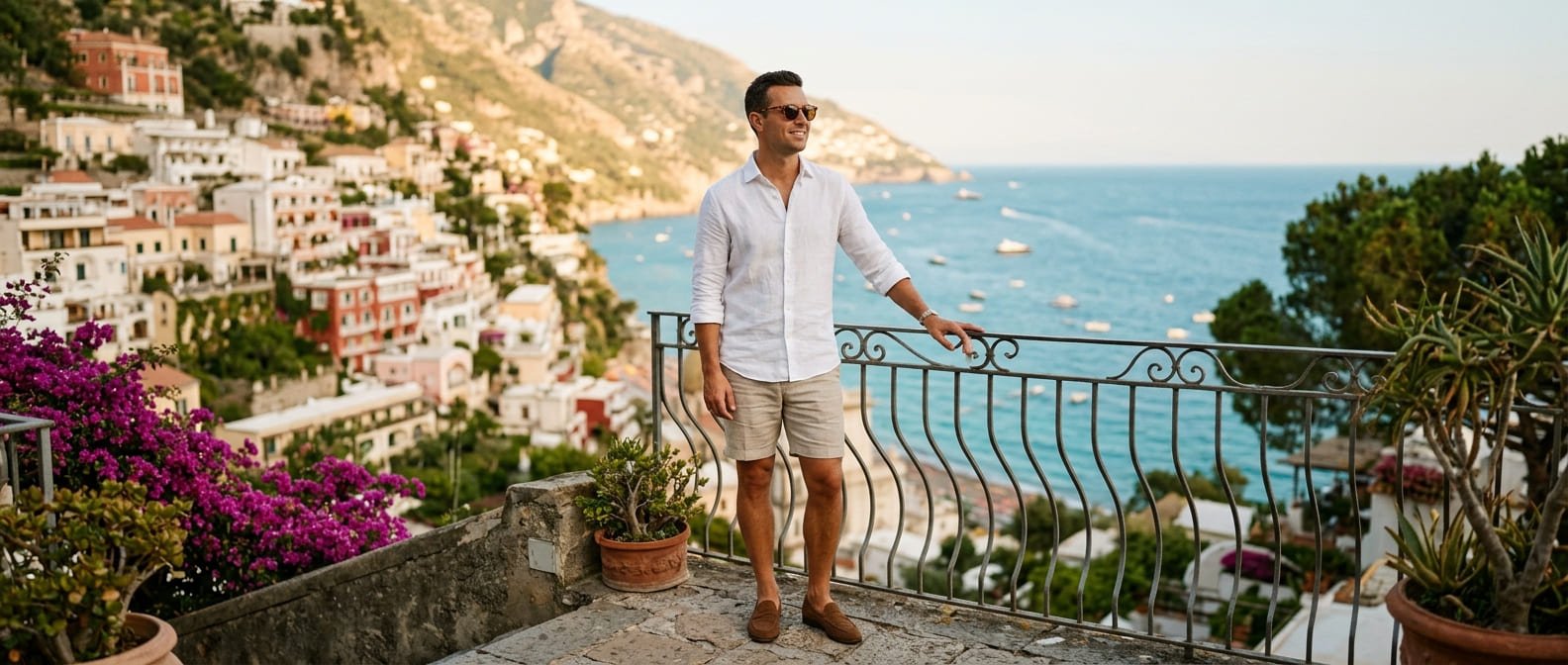
- What to wear in Spain in summer: linen shirts, light chinos or tailored shorts, loafers or leather sandals, a hat and sunglasses. Keep a smarter outfit for the evening.
- What to wear in southern Spain in October: short sleeves by day and a light jacket or jumper after dark. It can still reach the high twenties.
- What to wear in Madrid in winter: a proper wool coat. Madrid is on a high plateau, and nights often fall close to freezing.
- What to wear in Barcelona in summer: breathable city clothes, with swimwear kept for the beach.
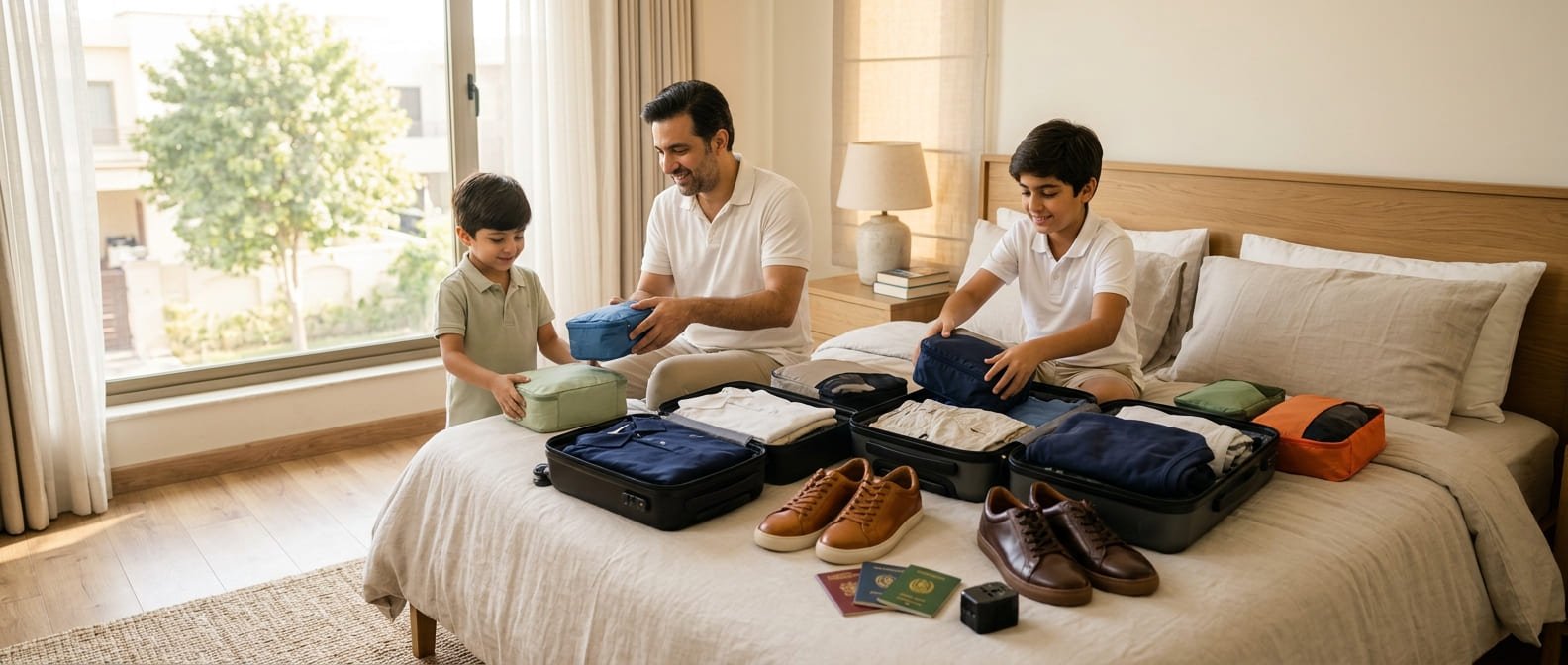
Our full guide to what to wear in Spain has outfits by region and a one-week packing list, and what to pack for a Europe trip covers longer journeys.
Spain outfits by season
Spring
A light jacket or blazer, a shirt or fine knit, chinos and suede shoes. See spring outfits for men.
Summer
- White linen shirt Shirt
- Stone tailored shorts or chinos Trousers
- Tan leather sandals or loafers Shoes
- Straw hat Accessory
More ideas are in our European summer outfits for men and our guide to summer shoes for men.
Autumn
A quilted or suede jacket, a jumper, dark trousers and boots or loafers.
Winter
- Navy wool overcoat Coat
- Grey merino jumper Knit
- Dark trousers Trousers
- Brown leather boots Shoes
- Burgundy scarf Accessory
See winter outfits for men for layering.
Traditional Spanish clothing
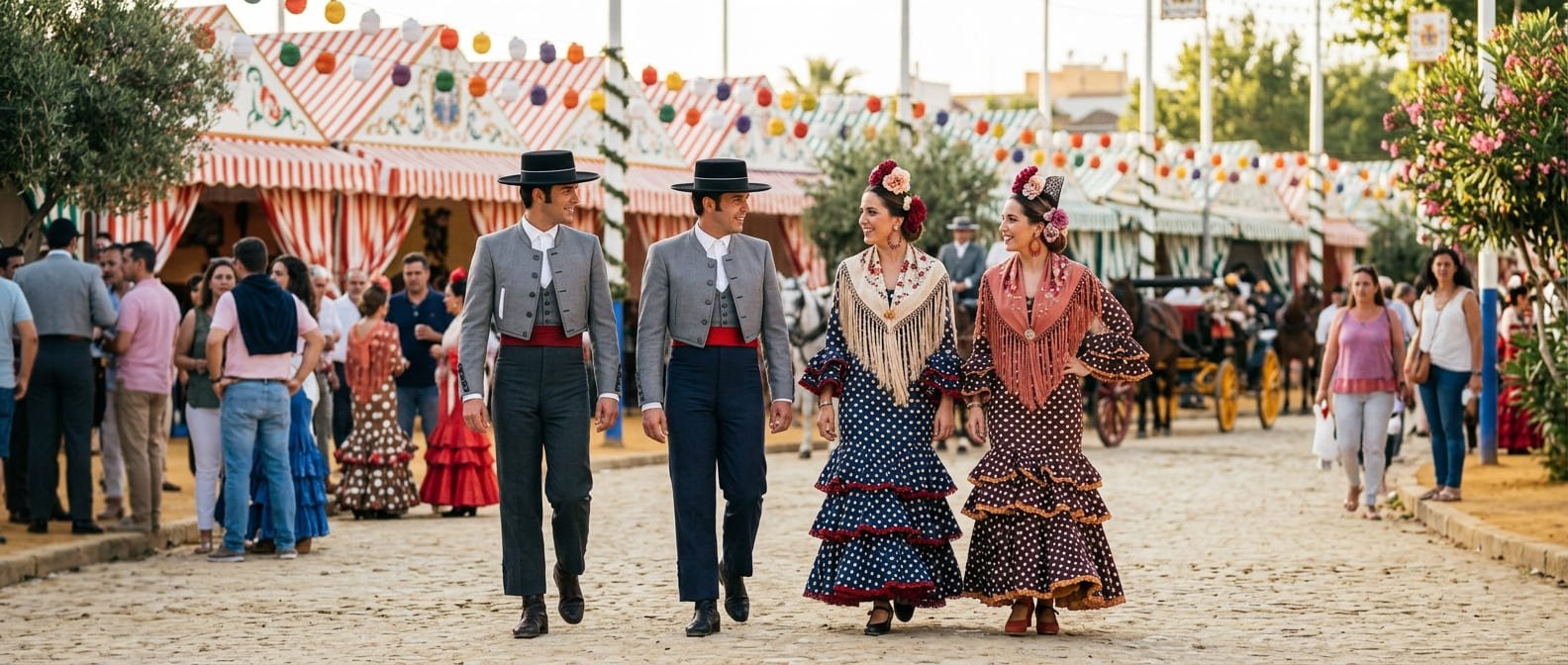
Searches for the typical dress of Spain usually have one image in mind: the flamenco dress. In reality, Spain has no single national costume. Each region has its own traditional clothing, worn today at festivals, weddings, religious processions and folk dances.
| Region | Traditional dress | When it’s worn |
|---|---|---|
| Andalusia | Flamenco dress (traje de flamenca) with ruffles and a fringed shawl. For men, the short jacket, high-waisted trousers and flat-brimmed Cordoban hat | Spring fairs, pilgrimages, flamenco |
| Madrid | Chulapo and chulapa: waistcoat, flat cap and neckerchief for men, a fitted dress, shawl and carnation for women | San Isidro festival in May |
| Valencia | Fallera dress in rich silk brocade. For men, breeches, sash and waistcoat | Las Fallas in March |
| Catalonia | Red barretina cap, sash and rope-soled espardenyes | Folk dances and festivals |
| Basque Country | Beret (txapela), white shirt and trousers with a red sash and scarf | Festivals, rural sports |
| Aragon | Baturro dress with a headscarf, waistcoat and sash | Pilar festival in October |
| Galicia | Dark wool waistcoat, breeches and gaiters. Embroidered shawls for women | Folk festivals |
| Across Spain | Lace mantilla with a high comb (peineta) | Holy Week, weddings, formal events |
Several traditional pieces are still part of everyday Spanish clothing: rope-soled espadrilles (alpargatas), the beret, embroidered shawls and leather sandals from Menorca.
Our guide to traditional Spanish clothing explains each costume, its history and what the pieces are called.
The Spanish fashion industry
Spain is one of the most important fashion countries in the world, although its strength is in making and selling clothes more than in runway glamour.
- High-street fashion. The world’s largest clothing retail group, Inditex, is based in Arteixo in Galicia. It changed global fashion by moving designs from sketch to shop in weeks. A second major group, Mango, is based near Barcelona.
- Shoes. The province of Alicante, around Elche and Elda, is one of Europe’s main shoemaking centres. Mallorca and Menorca are known for leather shoes and sandals, and La Rioja for espadrilles and canvas shoes.
- Leather goods. The town of Ubrique in Andalusia has made fine leather goods for centuries, including work for international luxury houses.
- Bridal and occasion wear. Barcelona is a world centre for bridal fashion.
- Couture heritage. Cristóbal Balenciaga, Paco Rabanne and Manuel Pertegaz were among the twentieth century’s most influential couturiers.
- Fashion weeks. Madrid and Barcelona each hold a fashion week twice a year.
- Craft. Embroidery, lace, wool, esparto grass weaving and hand-painted fans are living crafts.
Spanish brands and designers
This section lists well-known Spanish clothing brands, fashion retailers and designers for reference. StyleGauge is independent: the names are not ranked, recommended or linked, and we earn nothing from any of them.
Spanish fashion retailers and high-street brands
| Brand or group | Based in | Known for |
|---|---|---|
| Inditex | Arteixo, Galicia | The world’s largest fashion retail group. Its chains include Zara, Massimo Dutti, Pull&Bear, Bershka, Stradivarius and Oysho |
| Zara | Arteixo, Galicia | The group’s flagship chain, founded in A Coruña in 1975. Current fashion for men, women and children |
| Massimo Dutti | Barcelona area | Smarter, more classic clothing and tailoring |
| Pull&Bear and Bershka | Galicia and Catalonia | Younger, casual and streetwear-led fashion |
| Mango | Near Barcelona | International high-street fashion, founded in Barcelona in 1984 |
| Tendam | Madrid | The group behind Cortefiel, Springfield and Pedro del Hierro |
| Desigual | Barcelona | Colourful prints and patchwork designs |
| El Corte Inglés | Madrid | Spain’s main department store chain, with its own clothing labels |
The fashion retailer headquartered in Spain that most people have in mind is Zara, part of Inditex.
Spanish menswear brands
| Brand | From | Style |
|---|---|---|
| Massimo Dutti | Barcelona area | Classic smart casual and tailoring |
| Cortefiel and Pedro del Hierro | Madrid | Traditional menswear and tailoring |
| Scalpers | Seville | Modern tailoring and smart casual |
| El Ganso | Madrid | Preppy, British-inspired clothing with colour |
| Silbon | Córdoba | Classic Spanish smart casual |
| Adolfo Domínguez | Ourense, Galicia | Relaxed, minimalist tailoring and linen |
| Purificación García | Galicia | Clean, understated design |
| Ecoalf | Madrid | Clothing and outerwear made from recycled materials |
Spanish luxury brands and fashion houses
- Loewe: founded in Madrid in 1846 as a leather workshop, and now one of the best-known luxury houses in the world. It is part of a French luxury group.
- Balenciaga: founded by Cristóbal Balenciaga, who was born in Getaria in the Basque Country in 1895 and opened his Paris house in 1937. The brand is now French-owned and based in Paris. A museum in Getaria is dedicated to his work.
- Rabanne (Paco Rabanne): the house of the Basque-born designer famous for metal and plastic dresses in the 1960s. It belongs to the Barcelona fashion and fragrance group Puig.
- Carolina Herrera: an American fashion house owned by Puig, with a strong presence in Spain.
- Manolo Blahnik: the shoe designer was born in the Canary Islands. His company is based in London.
- Pronovias and Rosa Clará: Barcelona bridal houses known internationally.
Famous Spanish fashion designers
| Designer | Known for |
|---|---|
| Cristóbal Balenciaga (1895 to 1972) | Sculptural couture. Often called the master of twentieth-century fashion |
| Mariano Fortuny (1871 to 1949) | Born in Granada and based in Venice. Creator of the pleated Delphos gown |
| Manuel Pertegaz (1918 to 2014) | Barcelona couturier, and designer of Queen Letizia’s wedding dress |
| Paco Rabanne (1934 to 2023) | Space-age designs in metal and plastic |
| Adolfo Domínguez | Soft tailoring and the 1980s slogan “the wrinkle is beautiful” |
| Ágatha Ruiz de la Prada | Bright colours, hearts and playful shapes |
| Custo Dalmau | The printed designs of Custo Barcelona |
| Lorenzo Caprile | Madrid couture and bridal wear |
| Alejandro Gómez Palomo | Palomo Spain, known for theatrical menswear |
Spanish shoe brands
Spain’s reputation for footwear is as strong as its reputation for clothing.
| Brand | From | Known for |
|---|---|---|
| Camper | Mallorca | Casual, design-led shoes |
| Carmina | Mallorca | Traditional welted leather dress shoes |
| Meermin | Mallorca | Welted leather shoes |
| Magnanni | Almansa, Castilla-La Mancha | Leather dress shoes |
| Pikolinos | Elche, Alicante | Comfortable leather shoes |
| Castañer | Banyoles, Catalonia | Espadrilles, made since the 1920s |
| Toni Pons | Girona, Catalonia | Espadrilles |
| Victoria | La Rioja | Canvas trainers |
| Hoff | Elche, Alicante | Colourful trainers |
For how to wear them, see our guides to summer shoes for men and walking shoes for Europe.
Spanish sportswear
- Joma: based in Toledo. Football, running and team sportswear.
- Kelme: from Elche. Football and futsal kit.
- Munich: from the Barcelona area. Trainers recognised by the X on the side, with roots in indoor football.
- Ternua and Trangoworld: outdoor and mountain clothing from northern Spain.
Spanish children’s clothing brands
Spain’s tradition of dressing children well supports a large childrenswear industry.
- Mayoral: based in Málaga, and one of Europe’s largest children’s fashion companies.
- Zara Kids: the children’s line of Zara.
- Gocco, Nanos and Neck & Neck: classic Spanish children’s clothing.
- Bóboli and Tuc Tuc: colourful everyday clothes for younger children.
Made in Spain and designed in Spain
Labels reading “Hecho en España” mean made in Spain. “Diseñado en España” means designed in Spain, with production possibly elsewhere. For shoes and leather goods in particular, Spanish manufacture is a reliable sign of quality.
Shopping for clothes in Spain
Where to shop
- Madrid: Gran Vía and the streets around it for high-street shops, Calle Fuencarral for younger fashion, the Salamanca district for designer and luxury shops, and the Sunday Rastro flea market for vintage finds.
- Barcelona: Passeig de Gràcia for designer shops, Portal de l’Àngel for the high street, and El Born and Gràcia for independent boutiques.
- Everywhere: almost every town has a pedestrian shopping street in the old centre.
Opening hours
Large shops open all day, usually from 10 am to 9 or 10 pm. Smaller shops often close for lunch from about 2 pm to 5 pm and reopen until 8 or 9 pm. Many shops close on Sundays outside the main tourist areas.
Sales
The main sales (rebajas) begin in early January and early July and last several weeks.
Sizes and clothing labels
Spain uses European sizing. These conversions are approximate, so check each shop’s chart.
| Item | Spain and EU | UK | US |
|---|---|---|---|
| Jackets and suits | 48 | 38 | 38 |
| Jackets and suits | 50 | 40 | 40 |
| Jackets and suits | 52 | 42 | 42 |
| Shirts (collar) | 39 cm | 15.5 in | 15.5 in |
| Shirts (collar) | 41 cm | 16 in | 16 in |
| Shoes | 42 | 8 | 9 |
| Shoes | 43 | 9 | 10 |
| Shoes | 44 | 9.5 | 10.5 |
Useful words on Spanish clothing tags:
| Spanish | English |
|---|---|
| Talla | Size |
| Algodón | Cotton |
| Lana | Wool |
| Lino | Linen |
| Seda | Silk |
| Piel or cuero | Leather |
| Lavar a máquina | Machine wash |
| Lavar a mano | Hand wash |
| No usar lejía | Do not bleach |
| Planchar | Iron |
| Limpieza en seco | Dry clean |
| Probadores | Fitting rooms |
Tax-free shopping
Visitors who live outside the European Union can usually reclaim VAT on goods they take home. Ask the shop for a tax-free form, and check the current rules before you travel.
Clothing words in Spanish
Fashion in Spanish is “la moda”. Clothes are “la ropa”, and “What should I wear?” is “¿Qué me pongo?”.
| English | Spanish |
|---|---|
| Shirt | La camisa |
| T-shirt | La camiseta |
| Jumper or sweater | El jersey |
| Jacket | La chaqueta |
| Coat | El abrigo |
| Suit | El traje |
| Trousers | Los pantalones |
| Jeans | Los vaqueros |
| Shorts | Los pantalones cortos |
| Dress | El vestido |
| Skirt | La falda |
| Shoes | Los zapatos |
| Trainers | Las zapatillas |
| Boots | Las botas |
| Sandals | Las sandalias |
| Espadrilles | Las alpargatas |
| Swimsuit | El bañador |
| Hat | El sombrero |
| Scarf | La bufanda |
| Belt | El cinturón |
| Socks | Los calcetines |
| Traditional dress | El traje típico or traje regional |
Dress codes and customs
- Churches and cathedrals: cover shoulders and knees. Major sites may refuse entry otherwise.
- Beach towns: wear swimwear only on the beach or at the pool. Barcelona and several other coastal towns can fine people for walking through the streets in swimwear or without a shirt.
- Restaurants: smart casual is right almost everywhere. Avoid sportswear, vests and flip-flops in the evening.
- Offices: business dress is fairly formal in Madrid and in banking and law, and more relaxed in Barcelona and in creative work. See business casual for men.
- Weddings: Spanish weddings are formal and long. Men wear a dark suit and tie, or a morning suit if the invitation asks for it.
- Festivals: at the spring fairs of Andalusia, many locals wear traditional dress. Visitors should dress smartly: a jacket and tie for men is common in Seville.
- Bullrings, theatres and concert halls: smart casual.
Spanish fashion for boys and kids
Spain has a strong tradition of dressing children well.
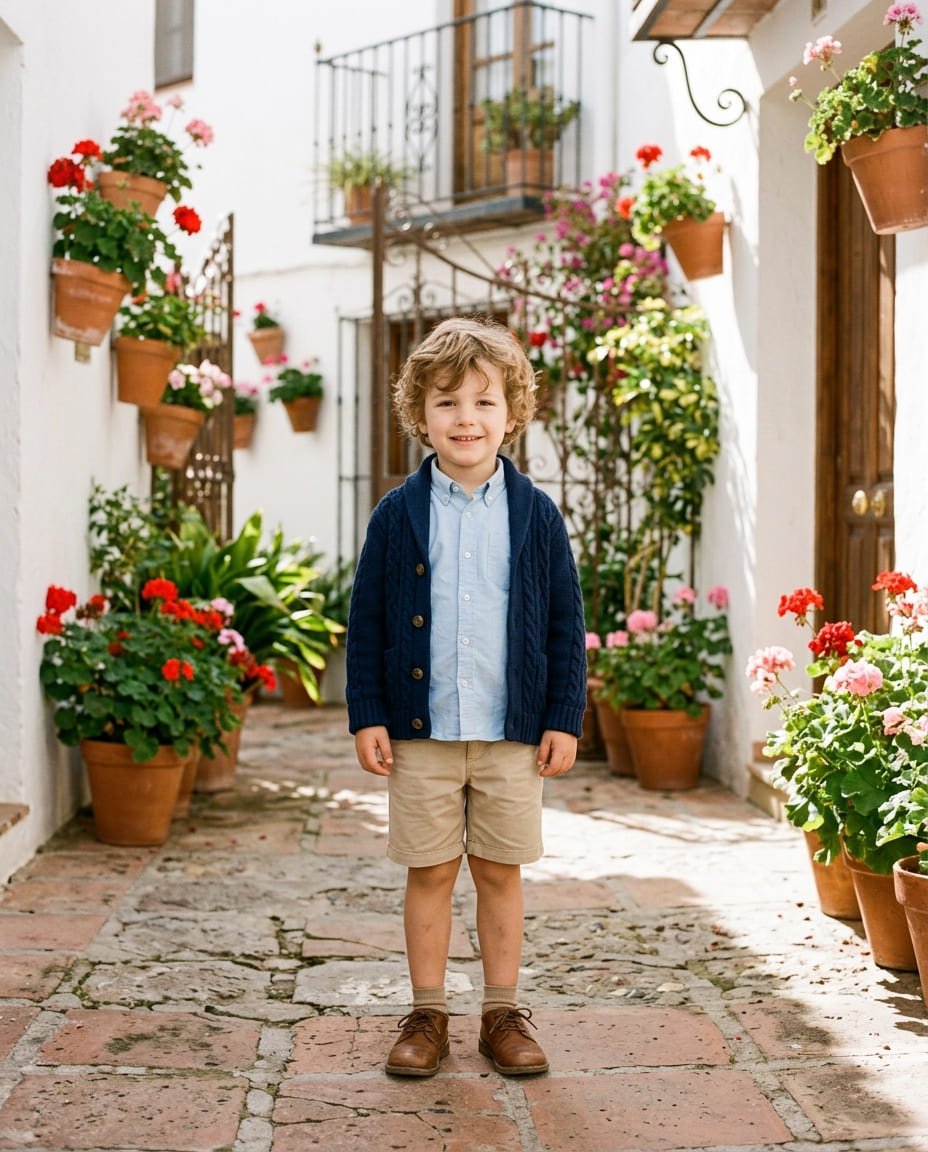
- Classic children’s clothing. Knitted cardigans, collared shirts, tailored shorts with knee socks and leather shoes are still common for young children, especially on Sundays.
- Coordinated siblings. Brothers and sisters are often dressed in matching or coordinating outfits for family occasions.
- First Communion. Around the age of nine, many boys wear a sailor suit or a formal suit for their First Communion, one of the major family occasions of childhood.
- School. Many private and state-subsidised schools have uniforms. Younger children often wear a smock, called a babi, over their clothes.
- Teenagers dress like teenagers everywhere, in trainers, jeans and hoodies, but they smarten up for family events.
- For visitors: light cotton, a sun hat, sandals with a back strap and one smart outfit for dinners.
- Light-blue collared shirt Shirt
- Navy knitted cardigan Knit
- Beige tailored shorts Shorts
- Brown leather shoes Shoes
For practical advice, see clothes for teenage boys and our Kids’ Fashion hub.
Spain fashion trends
What are people wearing in Spain right now? Trends change each season, but several directions have held steady in Spanish cities.
- Relaxed tailoring: softer jackets and wider, pleated trousers.
- Linen everything in summer, including matching shirt and trouser sets.
- Earth tones: beige, olive, terracotta and brown alongside navy and white.
- Knitted polos and textured short-sleeved shirts.
- Plain white and retro-style trainers.
- Quilted gilets and light padded jackets in the cooler months.
- Craft and local production: more interest in clothes and shoes made in Spain.
How to dress like a local: a Spanish capsule
- Navy unstructured blazer
- Two cotton shirts, in white and light blue
- One linen shirt
- One polo or knitted polo
- A fine jumper to wear or drape over the shoulders
- Beige and navy chinos
- Dark jeans
- Tailored shorts, for beach towns and hot days
- Suede loafers
- Plain leather trainers
- Espadrilles or leather sandals
- A light jacket, and a wool coat for winter in the centre and north
Check your own wardrobe against this list with our Wardrobe Planner, and choose shoes for cobbled old towns with our guide to walking shoes for Europe.
Mistakes visitors make
| Mistake | Why it stands out | Do this instead |
|---|---|---|
| Sportswear in the city | Locals keep it for sport | Chinos or dark jeans and a shirt or polo |
| Flip-flops away from the beach | Seen as beachwear | Leather sandals, loafers or trainers |
| Swimwear in town | Disrespectful, and sometimes fined | Cover up when you leave the beach |
| Shorts in spring | Locals still wear trousers | Light chinos |
| Underdressing at dinner | Evenings are smarter | A collared shirt and proper shoes |
| Packing only for heat | The north is wet, and Madrid winters are cold | Check the region and the month |
| Shorts and vests in churches | Entry may be refused | Covered shoulders and knees |
Frequently asked questions
People in Spain dress neatly in smart casual clothes: shirts, polos, fine knitwear, chinos or dark jeans and leather shoes or clean trainers. Sportswear and beachwear are kept for sport and the beach.
Spanish men wear well-fitting shirts or polos, chinos or dark jeans, loafers or leather trainers and, in cooler weather, a blazer, quilted jacket or fine jumper. Suits are slim and usually navy or grey.
Spanish fashion is known for neat, well-fitting everyday clothes, global high-street retail, high-quality shoes and leather goods, bridal wear and a strong couture heritage.
There is no single national costume. The best known is the Andalusian flamenco dress, with the short jacket and Cordoban hat for men. Every region has its own traditional dress.
Linen and cotton shirts, light chinos or tailored shorts, loafers or leather sandals, a hat and sunglasses. Bring a smarter outfit for the evening.
Smart casual clothes suited to the season: light fabrics in the very hot summer and a wool coat, jumper and scarf in the cold winter.
There is no general dress code, but churches expect covered shoulders and knees, some coastal towns fine people for wearing swimwear in the streets, and restaurants expect neat clothes in the evening.
Yes, in summer and in beach towns. In cities, tailored shorts are fine by day. Wear long trousers for churches, smart restaurants and most evenings.
Fashion is "la moda", clothes are "la ropa" and traditional dress is "el traje típico" or "traje regional".
Spain uses European sizes. A jacket size 50 is about a UK and US 40, and a shoe size 43 is about a UK 9 or US 10. Sizes vary between shops, so check the chart.
Madrid is more classic and formal, with tailoring and polished shoes. Barcelona is more relaxed and design-led, with clean lines, neutral colours and trainers.
Zara, Massimo Dutti, Pull&Bear, Bershka and Stradivarius (all part of Inditex), Mango, Desigual, Cortefiel, Springfield, Loewe, Adolfo Domínguez and the shoe brand Camper are among the best known.
Inditex, the world's largest fashion retail group and owner of Zara, is headquartered in Arteixo in Galicia. Mango is headquartered near Barcelona, and Tendam in Madrid.
Cristóbal Balenciaga, Paco Rabanne, Manuel Pertegaz and Mariano Fortuny are the historic names. Adolfo Domínguez, Ágatha Ruiz de la Prada, Custo Dalmau, Lorenzo Caprile and Alejandro Gómez Palomo are well-known designers working today. Manolo Blahnik is the best-known Spanish shoe designer.
Loewe is the leading Spanish luxury house. Balenciaga and Rabanne have Spanish founders, and the Barcelona group Puig owns several international fashion houses. Spain is also known for luxury leather goods and bridal wear.