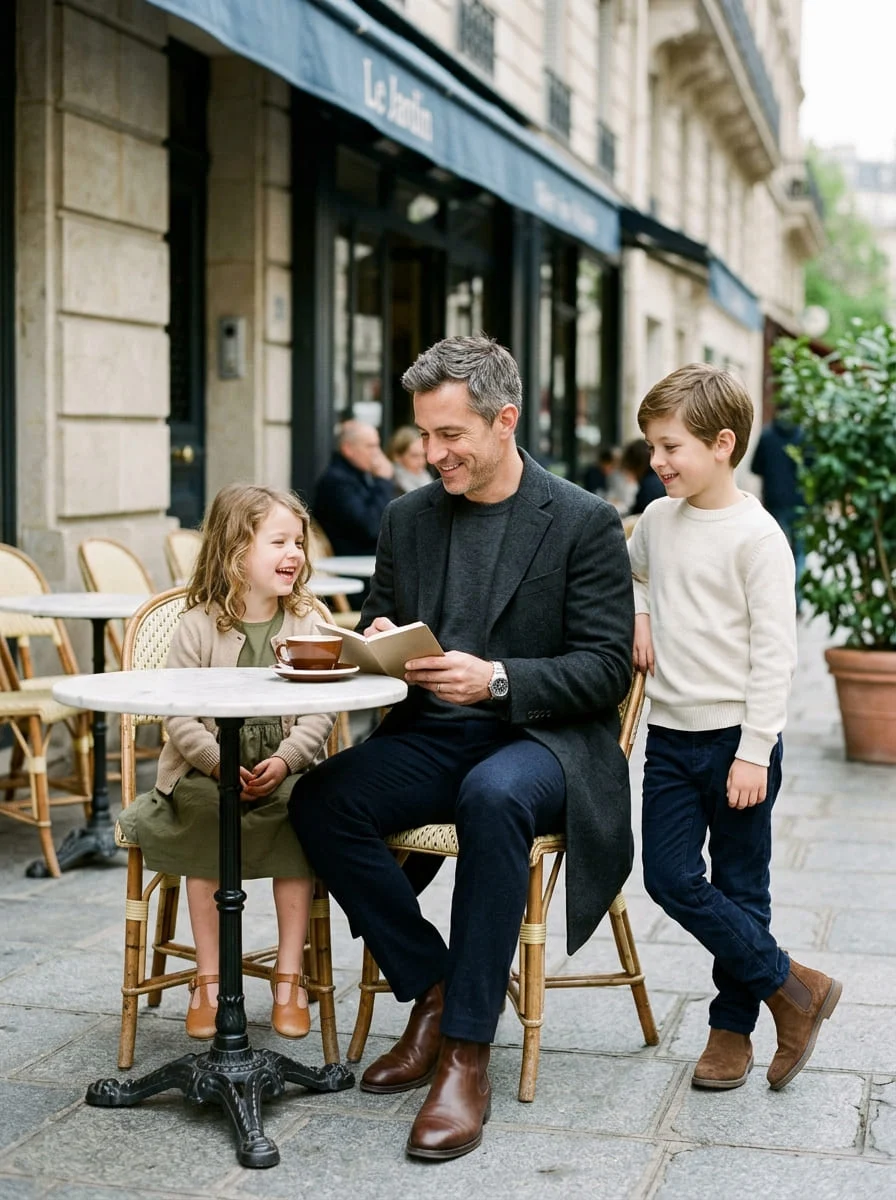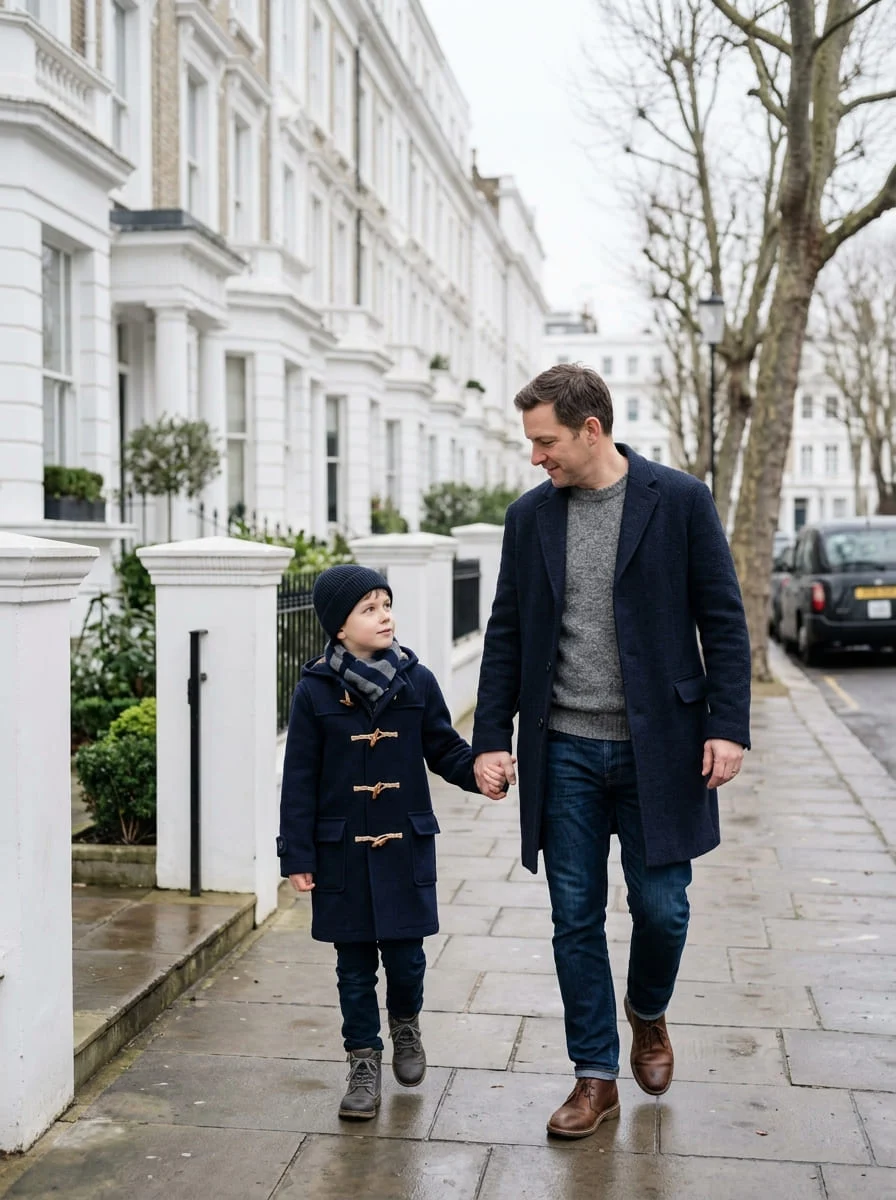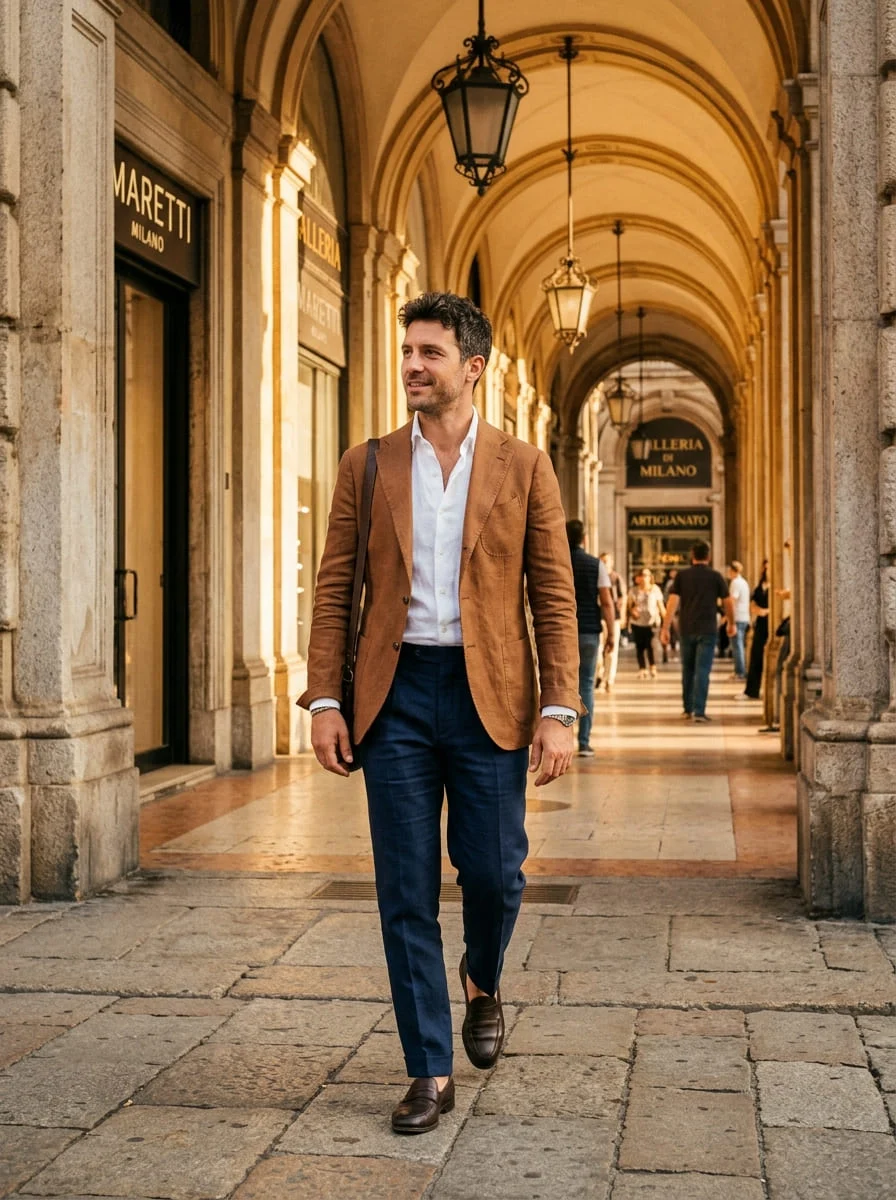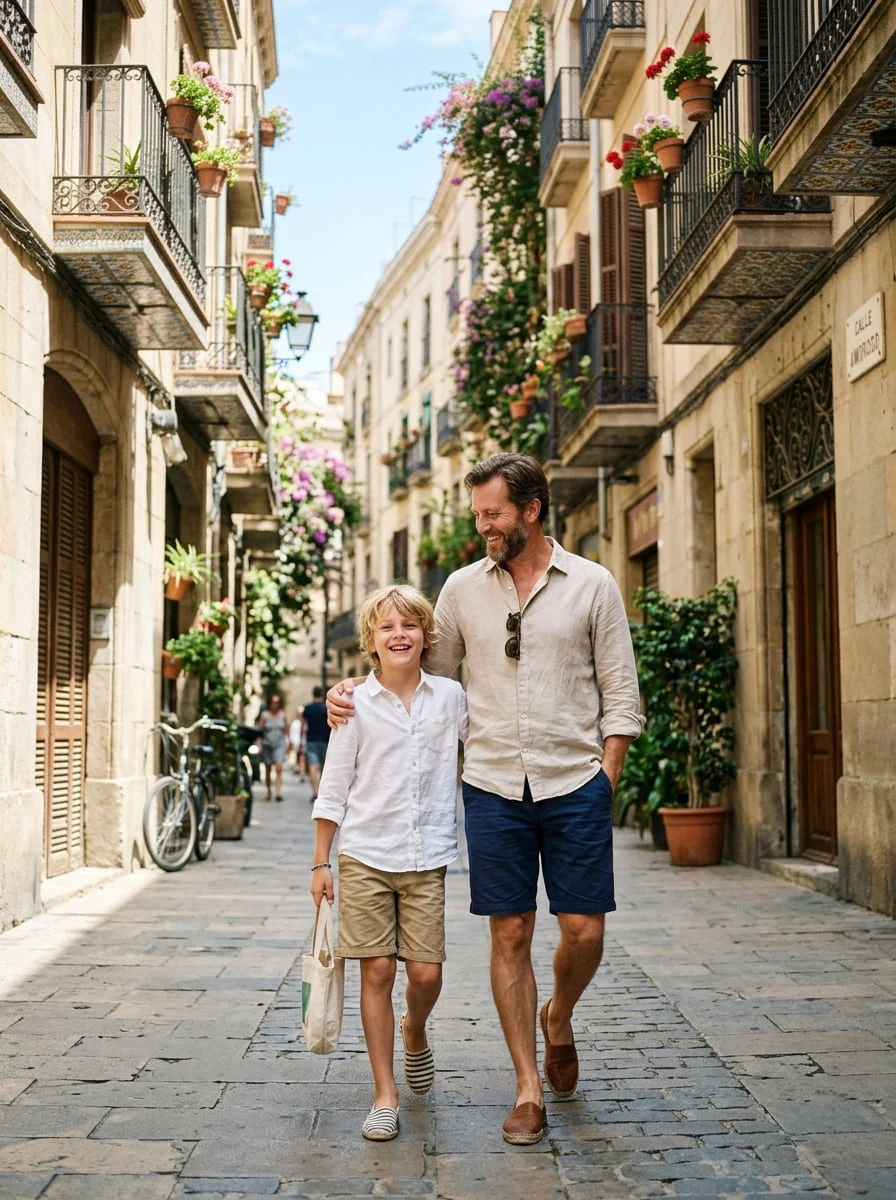



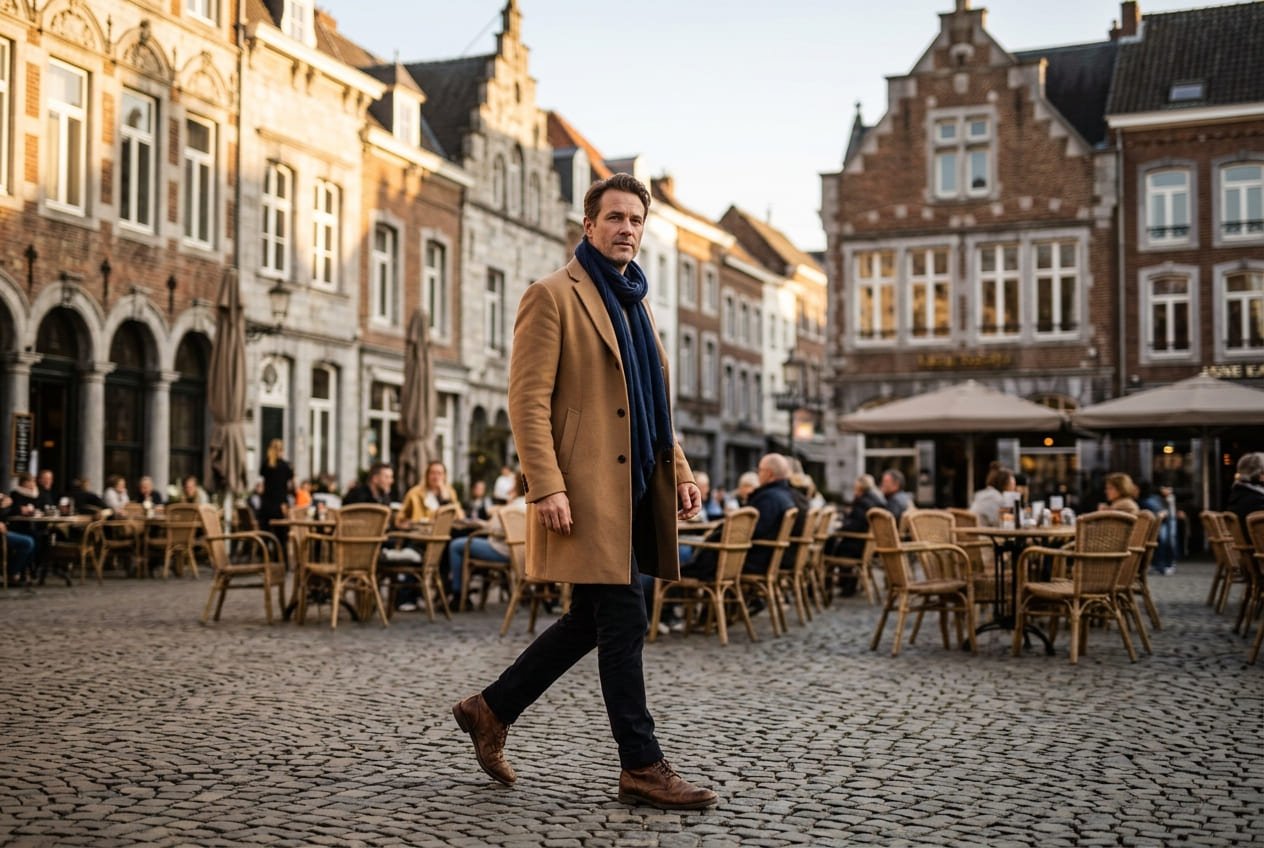
Dutch fashion is shaped by three things that have nothing to do with catwalks: the bicycle, the weather and a national dislike of showing off. In the Netherlands, most people cycle to work, to school and to dinner, in wind and rain as well as sun, so clothes have to be practical first. A well-known Dutch saying, “doe maar gewoon, dan doe je al gek genoeg” (just act normal, that’s crazy enough), explains the rest: Dutch fashion is relaxed, understated and unpretentious. Yet this small country also produces some of the world’s most experimental designers, leads Europe in denim and has one of the most colourful traditions of regional costume. This guide explains how people dress in the Netherlands today, style in Amsterdam and other cities, Amsterdam’s weather and what to wear each month, traditional Dutch clothing, Dutch brands and designers, and the practical details of shopping, sizes and dress codes.
Dutch fashion at a glance
- Practical. Clothes must work on a bicycle and in the rain.
- Casual. The Netherlands is one of the most informal countries in Europe, at work and at play.
- Understated. Navy, grey, black, denim and white, with few logos.
- Denim-loving. Jeans are worn everywhere, by everyone. Amsterdam calls itself a denim capital.
- Tall. Dutch men are, on average, the tallest in the world, and clothes are cut long.
- Orange on special days. On King’s Day and for international football, the whole country wears orange.
- Experimental at the top. Dutch designers are known for avant-garde and conceptual fashion.
- Sustainable. Second-hand, repair and circular fashion are mainstream.
Holland or the Netherlands?
The country is the Netherlands. Holland is the name of two of its twelve provinces, North Holland and South Holland, where Amsterdam, Rotterdam and The Hague are located. The people and the language are called Dutch. This page uses all three terms as searchers do, but “Dutch fashion” and “fashion in the Netherlands” mean the same thing.
How people dress in the Netherlands
Everyday clothes
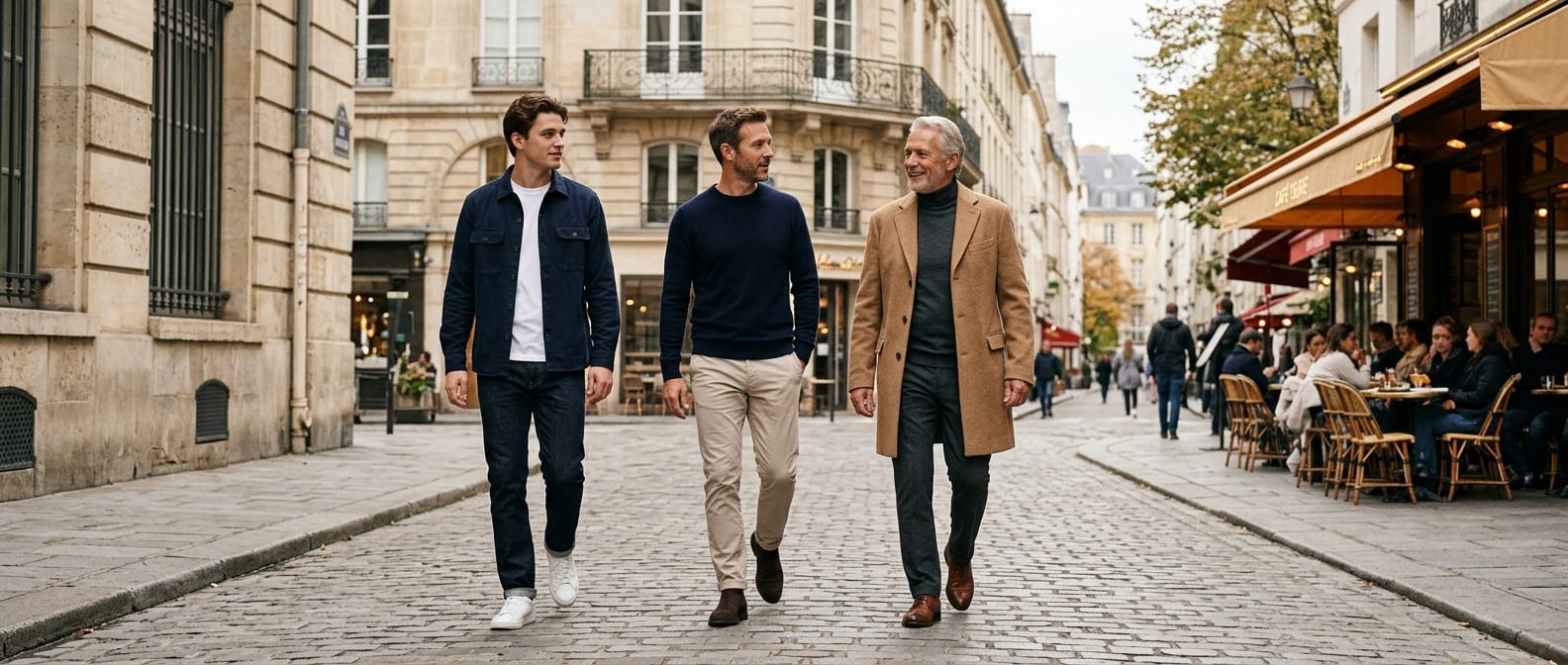
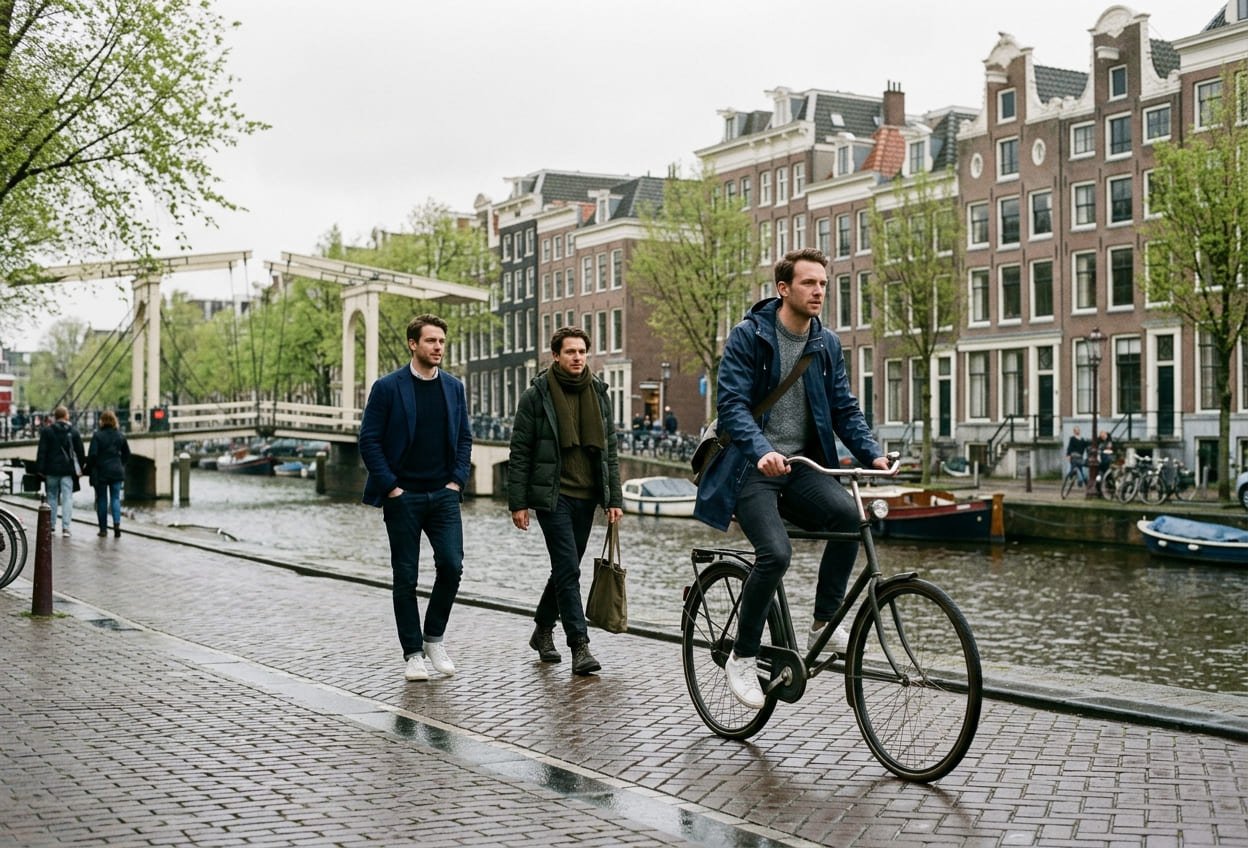
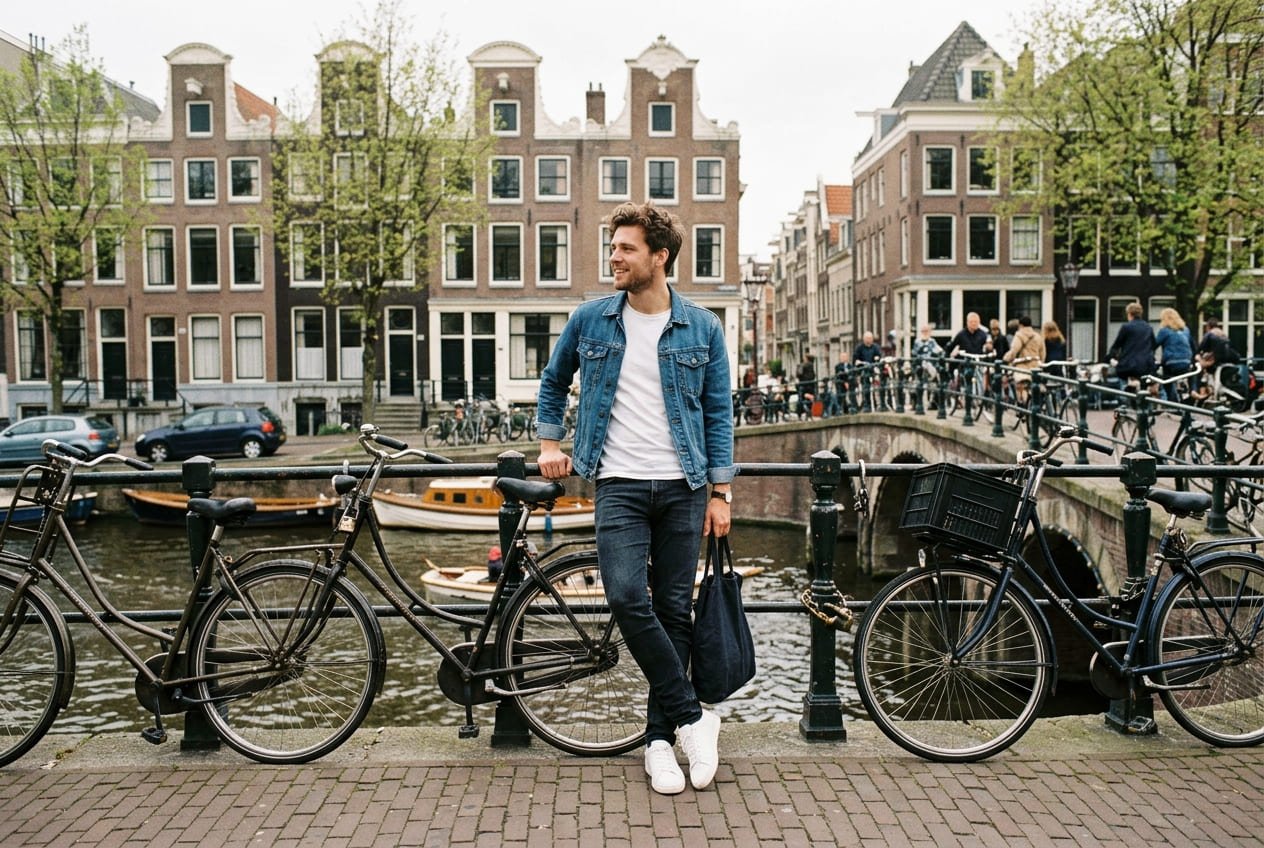
What do people wear in the Netherlands? Jeans, trainers, a T-shirt or jumper and a jacket, almost everywhere and for almost every occasion. The look is clean and simple, and the difference between weekday and weekend clothes is small.
Dressing for the bike
Cycling shapes Dutch clothing more than anything else.
- Jackets are waterproof or windproof and long enough to cover the back.
- Trousers are flexible. Many people keep a pair of rain trousers in their bag.
- Shoes are flat and can get wet.
- Bags are backpacks, cross-body bags or panniers.
- Scarves and gloves come out early in the autumn.
- Nobody wears special cycling clothes. The Dutch cycle in suits, dresses and work clothes.
Dressing for the weather
The weather is mild, damp and windy, and it changes several times a day. Layers and a rain jacket are standard. The Dutch don’t cancel plans for rain. They dress for it.
Understated by principle
Dutch culture values equality and modesty. Expensive clothes with obvious logos are seen as a little vulgar. People would rather look relaxed than rich, and being overdressed is more awkward than being underdressed.
What do Dutch people look like?
It’s a common search, so here’s a fair answer. The Dutch are tall: the average man is about 183 cm (6 ft). Beyond that, the population is diverse, and there’s no single look. In style, Dutch men are often recognised by slim dark jeans, clean white trainers, a neat jacket and practical outerwear.
Dutch menswear
Dutch menswear sits between Scandinavian minimalism and German practicality, with a little more colour and humour.
- Jeans: slim or straight, dark or mid-blue. The centre of the wardrobe.
- Shirts and knits: casual shirts, crew-neck jumpers and polo shirts.
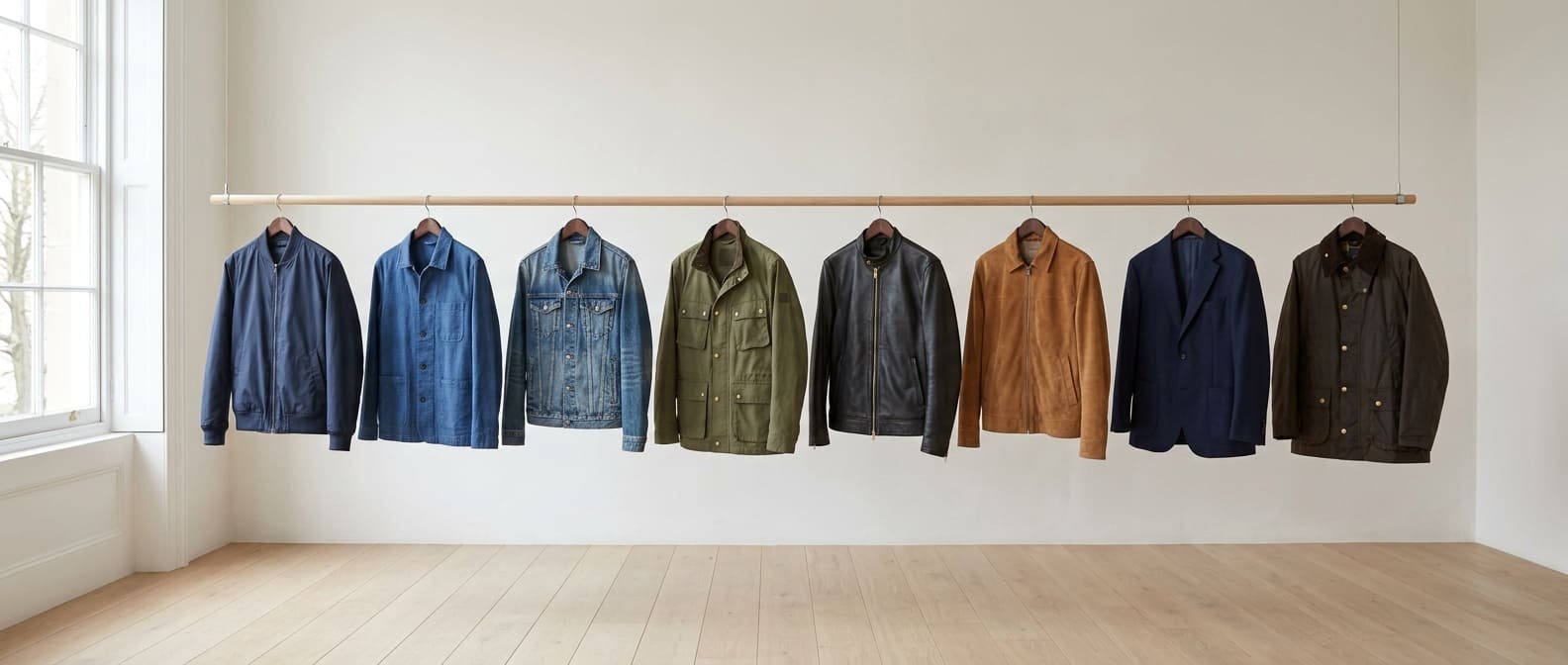
- Jackets: padded jackets, rain jackets, bombers, quilted gilets and wool coats.
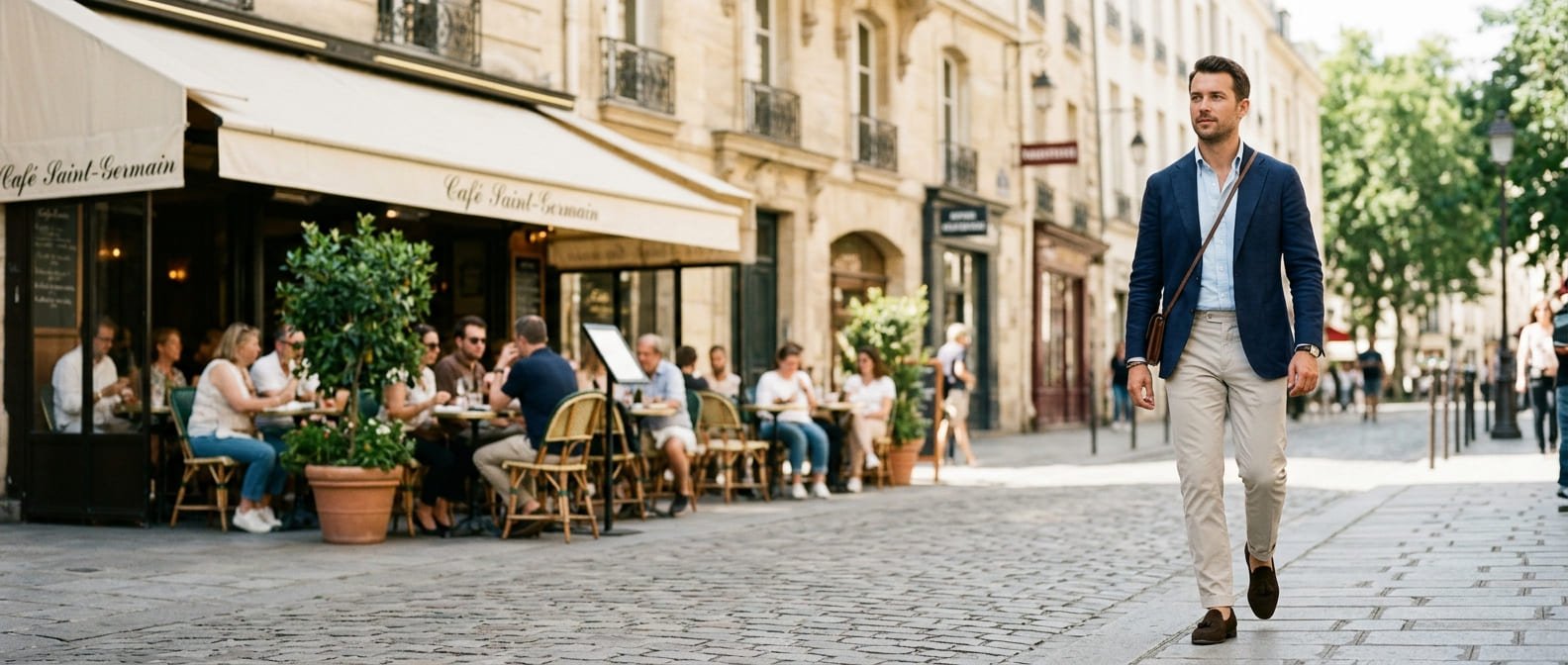
- Blazers with jeans: the classic Dutch smart casual outfit.
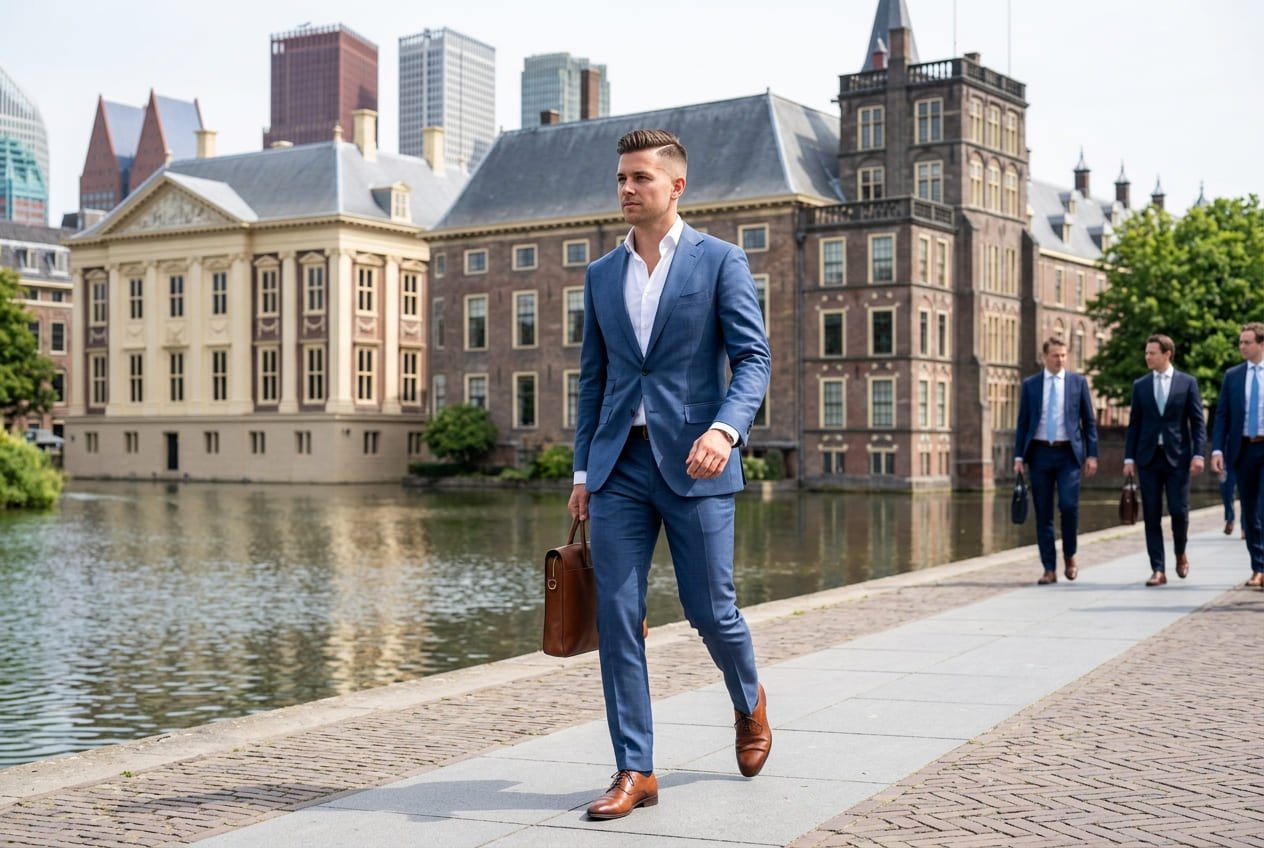
- Suits: slim and blue, often worn with brown shoes and no tie.
- Shoes: white trainers, leather boots and brown brogues.
- Sportswear: worn for sport, and football shirts on match days.
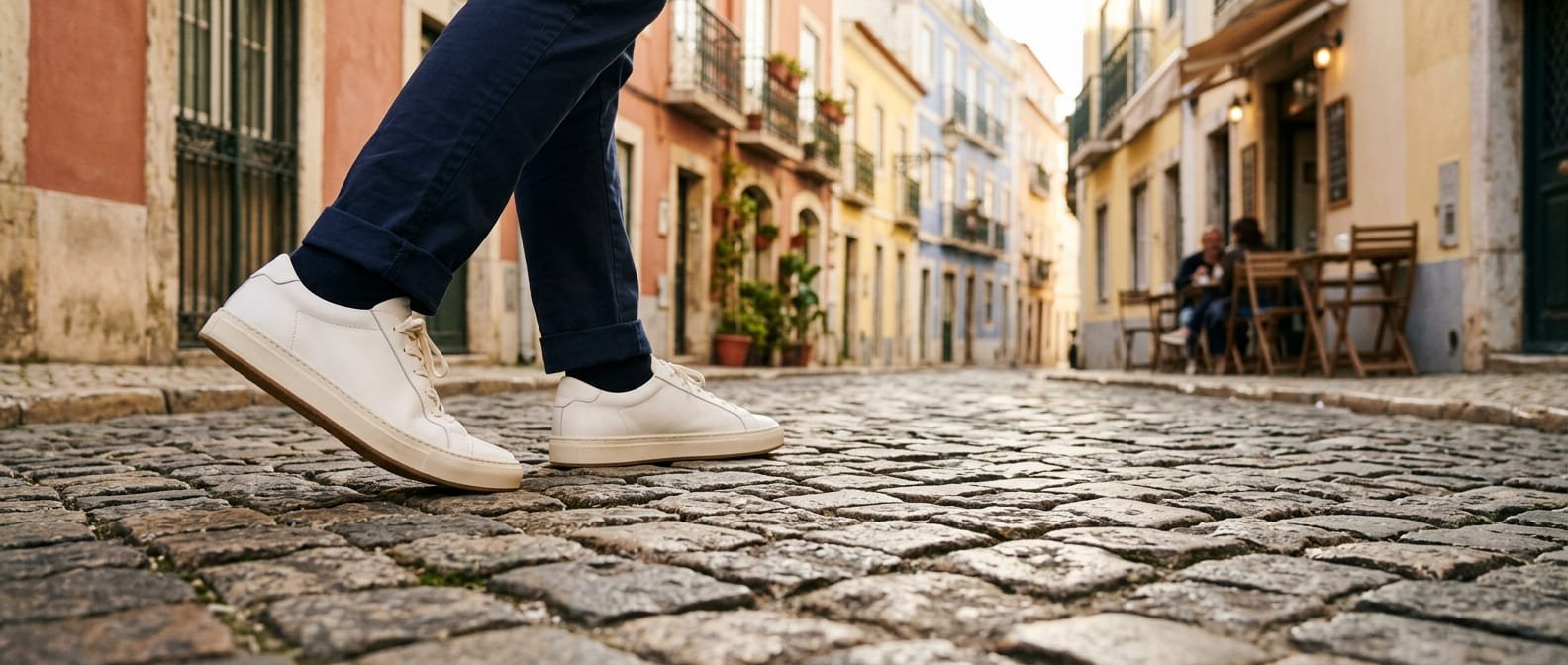
- Navy unstructured blazer Jacket
- White Oxford shirt Shirt
- Dark slim jeans Trousers
- White leather trainers Shoes
To compare Dutch style with its neighbours, see our guide to European men’s fashion and the German Fashion and British Fashion pages.
Dutch style by city
Amsterdam fashion
Amsterdam is the most international and creative of the Dutch cities. Style is relaxed and individual: denim, vintage, streetwear and independent labels, all chosen with a bike in mind. The Nine Streets and the Jordaan are known for small boutiques, De Pijp for younger fashion, and Amsterdam-Noord for creative studios.
Rotterdam
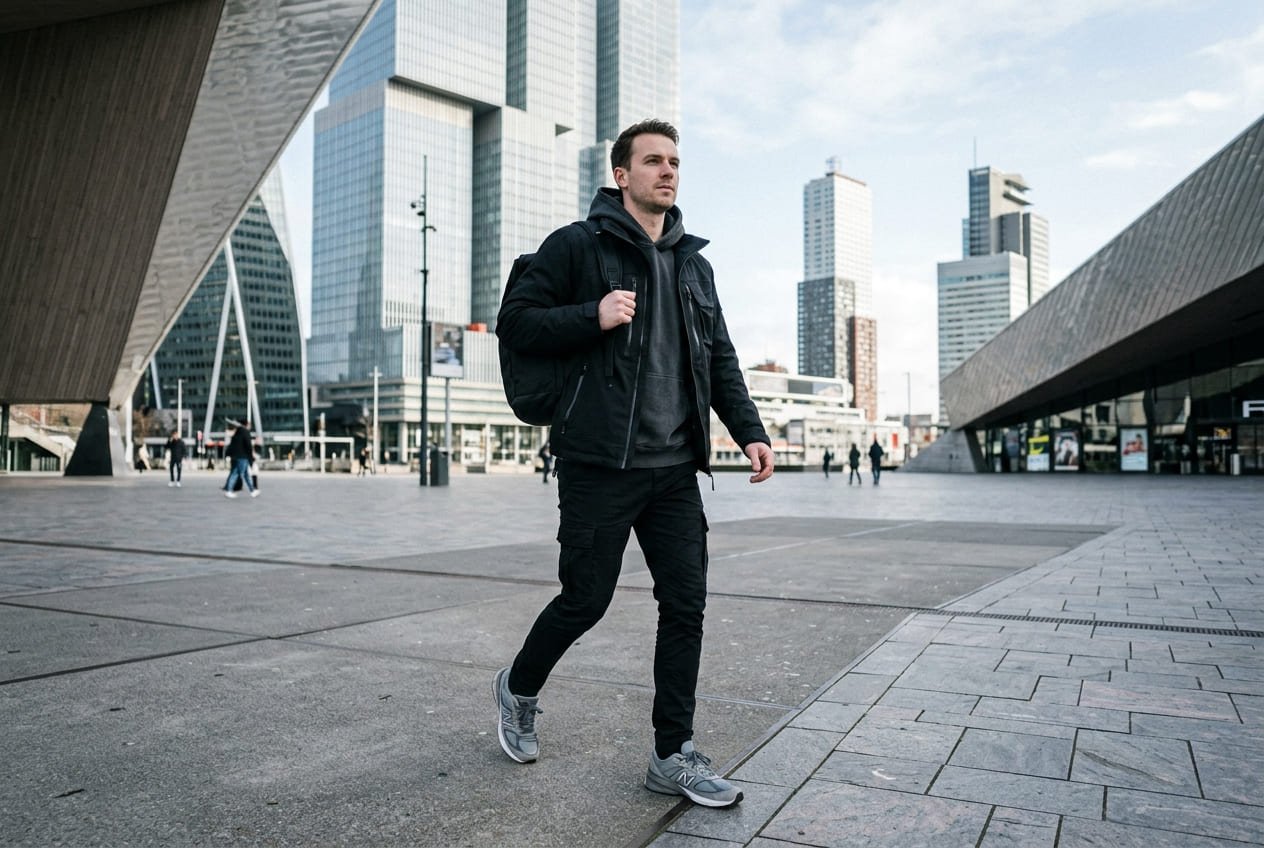
A modern port city rebuilt after the war, with bold architecture and a matching attitude. Rotterdam style is tougher and more streetwear-led, with dark colours, technical jackets and trainers.
The Hague
The seat of government and the royal family. Dress is the most formal in the country: suits, smart coats and polished shoes around the ministries and embassies.
Utrecht
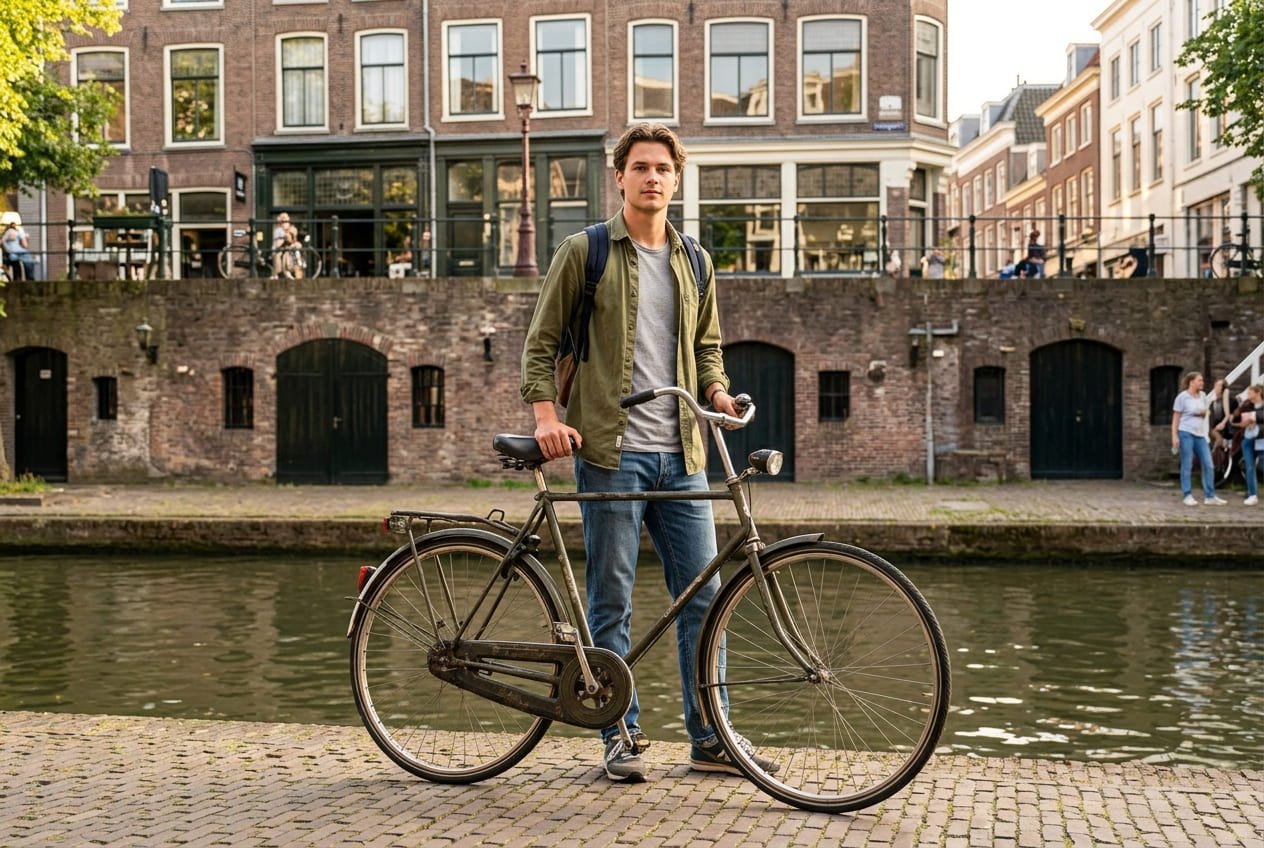
A university city with a young population. Expect jeans, backpacks, second-hand finds and a great many bicycles.
Arnhem
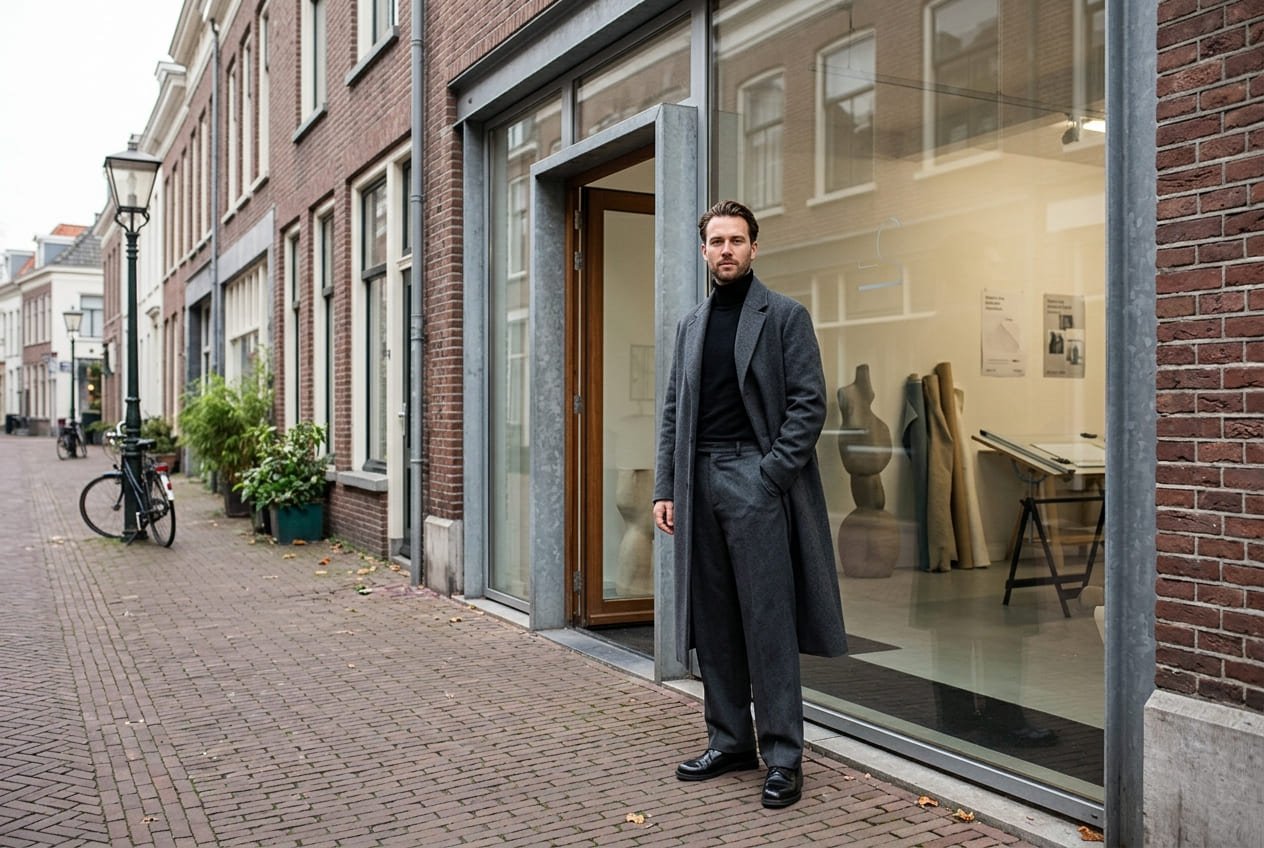
The Netherlands’ fashion city, home to a leading fashion academy and a designer quarter of studios and shops.
Maastricht
In the far south, close to Belgium and Germany. Maastricht is more elegant and continental, and people dress up more for dinner.
Amsterdam weather and what to wear, month by month
The Dutch climate is maritime: mild winters, cool summers, steady wind and rain in every month. The figures are typical for Amsterdam and approximate.
| Month | Typical high | Typical low | What to wear |
|---|---|---|---|
| January | about 6 °C | about 1 °C | Warm coat, jumper, hat, scarf, gloves and waterproof boots |
| February | about 7 °C | about 1 °C | As January. Wind makes it feel colder |
| March | about 10 °C | about 3 °C | Padded jacket or coat, layers and a scarf |
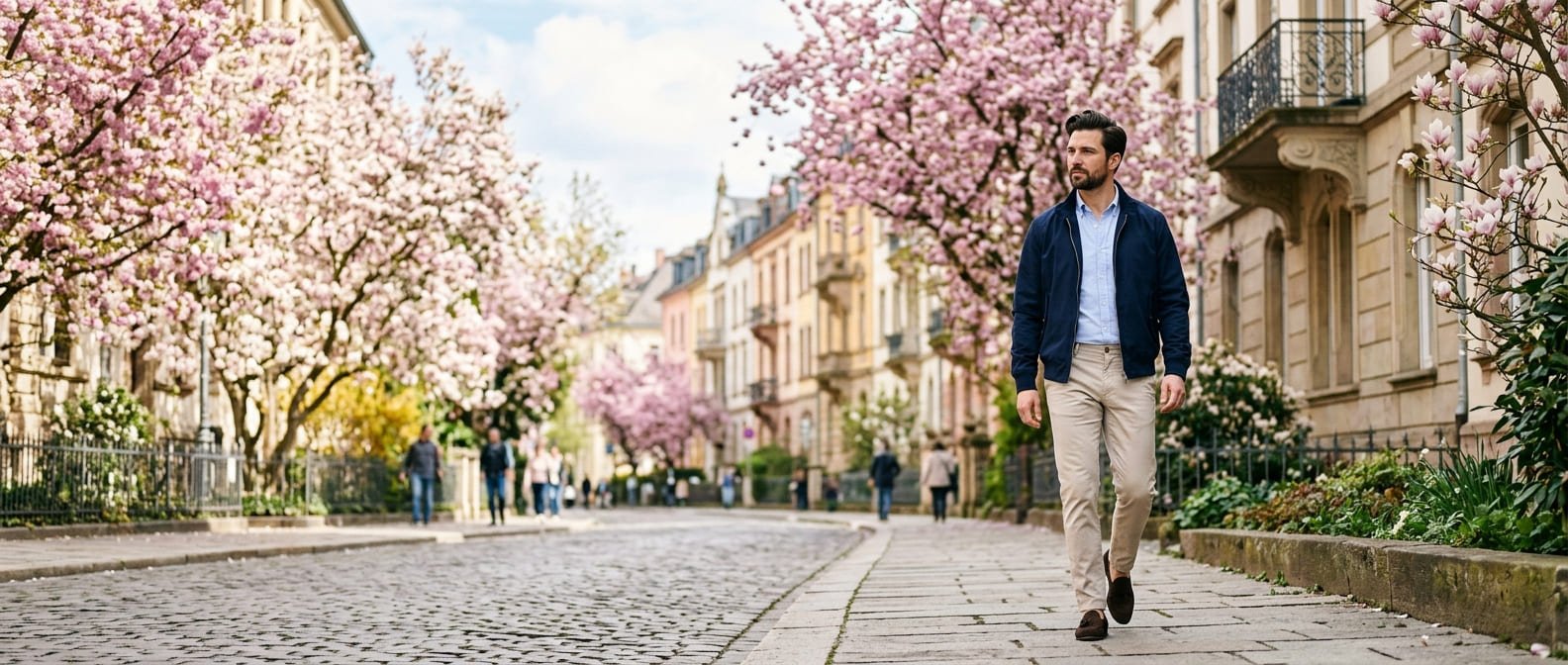
| April | about 14 °C | about 5 °C | Rain jacket, jumper and comfortable shoes. Tulip season |
| May | about 18 °C | about 9 °C | Light jacket, T-shirt or shirt and a knit |
| June | about 20 °C | about 11 °C | T-shirts, light trousers and a jacket for the evening |
| July | about 22 °C | about 13 °C | Summer clothes, plus a light waterproof layer |
| August | about 22 °C | about 13 °C | As July. The warmest month, with showers |
| September | about 19 °C | about 11 °C | Layers and a light jacket |
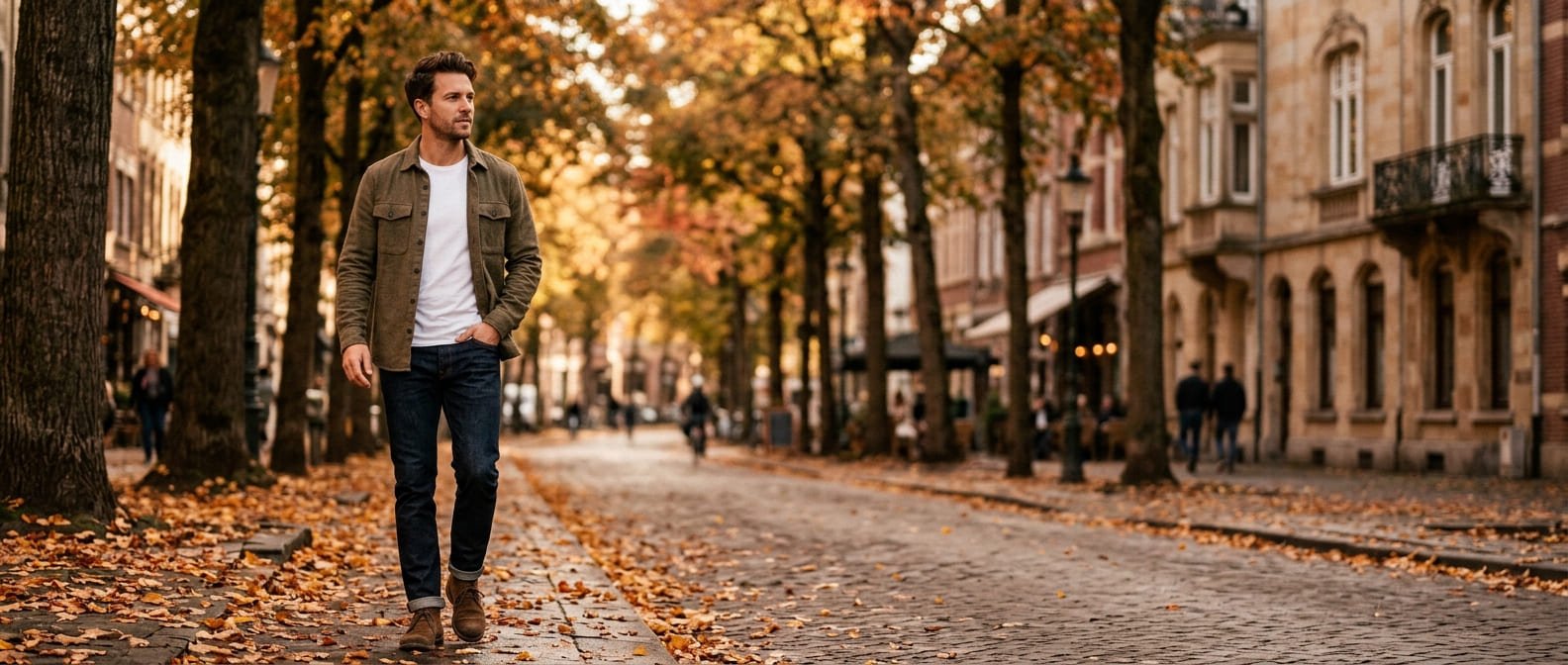
| October | about 15 °C | about 8 °C | Rain jacket, jumper and boots |
| November | about 10 °C | about 5 °C | Warm coat, scarf and waterproof shoes |
| December | about 7 °C | about 2 °C | Winter coat, hat, gloves and warm boots |
- Does it snow in Amsterdam? Sometimes, for a few days each winter, but it rarely settles for long. Cold rain and wind are far more common.
- Amsterdam in spring (March to May): changeable. Bring a rain jacket, a jumper and shoes that can get wet.
- Amsterdam in summer (June to August): pleasant, not hot. Days around 20 to 22 °C, with cool evenings. Always carry a layer.
- Amsterdam in autumn (September to November): mild at first, then wet and windy. Waterproofs matter most.
- Amsterdam in winter (December to February): cold, damp and dark by late afternoon. Dress warmly, especially for cycling and canal walks.
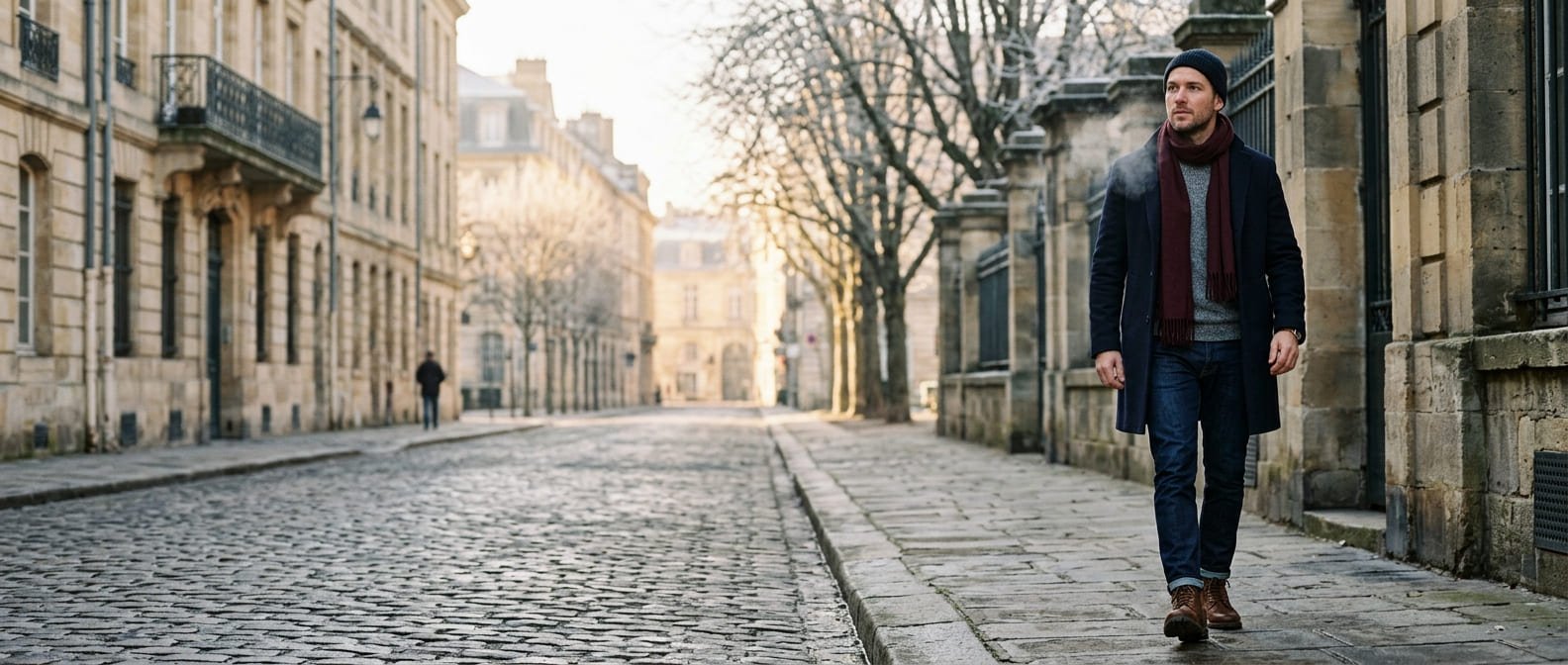
- Navy rain jacket Jacket
- Grey crew-neck jumper Knit
- Dark jeans Trousers
- Brown leather boots Shoes
- Wool scarf Accessory
Umbrellas are of limited use in Dutch wind. A hooded jacket is better. For packing, see what to pack for a Europe trip, walking shoes for Europe and our guide to the types of jackets for men.
What to wear for Dutch occasions
King’s Day
King’s Day (Koningsdag) is the national holiday on 27 April, the king’s birthday, or 26 April when the 27th falls on a Sunday. The whole country holds street markets, boat parties and concerts, and everyone wears orange, the colour of the royal House of Orange-Nassau.
- Wear something orange: a T-shirt, jumper, scarf, hat or an entire outfit.
- Dress in layers. Late April can be anything from 8 to 20 °C.
- Wear comfortable, closed shoes. The streets are crowded and messy.
- Bring a rain jacket.
Tulip season
The tulip fields and gardens bloom from about mid-March to mid-May, with the peak usually in mid-April. It’s often cool, windy and muddy.
- A windproof or waterproof jacket.
- A jumper and a scarf.
- Sturdy shoes you don’t mind getting dirty.
- Plain colours, which look better against the flowers in photographs. See our family photo outfit ideas.
Sinterklaas and Christmas
The Dutch give presents on the evening of 5 December for Sinterklaas, and Christmas is a quieter family occasion. Dress is smart casual: a good jumper, a shirt and dark trousers. See Christmas outfits for men.
Liberation Day and football
Liberation Day on 5 May is marked with festivals. For international football matches, orange returns.
Traditional Dutch clothing
Traditional Dutch clothing is called klederdracht. Each fishing village and farming region once had its own costume, and the differences showed where you came from, your religion and whether you were married. A few older people in a handful of villages still wear it daily. Elsewhere it appears at festivals and for visitors.
The famous image: Volendam
The Dutch traditional dress known around the world, with a pointed white lace cap, a striped skirt and an apron, comes from the fishing village of Volendam. Men there wore wide black wool trousers with silver buttons, a striped shirt, a red neckerchief and a round cap.
Traditional Dutch clothing by region
| Place | Traditional dress | Notes |
|---|---|---|
| Volendam | Pointed lace cap, dark top, striped skirt and coral necklace. Wide black trousers and silver buttons for men | The best-known Dutch costume |
| Marken | Brightly embroidered bodices, striped sleeves and colourful caps | Young boys and girls were once dressed alike |
| Zeeland | Large white lace caps with gold spiral ornaments at the temples. Black suits with silver buttons for men | Each island had its own version |
| Staphorst | Dark clothing decorated with fine dotted patterns | Still worn daily by some older women |
| Spakenburg | A stiff, wide shoulder piece in printed cotton | Still worn by a small number of women |
| Friesland | A gold or silver head brace under a lace cap | Worn by wealthy women |
| Scheveningen | Shawls and white caps with gold pins | The fishing district of The Hague |
| Urk | Dark fisherman’s dress with silver buttons | A former island |
Traditional Dutch clothing for men
- Wide wool trousers, in black or dark blue, cut full for work on boats.
- A striped or dark shirt and a short jacket or waistcoat.
- Silver buttons at the waist and collar, which were a family’s savings.
- A neckerchief, usually red.
- A cap: round and flat, or a tall fur hat in some villages.
- Wooden shoes.
Farmers wore a loose blue smock with a red patterned neckerchief and a flat cap. That outfit is still worn at carnival in the south.
Dutch clogs
Wooden shoes, called klompen, are carved from a single block of poplar or willow. They’re cheap, waterproof, warm when stuffed with straw or worn with thick socks, and strong enough to protect the feet. Some farmers and gardeners still wear them for work. For everyone else they’re souvenirs.
Orange, Delft blue and other Dutch symbols
- Orange: the national colour, from the royal family’s name.
- Delft blue: the blue and white pottery pattern, used on textiles and prints.
- Tulips and windmills: common motifs on souvenirs.
- Wax-print cotton: a Dutch company has produced bold wax prints for West and Central African markets since the nineteenth century, a lesser-known part of Dutch textile history.
Dutch avant-garde fashion
The Netherlands has a reputation for avant-garde fashion: experimental, conceptual clothing that treats fashion as art.
- What avant-garde fashion means. Designs that challenge ideas about what clothes are, through unusual shapes, materials and techniques. They’re often made for the runway and museums, not for daily wear.
- Dutch conceptual design. Dutch designers are known for wit, sculptural forms and new technology, including 3D printing and laser cutting.
- The art connection. The geometric paintings of the Dutch artist Piet Mondrian inspired the famous Mondrian dress of 1965, one of the best-known meetings of art and fashion.
- Education. The fashion academy in Arnhem has trained many of the country’s leading designers.
Dutch brands and designers
This section lists well-known Dutch clothing brands and designers for reference. StyleGauge is independent: the names are not ranked, recommended or linked, and we earn nothing from any of them.
Dutch menswear brands
| Brand | Based in | Known for |
|---|---|---|
| Suitsupply | Amsterdam | Slim, affordable tailoring, founded in 2000 |
| Scotch & Soda | Amsterdam | Detailed, colourful casual wear |
| G-Star RAW | Amsterdam | Denim, founded in 1989 |
| Denham | Amsterdam | Premium denim |
| State of Art | The Netherlands | Smart casual menswear |
| PME Legend, Cast Iron and Vanguard | The Netherlands | Casual menswear and denim |
| WE Fashion | Utrecht | High-street fashion for men, women and children |
| Olaf Hussein | Amsterdam | Minimal streetwear |
Dutch streetwear and trainers
- Patta: an Amsterdam streetwear label and shop with roots in hip-hop culture.
- Daily Paper: Amsterdam streetwear inspired by African heritage.
- Filling Pieces: Amsterdam footwear between trainers and luxury shoes.
Dutch denim
Amsterdam has one of the highest concentrations of denim companies in the world. Alongside the brands above, Kings of Indigo and MUD Jeans are known for sustainable and circular denim, including jeans that can be leased and recycled. Several international denim companies have their European headquarters in the city.
Dutch high-street and department stores
- C&A: founded in the Dutch town of Sneek in 1841, now an international chain.
- HEMA: a much-loved Dutch variety store selling basics, children’s clothes and homeware.
- De Bijenkorf: the leading Dutch department store.
- WE Fashion and Mexx: Dutch-founded high-street names.
Famous Dutch fashion designers
| Designer | Known for |
|---|---|
| Viktor & Rolf | Viktor Horsting and Rolf Snoeren. Witty, theatrical, conceptual couture |
| Iris van Herpen | Sculptural couture using 3D printing and new materials |
| Jan Taminiau | Couture worn by Queen Máxima |
| Ronald van der Kemp | Couture made from surplus and vintage materials |
| Duran Lantink | Collage-like designs from unsold stock |
| Alexander van Slobbe | Clean, minimalist design |
| Bas Kosters | Colourful, playful fashion and illustration |
| Lidewij Edelkoort | One of the world’s best-known trend forecasters |
Dutch children’s brands
- Oilily: bright, patterned children’s clothing.
- Vingino and Tumble ‘N Dry: children’s denim and casual wear.
- Noppies: baby and maternity clothing.
- HEMA: everyday basics for children.
Shopping for clothes in the Netherlands
Where to shop
- Amsterdam: the Nine Streets for boutiques and vintage, Kalverstraat and Leidsestraat for the high street, P.C. Hooftstraat for luxury, Haarlemmerstraat for independent shops, and the Waterlooplein and Albert Cuyp markets.
- Rotterdam: the Lijnbaan, one of Europe’s first pedestrian shopping streets, plus Witte de Withstraat for independent shops.
- The Hague: Noordeinde for boutiques and the covered Passage arcade.
- Utrecht: the streets along the Oudegracht canal.
- Arnhem: the designer quarter in Klarendal.
- Maastricht: the Stokstraat quarter for luxury.
- Second-hand: vintage shops, flea markets and thrift shops (kringloopwinkels) are everywhere.
Opening hours and paying
- Shops usually open from 9 or 10 am to 6 pm, and many open late on Monday morning.
- Most towns have one late shopping evening a week, usually Thursday or Friday.
- In big cities, most shops also open on Sundays.
- Debit cards are used for almost everything, and some shops don’t accept cash. Not every shop accepts credit cards, so carry a debit card.
Sales and tax-free shopping
Sales run in January and July. Visitors who live outside the European Union can usually reclaim VAT on larger purchases. Ask in the shop, and check the current rules.
Sizes
The Netherlands uses European sizes. Because the Dutch are tall, many shops stock longer leg and sleeve lengths than elsewhere in Europe.
| Item | Netherlands and EU | UK | US |
|---|---|---|---|
| Jackets and suits | 48 | 38 | 38 |
| Jackets and suits | 50 | 40 | 40 |
| Jackets and suits | 52 | 42 | 42 |
| Jeans (waist and leg in inches) | 32/34 | 32/34 | 32/34 |
| Shoes | 42 | 8 | 9 |
| Shoes | 43 | 9 | 10 |
| Shoes | 44 | 9.5 | 10.5 |
Conversions are approximate. Jeans are sold by waist and leg length in inches, as in the UK and US, and a 34 or 36-inch leg is easy to find.
Clothing words in Dutch
Fashion in Dutch is “mode”, and clothing is “kleding”.
| English | Dutch |
|---|---|
| Shirt | Het overhemd |
| T-shirt | Het T-shirt |
| Jumper or sweater | De trui |
| Jacket or coat | De jas |
| Rain jacket | De regenjas |
| Rain trousers | De regenbroek |
| Suit | Het pak |
| Trousers | De broek |
| Jeans | De spijkerbroek |
| Dress | De jurk |
| Skirt | De rok |
| Shoes | De schoenen |
| Trainers | De sneakers or gympen |
| Boots | De laarzen |
| Clogs | De klompen |
| Hat | De muts (knitted) or de hoed (brimmed) |
| Scarf | De sjaal |
| Gloves | De handschoenen |
| Belt | De riem |
| Socks | De sokken |
| Size | De maat |
| Fitting room | De paskamer |
| Sale | De uitverkoop |
| Traditional costume | De klederdracht |
Dress codes in the Netherlands
- Offices: informal. Jeans are normal in most workplaces, and many managers never wear a tie. Law, banking and government are smarter, with a suit, often blue, and brown shoes.
- Restaurants: casual or smart casual. Almost nowhere requires a jacket.
- Weddings: the invitation usually states the dress code. A suit is standard for men.
- Theatre and concerts: come as you are, though people dress up for premieres.
- Churches: modest clothing.
- Nightclubs: casual, dark and understated. Some refuse sportswear or large groups in matching outfits.
- Birthdays and visits: neat everyday clothes.
- Saunas and spas: most Dutch saunas are mixed and swimwear-free, with set swimwear days.
For the meaning of common dress codes, see smart casual for men and business casual for men.
Dutch fashion for boys and kids
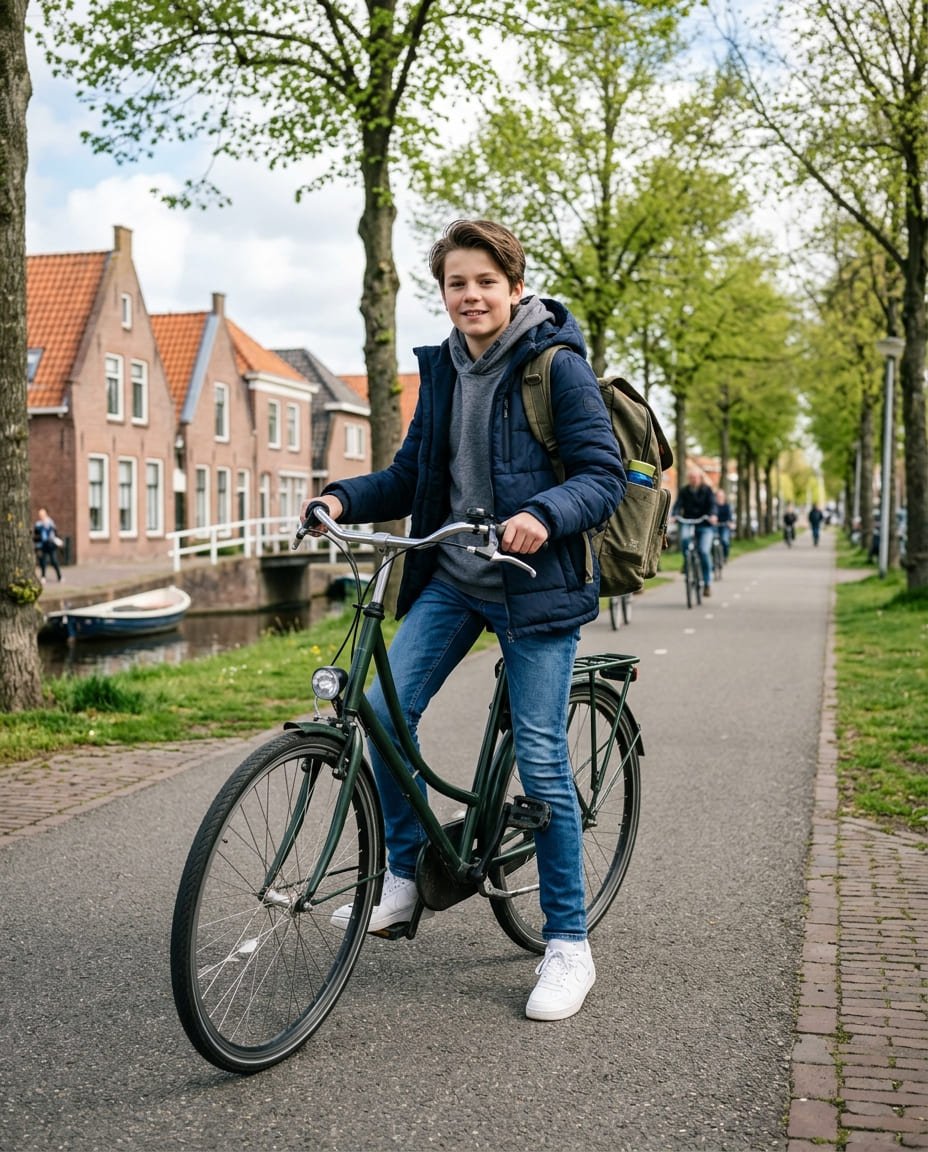
- No school uniforms. Children wear jeans, T-shirts, hoodies and trainers to school.
- Cycling from a young age. Children ride to school in all weather, so a rain suit and waterproof shoes are essential.
- Colour and pattern. Dutch children’s clothing is known for bright colours and bold prints.
- Practical layers. Easy to wash, and easy to take off.
- Swimming lessons. Dutch children earn swimming certificates, and part of the first test is swimming in clothes.
- Orange. Children wear orange shirts, face paint and crowns on King’s Day.
- Teenagers dress like teenagers across Europe: wide jeans, hoodies, puffer jackets and trainers. See our guides to clothes for teenage boys and Gen Z fashion.
- Yellow rain jacket Jacket
- Striped jumper Knit
- Dark jeans Trousers
- Waterproof trainers Shoes
Dutch fashion trends
What are people wearing in the Netherlands now?
- Relaxed denim: straight and wide jeans alongside the slim cuts Dutch men have long favoured.
- Technical rainwear in muted colours.
- Clean trainers with everything.
- Second-hand and vintage, and clothing rental.
- Circular and sustainable labels.
- Workwear: chore jackets and overshirts.
- Quiet, logo-free basics.
For the wider picture, see men’s fashion trends 2026.
How to dress like a local: a Dutch capsule
- Waterproof hooded jacket
- Wool coat or padded jacket for winter
- Navy blazer
- Two casual shirts
- Crew-neck jumper in navy or grey
- Two plain T-shirts
- Dark jeans
- Straight or relaxed jeans in mid-blue
- Chinos
- White leather trainers
- Leather boots that can handle rain
- A scarf, gloves and a backpack
Check your wardrobe against the list with our Wardrobe Planner.
Mistakes visitors make
| Mistake | Why it stands out | Do this instead |
|---|---|---|
| Relying on an umbrella | The wind turns it inside out | A hooded rain jacket |
| Dressing for a hot summer | Evenings are cool, and it often rains | Bring a layer and a waterproof |
| Smart shoes for cycling and cobbles | Slippery and easily ruined | Flat shoes with grip |
| Overdressing | The Dutch dress casually | Neat jeans and a jacket |
| Walking in the cycle lane | Dangerous, and it annoys locals | Stay on the pavement |
| No orange on King’s Day | You’ll be the only one | One orange item is enough |
| Expecting to pay by credit card | Not accepted everywhere | Carry a debit card |
Frequently asked questions
Dutch fashion is practical, casual and understated. People wear jeans, trainers, simple knitwear and weatherproof jackets, in navy, grey, black and denim, with few logos.
Jeans, T-shirts or jumpers, trainers or boots and a rain jacket or coat. Clothes are chosen to work on a bicycle and in changeable weather.
Traditional Dutch clothing is called klederdracht. The best-known version, with a pointed lace cap and striped skirt, comes from Volendam. Each region had its own costume.
Wide dark wool trousers, a striped or dark shirt, a short jacket or waistcoat with silver buttons, a red neckerchief, a cap and wooden shoes.
A few farmers and gardeners wear wooden shoes for work, because they're waterproof and protective. Most Dutch people never wear them.
Layers, comfortable flat shoes and a hooded rain jacket. Jeans, a jumper and trainers or boots suit almost every situation.
Mild and changeable, with rain and wind in every month. Summer days are about 20 to 22 °C, and winter days about 6 to 7 °C.
Occasionally, for a few days each winter, but snow rarely lasts. Cold rain and wind are much more common.
Orange. A T-shirt, scarf or hat is enough, though many people dress in orange from head to toe. Add layers, a rain jacket and comfortable shoes.
Suitsupply, Scotch & Soda, G-Star RAW, Denham, Patta, Daily Paper and Filling Pieces are among the best-known Dutch menswear and streetwear names.
Viktor & Rolf and Iris van Herpen are the most famous, known for conceptual and avant-garde couture. Jan Taminiau and Ronald van der Kemp are also well known.
Avant-garde fashion is experimental clothing that challenges conventional ideas of dress through unusual shapes, materials and techniques. Dutch designers are among its best-known names.
No. The Netherlands is the country. Holland is the name of two of its twelve provinces, North Holland and South Holland. The people and language are Dutch.
Dress is informal almost everywhere. Jeans are normal at most offices and restaurants. Suits are worn in law, banking, government and at weddings.