




Choosing walking shoes for Europe is the single most important packing decision you’ll make. A typical day of sightseeing means 15,000 to 25,000 steps over cobbles, stairs, tram tracks, polished marble and steep hills, often followed by dinner somewhere you’d rather not arrive in gym shoes. Most guides answer the question with a list of brands. This one doesn’t name any. Instead, it explains which types of shoe make good walking shoes for Europe, what to look for when you buy, how to match shoes to the season and destination, and how to keep your feet comfortable all trip. It’s written for men, boys and kids.
The quick answer
The best stylish walking shoes for Europe share five features:
- A cushioned, supportive sole that absorbs shock on hard ground.
- Good grip for wet cobbles and smooth stone.
- A clean, simple design in a neutral colour that works with every outfit.
- Breathable or weather-resistant uppers, depending on the season.
- A proper break-in of at least two to three weeks before you travel.
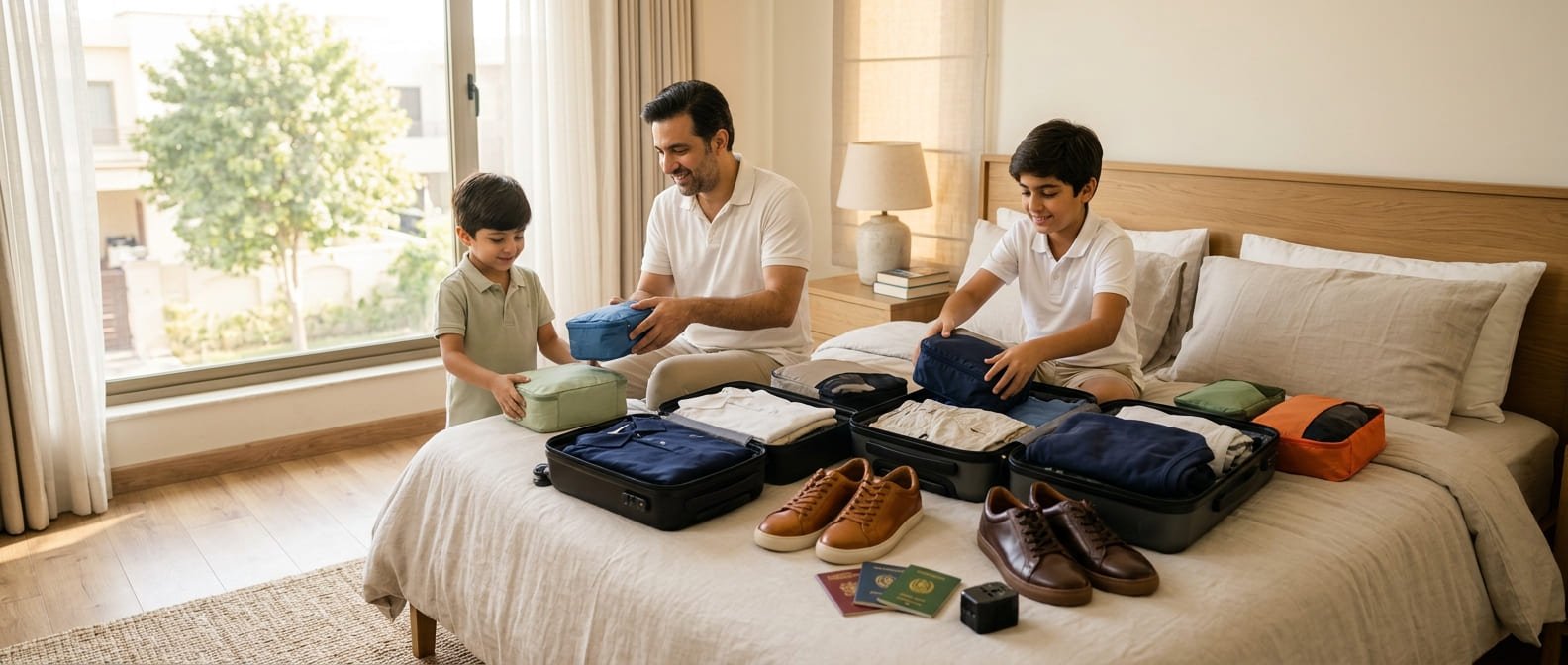
For most trips, pack two pairs: one main walking shoe and one smarter pair for evenings. Add sandals in summer or waterproof boots in winter.

Why European streets are hard on feet
- Cobblestones. Old towns from Lisbon to Prague are paved with uneven stone. Thin soles let you feel every one.
- Hills and steps. Lisbon, Porto, Edinburgh, Santorini and the Amalfi Coast are built on slopes.
- Polished stone and marble. Centuries of footsteps make surfaces slippery, especially in rain. Lisbon’s mosaic pavements and the marble at Greek sites are well-known examples.
- Distance. You’ll walk far more than at home, on consecutive days.
- Weather. Rain is common in northern and western Europe at any time of year, and summer heat in the south makes feet swell.
The best types of walking shoes for Europe
1. Minimal leather trainers
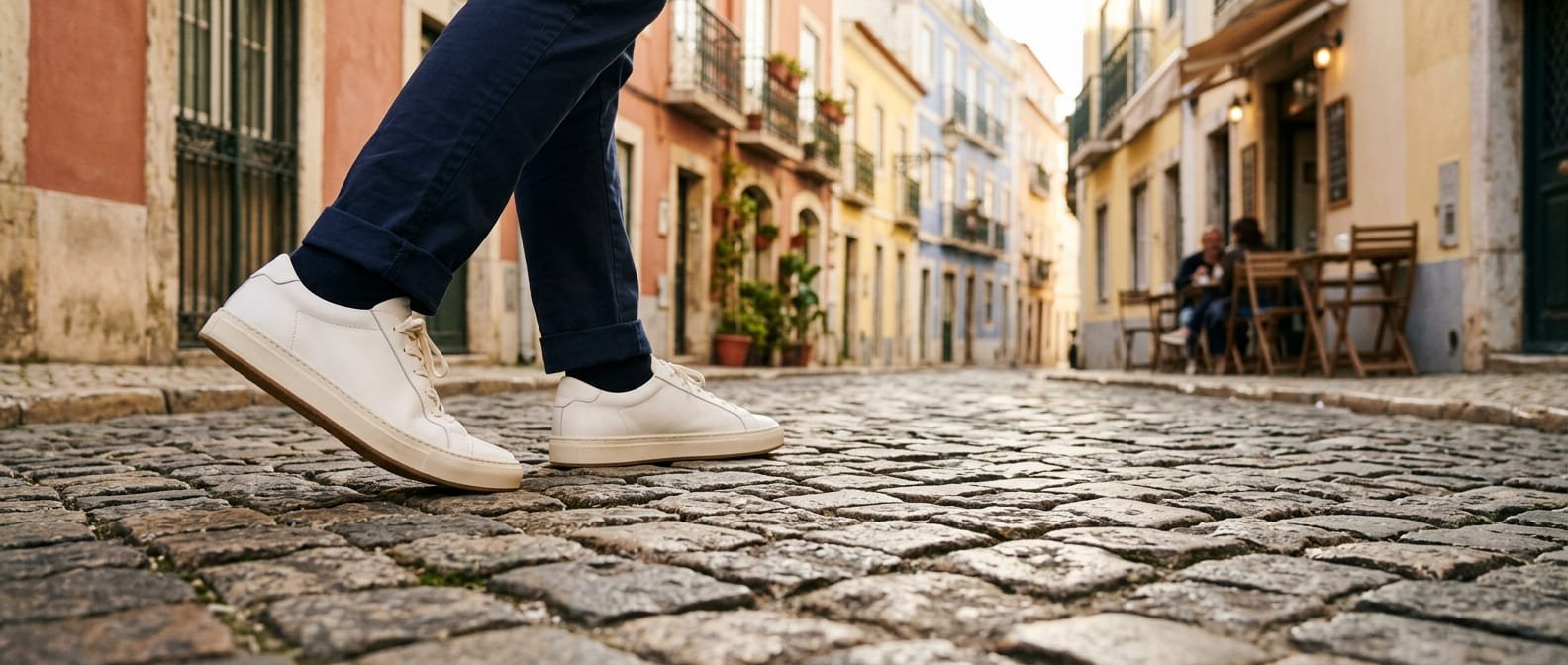
Plain leather trainers in white, grey, navy or brown are the most versatile walking shoes for Europe. They’re comfortable for long days, easy to clean and smart enough for most restaurants. Look for a cushioned insole and a rubber sole with some tread.
Best for: city breaks in spring, summer and autumn; almost any outfit.
2. Cushioned walking trainers in neutral colours
If you need maximum comfort, choose a well-cushioned walking or running-style trainer in a plain, dark or neutral colour. Black, grey, navy or olive pairs look far more discreet than bright sports colours.
Best for: very long walking days, travellers with foot or knee problems and theme-park days with children.
3. Suede or leather loafers
Loafers with a rubber sole are smart, light and comfortable for moderate distances. They’re ideal as a second pair for evenings and warm days.
Best for: dinners, southern Europe in summer and smart casual outfits.
4. Desert and chukka boots
Ankle-height suede or leather boots with crepe or rubber soles are comfortable, supportive and stylish with jeans and chinos.
Best for: spring and autumn, cooler evenings and smart casual city trips.
5. Chelsea boots
Leather Chelsea boots slip on and off easily, support the ankle and suit both casual and smart outfits. Choose a rubber sole for grip.
Best for: autumn and winter cities, and airports.
6. Waterproof leather boots
For wet or cold trips, lightweight waterproof boots with a grippy sole keep feet dry and warm.
Best for: northern Europe in winter, Christmas markets and rainy destinations.
7. Walking sandals with straps
Sandals with a contoured footbed, a back strap and a proper sole are the best choice for hot destinations.
Best for: summer in the Mediterranean, islands and beach towns.
8. Trail and light hiking shoes
Low-cut trail shoes with deep tread are useful if your trip includes coastal paths, mountains or national parks.
Best for: the Alps, the Dolomites, coastal walks and countryside holidays.
| Shoe type | Comfort for all-day walking | Smartness | Best season |
|---|---|---|---|
| Minimal leather trainers | High | Medium to high | Spring to autumn |
| Cushioned walking trainers | Very high | Low to medium | All year |
| Loafers with rubber soles | Medium | High | Spring and summer |
| Desert or chukka boots | Medium to high | Medium to high | Spring and autumn |
| Chelsea boots | Medium to high | High | Autumn and winter |
| Waterproof leather boots | High | Medium | Winter |
| Walking sandals | Medium to high | Low to medium | Summer |
| Trail shoes | Very high | Low | All year, outdoors |
- White leather trainers Main walking shoe
- Brown suede loafers Evening shoe
- Merino or cotton socks Socks
- Leather sandals (summer only) Optional third pair
What to look for in good walking shoes for Europe
Cushioning and support
Press the insole with your thumb: it should feel springy, not flat. Check that the arch is supported and the heel is held firmly. If your favourite shoes lack support, add a good insole.
Grip
Turn the shoe over. A rubber sole with a clear tread pattern grips wet stone; a smooth leather sole does not.
Fit
Try shoes on in the afternoon, when your feet are slightly larger. You should have about a thumb’s width in front of your longest toe, and your heel shouldn’t slip.
Weight
Heavy shoes tire your legs over a long day. Lighter is better, as long as the sole is still supportive.
Breathability or water resistance
Choose breathable leather, suede or mesh for warm weather, and water-resistant or waterproof leather for wet and cold seasons.
Style and colour
Neutral colours, such as white, brown, navy, grey and black, work with everything and look more at home in European cities than bright sports colours.
Walking shoes for Europe by season
Spring: leather trainers and desert boots. Carry a waterproofing spray for showers.
Summer: breathable leather trainers, loafers and walking sandals. Feet swell in the heat, so avoid tight shoes.
Autumn: leather trainers, chukka or Chelsea boots and water-resistant shoes.
Winter: waterproof leather boots with warm socks. Icy pavements and wet cobbles need real grip.
Walking shoes for Europe by destination
| Destination | Ground and weather | Best shoes |
|---|---|---|
| Paris, Vienna, Berlin | Long pavements, some cobbles, showers | Leather trainers, Chelsea boots |
| Rome, Florence, Prague | Uneven cobbles | Cushioned trainers with thick soles |
| Lisbon, Porto, Edinburgh | Steep hills, slippery stone | Trainers with strong grip |
| Amsterdam, London, Dublin | Frequent rain | Water-resistant trainers or boots |
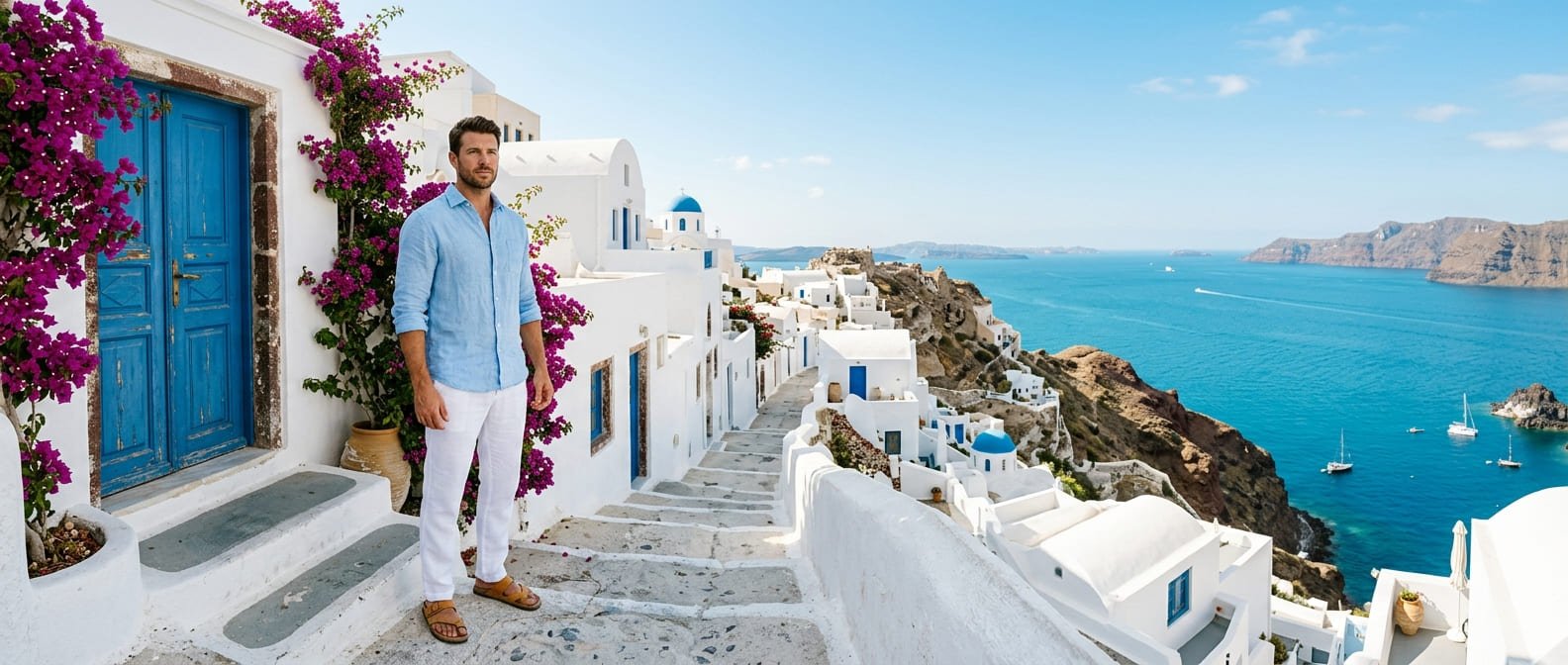
| Greek islands, Amalfi Coast | Steps, heat, marble | Grippy trainers, sandals with back straps |
| Spain in summer | Heat and long evenings | Breathable trainers, loafers, espadrilles for short walks |
| The Alps and lakes | Trails and changeable weather | Trail shoes or light hiking boots |
How many pairs should you pack?
Two pairs are enough for most trips, and three is the sensible maximum.
- Your main walking shoe, worn on travel days.
- A smarter second pair for evenings, which also gives your main pair time to dry and recover.
- A seasonal third pair if needed: sandals in summer, waterproof boots in winter.
Alternating shoes each day is one of the best ways to prevent blisters.
How to wear stylish walking shoes for Europe
Comfortable shoes don’t have to spoil an outfit. A few simple pairings keep everything looking deliberate.
- White leather trainers: with stone or navy chinos and a knitted polo, or with dark jeans and an overshirt. They also work with tailored shorts in summer.
- Suede loafers: with linen trousers and a shirt for dinner, or with chinos and a polo by day.
- Desert or chukka boots: with dark jeans, a knit and a jacket in spring and autumn.
- Chelsea boots: with wool trousers or dark jeans and a coat in winter.
- Walking sandals: with tailored shorts and a linen shirt in beach towns.
- Dark cushioned trainers: with dark trousers, so the shoe blends into the outfit.
A useful rule: match the colour of your shoes to something else you’re wearing, such as a belt, a jacket or a bag.
Shoes for different feet
- Wide feet: look for shoes sold in wide fittings, and avoid narrow, pointed shapes. Leather and suede stretch slightly; synthetic uppers don’t.
- Flat feet: choose shoes with firm arch support and a stable heel, or add a supportive insole.
- High arches: look for extra cushioning under the heel and forefoot.
- Knee, hip or back problems: prioritise cushioning over style for your main pair, and keep the smarter pair for short evening walks.
If you use orthotic insoles, take them when you try on shoes, because they change the fit.
Good walking shoes for Europe on a budget
You don’t need to spend a lot to walk comfortably.
- Use what you own. A well-worn pair of comfortable trainers beats a new pair every time.
- Upgrade the insole. A good cushioned insole can transform an ordinary shoe.
- Buy at the end of the season. Prices drop in January and July in many countries.
- Choose leather for value. It lasts longer and can be cleaned and repaired.
- Spend on socks. Good socks cost little and prevent most blisters.
When to replace your walking shoes
Even the best walking shoes for Europe wear out. Replace them before a big trip if the sole is worn smooth, the cushioning feels flat, the heel has collapsed to one side or the upper has stretched so that your foot slides. A worn sole is slippery on wet stone, and tired cushioning leads to sore knees.
Socks matter as much as shoes
- Merino wool socks wick moisture, resist odour and cushion the foot in every season.
- Cotton-blend socks are fine for short days but hold moisture.
- No-show socks work with loafers and trainers in summer; choose ones with silicone grips at the heel.
- Pack a fresh pair for every day, and a spare in your day bag for wet weather.
How to break in new shoes
- Buy them at least three weeks before your trip.
- Wear them at home for an hour or two a day in the first week.
- Take them on short walks in the second week.
- Do one long walk of several miles before you leave.
- If they still rub, change them. A holiday is the wrong place to find out.
Preventing blisters and sore feet
- Keep feet dry; change socks if they get wet.
- Put a blister plaster on any hot spot as soon as you feel it.
- Trim toenails before the trip.
- Loosen laces slightly on hot afternoons, when feet swell.
- Rest and raise your feet for a few minutes at lunch.
- Stretch your calves in the evening.
Walking shoes for boys and kids
Children walk just as far as adults on a European trip, and their feet tire sooner.
- Fit first. Have their feet measured shortly before the trip; children outgrow shoes quickly.
- Choose cushioned trainers with a secure fastening and good grip.
- Never start a trip in new shoes. Let them wear the pair for a couple of weeks first.
- Pack sandals with closed toes for summer, and waterproof boots for winter.
- Bring spare socks and blister plasters.
- Cushioned trainers with secure fastening Main shoe
- Closed-toe sandals (summer) Second pair
- Waterproof boots (winter) Second pair
- Spare socks Essentials
To find the right size before you travel, use our kids’ shoe size guide.
Caring for shoes on the road
- Wipe leather with a damp cloth and let it dry away from direct heat.
- Stuff wet shoes with paper overnight.
- Carry a small suede brush or a microfibre cloth.
- Reapply waterproofing spray before a rainy day.
- Pack shoes in bags and fill them with socks to save space.
How far will you walk?
Most visitors underestimate the distance. A typical sightseeing day in a European city involves 15,000 to 25,000 steps, which is roughly 10 to 18 kilometres. Much of it is on stone, and a lot of it is standing still in queues and galleries, which tires feet more than walking.
That’s why the best shoes for Europe are those you’ve already worn for a full day at home. Before you travel, test your main pair on a long walk of at least two hours on hard pavements. If they still feel comfortable at the end, they’ll serve you well on the trip.
A quick checklist before you buy
- Is there a thumb’s width of space in front of your longest toe?
- Does your heel stay in place when you walk?
- Does the sole grip on a smooth, wet surface?
- Is there cushioning under both the heel and the ball of the foot?
- Can you remove the insole to replace or dry it?
- Do they go with at least three outfits you’re packing?
- Would you wear them to a restaurant?
If you answer yes to all seven, you’ve found good walking shoes for Europe.
Shoes to leave at home
| Avoid | Why | Bring instead |
|---|---|---|
| Brand-new shoes | Blisters on day one | A pair you’ve already broken in |
| Flip-flops as walking shoes | No support or grip | Sandals with straps and a proper sole |
| Smooth leather-soled shoes | Slippery on wet stone | Rubber-soled loafers or derbies |
| Heavy hiking boots for cities | Hot, heavy and unnecessary | Cushioned trainers |
| Bright sports trainers | Stand out in smart places | Neutral leather or plain trainers |
| White canvas shoes in rain | Soak through and stain | Leather trainers with a water-resistant finish |
For the rest of your suitcase, read our guide to what to pack for Europe and our European summer outfits for men.
Frequently asked questions
Minimal leather trainers or well-cushioned walking trainers in neutral colours, with a supportive insole and a rubber sole that grips wet cobbles. Pair them with a smarter second shoe, such as loafers or boots.
Plain leather trainers, suede desert boots, Chelsea boots and rubber-soled loafers. They're comfortable for long days and smart enough for restaurants and museums.
Two pairs for most trips: a main walking shoe and a smarter evening pair. Add sandals in summer or waterproof boots in winter.
Yes. Clean, simple trainers are worn all over Europe. Neutral leather or plain styles blend in better than bright sports shoes.
Shoes with thick, cushioned soles and good grip. Thin soles and smooth leather soles are uncomfortable and slippery on cobbles.
Supportive walking sandals with a back strap and a proper sole are fine in summer. Flip-flops and flat fashion sandals aren't suitable for long walks.
Start at least three weeks ahead. Wear them at home, then on short walks, and finish with one long walk before you travel.
Yes, if they have a cushioned insole and a rubber sole. They're one of the most versatile choices for European cities because they're comfortable and smart enough for restaurants.
In autumn, winter and early spring, and for rainy destinations such as the UK, Ireland, the Netherlands and northern Spain, water-resistant or waterproof shoes are a good idea.
A typical sightseeing day is 15,000 to 25,000 steps, or roughly 10 to 18 kilometres, mostly on hard stone. That's why cushioning and a proper fit matter so much.