

Deciding what to wear in Spain is harder than it looks, because Spain is really several countries in one. Seville can reach 40 °C in July while the green north stays mild and rainy. Madrid is baking in August and bitterly cold in January. Barcelona mixes beach and city in the same afternoon. On top of that, Spaniards dress well: neat, fitted and a little smarter than many visitors expect, especially in the evening. This guide explains what to wear in Spain for men, boys and kids, with Spain outfits for every season, region and occasion, a packing list and the local customs worth knowing.
What to wear in Spain: the quick answer
- Dress neatly. Fitted, clean, well-pressed clothes are the norm, even for casual days.
- Choose light, breathable fabrics for late spring, summer and early autumn: linen, cotton and light knits.
- Pack one smart outfit for dinner. Spaniards dress up in the evening.
- Bring comfortable, presentable shoes. Leather trainers, loafers or espadrilles; flip-flops are for the beach.
- Carry a layer. Evenings cool down, and air conditioning is strong.
- Cover up for churches and in towns. Swimwear belongs on the beach.
How Spaniards dress
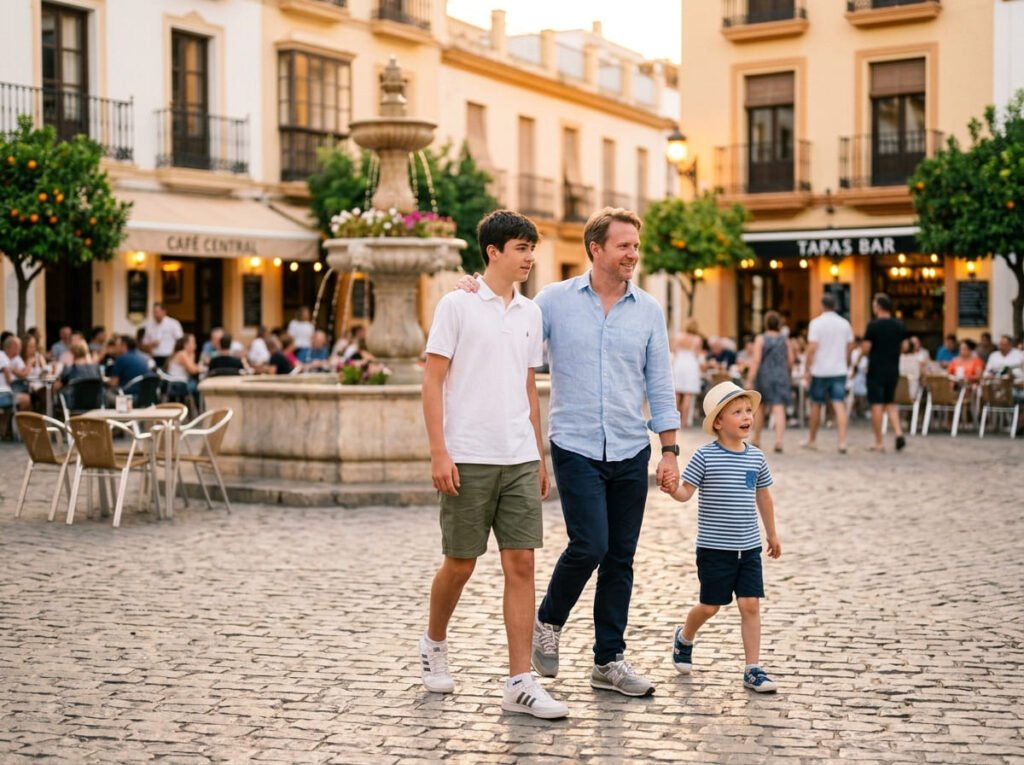
Spanish style is relaxed but polished. Men typically wear well-fitted chinos or dark jeans, a shirt or polo and leather shoes or clean trainers. Colours lean towards navy, white, beige and grey, with a brighter shirt or knit now and then. Clothes fit closely; baggy outfits are uncommon.
Three habits are worth copying.
- Smarter in the evening. Dinner starts late, often at 9 or 10 pm, and the evening stroll before it is a social event. People change out of daytime clothes.
- Shorts in the right place. Spanish men wear shorts on the coast and in summer heat, but in city centres many still prefer light trousers. Tailored shorts with a shirt are fine; athletic shorts stand out.
- Shoes matter. Leather shoes and neat trainers are standard. Sports shoes and flip-flops away from the beach mark you as a visitor.
Spain’s climate by region
What to wear in Spain depends heavily on where you’re going.
| Region | Summer | Winter | What it means |
|---|---|---|---|
| Andalusia (Seville, Granada, Córdoba) | Very hot and dry, often 35 to 40 °C | Mild days, cool nights | Linen and sun protection in summer; a jacket in winter |
| Madrid and central Spain | Hot and dry | Cold, sometimes freezing | Light fabrics in summer; a proper coat in winter |
| Barcelona and the Mediterranean coast | Hot and humid | Mild | Breathable clothes; a light jacket in winter |
| Northern Spain (Basque Country, Galicia, Asturias) | Mild, often rainy | Cool and wet | Layers and a waterproof all year |
| Balearic Islands | Hot and sunny | Mild | Beachwear, linen and a light layer |
| Canary Islands | Warm all year | Warm all year | Summer clothes with a light jacket for evenings |
Spain outfits for men
1. The city sightseeing day
A light-blue or white linen shirt with sleeves rolled, stone chinos and white leather trainers. It’s cool, comfortable for long walks and smart enough for lunch.
- White linen shirt Shirt
- Stone chinos Trousers
- White leather trainers Shoes
- Sunglasses and a cap Accessories
2. The summer heat outfit
For Seville, Córdoba or Madrid in July, choose the lightest fabrics you own: a loose linen shirt, linen trousers or tailored shorts in a pale colour, loafers or espadrilles and a hat.
3. The evening look
A knitted polo or a crisp shirt, navy or cream trousers and suede loafers. Add a light blazer or an overshirt for smarter restaurants. This is the outfit that helps you blend in on a Spanish evening.
- Navy knitted polo Top
- Cream linen-blend trousers Trousers
- Brown suede loafers Shoes
- Light unstructured blazer (optional) Jacket
4. The beach town
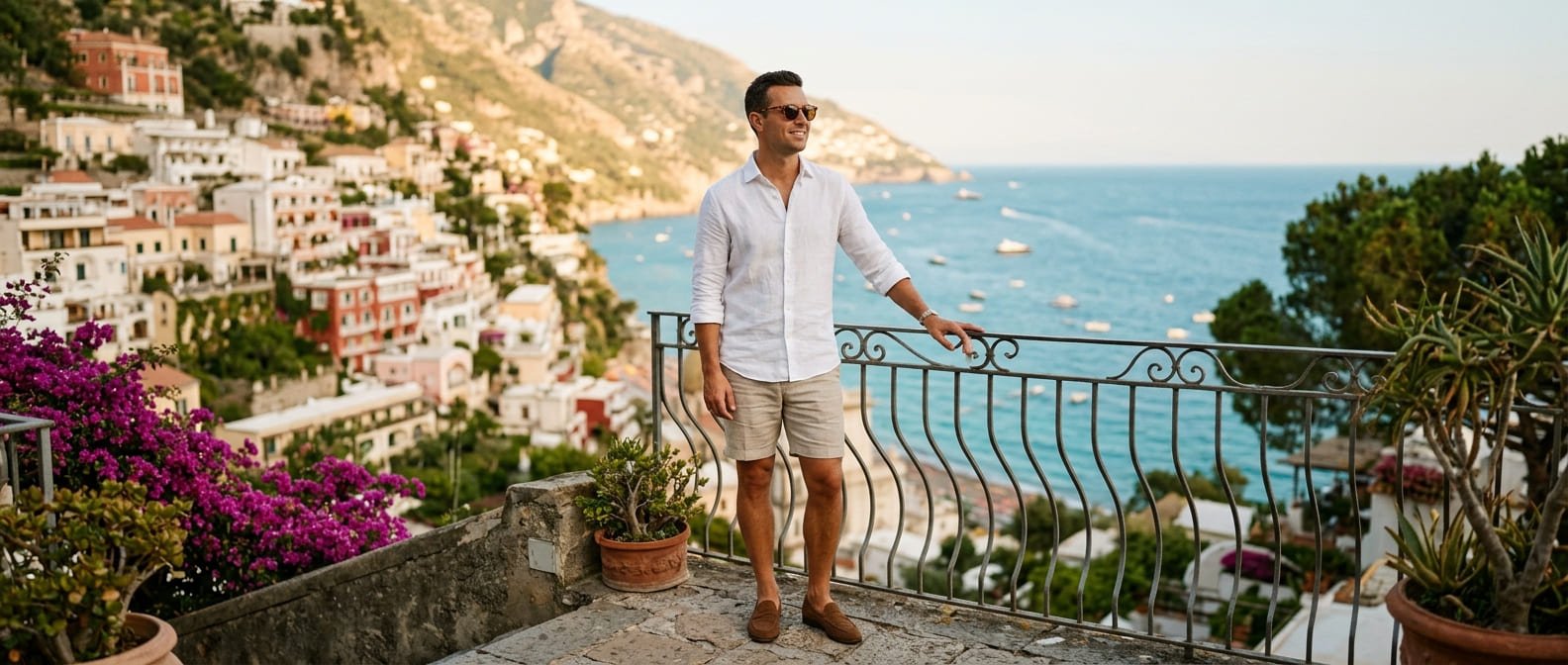
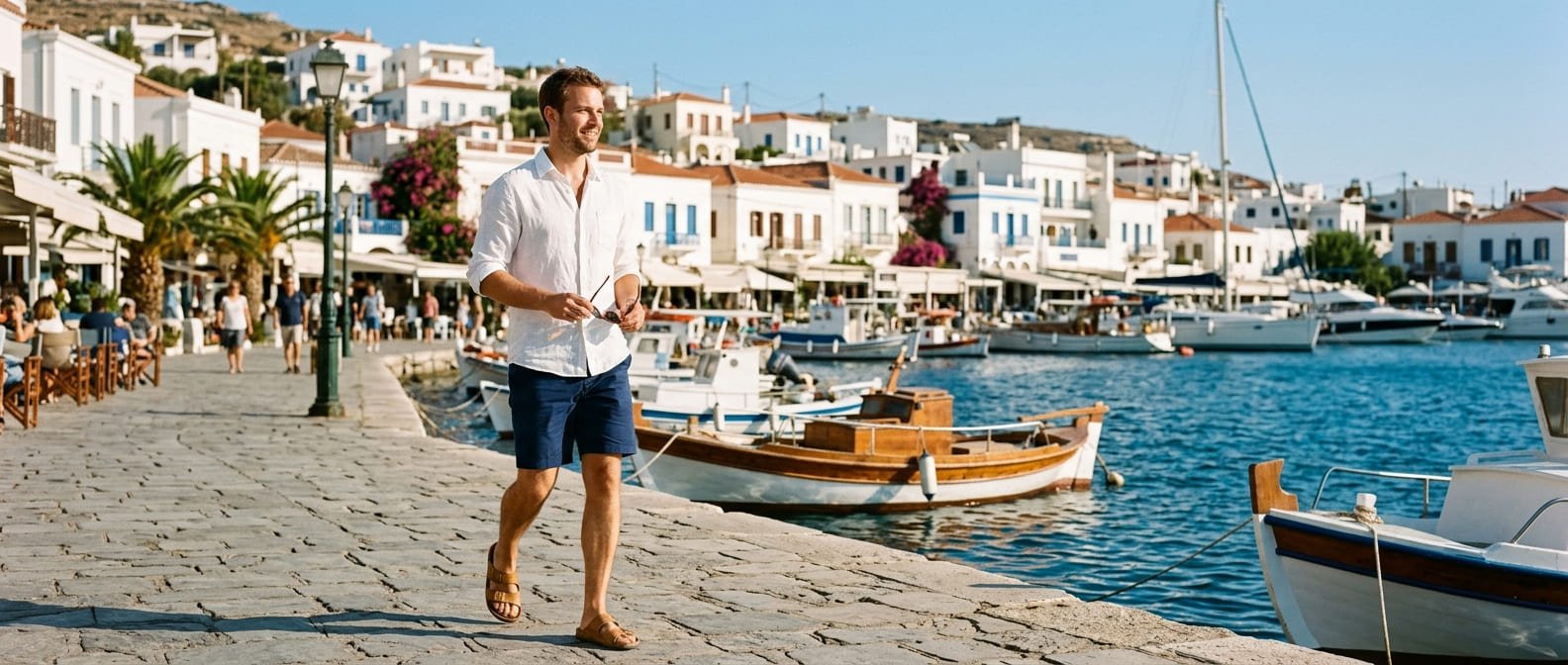
Swim shorts on the sand, then a linen or camp-collar shirt, tailored shorts and espadrilles or leather sandals for the promenade. Always put a top on before leaving the beach.
5. The northern Spain outfit
In San Sebastián, Bilbao or Santiago de Compostela, plan for rain. A light knit, dark jeans or chinos, a waterproof jacket and water-resistant leather trainers or boots.
6. The winter city break
Madrid, Granada and the interior are cold in winter. Wear a wool coat, a scarf, a merino jumper, dark trousers and leather boots. On the coast, a lighter jacket is usually enough.
7. The tapas crawl
You’ll stand at bars and walk between them. Choose comfortable leather shoes, dark jeans or chinos and a shirt or knit. Smart casual is right everywhere.
8. The festival or fair
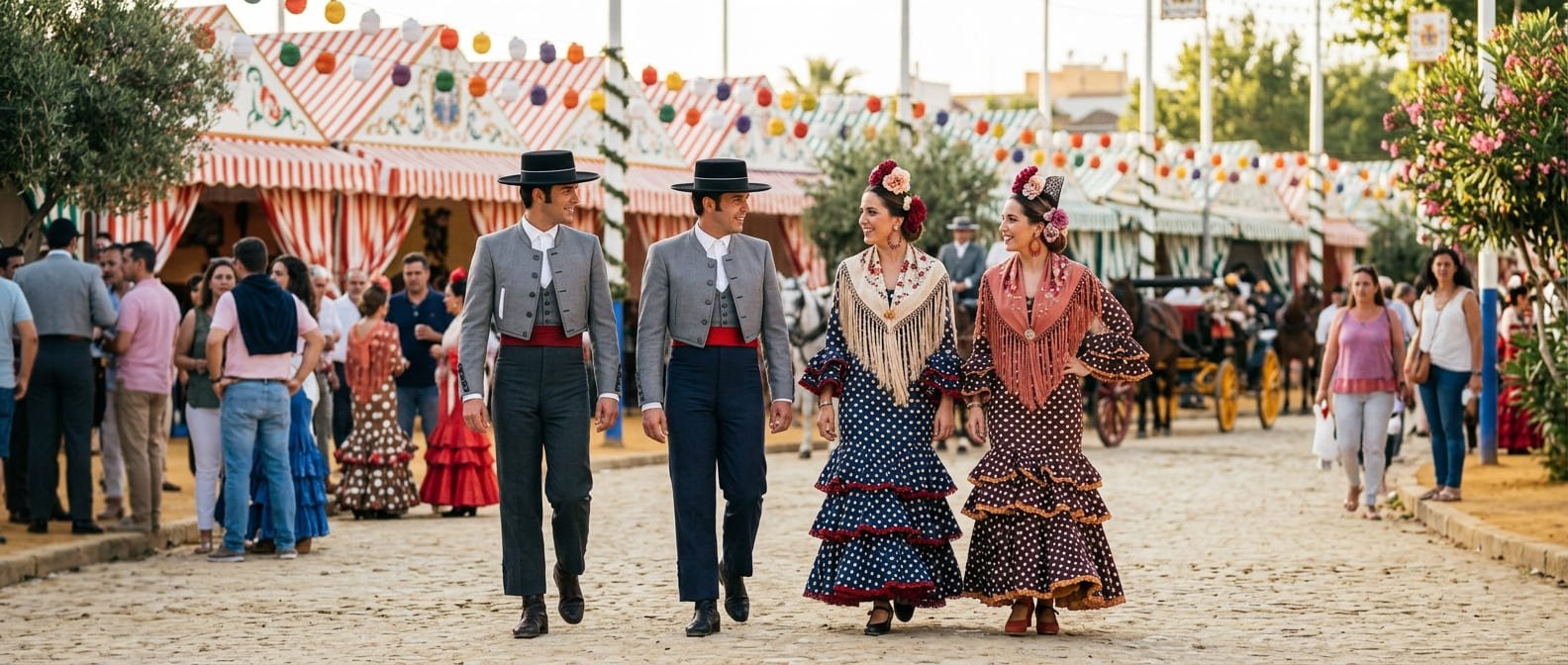
At spring fairs in Andalusia, many men wear a suit or a jacket and tie, and women wear flamenco dresses. Visitors aren’t expected to wear costume, but smart clothes show respect. At Pamplona’s San Fermín, everyone wears white with a red neckerchief and sash. Read more in our guide to traditional Spanish clothing.
What to wear in Spain by season
Spring (March to May)
Mild and changeable. Pack T-shirts, a shirt or two, a light knit, a jacket or overshirt and chinos or jeans. Evenings can be cool, and the north is often wet.
Summer (June to August)
Hot almost everywhere, and extreme in the south and centre. Choose linen and cotton, pale colours, tailored shorts, a hat, sunglasses and high-factor sun cream. Plan sightseeing for the morning and evening, as locals do, and rest in the shade after lunch.
Autumn (September to November)
September is still summer in much of Spain. By November, you’ll want knitwear and a jacket. Pack layers and a light waterproof.
Winter (December to February)
Mild on the Mediterranean and in the Canaries; cold in Madrid and inland; wet in the north. Bring a coat, knitwear, a scarf and proper shoes or boots.
Colours for Spain outfits
Light colours reflect heat in summer. Navy, white and beige are the safest base, and one warm accent, such as terracotta or olive, suits the Spanish landscape.
Shoes for Spain
You’ll walk a great deal, often on cobbles, hills and polished stone.
- Leather trainers: the best all-round choice for cities.
- Suede or leather loafers: ideal for evenings and warm days.
- Espadrilles: a Spanish classic for summer, best for short walks and evenings.
- Leather sandals: for beach towns and very hot days.
- Leather boots: for winter in Madrid and the north.
Break shoes in before you travel. For more detail, see our guide to walking shoes for Europe.
What to wear in Spain by city
Madrid
The capital is smart and urban. Men wear neat chinos or dark jeans, shirts or knits and leather shoes or clean trainers. Summers are very hot and dry; winters are cold, so a proper coat is essential from December to February.
Barcelona
A mix of city and beach. Dress in relaxed, stylish clothes for the streets, and keep swimwear for the sand. Evenings by the sea can be breezy, so carry a light layer.
Seville and Andalusia
Heat rules everything from June to September. Choose pale linen, a hat and breathable shoes, and plan your day around the cooler hours. Locals dress elegantly in the evening, so pack one smarter outfit.
Valencia
Sunny, relaxed and coastal. Light shirts, tailored shorts and loafers or espadrilles work for most of the year.
San Sebastián, Bilbao and the north
Cooler and often wet, with some of Spain’s best restaurants. Smart casual clothes, a waterproof jacket and water-resistant shoes are the right choice.
Granada and the mountains
Hot days and cool nights, with hills and cobbles around the old town. Wear comfortable shoes with grip and bring a layer for the evening.
What to wear in Spain for different activities
- Museums and galleries: smart casual, comfortable shoes and a light layer for air conditioning.
- A flamenco show: smart casual at least: long trousers, a shirt and leather shoes.
- A football match: casual clothes, a team scarf if you have one and layers for evening kick-offs in cooler months.
- Hiking and long-distance walks: breathable layers, a hat, trail shoes and a waterproof, especially in the north.
- Markets and tapas bars: neat, casual clothes and shoes you can stand in.
- Beach clubs: swim shorts with a linen shirt and sandals; some clubs expect a shirt and proper footwear at the bar.
Fabrics that work in Spain
- Linen: the coolest choice for the long, hot summer.
- Cotton and cotton-linen blends: easy to wash and crease less than pure linen.
- Light merino knits: useful for spring, autumn and cool evenings.
- Wool coats and knitwear: for winter in Madrid and the interior.
- Avoid: polyester shirts and heavy denim in the summer heat.
Mistakes first-time visitors make
- Packing only for heat. Spring and autumn evenings can be cool, and the north is wet.
- Dressing too casually at night. A collared shirt and long trousers fit in far better at dinner.
- Sightseeing at midday in summer. Follow local habits: early starts, a long lunch and late evenings.
- Forgetting church visits. Keep a light shirt or trousers handy.
- Wearing new shoes. Old towns are hard on feet.
Dress codes and customs to know
- Churches and cathedrals: many ask visitors to cover their shoulders, and some refuse very short shorts or beachwear. Carry a light shirt or wear trousers on church days.
- Swimwear in town: several cities and resorts, including Barcelona and parts of the Balearic Islands, can fine people for walking around in swimwear or without a shirt away from the beach.
- Restaurants: smart restaurants expect long trousers and a collared shirt in the evening.
- Late hours: shops in smaller towns may close in the afternoon and reopen in the evening, and dinner is late, so plan a change of clothes.
- Sun: the Spanish sun is strong from late spring to early autumn. A hat and sun cream are essentials, not extras.
What boys should wear in Spain
Boys aged 8 to 16 need cool, comfortable clothes for long days out and one smarter outfit for dinner.
- T-shirts and polos in light colours
- Tailored or casual shorts, plus one pair of light trousers
- A collared shirt for restaurants and church visits
- Comfortable trainers and sandals
- Swimwear, a cap, sunglasses and sun cream
- A hoodie or light jumper for evenings and air conditioning
- Light-blue polo shirt Top
- Navy chino shorts Shorts
- White trainers Shoes
- Cap Accessory
What kids should wear in Spain
Young children need sun protection and plenty of spares.
- Light cotton tops and shorts
- A wide-brimmed sun hat and UV swimwear
- Sandals with straps and comfortable trainers
- A light cardigan for evenings
- A spare outfit in your day bag
Spanish families eat late, and children are welcome in restaurants in the evening. A neat outfit and a light layer help them stay comfortable through a long dinner.
A one-week Spain packing list for men
- Three T-shirts and two linen or cotton shirts
- One knitted polo
- One light knit or overshirt
- Chinos and one pair of light trousers
- One or two pairs of tailored shorts (late spring to early autumn)
- Dark jeans (spring, autumn and winter)
- A light jacket, or a coat in winter
- Leather trainers and loafers or espadrilles
- Swim shorts, sunglasses, a hat and sun cream
- A small cross-body bag
For a full checklist, read our guide to what to pack for Europe.
What to wear in Spain in the evening
Spanish evenings start late. Dinner before nine is early, and families with children are still out at eleven in summer. The evening walk, the paseo, is a daily habit, and people dress for it.
For men, the easy answer is a fresh shirt, long trousers and leather shoes or clean leather trainers. You rarely need a jacket or tie outside formal restaurants, but beachwear, sports kit and flip-flops look out of place. In winter, add a wool coat and a scarf in Madrid and the interior. If you plan one special dinner, an unstructured navy jacket over a shirt is enough almost anywhere.
Laundry and packing light
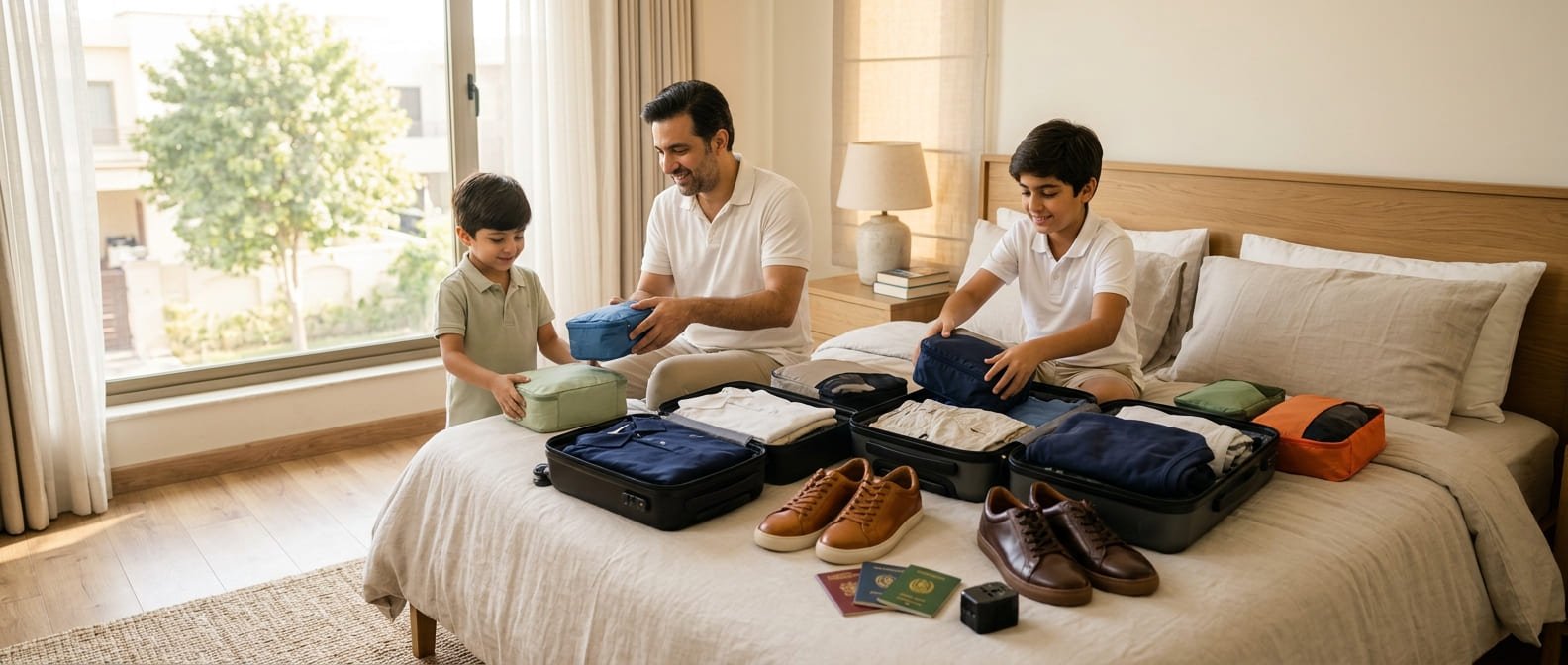
You can travel around Spain for two weeks with one week of clothes. Many apartments have a washing machine, most towns have a self-service launderette, and linen and light cotton dry overnight in the warm air. Roll clothes rather than fold them, wear your heaviest shoes on travel days and keep one clean shirt in reserve for the evening.
What not to wear in Spain
| Avoid | Why | Wear instead |
|---|---|---|
| Flip-flops in the city | Too casual and uncomfortable on cobbles | Leather trainers, loafers or sandals |
| Swimwear away from the beach | Disrespectful and sometimes fined | A shirt and shorts over swimwear |
| Athletic shorts and gym tops | Stand out in Spanish cities | Tailored shorts and a shirt or polo |
| Heavy, dark fabrics in summer | Very hot in the south and centre | Pale linen and cotton |
| Baggy, creased clothes | At odds with neat Spanish style | Fitted, pressed pieces |
| No layer in the evening | Air conditioning and night breezes | A light knit or overshirt |
For more warm-weather ideas, see our European summer outfits for men, and explore other countries in our European fashion guides.
Frequently asked questions
Neat, fitted clothes: chinos or dark jeans, a shirt, polo or light knit and leather trainers or loafers. Choose linen and cotton in warm months, and pack one smarter outfit for evenings.
Yes, especially in summer and on the coast. Choose tailored shorts with a shirt or polo. In city centres, churches and smart restaurants, light trousers are often the better choice.
Light, breathable fabrics such as linen and cotton in pale colours, a hat, sunglasses and sun cream. Add a light layer for air-conditioned places and cooler evenings.
It depends on the region. Madrid and inland cities need a wool coat, knitwear and boots. The Mediterranean coast is mild, so a lighter jacket is enough. The north is wet, so bring a waterproof.
Leather trainers for walking, loafers or espadrilles for evenings and sandals for the beach. Avoid flip-flops in cities and brand-new shoes on a walking holiday.
Many churches and cathedrals ask visitors to cover their shoulders and avoid very short shorts and beachwear. Carry a light shirt or wear trousers when you plan to visit.
A little smarter than during the day: long trousers, a collared shirt or fine knit and leather shoes. Dinner is late, and evenings out are a social occasion.
Relaxed, stylish city clothes: a linen or cotton shirt, chinos or tailored shorts and leather trainers or loafers. Keep swimwear for the beach, and carry a light layer for breezy evenings.
The lightest linen and cotton you have, in pale colours, with a hat, sunglasses and breathable shoes. Sightsee early and late, and pack a smarter outfit for the evening.
From October to April, yes. Bring a light jacket for the coast and the south, and a warm coat for Madrid, the interior and the north in winter. In summer, a light layer is enough for air conditioning and cooler evenings.