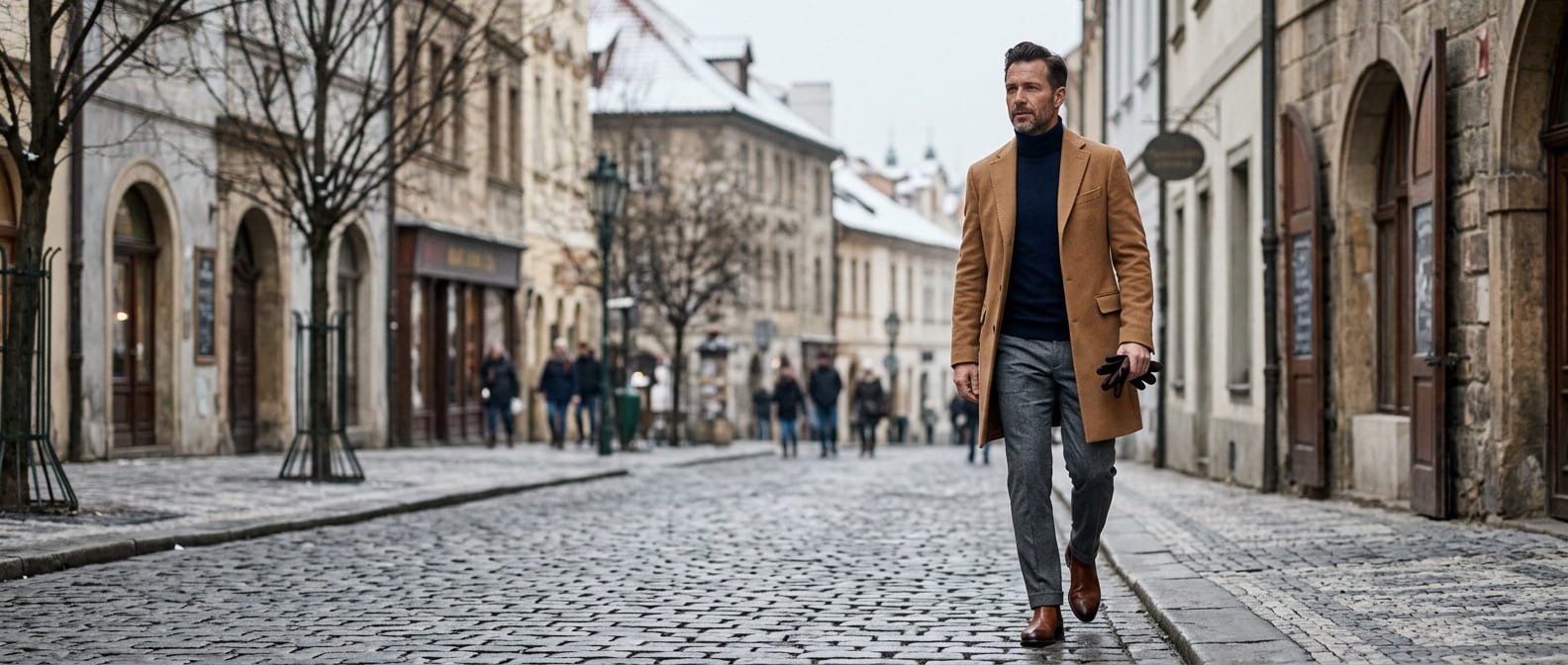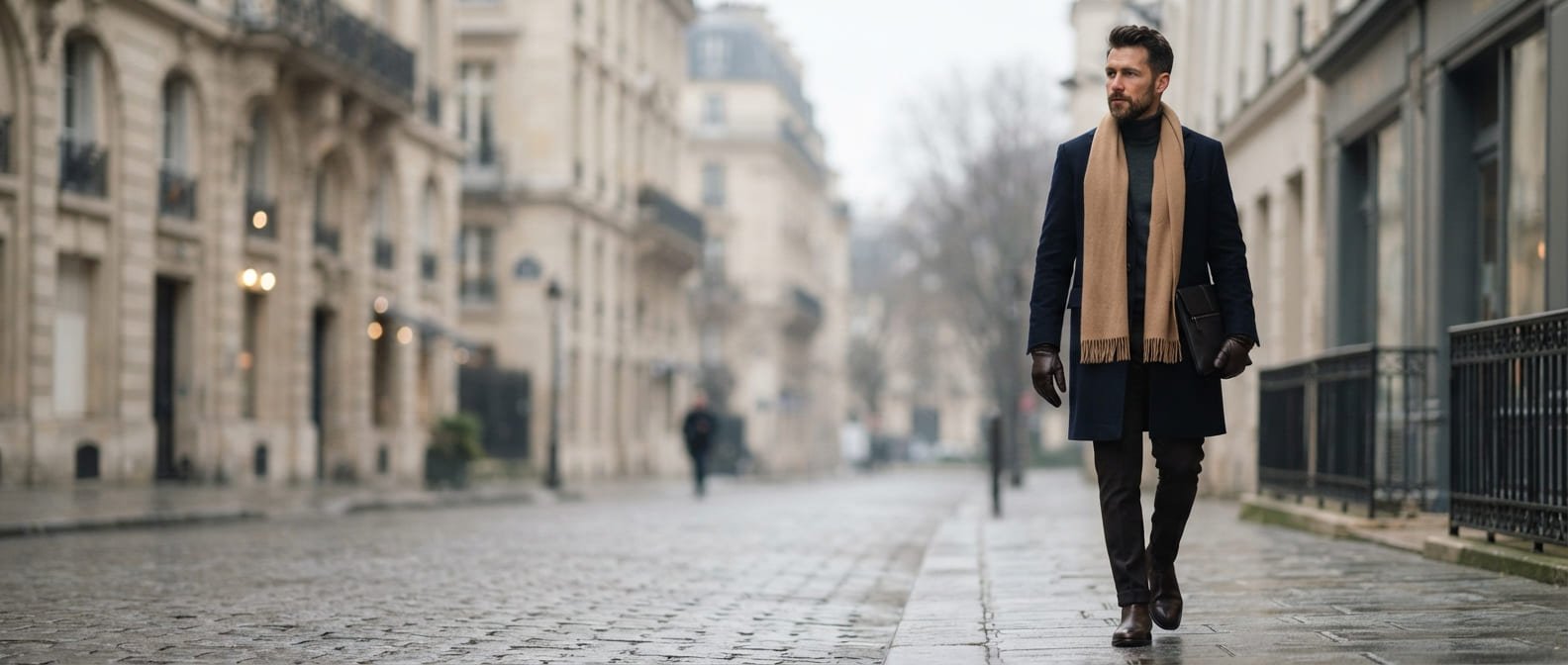




Winter outfits for men have one job that summer clothes never face: they must keep you warm outdoors, comfortable indoors and presentable in both. Get it wrong and you spend four months either shivering at a bus stop or sweating on a heated train. Get it right and winter becomes the easiest season to dress well, because coats, knitwear, boots and scarves do most of the work for you. This guide covers the best winter outfits for men for work, weekends, evenings and travel, explains how to layer properly, and adds practical advice for boys and kids, all without a single brand name.
Winter outfits for men: the quick answer
- Layer in three steps: a thin base, a warm middle and a protective coat.
- Choose natural fibres: wool, merino, cashmere blends, flannel and corduroy hold warmth and breathe.
- Buy one good coat: it’s the piece people see most from November to March.
- Wear proper boots or weatherproof shoes: cold, wet feet ruin any outfit.
- Keep to dark, rich colours: navy, charcoal, camel, olive, brown and burgundy all work together.
- Use accessories: a scarf, gloves and a hat add more warmth per gram than anything else.
- Fit matters more in winter: leave room for layers, but avoid bulk.
How layering works
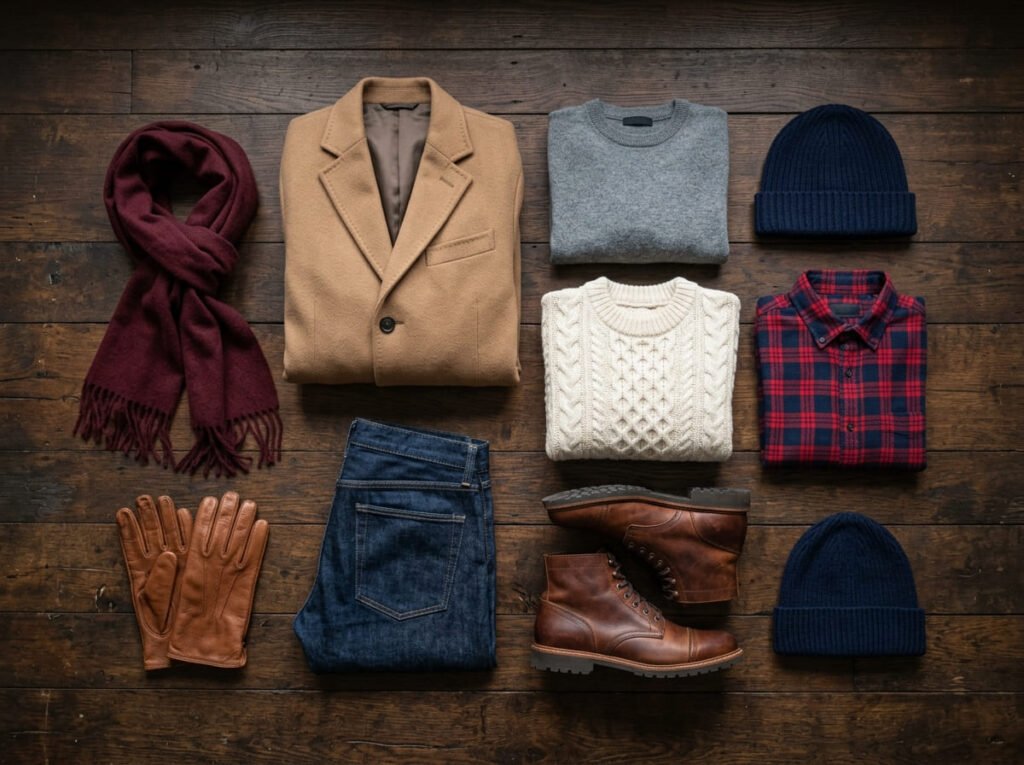
Layering is the idea behind all good winter clothes for men. Several thin layers trap more warm air than one thick one, and you can remove a layer when you step indoors.
The base layer
This sits next to your skin. A cotton T-shirt is fine for a city day. For long periods outdoors, a thin merino or thermal top is warmer and dries faster. In very cold weather, add thermal leggings under trousers.
The middle layer
This provides most of the warmth: a jumper, cardigan, fleece, quilted gilet or overshirt. Wool is the classic choice. A fine merino crew neck fits under a blazer, while a chunky cable knit works as the main feature of a weekend outfit.
The outer layer
Your coat or jacket blocks wind, rain and snow. A wool overcoat suits dry, cold cities. A padded jacket or parka is better for wet, windy or freezing conditions.
| Temperature | Base | Middle | Outer |
|---|---|---|---|
| 10 to 15 °C | T-shirt or shirt | Light knit or overshirt | Light jacket or trench coat |
| 5 to 10 °C | Shirt or long-sleeved T-shirt | Merino or lambswool jumper | Wool coat or padded jacket |
| 0 to 5 °C | Thermal or long-sleeved top | Thick jumper or fleece | Overcoat, parka or padded jacket, plus scarf and gloves |
| Below 0 °C | Thermal top and leggings | Thick knit plus gilet or fleece | Insulated parka, hat, scarf, lined gloves |
Winter wardrobe essentials for men
You don’t need many pieces. You need the right ones.
Coats and jackets
- Wool overcoat: the smartest option, in navy, charcoal or camel. It goes over a suit and over jeans.
- Padded or puffer jacket: light, very warm and practical for daily life.
- Parka: long, hooded and weatherproof, for the coldest and wettest days.
- Peacoat: short, double-breasted and neat, a good coat for smart casual outfits.
- Waxed or field jacket: useful for mild, wet winters and countryside weekends.
Knitwear
- Merino crew neck or roll neck: thin, warm and smart enough for the office.
- Chunky jumper: cable knit or fisherman style for weekends.
- Cardigan: a relaxed replacement for a blazer.
- Quarter-zip or zip-neck knit: easy to wear over a shirt or T-shirt.
Shirts and tops
- Flannel and brushed cotton shirts: soft, warm and good for layering.
- Oxford shirts: the reliable smart casual base.
- Long-sleeved T-shirts and thermals: invisible warmth.
Trousers
- Dark jeans: heavier denim is warmer.
- Wool or flannel trousers: the warmest smart option.
- Corduroy trousers: soft, warm and full of texture.
- Heavy chinos: an everyday choice in navy, olive or brown.
Footwear
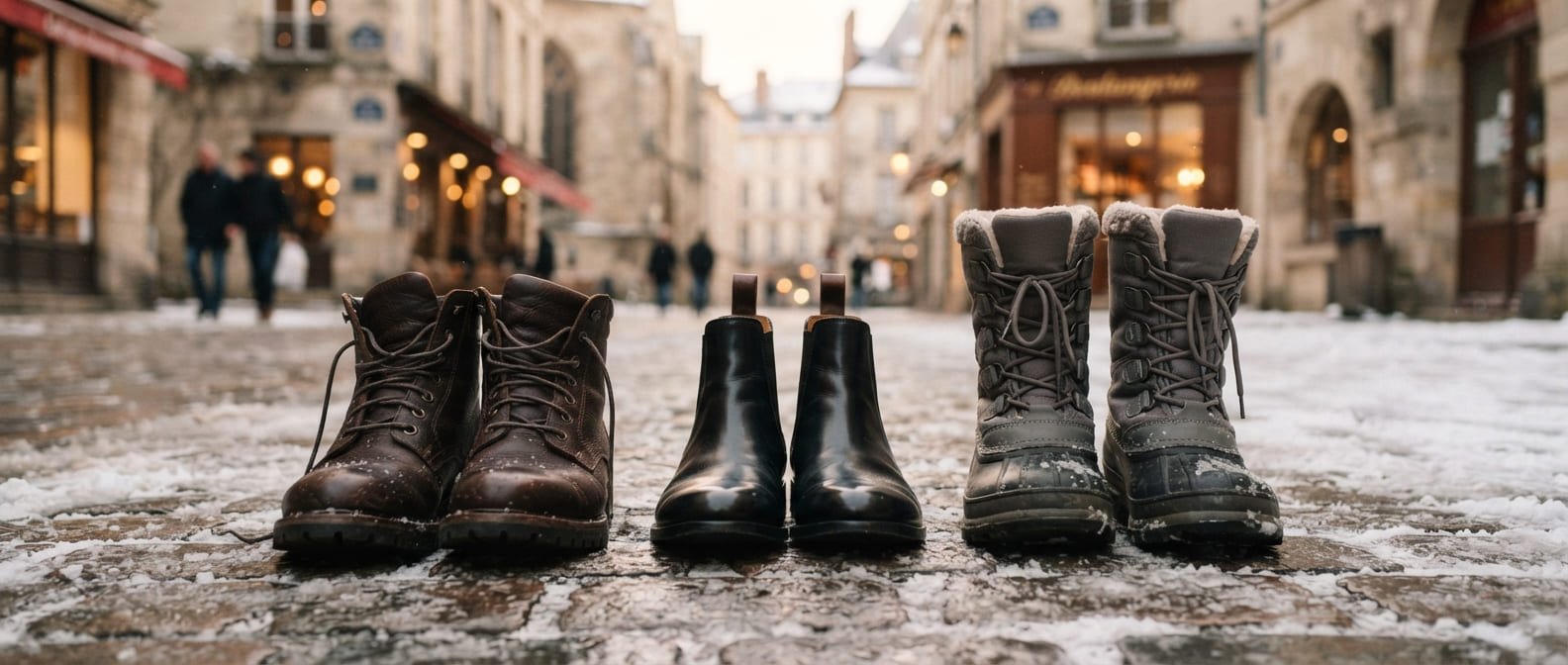
- Leather boots: Chelsea, chukka or lace-up styles with rubber soles.
- Weatherproof trainers: leather rather than canvas.
- Insulated boots: for snow and ice.
Accessories
- Wool scarf, lined gloves and a beanie.
- Wool socks: the cheapest upgrade in winter.
10 winter outfits for men
1. The everyday city outfit
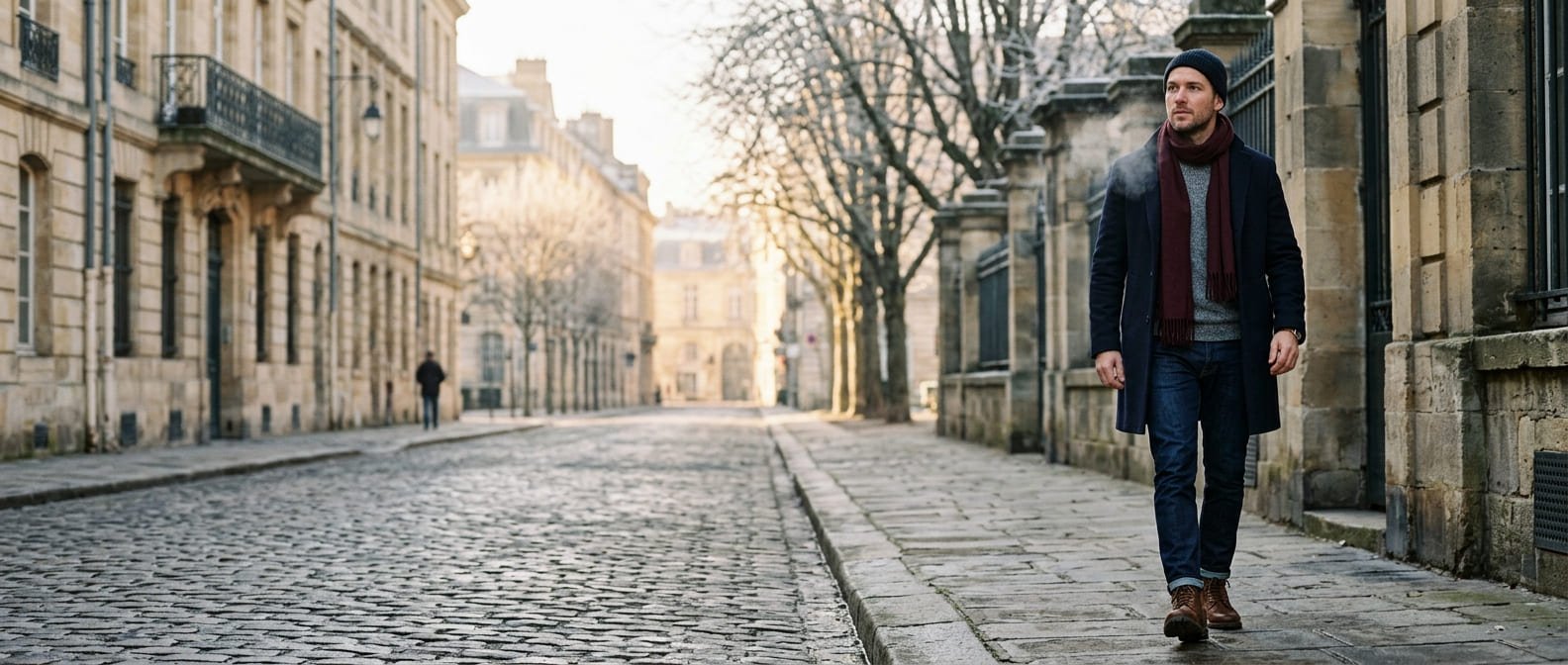
A navy wool coat over a grey crew-neck jumper, dark jeans and brown leather boots. Add a scarf in a contrasting colour. It suits the commute, the shops and a casual lunch.
- Navy wool overcoat Coat
- Grey merino crew neck Knit
- Dark indigo jeans Trousers
- Brown leather boots Shoes
- Burgundy wool scarf Accessory
2. The smart office outfit
A charcoal overcoat, a fine roll neck or shirt and tie, wool trousers and black or dark brown leather shoes with rubber soles. Our guide to business casual for men covers the dress code in detail.
3. The casual weekend outfit
A padded jacket over a hoodie or sweatshirt, heavy chinos and leather trainers. This is one of the most popular winter styles for guys because it’s warm, comfortable and takes no thought.
4. The country walk outfit
A waxed or field jacket, a chunky jumper over a flannel shirt, corduroy trousers and walking boots. Bring a hat and gloves.
- Olive field jacket Jacket
- Cream cable-knit jumper Knit
- Checked flannel shirt Shirt
- Brown corduroy trousers Trousers
- Walking boots Shoes
5. The date night outfit
A dark roll neck under a wool coat, tailored trousers and Chelsea boots. It’s simple, warm and looks far smarter than the effort involved.
6. The smart casual dinner
A camel coat, a navy blazer, an Oxford shirt, grey flannel trousers and suede boots. This is the classic European winter look seen from Milan to Copenhagen.
- Camel wool coat Coat
- Navy blazer Jacket
- Light-blue Oxford shirt Shirt
- Grey flannel trousers Trousers
- Dark brown suede boots Shoes
7. The all-black outfit
A black coat, black roll neck, black jeans and black boots. Vary the textures (wool, denim, leather) so the outfit doesn’t look flat.
8. The very cold day
A thermal top, a thick jumper, a long insulated parka, lined trousers or thermal leggings under jeans, insulated boots, a beanie, a scarf and gloves. Function comes first, so keep the colours simple.
9. The winter travel outfit
A padded jacket you can compress into a bag, a merino jumper, stretch chinos and slip-on boots. For flights, see our airport outfit ideas.
10. The festive gathering
A burgundy or forest-green jumper over a shirt, dark trousers and polished boots. It looks seasonal without a novelty pattern.
Winter colours that work
Winter light is soft and grey, so deep, rich colours look best. Choose two or three neutrals and one accent.
- Navy, charcoal and grey are the safest base colours.
- Camel, brown and olive add warmth.
- Burgundy, forest green and mustard work well as accents in scarves and knitwear.
- Cream and off-white brighten dark outfits near the face.
The best fabrics for winter
| Fabric | Why it works | Best for |
|---|---|---|
| Wool | Warm, breathable, resists odour | Coats, jumpers, trousers |
| Merino | Fine, soft, warm for its weight | Base layers, thin knits, socks |
| Cashmere blends | Very soft and warm | Scarves, jumpers |
| Flannel | Brushed surface traps warmth | Shirts, trousers |
| Corduroy | Thick, soft and textured | Trousers, overshirts |
| Down and synthetic padding | Very warm and light | Jackets, gilets |
| Fleece | Warm, light and quick-drying | Middle layers |
| Leather | Blocks wind | Boots, gloves, jackets |
Avoid thin cotton as your only layer outdoors. It holds moisture and feels cold once damp.
Shoes and boots for winter
Cold travels up from the ground, so soles matter.
- Choose rubber soles with a tread. Smooth leather soles slip on wet or icy pavements.
- Wear leather or treated suede rather than canvas.
- Protect your shoes with a waterproofing spray or wax before the first wet day.
- Size for wool socks, and don’t lace boots so tightly that they restrict circulation.
- Dry shoes slowly at room temperature, not on a radiator.
If you’ll walk a lot on winter city breaks, our guide to walking shoes for Europe covers boots and weatherproof options. For snow, ice and slush, our guide to winter boots for men compares insulated, waterproof and snow boots.
Accessories that add real warmth
- Scarf: closes the gap at the collar where warm air escapes.
- Beanie or flat cap: an uncovered head feels cold quickly.
- Gloves: leather lined with wool or fleece for the city, insulated gloves for the cold.
- Wool socks: warmer and drier than cotton. For how to choose each piece, see our guide to winter accessories for men.
- Gilet: a thin quilted gilet under a coat adds warmth without bulky sleeves.
How to stay warm without looking bulky
- Keep the thinnest layers closest to the body.
- Choose fine merino rather than thick cotton under tailoring.
- Wear a gilet instead of a second jumper.
- Pick a coat that fits over a jumper, and check that you can lift your arms.
- Balance proportions: a bulky jacket looks better with slimmer trousers.
- Use a longer coat. Covering the thighs makes a large difference to warmth.
Winter outfits for different climates
Winter is not the same everywhere, so the best mens winter clothes depend on where you live.
- Mild and wet (the UK, Ireland, the Netherlands, northern France): prioritise a waterproof or water-resistant coat, layers and weatherproof shoes. Temperatures are rarely extreme, but the damp makes it feel colder.
- Cold and dry (Germany, Poland, central Europe, the Alps): wool coats, thick knitwear, scarves and lined boots.
- Very cold (Scandinavia, the Baltics): insulated parkas, thermals and proper winter boots. Locals favour dark, simple, functional clothes.
- Mild and sunny (southern Spain, southern Italy, Greece): a light wool coat or jacket and a jumper are usually enough, with a warmer layer for evenings.
For more on regional style, read our guide to European men’s fashion.
Winter outfits for boys
Teenage boys want to look like their friends, and parents want them to be warm. The answer is usually layers they’ll actually wear.
- A padded jacket or parka with a hood, in black, navy or olive.
- Hoodies and sweatshirts as the middle layer.
- Dark jeans, cargo trousers or joggers.
- Leather trainers or boots with grip.
- A beanie they like enough to keep on.
- Black padded jacket Jacket
- Grey hoodie Layer
- Dark jeans Trousers
- White leather trainers Shoes
Winter outfits for kids
Young children lose heat faster than adults and spend more time on the ground, so waterproofing matters as much as warmth.
- A waterproof, insulated coat with a hood and reflective details.
- Thermal or long-sleeved base layers.
- Fleece or knitted jumpers.
- Lined or waterproof trousers for wet and snowy days.
- Insulated, waterproof boots that they can pull on themselves.
- Mittens (warmer than gloves), a hat that covers the ears and a snood instead of a long scarf.
- Spare gloves and socks in the bag.
Check children regularly: if the back of the neck is sweaty, remove a layer.
Winter outfits for men over 40, 50 and beyond
Style doesn’t change much with age, but priorities do. Comfort, warmth and fit become more important, and loud trends matter less.
- Choose a well-cut wool coat that reaches mid-thigh or the knee.
- Wear fine merino or lambswool knitwear instead of thick, shapeless jumpers.
- Pick trousers with a slightly higher rise, in flannel or corduroy.
- Invest in good boots with cushioned insoles and grip.
- Keep colours simple: navy, grey, camel and brown, with one accent.
Common winter style mistakes
| Mistake | Why it fails | Do this instead |
|---|---|---|
| One thick layer | No way to adjust indoors | Three thinner layers |
| Canvas shoes in the rain | Wet, cold feet | Leather shoes or boots with rubber soles |
| A coat that’s too tight | No room for knitwear | Try coats on over a jumper |
| Cotton socks | Hold moisture | Wool or wool-blend socks |
| Ignoring the neck and head | Heat escapes | Scarf and hat |
| All bulk, no shape | Looks shapeless | Balance a big jacket with slimmer trousers |
| Short jacket in deep cold | Cold legs | A longer coat or parka |
How to build a winter capsule wardrobe
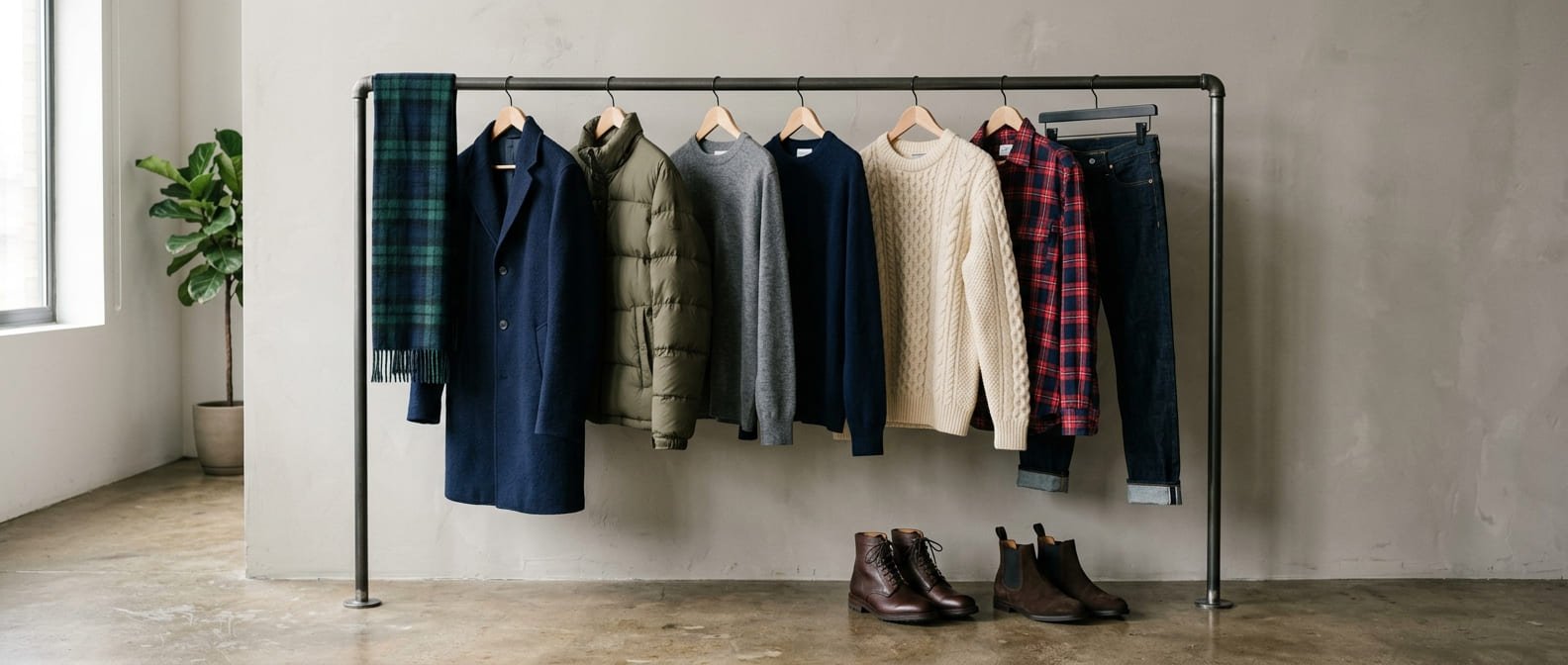
A winter capsule wardrobe is a small set of clothes that all work together. About 15 pieces cover most men from December to March.
- One wool overcoat
- One padded jacket or parka
- Two fine knits (crew neck and roll neck)
- One chunky jumper
- One cardigan or overshirt
- Three shirts (Oxford, flannel, brushed cotton)
- Two long-sleeved T-shirts or thermals
- One pair of dark jeans
- One pair of wool or flannel trousers
- One pair of corduroy or heavy chino trousers
- One pair of leather boots and one pair of weatherproof trainers
Keep everything within one palette, and each piece will go with at least three others. Our Wardrobe Planner can help you check for gaps.
Caring for winter clothes
- Air knitwear between wears, and wash it less often than you think.
- Fold jumpers instead of hanging them, so they keep their shape.
- Brush wool coats and hang them on wide hangers.
- Remove bobbles with a fabric comb.
- Clean and store everything properly in spring, with cedar or lavender to deter moths.
Frequently asked questions
Wear three layers: a thin base such as a T-shirt or thermal top, a warm middle layer such as a wool jumper, and a coat that blocks wind and rain. Add boots with rubber soles, a scarf, gloves and a hat.
The most reliable winter outfits for men combine a wool coat or padded jacket with knitwear, dark jeans or wool trousers and leather boots. A navy coat, grey jumper, dark jeans and brown boots suit almost any casual occasion.
Start with a thin, close-fitting base layer, add an insulating layer such as a jumper or fleece, and finish with a wind- and water-resistant coat. Keep thinner layers closest to the body, so you can remove one indoors.
Navy, charcoal, grey, camel, brown and olive are the most versatile. Add burgundy, forest green or mustard as accents, and use cream or off-white to brighten dark outfits.
A long insulated parka filled with down or synthetic padding is usually the warmest. A wool overcoat is smarter and warm enough for most dry city winters when you wear layers underneath.
Choose fine merino layers instead of thick cotton, wear a well-fitting wool coat, add a scarf and pick leather boots. Good fit, rich colours and texture make winter clothes look smart.
Wool, flannel and corduroy trousers are the warmest. Heavy denim and thick chinos also work, and you can wear thermal leggings underneath on very cold days.
Yes, if they're leather or weatherproof with a good rubber sole. Avoid canvas and mesh, which let in water and cold.
Two cover most needs: a smart wool coat and a practical padded jacket or parka. In mild, wet climates, add a light waterproof jacket.
Dress them in layers: a base layer, a fleece or jumper and a waterproof, insulated coat with a hood. Add waterproof boots, a hat that covers the ears and mittens, and pack spare gloves and socks.