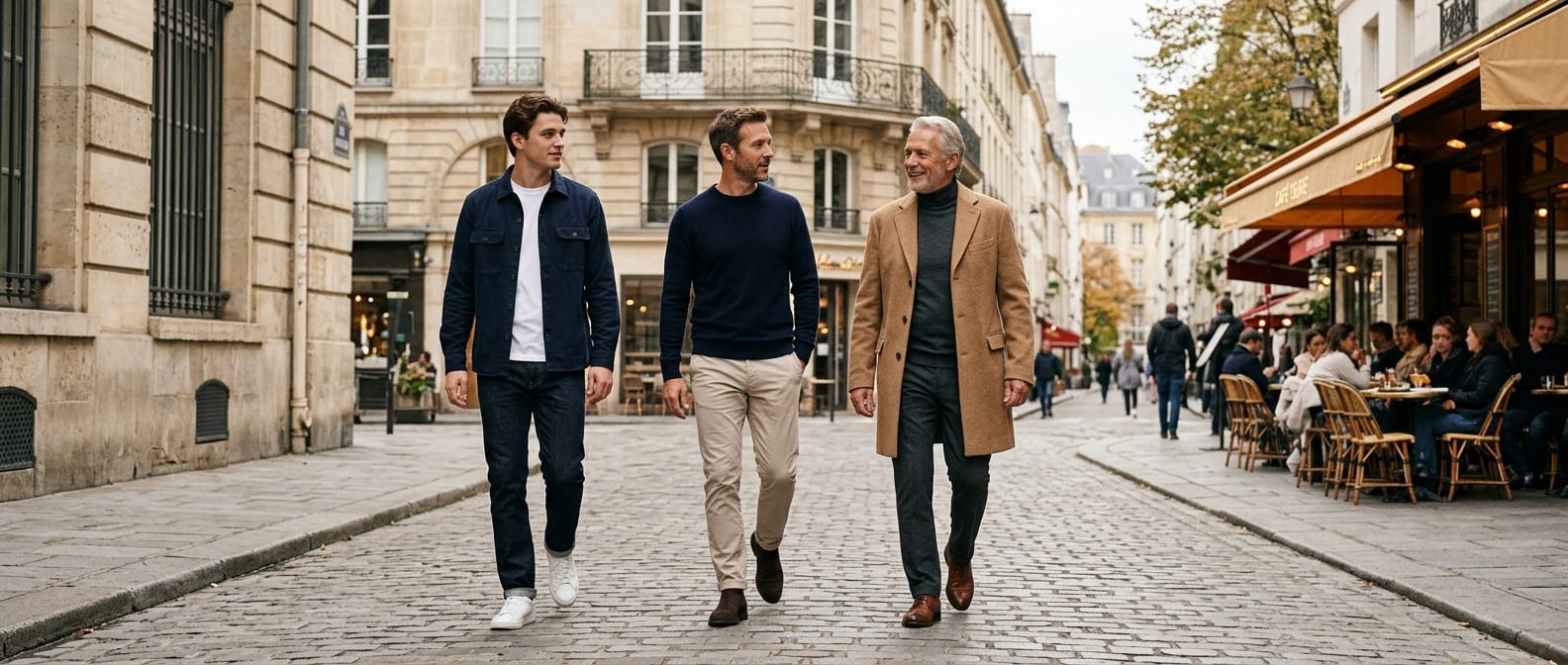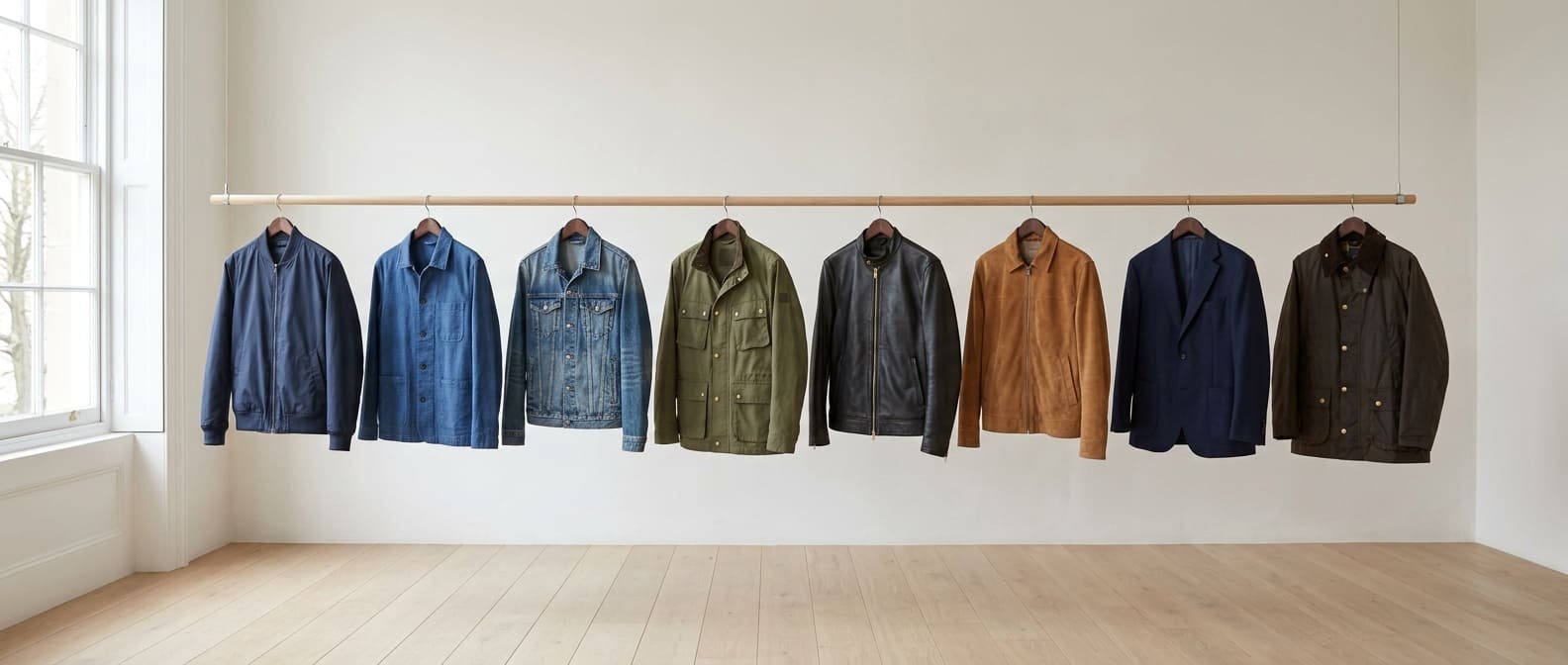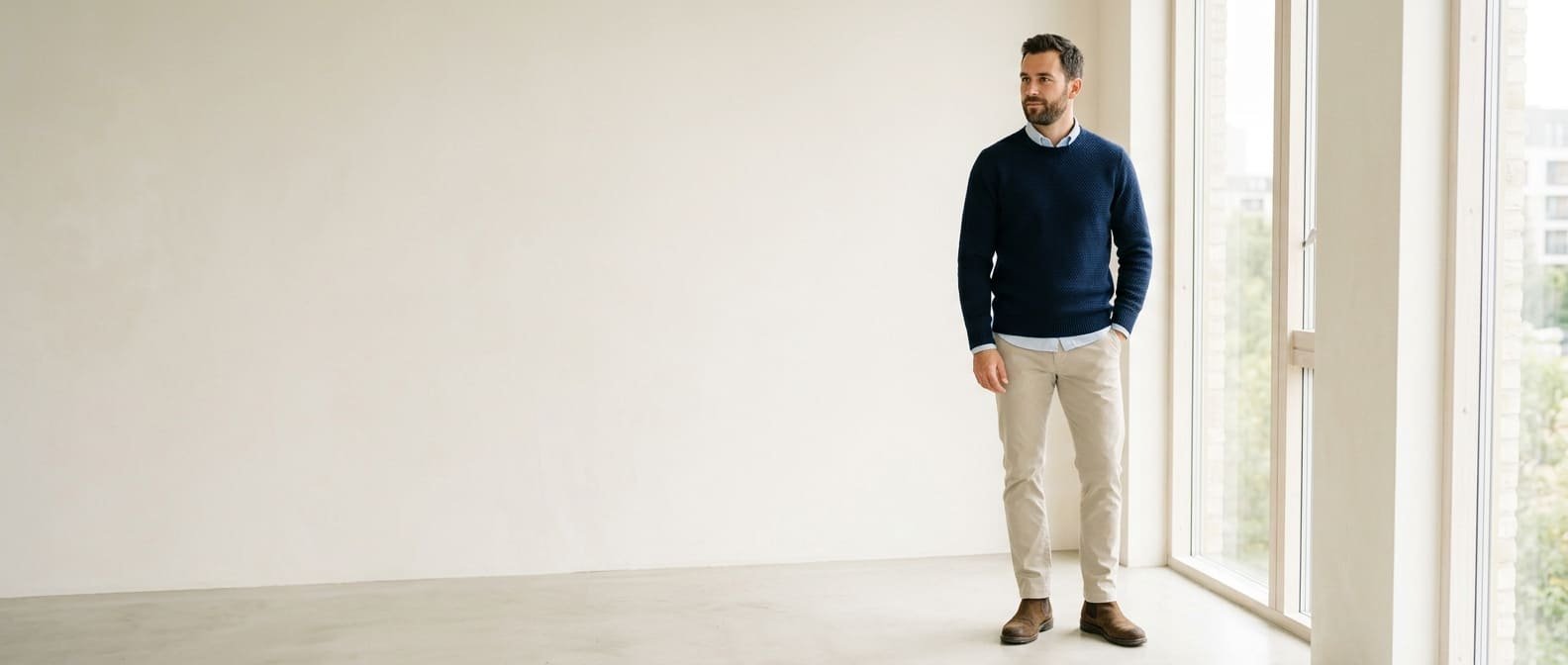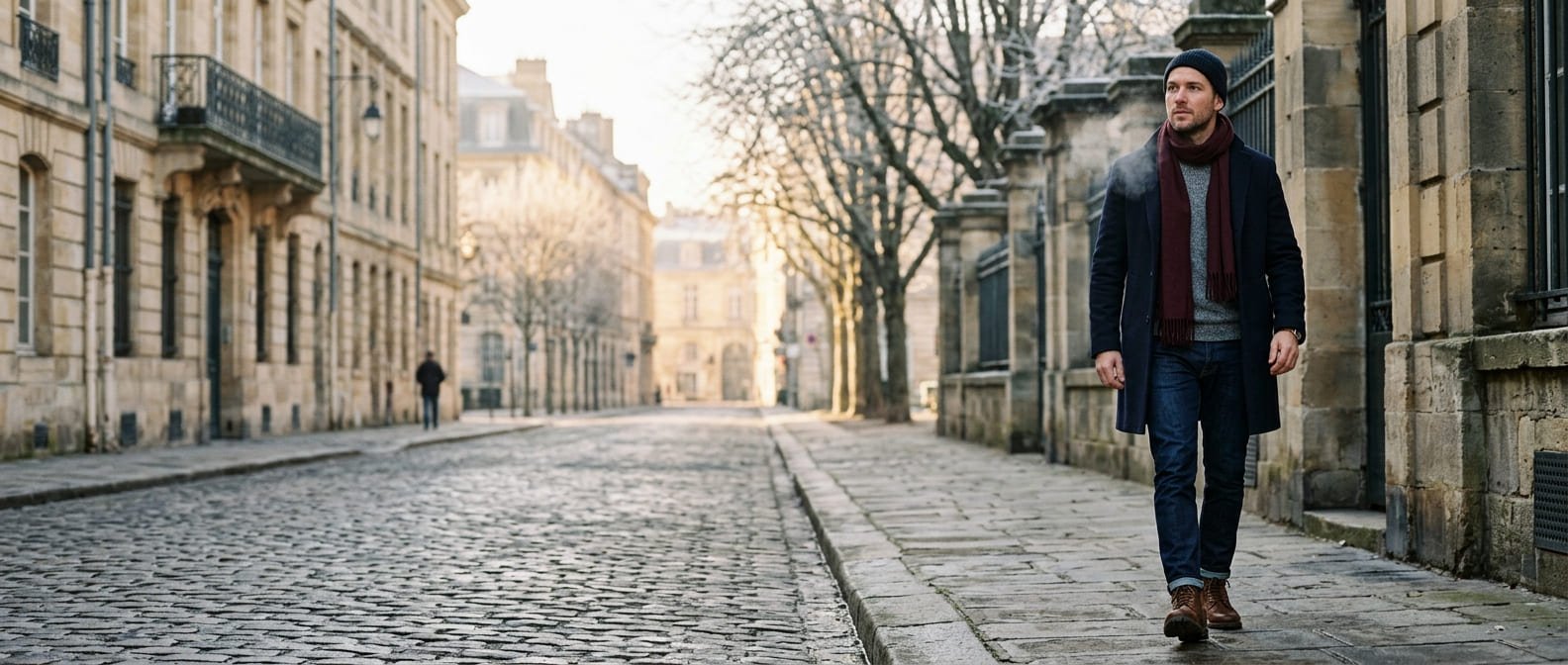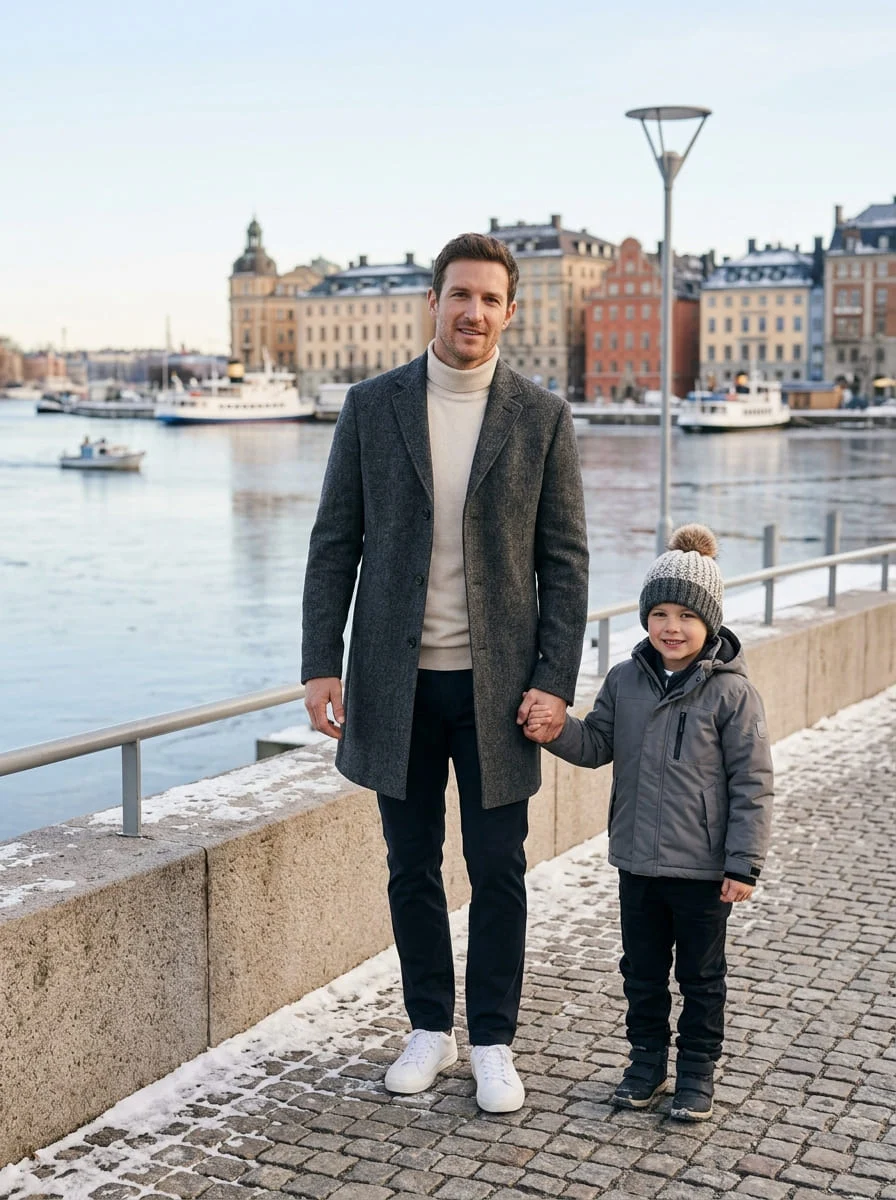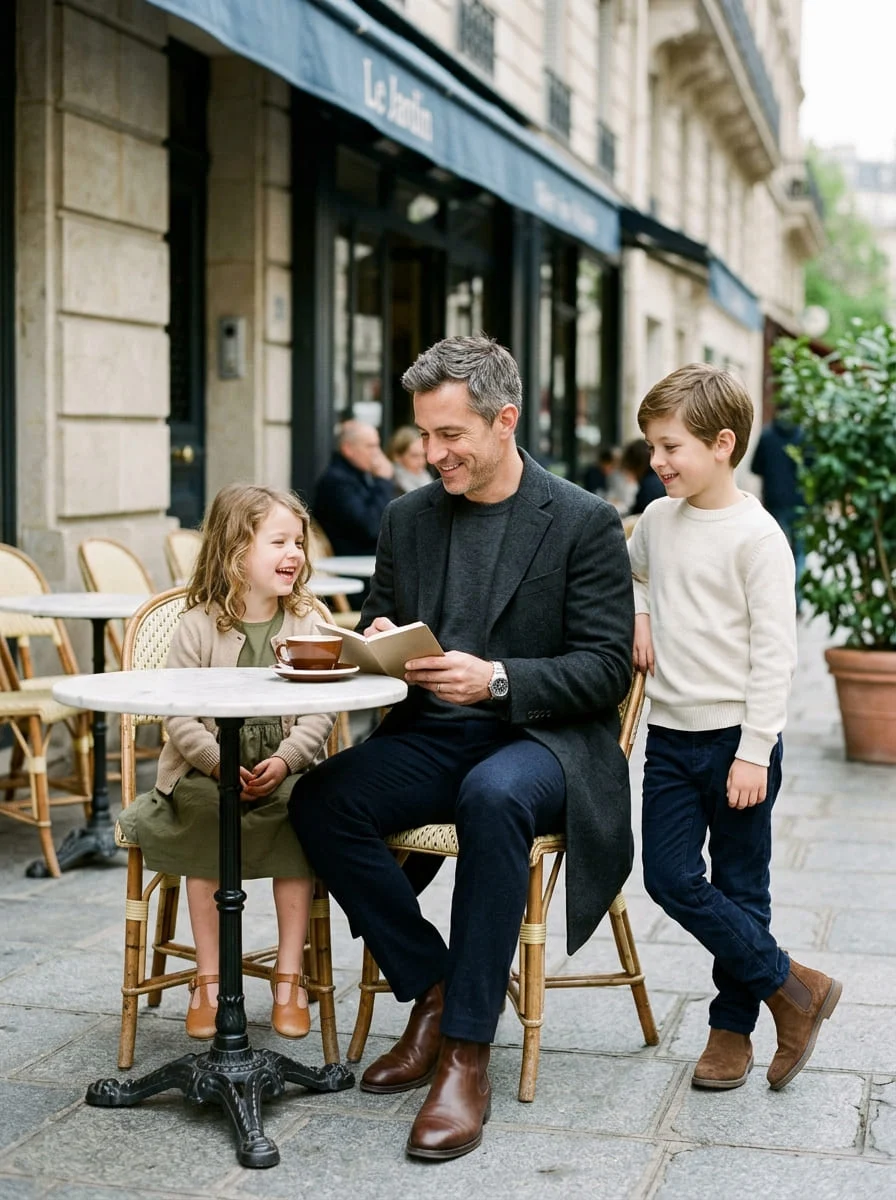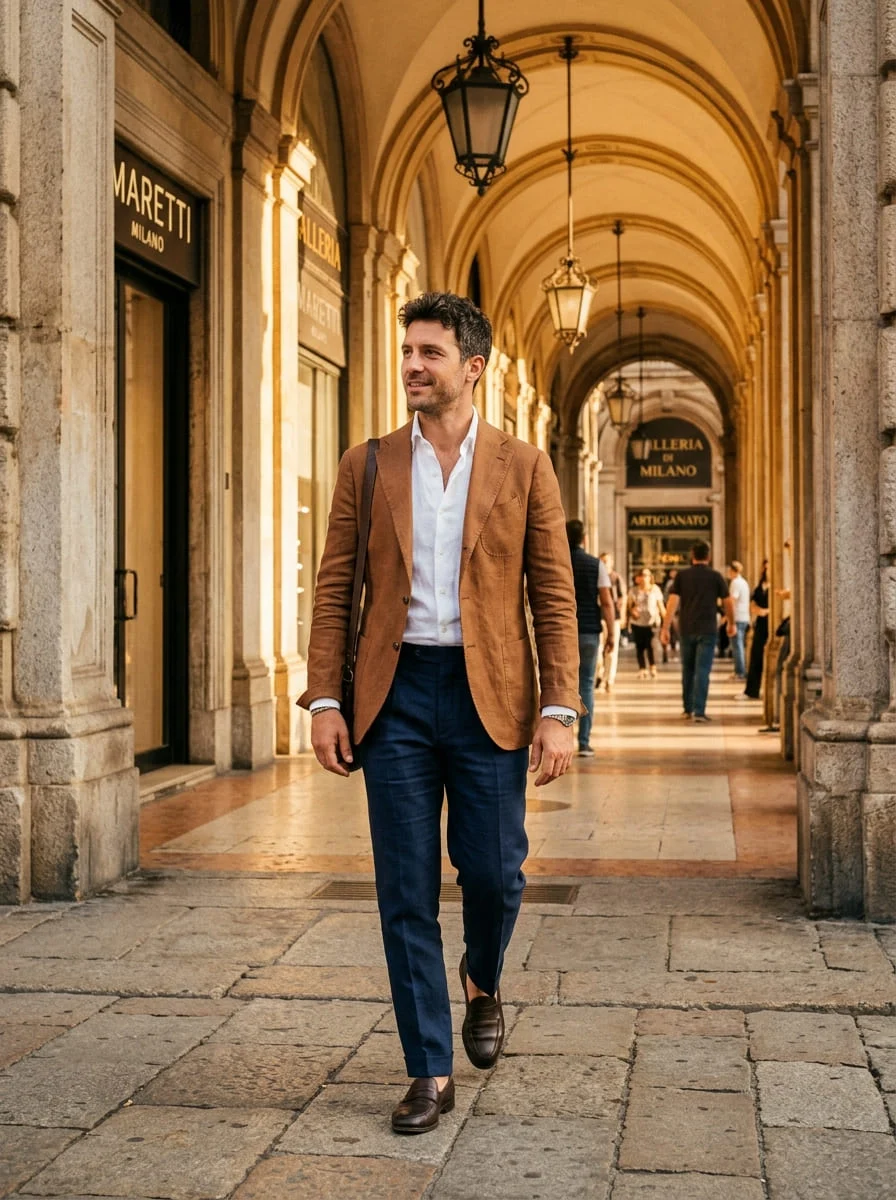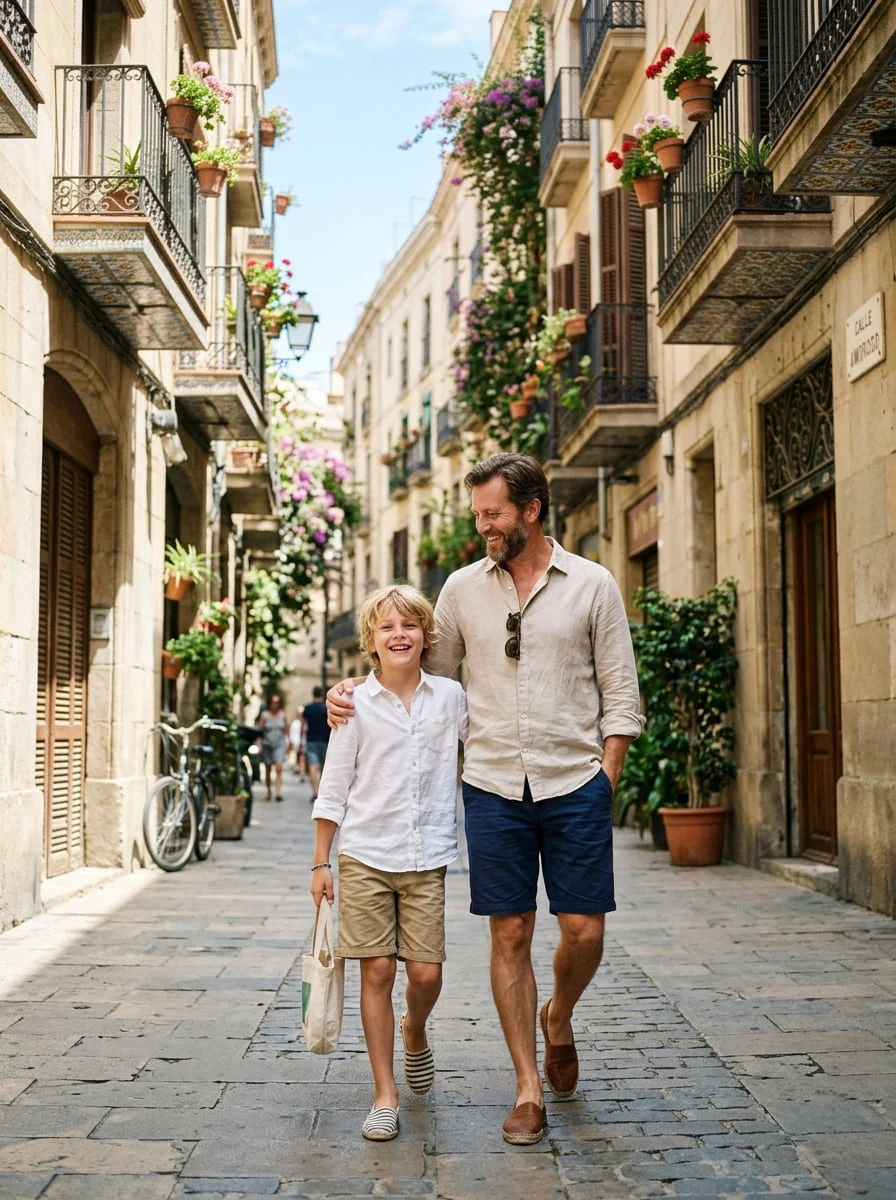






Danish fashion is the cheerful side of Scandinavian style. Where its neighbours favour black and restraint, Denmark fashion adds colour, print and a sense of humour, then puts the whole outfit on a bicycle. Copenhagen has become one of the most watched fashion cities in the world, its fashion week sets the pace on sustainability, and “Copenhagen style” is a look that people copy from London to Seoul. Behind the photographs is a practical country: flat, windy, rainy and happiest when comfortable. Danish fashion is relaxed, functional and quietly well made, for men as much as for women. This guide explains how people dress in Denmark, what Copenhagen style means, what to wear each month, traditional Danish clothing, the brands and designers to know, shopping, sizes and dress codes, for men, boys and kids.
Danish fashion at a glance
- Relaxed. Comfort comes first, and almost nobody dresses up for an ordinary day.
- Practical. Clothes must work in wind and rain, and on a bicycle.
- Playful. Colour, prints and unexpected combinations set Denmark apart from the rest of Scandinavia.
- Layered. The weather changes several times a day.
- Understated quality. Good fabrics and simple cuts, with few logos.
- Trainers with everything. Suits, dresses and coats are all worn with trainers.
- Equal. A casual, classless style at work and in the street.
- Sustainable. Second-hand shopping and responsible production are taken seriously.
- Hygge. The Danish love of cosiness shows in knitwear, scarves and soft layers.
How people dress in Denmark
Everyday clothes
On an ordinary day, Danes wear jeans or loose trousers, a knit or overshirt, a rain jacket or wool coat, a scarf and trainers. Black, navy and grey form the base, as elsewhere in the north, but a bright jumper, a patterned scarf or a coloured jacket is never far away.
Dressed for the bicycle
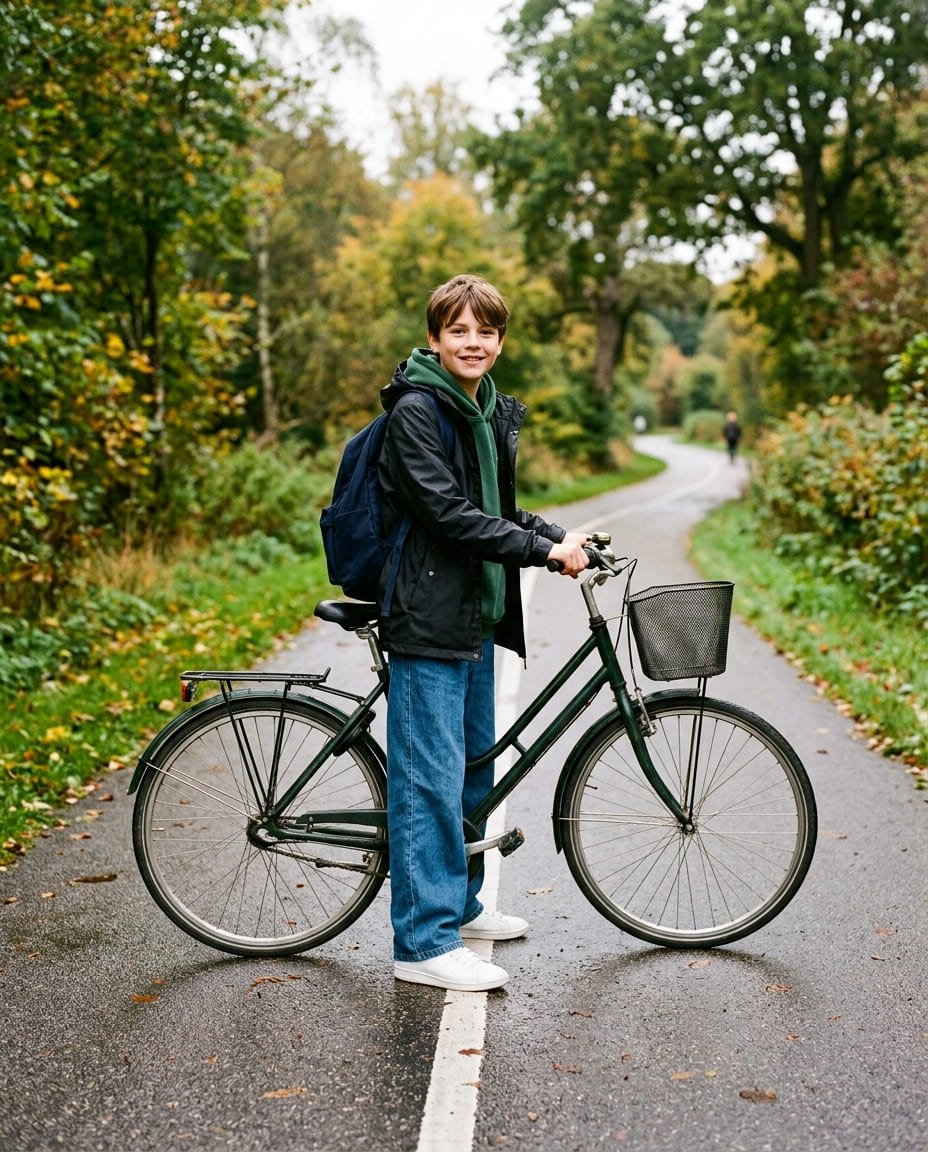
In Copenhagen, more people commute by bicycle than by car. That shapes everything: trousers that move, coats that cover the back, flat shoes, cross-body bags and backpacks, and rain gear kept within reach. People cycle in suits, dresses and heels, so clothes have to cope.
Hygge and comfort
*Hygge* means a feeling of cosiness and ease. In clothes, it means big knits, wool socks, soft scarves and nothing stiff or fussy. Looking as if you tried too hard is considered a little uncool.
The law of Jante
Like their neighbours, Danes are wary of showing off. The “law of Jante”, described by the writer Aksel Sandemose in 1933, says that nobody should think they’re better than anyone else. In fashion, it means few logos and little flash, though Danes express themselves freely through colour and shape.
Weather
Denmark is mild, damp and windy. It rarely gets very cold or very hot, and heavy snow is unusual. Wind is the real challenge, so a windproof outer layer matters more than a thick one.
Generations
- Teenagers: wide jeans, hoodies, puffer jackets and trainers, often in the same Danish high-street labels.
- Young adults: the Copenhagen look, mixing vintage, sportswear and designer pieces.
- Adults: smart casual with good knitwear, clean trainers and a practical coat.
- Older Danes: classic, colourful and active, with quilted jackets and comfortable shoes.
What is Copenhagen style?
Copenhagen style is the relaxed, colourful and slightly eccentric way of dressing seen on the streets of the Danish capital, especially during fashion week. It’s sometimes called “Scandi style” or “Scandi girl style”, although it’s more playful than the minimalism of Stockholm.
- Colour and print: bright knits, checks, stripes, florals and animal prints, often mixed.
- Oversized shapes: big blazers, wide trousers, long coats and roomy shirts.
- Dresses with trainers or boots.
- Statement details: large collars, puff sleeves, bows and quilting.
- Knitwear: patterned jumpers, knitted vests and cardigans.
- Sportswear mixed in: football shirts, track jackets, caps and running shoes.
- Practical outerwear: rain jackets, padded coats and fleeces.
- Scarves, beanies and balaclavas in winter.
- A bicycle, the essential accessory.
Copenhagen style for men
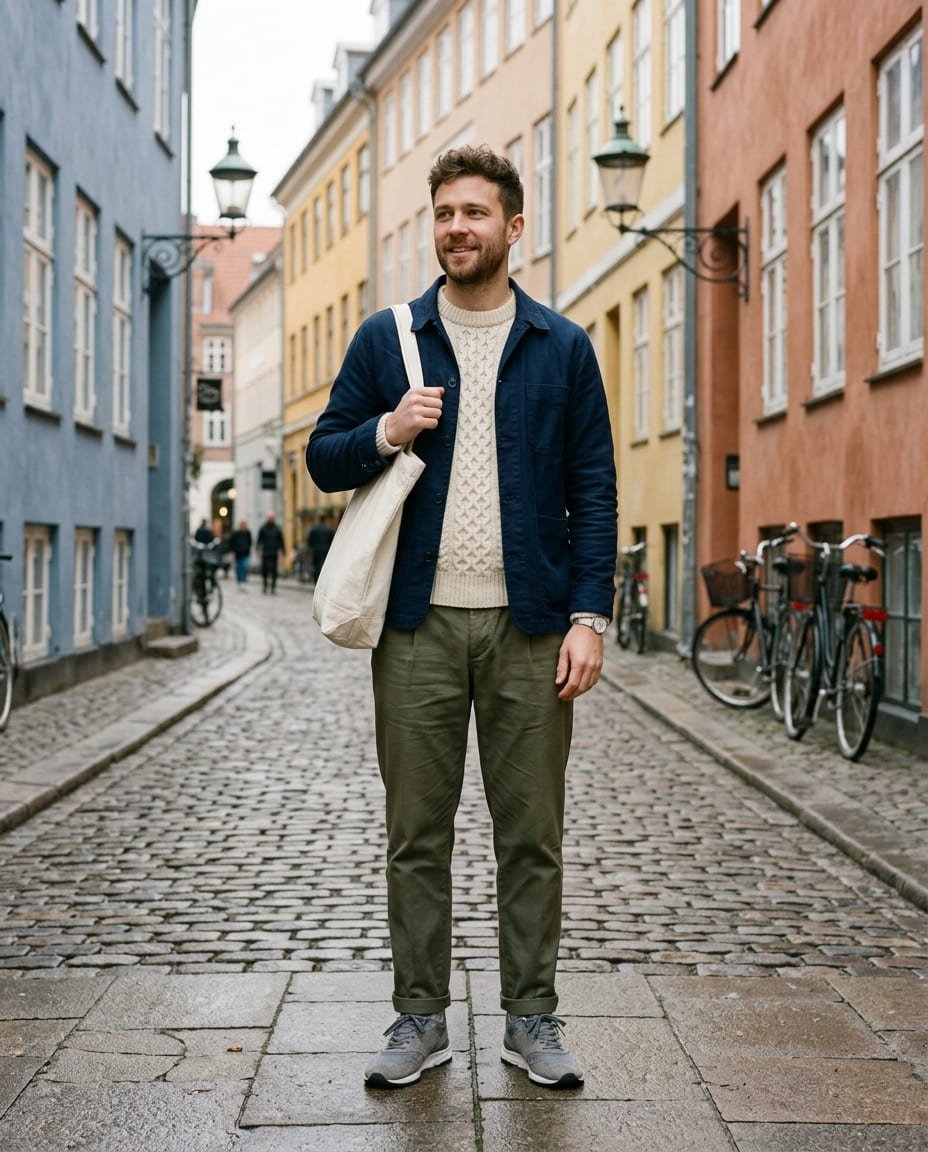
For men, Copenhagen style is cleaner but still relaxed.
- A boxy overshirt or chore jacket.
- A wool overcoat or a technical rain jacket.
- Loose, straight or pleated trousers, often cropped above the shoe.
- A striped long-sleeve T-shirt or a heavy plain one.
- A chunky fisherman’s jumper.
- A cap or beanie.
- Running-style or minimal leather trainers.
- A tote bag or small cross-body bag.
- Navy chore jacket Jacket
- Navy and white striped long-sleeve T-shirt Top
- Olive loose pleated trousers Trousers
- Grey running-style trainers Shoes
- Green beanie Accessory
Copenhagen street style by district
- Indre By: the old centre, with designer shops, department stores and the most polished outfits.
- Vesterbro: the former meatpacking district. Creative, casual and full of independent shops.
- Nørrebro: young, multicultural and the heart of vintage and streetwear.
- Østerbro: residential and classic, with good knitwear and prams.
- Frederiksberg: leafy, smart and understated.
- Christianshavn: canals, houseboats and a bohemian edge.
Scandinavian fashion: how Denmark compares
Scandinavian fashion shares function, quality and simplicity, yet each country has its own character.
| Country | Character | Typical outfit |
|---|---|---|
| Denmark | Colourful, playful and relaxed | Bright knit, wide trousers, rain jacket and trainers |
| Sweden | Sleek, dark and tailored | Black overcoat, grey knit, straight jeans and boots |
| Norway | Sporty and outdoor-led | Patterned wool jumper, shell jacket and hiking shoes |
| Finland | Bold prints and practical design | Printed shirt, parka and sturdy boots |
See our guide to Swedish fashion for the minimalist side of the region.
Danish men’s fashion
Danish menswear is among the most wearable in Europe: relaxed cuts, good fabrics and colours that mix easily.
- A navy or olive rain jacket.
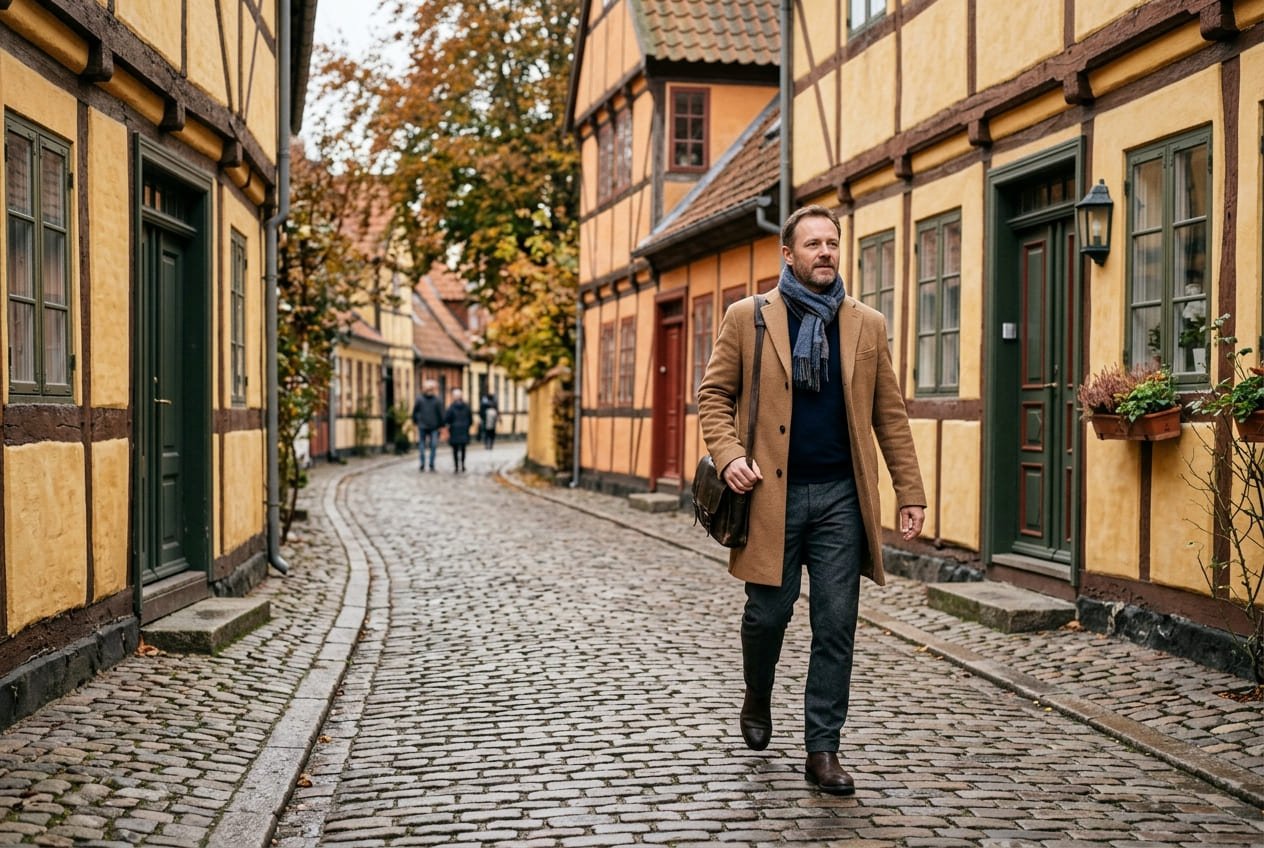
- A wool overcoat for winter.
- An overshirt or chore jacket.
- A fisherman’s or lambswool jumper.
- Striped and plain long-sleeve T-shirts.
- An Oxford shirt.
- Straight jeans in mid-blue, black or ecru.
- Pleated or loose chinos.
- An unstructured suit, worn with a T-shirt and trainers.
- Trainers and a pair of leather boots.
- A beanie, cap and scarf.
See our guides to European men’s fashion, smart casual for men and sweater outfits for men.
Danish style by region
Copenhagen
The capital and the fashion centre. Creative, colourful and built around cycling.
Aarhus
Denmark’s second city, in Jutland, is a university town with a young, relaxed style and a lively Latin Quarter of small shops.
Odense
The home town of Hans Christian Andersen, on the island of Funen. Classic, comfortable and unhurried.
Aalborg and northern Jutland
A former industrial port with a student population. Practical clothing for a windy climate.
Skagen and the far north
At the tip of Jutland, where two seas meet, summer style is nautical: striped tops, navy knitwear, white trousers and yellow raincoats.
The west coast
Long, wild North Sea beaches with strong wind all year. Windproof jackets, wool jumpers and rubber boots are standard, with wetsuits for the surfers at Klitmøller.
Bornholm and the islands
The Baltic island of Bornholm is sunnier, with craft traditions in ceramics and textiles and a relaxed summer wardrobe.
What to wear in Denmark, month by month
The table gives typical daytime highs for Copenhagen. Jutland’s west coast is windier and wetter. Rain falls throughout the year, so a waterproof layer is useful in every month.
| Month | Copenhagen | Daylight | What to wear |
|---|---|---|---|
| January | about 3 °C | about 8 hours | Wool or padded coat, jumper, scarf, beanie, gloves and waterproof boots |
| February | about 3 °C | about 10 hours | As January. Often the coldest month |
| March | about 6 °C | about 12 hours | Winter coat or padded jacket, knitwear and a scarf |
| April | about 11 °C | about 14 hours | Lighter jacket, jumper and a rain layer |
| May | about 16 °C | about 16 hours | Light jacket, shirt or knit and trainers |
| June | about 20 °C | about 17 hours | T-shirts, light trousers, a jumper and a rain jacket |
| July | about 22 °C | about 17 hours | Summer clothes, a light layer for evenings and swimwear |
| August | about 22 °C | about 15 hours | As July, with a rain jacket to hand |
| September | about 18 °C | about 13 hours | Jacket, knitwear and long trousers |
| October | about 12 °C | about 10 hours | Coat, jumper, scarf and waterproof shoes |
| November | about 7 °C | about 8 hours | Winter coat, hat and gloves. Dark and damp |
| December | about 4 °C | about 7 hours | Warm coat, knitwear, scarf and boots |
Copenhagen in summer
Copenhagen in August is mild, not hot: around 22 °C by day and cooler at night. Wear T-shirts, light shirts, trousers or shorts and trainers, and carry a jumper and a rain jacket. Bring swimwear, because locals swim in the clean harbour baths. See European summer outfits for men.
- Light-blue Oxford shirt Shirt
- White T-shirt Top
- Navy cotton shorts Shorts
- White leather trainers Shoes
Copenhagen in October and autumn
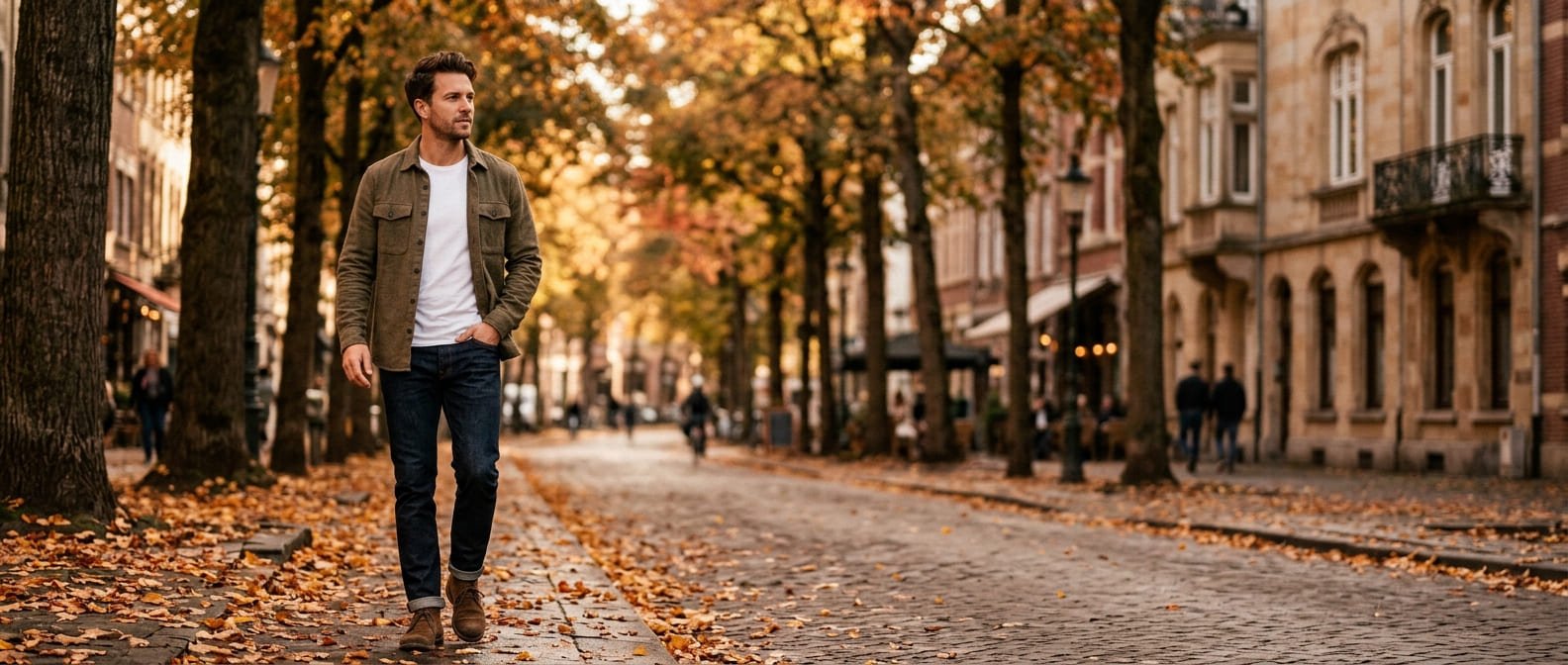
Copenhagen in October is cool, windy and often wet, at around 12 °C. A wool coat or lined rain jacket, a jumper, a scarf and waterproof shoes are right. See fall outfits for men.
Denmark in winter
Winter in Denmark is damp and dark, not arctic. Temperatures hover just above freezing, but wind and moisture make it feel colder.
- A windproof, water-resistant coat that covers the hips.
- A wool jumper over a long-sleeve top.
- A thermal layer on the coldest days, or for cycling.
- Waterproof boots with wool socks.
- A beanie, a large scarf and gloves.
See winter outfits for men, winter coats for men and cold-weather clothing.
- Black long rain parka Coat
- Cream fisherman's jumper Knit
- Dark straight jeans Trousers
- Brown leather boots Shoes
- Mustard wool scarf Accessory
Spring
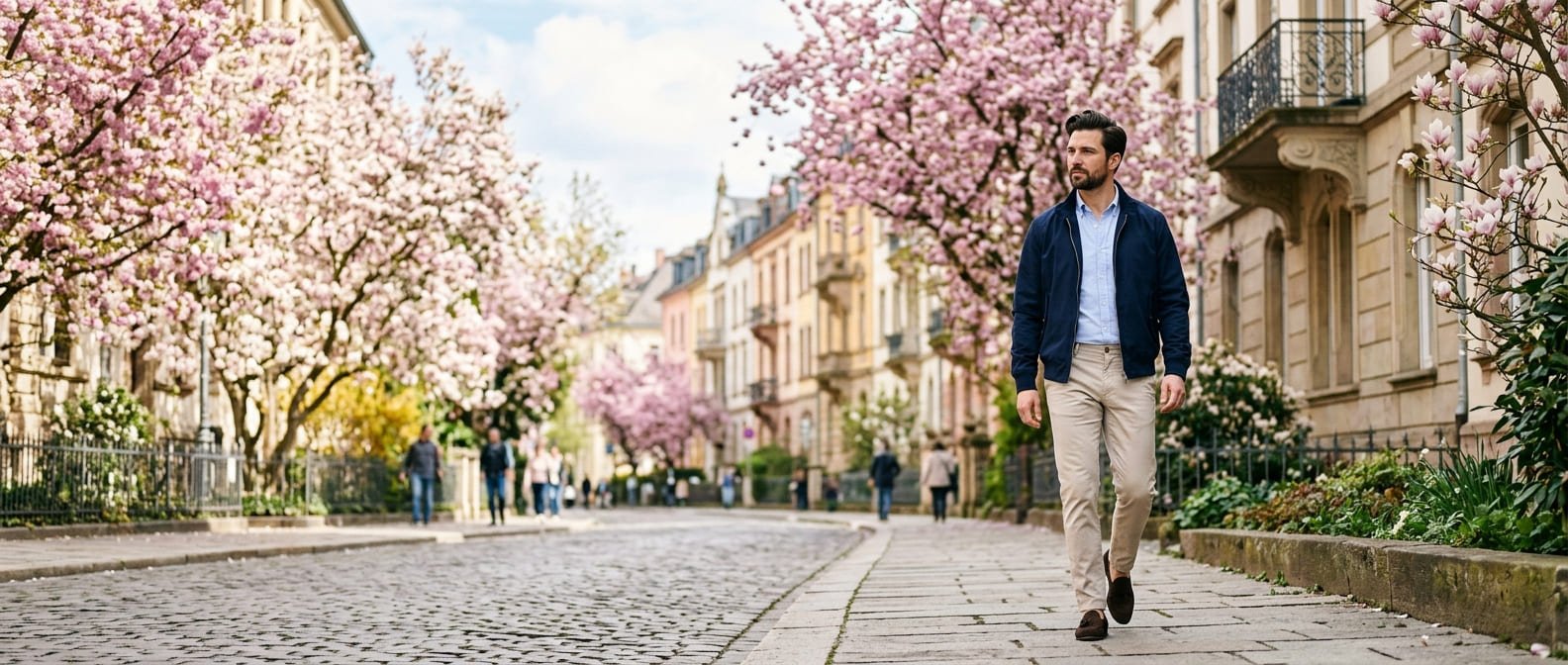
Spring arrives slowly. Layer a light jacket over knitwear, and keep the scarf until May. See spring outfits for men.
What to wear for Danish places and occasions
Sightseeing in Copenhagen
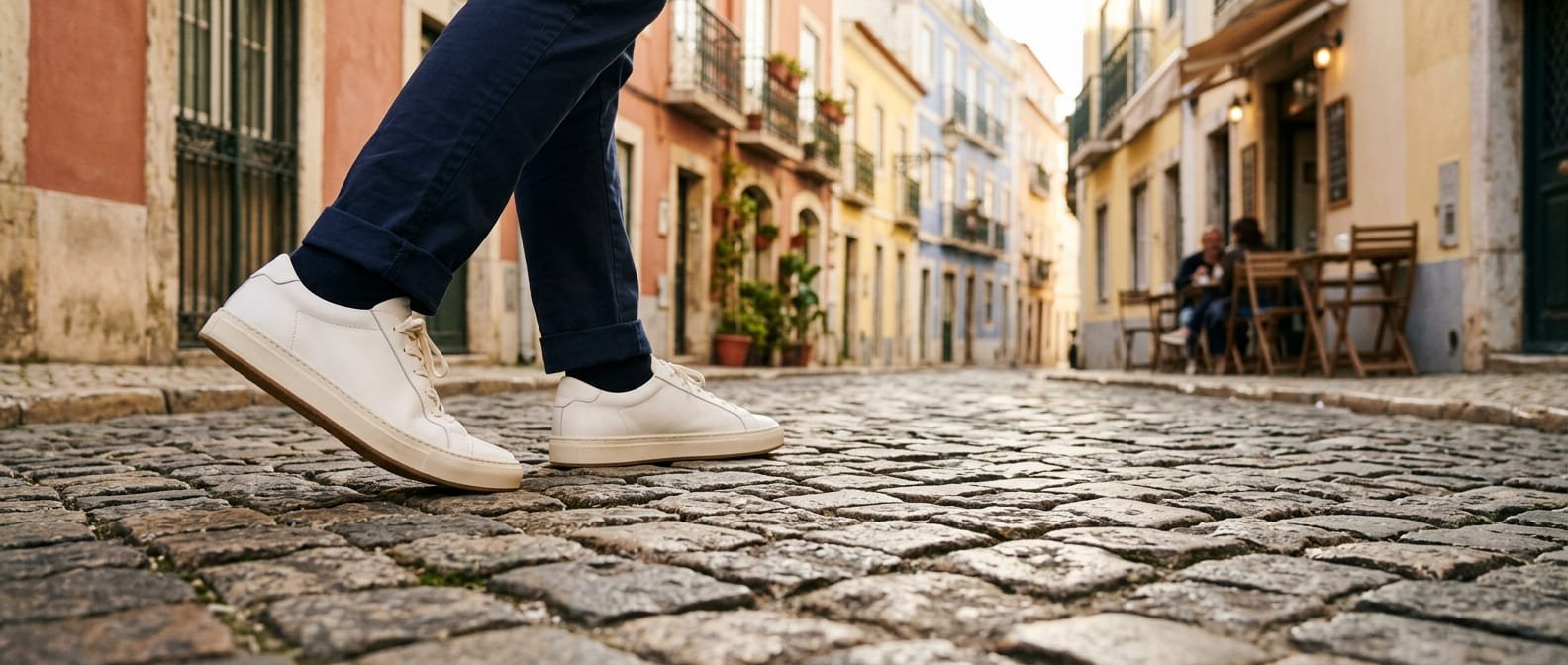
The city is flat and compact, with cobbles in the old centre. Wear comfortable shoes and a windproof layer. See walking shoes for Europe.
Cycling
Hire a bicycle and dress as locals do: normal clothes, flat shoes, a bag that sits on your back or in the basket, and a rain jacket. Lycra is for racing, not commuting.
Harbour baths and beaches
Danes swim outdoors all year. In summer, bring swimwear and a towel. In winter, a dip is followed by a sauna, a warm robe and a hat.
Restaurants
Even the most celebrated restaurants are relaxed about dress. Smart casual, with clean trainers or leather shoes, is right almost everywhere.
Tivoli and Christmas markets
Evenings outdoors are cold from October to March. Wear a warm coat, hat and gloves. See Christmas outfits for men.
The west coast and the countryside
Take a windproof jacket, a wool jumper, long trousers and sturdy shoes, even in summer.
Midsummer and summer houses
On 23 June, Danes light bonfires on the beach for Sankt Hans. Dress warmly. Summer-house life means shorts, knitwear, rubber boots and bare feet.
Copenhagen Fashion Week
Copenhagen Fashion Week is the largest fashion event in the Nordic countries and one of the most influential in the world.
- When: twice a year, in late January or early February and in August.
- What: runway shows and presentations by Danish, Swedish, Norwegian and Finnish labels.
- Known for: sustainability. Brands must meet a set of minimum environmental and social standards to take part, a model other fashion weeks have studied.
- Street style: the guests are as famous as the shows. Photographs of colourful outfits, often on bicycles, travel round the world.
- Trade fairs run at the same time, bringing buyers to the city.
- For visitors: most shows are by invitation, but the street style is free to watch around the venues.
Traditional Danish clothing
Traditional Danish clothing is the *folkedragt*, the folk costume worn by farming and fishing families from about 1750 to 1900. Denmark has no single national costume. Each region, and sometimes each island, has its own dress, made from homespun wool and linen.
| Garment | Worn by | Description |
|---|---|---|
| Skirt | Women | Long and full, in striped or plain wool |
| Apron | Women | Checked, striped or embroidered, worn over the skirt |
| Bodice and jacket | Women | A fitted, sleeveless bodice or short jacket over a linen blouse |
| Bonnet and scarf | Women | A cap with lace or gold and silver embroidery, often under a scarf |
| Knee breeches | Men | In wool or leather, fastened below the knee |
| Waistcoat | Men | Often striped or red, with rows of silver or pewter buttons |
| Jacket or long coat | Men | Dark wool, for church and feast days |
| Stockings | Men and women | Hand-knitted wool, usually white |
| Cap or hat | Men | A red knitted cap for work, or a tall hat for best |
| Shoes | Men and women | Wooden clogs for everyday, and buckled leather shoes for best |
Traditional Danish clothing for men
A traditional Danish outfit for men has a white linen shirt, a neckerchief, a waistcoat with silver buttons, knee breeches, white wool stockings and buckled shoes or clogs, with a red stocking cap or a hat.
Regional costumes
- Amager: an island beside Copenhagen settled by Dutch farmers in the 1500s. Its costume shows Dutch influence, with dark, rich fabrics.
- Fanø: an island in the Wadden Sea, known for women’s dress with several layered skirts and headscarves.
- Hedebo: the area between Copenhagen and Roskilde, famous for fine white embroidery.
- Læsø: an island in the Kattegat with an elaborate women’s costume and silver jewellery.
- Bornholm and Funen: each with distinct caps, colours and patterns.
The Faroe Islands and Greenland
Both are part of the Kingdom of Denmark and have their own national dress. Faroese costume features knitted wool, embroidered waistcoats and silver buttons. Greenlandic national dress includes a beaded collar and tall sealskin boots called *kamik*. Each is living cultural dress, worn with pride at celebrations.
When Danes wear traditional dress
Folk costume is worn mainly by folk dance groups, at heritage festivals and in museums. It’s less common in daily life than in Norway or Sweden. Danish traditions that involve special clothing are more often seasonal.
- Fastelavn: the Danish carnival in February, when children wear fancy dress and take turns to hit a barrel full of sweets.
- Confirmation: in spring, teenagers wear a suit or a white dress for a major family celebration.
- Graduation: in June, school leavers wear a white peaked cap with a coloured band, and ride through town on decorated lorries.
- Sankt Lucia, 13 December: children in white gowns carry candles.
- Christmas: red pointed *nisse* hats, inspired by the house elves of Danish folklore.
Royal style
Denmark has one of the world’s oldest monarchies. King Frederik X came to the throne in January 2024, and Queen Mary is known for wearing Danish designers and for wearing outfits more than once. Queen Margrethe II, who reigned for 52 years, designed costumes and wore strong colours.
The Danish fashion industry
- A major export. Fashion is among Denmark’s largest export industries, alongside design and furniture.
- Family groups. A handful of privately owned companies based in Jutland sell everyday clothing across Europe.
- Design heritage. Danish design, known for furniture, lighting and silver, values simplicity, craft and usefulness. Clothing follows the same ideas.
- Jutland’s textile towns. Herning and Ikast grew around knitwear and still house many fashion companies.
- Copenhagen’s creative labels. Small and mid-sized brands give the city its international reputation.
- Sustainability. Denmark hosts one of the world’s main forums on sustainable fashion, and brands compete on responsible materials.
- Education. Designers train at the Royal Danish Academy in Copenhagen and Design School Kolding.
Danish brands and designers
This section lists well-known Danish clothing brands and designers for reference. StyleGauge is independent: the names are not ranked, recommended or linked, and we earn nothing from any of them.
Danish fashion brands
| Brand | Founded | Known for |
|---|---|---|
| Ganni | 2000, Copenhagen | Playful prints, collars and the “Copenhagen girl” look |
| Stine Goya | 2006, Copenhagen | Colour and artistic prints |
| Baum und Pferdgarten | 1999, Copenhagen | Bold colour and pattern mixing |
| Cecilie Bahnsen | 2015, Copenhagen | Sculptural, romantic dresses |
| Rotate | 2018, Copenhagen | Party dresses |
| By Malene Birger | 2003, Copenhagen | Refined, bohemian womenswear |
| Day Birger et Mikkelsen | 1997 | Relaxed, embellished everyday wear |
| Samsøe Samsøe | 1993, Copenhagen | Scandinavian basics for men and women |
| Mads Nørgaard | 1986, Copenhagen | Striped tops and unpretentious everyday clothes |
| Wood Wood | 2002, Copenhagen | Streetwear and sportswear |
| Vero Moda, Only and Selected | From 1975, Jutland | High-street chains found across Europe |
| Noa Noa and Bitte Kai Rand | 1980s | Soft, feminine and layered womenswear |
Danish menswear brands
| Brand | Founded | Known for |
|---|---|---|
| Norse Projects | 2004, Copenhagen | Functional menswear, outerwear and caps |
| NN.07 | 2007, Copenhagen | Relaxed everyday menswear |
| Les Deux | 2011, Copenhagen | Smart casual with a sporty edge |
| Han Kjøbenhavn | 2008, Copenhagen | Dark, sculptural streetwear and tailoring |
| Soulland | 2002, Copenhagen | Graphic streetwear |
| Sunflower | 2018, Copenhagen | Clean, music-inspired menswear |
| mfpen | 2015, Copenhagen | Loose tailoring made from surplus fabrics |
| Forét | 2014, Copenhagen | Outdoor-inspired casual wear |
| Jack & Jones | 1990 | Jeans and high-street menswear |
| Sand Copenhagen and Matinique | 1970s and 1980s | Tailoring and smart casual |
| S.N.S. Herning | 1931, Herning | Textured fisherman’s knitwear |
| Andersen-Andersen | 2009 | Heavy sailor jumpers |
Outerwear, sportswear and shoes
- Rains: rubberised rain jackets and bags from Aarhus.
- Elka and H2O: rainwear and sailing-inspired sportswear.
- Hummel: football and handball kit with a chevron stripe.
- Ecco: comfortable leather shoes, founded in 1963.
- Angulus: leather shoes and boots, especially for children.
- Garment Project and Copenhagen Studios: minimalist trainers.
Jewellery and accessories
- Georg Jensen: silverware and jewellery since 1904.
- Pandora: charm bracelets.
- Maria Black and Pilgrim: modern and affordable jewellery.
Famous Danish fashion designers
| Designer | Known for |
|---|---|
| Ditte Reffstrup | Creative director who built Ganni’s playful style |
| Stine Goya | Colourful prints and a former modelling career |
| Cecilie Bahnsen | Voluminous, quilted and embroidered dresses |
| Henrik Vibskov | Experimental menswear, art and performance |
| Mads Nørgaard | Everyday clothes and a much-loved striped top |
| Malene Birger | Founder of By Malene Birger |
| Astrid Andersen | Luxury sportswear for men |
| Søren Le Schmidt | Sharp tailoring and evening wear |
| Nicklas Skovgaard | Sculptural womenswear from a newer generation |
| Peter Jensen | Witty, London-based collections |
| Erik Mortensen | Haute couture in Paris in the 1980s |
| Margit Brandt | Youthful Danish fashion of the 1960s and 1970s |
Danish children’s brands
- Name It: affordable everyday children’s clothing.
- Molo: bright prints and outerwear.
- Konges Sløjd and Liewood: soft colours, organic cotton and rainwear for small children.
- MarMar Copenhagen and Wheat: gentle, classic children’s clothes.
- Mini A Ture: outerwear for nursery days.
- LEGO Wear: playful clothes linked to Denmark’s famous toy.
Stores like the big minimalist chains
If you like the clean, affordable style of Scandinavian high-street minimalism, Danish labels such as Samsøe Samsøe, Selected and Minimum offer a similar look, usually with a little more colour.
Shopping in Copenhagen and Denmark
Where to shop in Copenhagen
- Strøget: one of Europe’s longest pedestrian shopping streets, running through the old centre, with chains at one end and luxury at the other.
- Købmagergade: a parallel pedestrian street with Danish high-street brands.
- Pilestræde, Grønnegade and Kronprinsensgade: Danish designer labels.
- Department stores: two historic stores, Illum and Magasin du Nord, stand in the centre.
- Vesterbro: independent boutiques around Istedgade and Værnedamsvej.
- Nørrebro: vintage and young designers in Jægersborggade, Elmegade and Ravnsborggade.
Aarhus and Odense
In Aarhus, explore the Latin Quarter and the pedestrian street from the station to the cathedral. In Odense, the centre is compact and walkable.
Second-hand and vintage
Second-hand is called *genbrug*. Charity shops are everywhere, flea markets (*loppemarked*) run on summer weekends, and Nørrebro has the best vintage shops.
Opening hours and paying
Shops usually open from 10 am to 6 or 7 pm on weekdays and until 4 or 5 pm on Saturdays. Many open on Sundays in the cities. The currency is the Danish krone. Cards and mobile payments are accepted almost everywhere.
Sales and tax-free shopping
Sales are marked *udsalg*, and the main ones start after Christmas and in late June. Prices include 25% VAT. Visitors who live outside the EU can claim a refund above a minimum spend, so ask for a tax-free form.
Sizes
Denmark uses European sizes.
| Item | Danish system | Example |
|---|---|---|
| Men’s suits and jackets | European sizes | 50 is roughly a UK 40 |
| Shirts | Collar in centimetres, or S to XL | 39, 40, 41 |
| Jeans | Waist and leg in inches | 32/32 |
| Children’s clothes | Height in centimetres | 92, 104, 116, 128 |
| Shoes | European sizes | 42, 43, 44 |
Danish clothes are cut for tall builds, so check sleeve and leg length.
Clothing words in Danish
| Danish | English |
|---|---|
| Tøj | Clothes |
| Jakke | Jacket |
| Frakke | Coat |
| Trøje or sweater | Jumper |
| Skjorte | Shirt |
| Bukser | Trousers |
| Kjole | Dress |
| Nederdel | Skirt |
| Jakkesæt | Suit |
| Sko | Shoes |
| Støvler | Boots |
| Hue | Beanie |
| Halstørklæde | Scarf |
| Vanter | Mittens |
| Handsker | Gloves |
| Strømper | Socks |
| Regnjakke | Rain jacket |
| Regntøj | Rainwear |
| Flyverdragt | Child’s snowsuit |
| Herre, dame, børn | Men, women, children |
| Størrelse | Size |
| Prøverum | Fitting room |
| Udsalg | Sale |
| Kvittering | Receipt |
The Danish word for fashion is *mode*.
Dress codes in Denmark
Denmark is one of Europe’s most informal countries.
| Danish term | Meaning | What men wear |
|---|---|---|
| Galla | White tie | Tailcoat, white waistcoat and white bow tie |
| Smoking | Black tie | Dinner jacket and black bow tie |
| Mørk påklædning | Dark suit | Dark suit, shirt and tie |
| Habit | Lounge suit | Suit, tie optional |
| Smart casual | Smart casual | Blazer or knit with trousers and clean shoes |
- Office: casual. Jeans, knitwear and trainers are normal, and ties are rare. See business casual for men.
- Weddings: a suit, usually with a tie. Summer weddings are lighter and brighter. See dressy casual for men.
- Funerals: dark, plain clothes.
- Restaurants and theatres: smart casual.
- Schools: no uniforms.
- Homes: shoes usually come off at the door.
Danish fashion for boys and kids
Danish children’s clothing is designed for outdoor life in any weather.
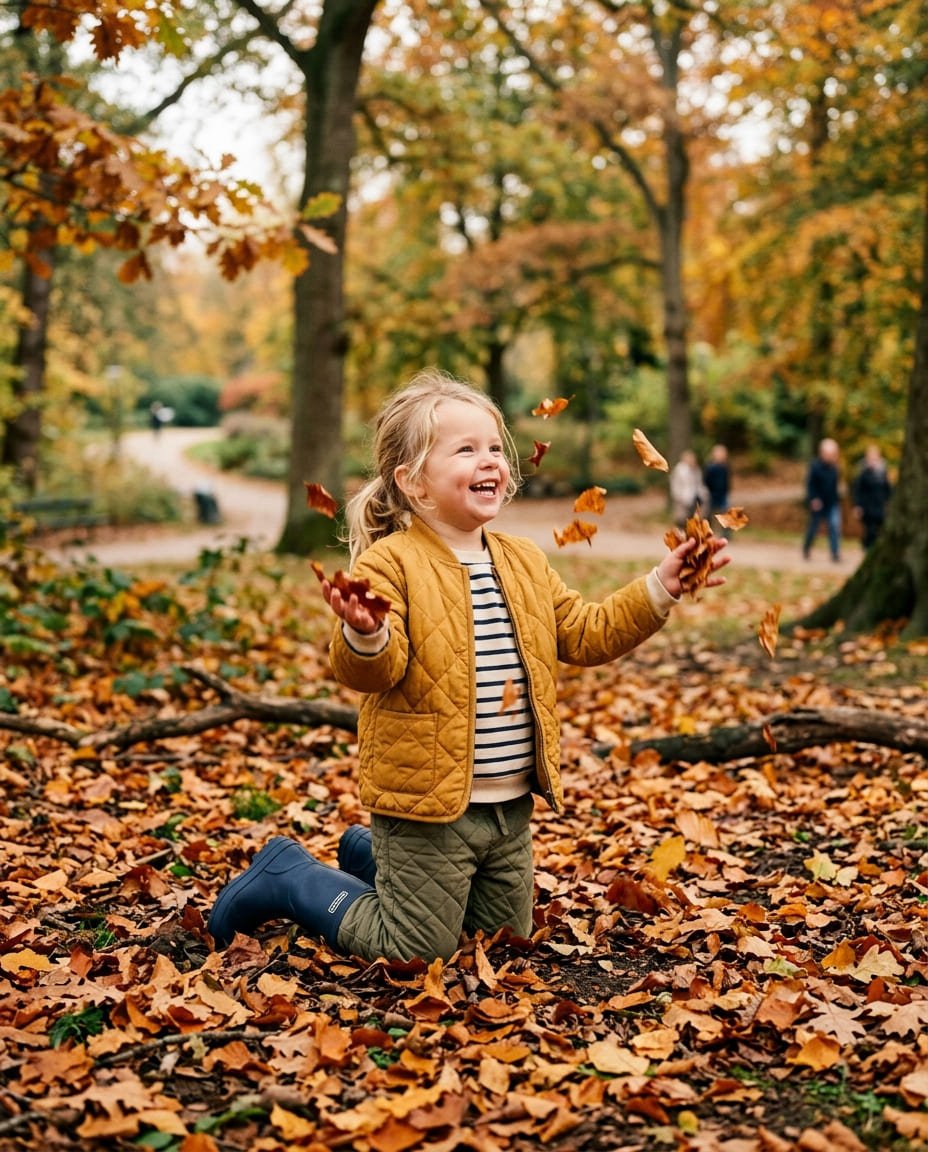
- Rain sets. Every child has waterproof trousers and a jacket, plus rubber boots.
- Quilted thermal sets. Light padded jackets and trousers for spring and autumn are a Danish nursery classic.
- Snowsuits. A one-piece padded suit for winter.
- Wool. Merino base layers, even for babies, who traditionally nap outdoors in their prams.
- Soft colours and prints. Earth tones, stripes and nature motifs, with little split between boys’ and girls’ clothes.
- Cargo bikes. Small children travel in the box of a cargo bicycle, wrapped up warm.
- Older boys: hoodies, wide jeans, football shirts and trainers. See clothes for teenage boys.
- Mustard quilted thermal jacket Jacket
- Cream striped long-sleeve top Top
- Olive quilted thermal trousers Trousers
- Navy rubber boots Shoes
Danish fashion trends
- Colour: butter yellow, red, green and brown worn with neutrals.
- Pattern mixing: checks with stripes, and florals with knits.
- Wide trousers and long shorts.
- Football shirts and track jackets as daywear.
- Rainwear as fashion.
- Ballet flats, loafers and running trainers.
- Fisherman’s knitwear.
- Second-hand and rental.
For the wider picture, see men’s fashion trends 2026 and Gen Z fashion.
How to dress like a Dane: a capsule wardrobe
- Navy or black rain jacket
- Wool overcoat
- Chore jacket or overshirt
- Cream fisherman’s jumper
- One bright lambswool jumper
- Striped long-sleeve T-shirt
- White and grey T-shirts
- Light-blue Oxford shirt
- Straight jeans
- Loose pleated trousers in olive or navy
- Trainers and leather boots
- Scarf, beanie and a tote or cross-body bag
Start with navy, cream and grey, then add one colour. To test combinations with your own clothes, use our Outfit Generator. For a packing list, see what to pack for a Europe trip.
Mistakes visitors make
| Mistake | Why it’s a problem | Do this instead |
|---|---|---|
| No waterproof layer | It can rain in any month | Pack a rain jacket |
| Ignoring the wind | Wind makes mild days feel cold | Choose a windproof outer layer |
| Overdressing | Danes dress casually almost everywhere | Smart casual is enough |
| Shoes you can’t walk or cycle in | Cobbles and bicycles | Wear flat, comfortable shoes |
| Packing for a hot summer | July averages only about 22 °C | Bring a jumper and long trousers |
| An umbrella on a bicycle | Wind turns it inside out | Wear a hood |
| Walking in the cycle lane | It’s dangerous and annoys locals | Keep to the pavement |
| Loud logos | They clash with Danish modesty | Keep it simple, and add colour |
Frequently asked questions
Danish fashion is known for relaxed, practical clothes with a playful use of colour and print, for Copenhagen street style and for a strong focus on sustainability.
Copenhagen style mixes colour, prints, oversized shapes, knitwear and sportswear with practical outerwear and trainers. It's more playful than the minimalism of Stockholm.
Jeans or loose trousers, a knit or overshirt, a rain jacket or wool coat, a scarf and trainers. Clothes are casual and suited to cycling in wind and rain.
The folkedragt, a regional folk costume. Women wear a full skirt, apron, bodice, blouse and bonnet. Men wear knee breeches, a waistcoat with silver buttons, white stockings and a cap or hat.
No single one. Each region and island has its own folk costume, and the Faroe Islands and Greenland have their own national dress.
Twice a year, in late January or early February and in August.
T-shirts, light shirts, trousers or shorts and trainers, with a jumper and a rain jacket. Daytime temperatures are around 20 to 22 °C.
A windproof, water-resistant coat, a wool jumper, waterproof boots, a beanie, a scarf and gloves. Temperatures stay near freezing, and wind makes it feel colder.
No. Snow falls most winters but rarely lies for long. Rain and wind are more common.
Ganni, Stine Goya, Samsøe Samsøe, Mads Nørgaard, Norse Projects, Wood Wood, NN.07, Rains, and high-street chains such as Vero Moda, Selected and Jack & Jones.
Ditte Reffstrup, Stine Goya, Cecilie Bahnsen, Henrik Vibskov, Mads Nørgaard, Malene Birger, Astrid Andersen and Søren Le Schmidt.
Danish style is more colourful, playful and loose. Swedish style is darker, sleeker and more tailored.
Strøget and Købmagergade for chains and department stores, the side streets around Pilestræde for Danish designers, and Vesterbro and Nørrebro for independent and vintage shops.
Rarely. Offices and restaurants are casual. Suits are kept for weddings, formal dinners and some professions.
Clothing that feels cosy and relaxed: chunky knitwear, wool socks, soft scarves and loose, comfortable shapes.