

Business casual for men is now the most common office dress code in Europe and North America, and also the most confusing. “Casual” suggests jeans and trainers; “business” suggests a suit. The truth sits in between, and it changes from one office to the next. This guide explains business casual for men in plain terms: what it includes, what it doesn’t, the core wardrobe you need, outfit formulas for a full working week and how to adjust business casual for winter, summer and different industries. You’ll also find a quick decision guide for meetings, presentations, travel days and casual Fridays.
If your workplace expects suits and ties, read our guide to business attire for men instead.
What is business casual for men?
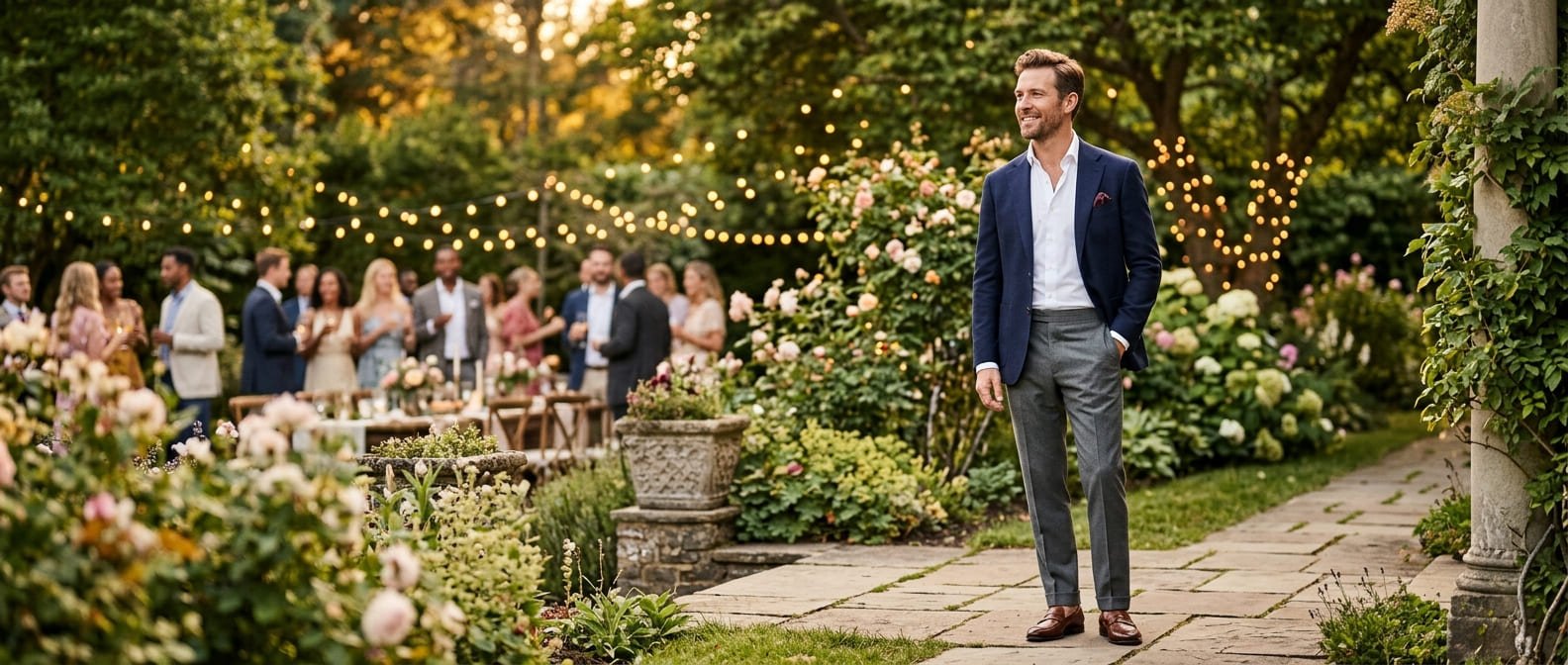
Business casual for men means professional clothing without the formality of a suit and tie. The core formula is simple: a collared shirt or smart knit, tailored trousers or chinos, and leather shoes. A blazer is optional, and ties are usually not required.
It sits between business professional (suit and tie) and smart casual (dark jeans, polos and clean trainers).
| Dress code | Jacket | Tie | Trousers | Shoes |
|---|---|---|---|---|
| Business professional | Matching suit jacket | Yes | Suit trousers | Oxfords or derbies |
| Business casual | Blazer optional | Rarely | Chinos or tailored trousers | Leather shoes, loafers, boots |
| Smart casual | Optional overshirt or jacket | No | Chinos or dark jeans | Loafers or clean trainers |
| Casual | None | No | Jeans or casual trousers | Trainers |

To see where business casual sits among the other codes, read dress codes explained.
The business casual formula
Most business casual outfits for men follow one formula:
Top with a collar or texture + tailored trousers or chinos + leather shoes + optional layer.
Change any one element and you change the level of formality. Add a blazer for a client meeting; swap the shirt for a fine knit on a quiet Friday.
- Light-blue oxford shirt Shirt
- Navy unstructured blazer (optional) Jacket
- Grey wool trousers Trousers
- Dark brown leather derbies Shoes
The core business casual wardrobe
Shirts
- Oxford button-down shirts in white, light blue and subtle stripes.
- Poplin dress shirts for a crisper look.
- Knitted polos and long-sleeved polos for relaxed offices and summer.
- Five shirts cover a full week.
Knitwear
- A merino crew-neck or V-neck in navy, grey or burgundy over a shirt.
- A quarter-zip or half-zip knit for modern offices.
- A cardigan in a fine knit for a softer look.
- A rollneck under a blazer for winter.
Trousers
- Chinos in navy, stone, olive and grey, in a slim or tapered fit.
- Wool trousers in grey or navy for a smarter look.
- Dark jeans only if your office explicitly allows them: dark, clean and without rips.
Jackets
- An unstructured blazer in navy, grey or tan.
- A textured sport coat, such as tweed or herringbone, for autumn and winter.
- An overshirt for relaxed offices and casual Fridays.
Shoes
- Leather derbies or oxfords in brown.
- Loafers in leather or suede.
- Chelsea or chukka boots in winter.
- Minimal leather trainers only in relaxed offices.
Belts and accessories
A leather belt that matches your shoes, a simple watch and dark socks that match your trousers are all you need.
Business casual outfits for a full week
Here’s how one small wardrobe creates a full working week.
| Day | Outfit |
|---|---|
| Monday | Navy blazer, white oxford shirt, grey trousers, brown derbies |
| Tuesday | Navy merino jumper over a light-blue shirt, stone chinos, brown loafers |
| Wednesday | Grey quarter-zip knit, white T-shirt or shirt, navy chinos, suede boots |
| Thursday | Tan sport coat, striped shirt, navy trousers, brown derbies |
| Friday | Knitted polo, dark jeans (if allowed), clean leather trainers or loafers |
Colours for business casual
Business casual allows more colour than a suit, but a calm base keeps outfits professional.
Start with neutrals (navy, grey, stone, white and brown) and add one richer colour, such as burgundy, forest green or rust, through a knit or an accessory.
Winter business casual
Winter business casual for men relies on texture and layering.
- Knitwear: merino or lambswool jumpers over collared shirts, or a rollneck under a blazer.
- Heavier trousers: flannel, wool or corduroy.
- Textured jackets: tweed, herringbone or brushed cotton.
- Boots: leather or suede Chelsea or chukka boots.
- Outerwear: a wool overcoat in navy, charcoal or camel, a scarf and leather gloves.
- Charcoal merino rollneck Knit
- Brown tweed sport coat Jacket
- Navy flannel trousers Trousers
- Dark brown suede Chelsea boots Shoes
Offices are warm, so make sure your outfit looks finished once the coat comes off.
Five winter office outfits
- Monday: navy merino crew neck over a light-blue Oxford shirt, grey flannel trousers, brown Chelsea boots.
- Tuesday: charcoal roll neck under a tweed jacket, dark chinos, brown brogues.
- Wednesday: white Oxford shirt, burgundy cardigan, navy trousers, loafers.
- Thursday: brushed cotton check shirt, navy blazer, charcoal trousers, suede boots.
- Friday: grey crew neck, dark jeans, leather trainers, with a wool overcoat for the commute.
For more on the shirts and layers, see winter shirts for men and our winter capsule wardrobe.
Summer business casual
In summer, the aim is to stay cool and still look professional.
- Shirts: linen-cotton blends, short-sleeved shirts in relaxed offices, or knitted polos.
- Trousers: lightweight chinos or tropical wool in stone, light grey or navy.
- Jackets: unlined cotton or linen blazers, carried in the commute and worn for meetings.
- Shoes: suede loafers or light leather derbies.
Shorts are rarely appropriate for business casual, even in heatwaves, unless your workplace explicitly allows them.
Business casual by industry
Business casual for men means different things in different sectors.
- Finance, law and consulting: the smart end. Blazers are common, chinos are tailored, shoes are leather and jeans are rare.
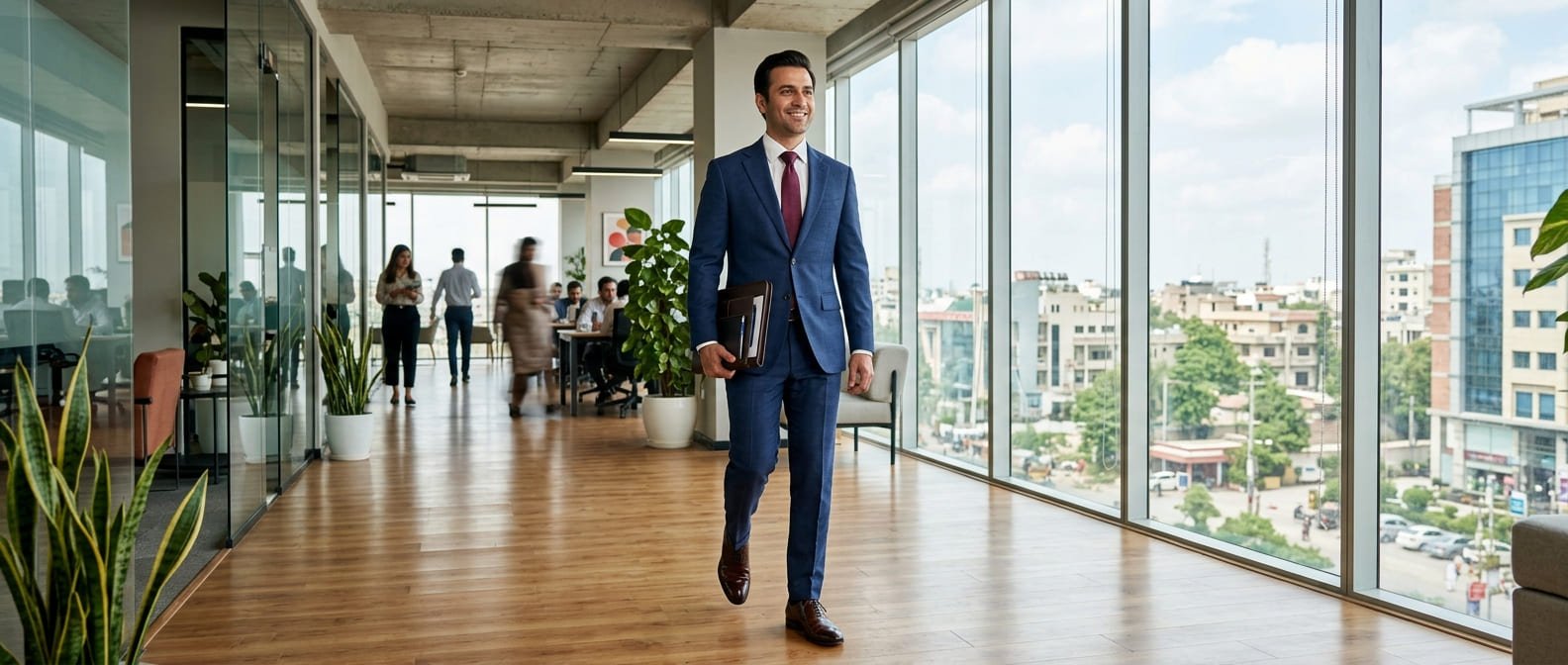
- Corporate offices: collared shirts, knits and chinos; blazers for meetings.
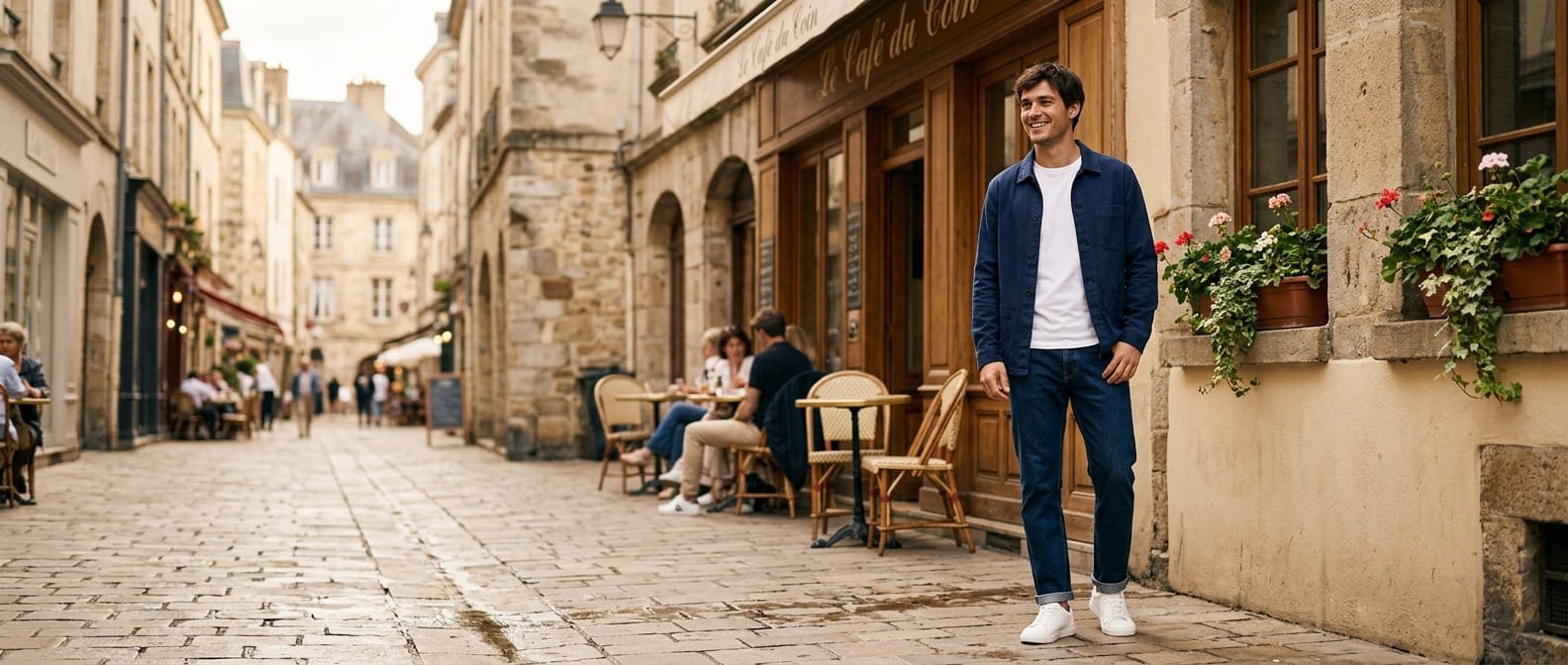
- Technology and start-ups: the relaxed end. Knitwear, overshirts, dark jeans and clean trainers are often fine.
- Creative industries: more personal style, texture and colour, as long as it looks deliberate.
- Teaching and public sector: practical business casual: shirts, knits, chinos and comfortable leather shoes.
If you’re new, dress at the smarter end for your first week and observe what senior colleagues wear. You can always relax your style later, but a poor first impression is harder to undo.
Business casual in Europe
European offices often take a slightly more polished view of business casual than many American workplaces.
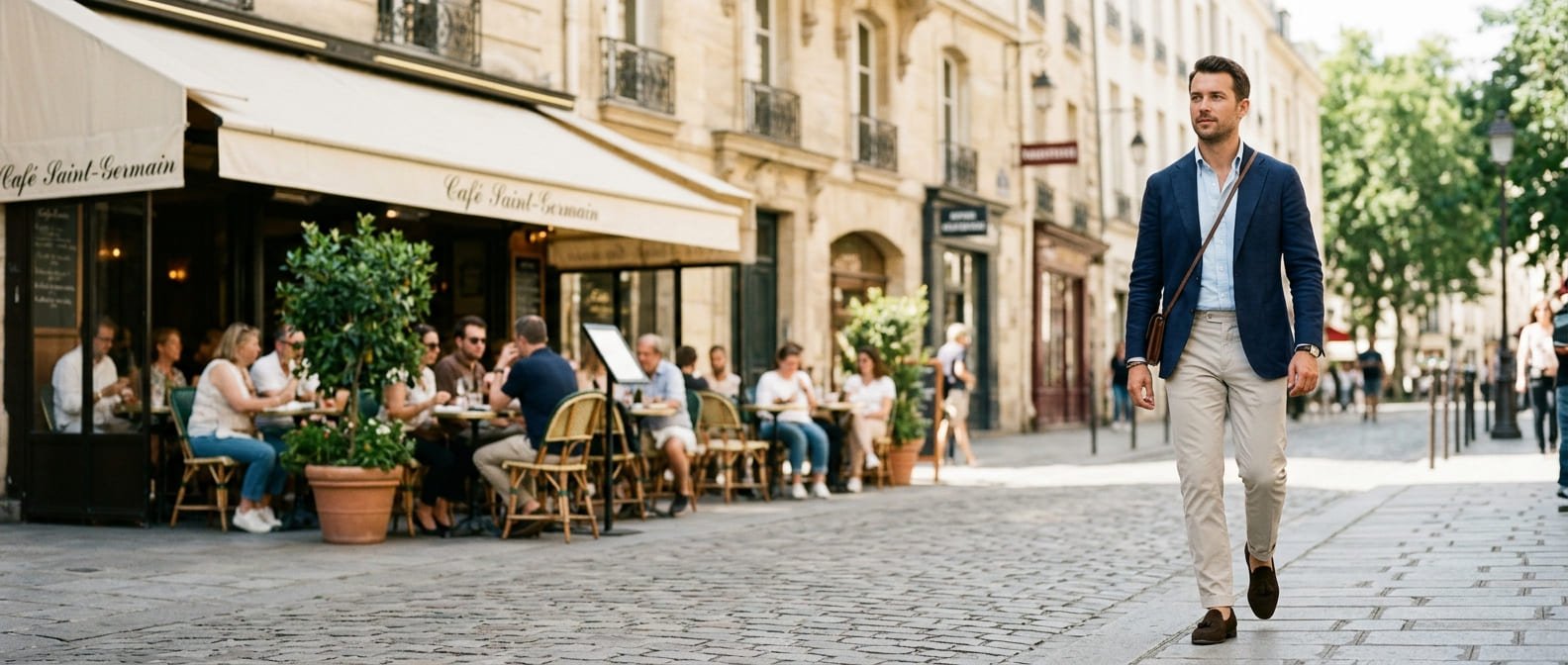
- Italy and France: business casual still looks elegant: tailored trousers, fine knits, soft blazers and leather shoes.
- United Kingdom: wide variation; the City remains smart, while many other offices accept knitwear and chinos.
- Germany and the Netherlands: practical and neat; quality knits, chinos and leather trainers in many offices.
- Scandinavia: minimalist and relaxed, with muted colours, good knitwear and clean trainers.
Business casual for interviews
Some employers describe their interview dress code as business casual. In that case, wear a blazer, a collared shirt, tailored trousers and leather shoes. A tie is optional. It’s better to be slightly overdressed than underdressed.
Dressing for your build
- Tall and slim: layer a knit over a shirt, or a blazer over a knit, to add structure.
- Broad or athletic: choose shirts and blazers with room in the chest and shoulders; stretch fabrics help.
- Shorter: keep colours close together from top to bottom, and keep jackets on the shorter side.
- Larger build: dark trousers, a lighter shirt and an open, structured blazer create a clean line.
Business casual shoes explained
Shoes often decide whether an outfit reads as business casual or simply casual.
| Shoe | Formality | Best with |
|---|---|---|
| Brown leather derbies | Smart business casual | Wool trousers, chinos, blazers |
| Leather oxfords | Upper business casual | Wool trousers and blazers |
| Suede loafers | Relaxed business casual | Chinos, knitted polos, summer trousers |
| Chelsea boots | Autumn and winter business casual | Wool or corduroy trousers, knits |
| Chukka boots | Casual business casual | Chinos, overshirts, tweed jackets |
| Minimal leather trainers | Relaxed offices only | Chinos, knits, dark jeans |
Keep shoes clean and polished, and match your belt to your shoes.
Business casual for men working from home and hybrid jobs
Hybrid work has changed business casual for men. Many people now dress for video calls at home and for meetings in the office on the same week.
- For video calls: a collared shirt, knitted polo or fine knit looks professional on camera. Solid colours look better than busy patterns.
- For office days: follow your workplace’s usual business casual standard.
- Keep a blazer nearby: it turns any home outfit into meeting-ready business casual in seconds.
- Don’t let standards slip completely: clean, pressed clothes help you feel ready to work.
Business casual for different ages
- Graduates and young professionals: start with the core wardrobe and invest in fit. A navy blazer and good chinos go a long way.
- Mid-career professionals: add texture and quality: merino knits, a tweed sport coat and better shoes.
- Senior roles: slightly smarter business casual sets the tone, with tailored trousers, quality knitwear and leather shoes.
Business casual for travel and conferences
Business trips and conferences need clothes that pack well and look good after a long day.
- Choose wrinkle-resistant wool trousers and cotton-blend shirts.
- Pack one blazer that works with every pair of trousers.
- Bring comfortable leather shoes; conference days involve a lot of standing.
- Add one knit for cold meeting rooms and flights.
Business casual for men in summer heat
On hot days, keep the structure but lighten the fabrics: a short-sleeved knitted polo or a linen-cotton shirt, lightweight chinos, unlined loafers and a cotton blazer carried for meetings. Choose light colours such as stone, light blue and white to stay cool.
Business casual for men: a quick decision guide
Not sure how dressy to go today? Use this quick guide.
| Today’s plan | Wear |
|---|---|
| Normal office day | Collared shirt or knit, chinos, leather shoes |
| Client meeting | Add a blazer; choose wool trousers and polished shoes |
| Presentation | Blazer, crisp shirt, dark trousers, oxfords or derbies |
| Team lunch or social | Knitted polo, chinos, loafers |
| Casual Friday | Knit or polo, dark jeans if allowed, clean leather trainers |
| Travel day | Stretch chinos, knit, comfortable leather shoes, blazer in your bag |
How to make business casual look sharper
Small details make business casual for men look deliberate rather than lazy.
- Tuck in your shirt unless it’s designed to be worn out.
- Roll sleeves neatly to just below the elbow on warm days.
- Choose one texture such as a knit, tweed or suede to add depth.
- Match belt and shoes.
- Keep collars crisp: collar stays help shirts look neat under knits and blazers.
- Use a simple palette: two neutrals and one accent colour.
Business casual and grooming
Even the best outfit looks unfinished without good grooming. Keep your haircut neat, trim facial hair regularly, keep nails clean and use a light scent. In shared offices and meeting rooms, less fragrance is always better.
Common business casual mistakes
- Wrinkled shirts. Business casual still needs ironing.
- Too casual on the wrong day. Check your calendar for client meetings.
- Worn-out shoes. Scuffed or dirty shoes undermine a good outfit.
- Ill-fitting chinos. Too long, too loose or too tight looks careless.
- Gym trainers and hoodies. Even relaxed offices expect something smarter.
- Graphic T-shirts. Plain tops under a jacket look intentional; slogans don’t.
What not to wear for business casual
| Avoid | Why | Wear instead |
|---|---|---|
| Graphic T-shirts | Too casual and distracting | Collared shirts or plain knits |
| Ripped or faded jeans | Unprofessional | Chinos or dark, clean jeans if allowed |
| Running shoes | Too casual | Leather derbies, loafers or boots |
| Shorts and sandals | Rarely acceptable in offices | Lightweight chinos and loafers |
| Creased shirts | Look careless | Pressed shirts or neat knitted polos |
| Full suit and tie every day | Can look out of step in relaxed offices | Blazer with contrasting trousers |
Fabrics for business casual
The right fabrics keep business casual for men comfortable from the commute to the evening.
- Cotton oxford and poplin: breathable, easy to iron and suitable all year.
- Merino wool: fine, warm and breathable knitwear that doesn’t overheat in offices.
- Wool and wool blends: for smart trousers and blazers that hold their shape.
- Cotton twill: the classic chino fabric; choose a little stretch for comfort.
- Linen blends: cooler in summer, with fewer creases than pure linen.
- Tweed, flannel and corduroy: texture and warmth for autumn and winter.
Build a business casual wardrobe in five steps
- Two pairs of chinos (navy and stone) and one pair of grey wool trousers.
- Five shirts: white and light-blue oxfords, a striped shirt and two knitted polos.
- Two knits: a navy merino jumper and a grey quarter-zip.
- One navy blazer and one textured sport coat.
- Two pairs of shoes: brown leather derbies and suede loafers or boots.
These pieces create dozens of combinations. The Wardrobe Planner shows how many outfits you can make from what you already own.
For social events one step up from the office, see dressy casual for men.
For more on dress codes, read what to wear and what not to wear and our guide to the styles of dressing.
Frequently asked questions
Business casual for men means a collared shirt or smart knit, chinos or tailored trousers and leather shoes, with an optional blazer. Ties are usually not required.
Only if your workplace allows them. If so, choose dark, clean jeans without rips and pair them with a collared shirt or knit, a blazer and leather shoes.
Knitted polos and well-fitting piqué polos in plain colours are business casual in many offices, especially in summer. Avoid logos and sports polos.
Leather derbies, oxfords, loafers and Chelsea or chukka boots. Minimal leather trainers are acceptable only in relaxed offices.
Not every day. A blazer is useful for meetings and presentations, and it makes any business casual outfit smarter instantly.
Layered business casual with merino or wool knits, rollnecks, flannel or corduroy trousers, textured jackets, leather boots and a wool overcoat.
A plain T-shirt under a blazer can be business casual in relaxed offices. In most workplaces, a collared shirt or knit is the safer choice.
Only clean, minimal leather trainers, and only in relaxed offices. In most workplaces, leather derbies, loafers or boots are the safer choice.
Navy, grey, stone, white, light blue and brown form the base, with one richer accent such as burgundy, forest green or olive.
Yes. A fine-knit quarter-zip or half-zip over a collared shirt or T-shirt is a modern business casual choice, especially in technology and corporate offices.
Business casual is the smarter of the two: collared shirts or fine knits, tailored trousers or chinos and leather shoes, often with a blazer. Smart casual is more relaxed and allows dark jeans, polos, overshirts and clean trainers. If you're unsure which one an employer means, choose business casual.