

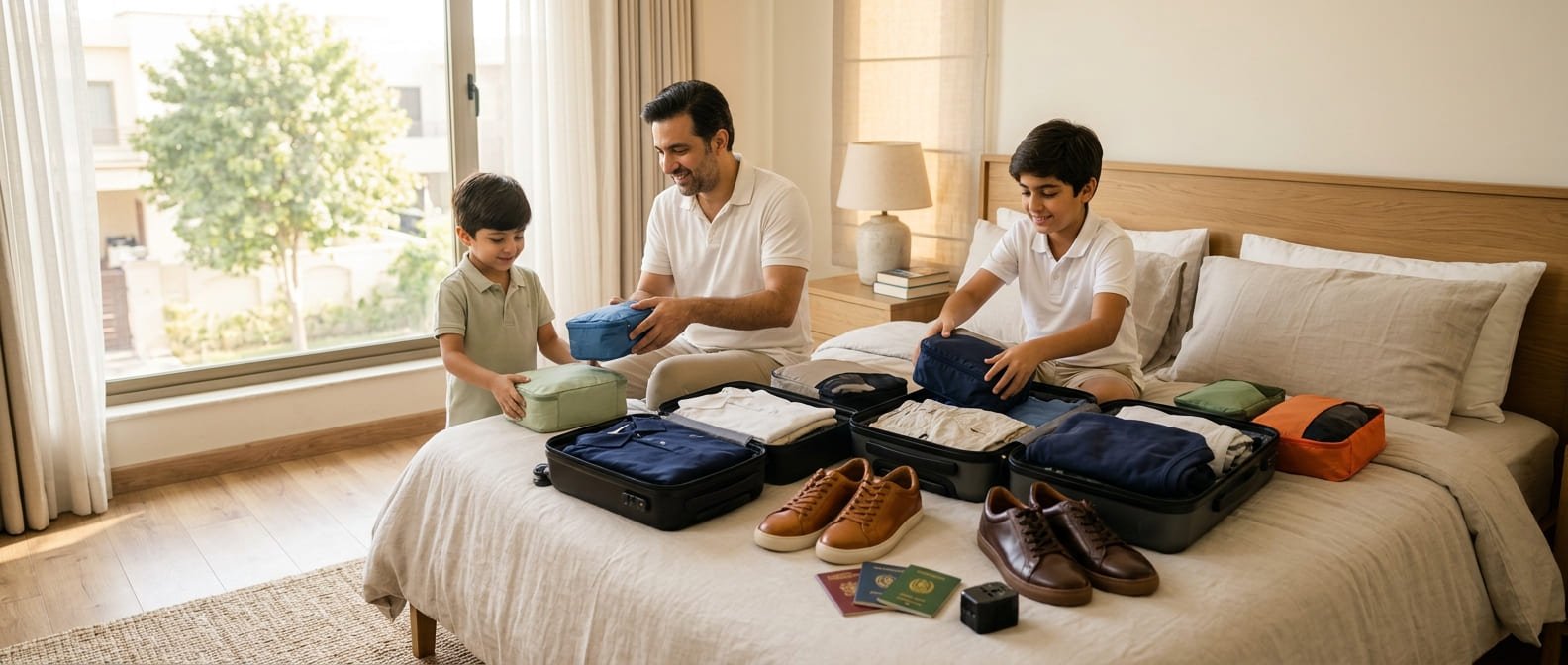
Most what to pack for Europe trip guides are written for one solo traveller with a backpack. Real trips are often different: a dad planning for himself and two boys, a family spending a week in Italy, or a couple combining city breaks with a few days by the sea. This guide answers what to pack for Europe trip by trip, with a complete Europe packing list for men, boys and kids: clothes for every season, shoes for cobbled streets, travel documents, electronics, toiletries and the small things people always forget.
You’ll also find a carry-on capsule wardrobe, printable-style checklists and advice on packing for trains, city breaks and the Mediterranean coast.
What to pack for Europe trip: the short answer
- Travel documents: passports, any visas or travel authorisations, insurance details, bank cards and booking confirmations.
- A versatile capsule wardrobe: about 10 to 14 pieces in one colour palette that all work together.
- Two pairs of comfortable shoes: one casual, one smarter, both already broken in.
- One weather layer: a light jacket in summer, a warm waterproof coat in winter.
- Electronics: phone, charger, power bank and the right plug adapters.
- Compact toiletries: liquids in small bottles that meet airport rules.
- A small day bag: a cross-body bag or compact backpack that closes securely.
Pack light. Europe is a continent of stairs, cobbles, narrow train aisles and small hotel rooms, and a carry-on case makes every one of them easier.

Step one: plan around your trip
Before you open a suitcase, answer four questions. They decide almost everything else.
- When are you going? Summer in southern Europe can be very hot; winter in the north is cold, dark and wet.
- Where are you going? Cities, beaches, mountains and countryside all need different clothes.
- How will you travel? Trains and budget flights reward small bags; car trips allow a little more.
- What will you do? Museums, churches, smart restaurants, hiking and beach days each need specific items.
Write your plans down, day by day, and you’ll see exactly which outfits you need.
The Europe packing list for men
Clothing for a 10 to 14 day trip
This capsule covers city days, dinners and travel in one suitcase. Choose one palette, such as navy, white, stone and olive, so everything matches.
| Item | How many | Notes |
|---|---|---|
| T-shirts | 3 to 4 | Plain, in white, navy and grey |
| Shirts or knitted polos | 2 to 3 | One linen or oxford shirt, one knitted polo |
| Light knit | 1 | Merino or cotton, for evenings and planes |
| Trousers | 2 | Chinos and dark jeans or light trousers |
| Shorts | 1 to 2 | Tailored, above the knee (summer only) |
| Jacket | 1 | Overshirt, light jacket or unstructured blazer |
| Weather layer | 1 | Packable waterproof or warm coat by season |
| Underwear and socks | 5 to 7 sets | Wash midway through the trip |
| Sleepwear | 1 set | Light and compact |
| Swimwear | 1 | For pools, beaches and spas |
Pack fewer bottoms than tops: trousers can be re-worn, and tops get changed more often.
- Navy knitted polo Top
- White linen shirt Shirt
- Stone chinos Trousers
- White leather trainers Shoes
Shoes
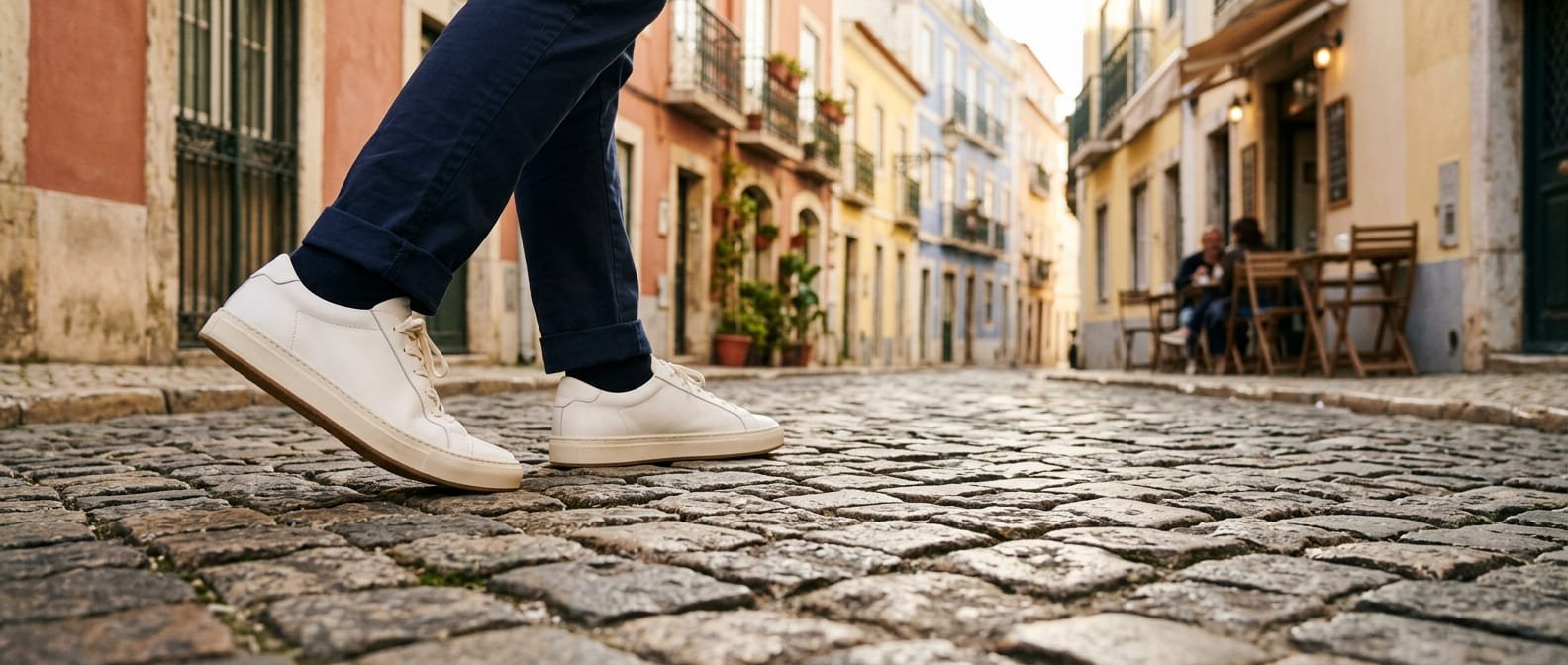
Shoes are where most travellers go wrong. You’ll often walk 15,000 to 25,000 steps a day on cobbles, stairs and hills.
- Main walking shoe: comfortable leather trainers or supportive casual shoes you’ve worn for weeks before the trip.
- Smarter shoe: suede loafers or leather derbies for dinners and evenings out.
- Optional third pair: sandals for summer beaches, or waterproof boots for winter.
Wear your bulkiest shoes on the plane to save suitcase space. For more help, see our guide to European summer outfits for men.
Packing for boys and kids
Children need more spares and more comfort, but the same capsule idea works.
Boys aged 8 to 16
- 4 to 5 T-shirts or polos
- 1 collared shirt for dinners and churches
- 2 pairs of shorts or trousers, depending on the season
- 1 hoodie or light jumper
- 1 waterproof or warm jacket
- Comfortable trainers they’ve already worn, plus sandals for summer
- Swimwear, a cap and sun cream
- Headphones and a charger for long journeys
Young children
- 1 outfit per day, plus 2 spare sets for spills and accidents
- Layers: a cardigan or fleece and a waterproof jacket
- A sun hat in summer, a warm hat and gloves in winter
- Comfortable, broken-in shoes
- A favourite comfort toy and small activities for journeys
- Nappies, wipes and a change mat for little ones (enough for the journey, then buy locally)
Put one complete change of clothes for each child in your hand luggage. Delays happen, and so do spills.
Packing by season
Spring (March to May)
Spring weather changes quickly. Pack layers: T-shirts, a light knit, an overshirt or light jacket and a packable waterproof. Bring trainers that cope with rain.
Summer (June to August)
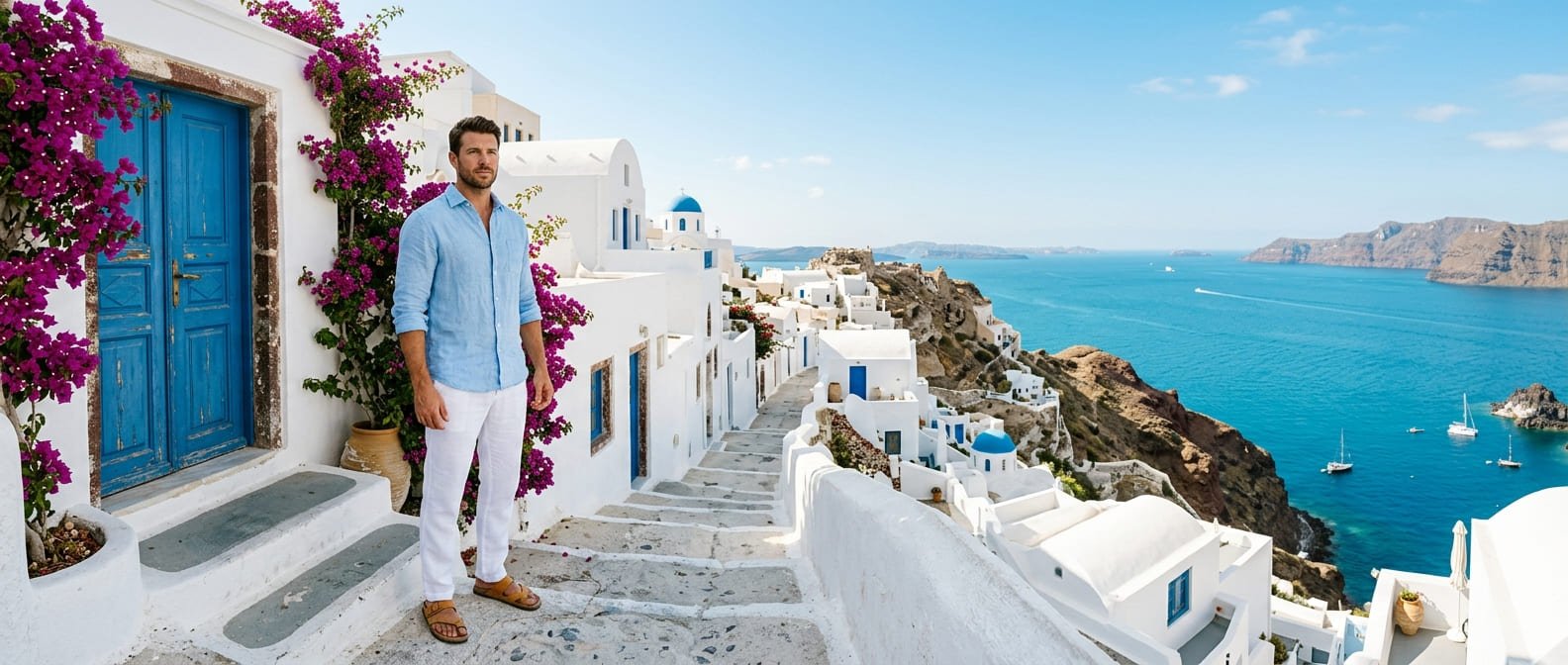
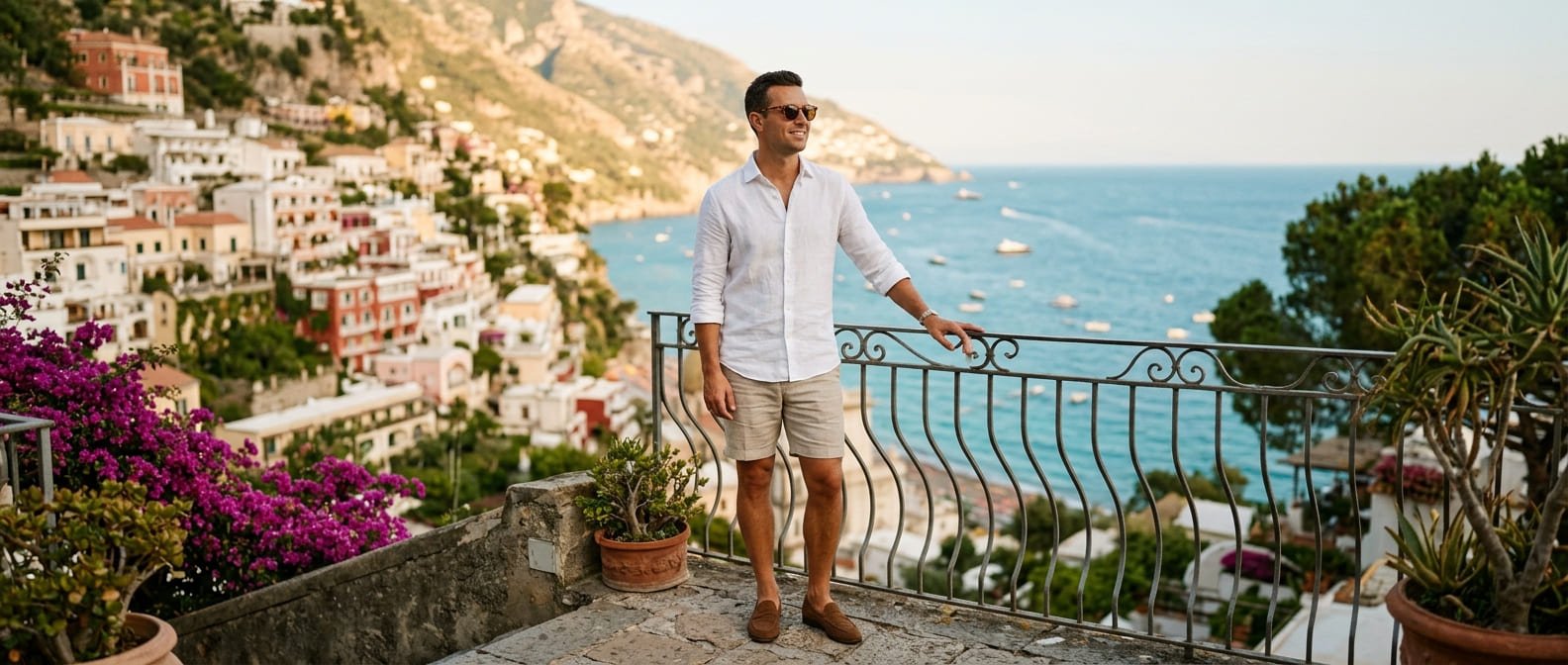
Southern Europe can be very hot, especially in cities. Choose linen and cotton, tailored shorts, a sun hat, sunglasses and high-factor sun cream. Pack one light layer for air-conditioned trains and cool evenings, and long trousers for churches.
Autumn (September to November)
Early autumn is still warm in the south; late autumn is cool and wet across most of Europe. Pack knits, an overshirt, a waterproof jacket and water-resistant shoes.
Winter (December to February)
Northern and central Europe are cold and dark, with rain or snow. Pack a warm waterproof coat, thermal base layers, a wool jumper, a hat, gloves, a scarf and waterproof boots with good grip. Christmas markets mean long hours standing outside, so warm socks matter.
Travel documents and money
- Passports for everyone, valid for at least several months beyond your travel dates.
- Entry requirements: check visa, travel authorisation and border rules for your nationality before you book, because EU entry systems have been changing.
- Travel insurance details, including medical cover.
- A European Health Insurance Card (EHIC) or Global Health Insurance Card (GHIC) if you’re entitled to one.
- Two bank cards from different providers, kept in different places.
- A little cash in euros or the local currency for small cafés and markets.
- Booking confirmations saved offline on your phone and, ideally, printed.
- Photocopies or photos of passports and cards, stored separately.
- A driving licence if you plan to hire a car.
- Consent documents if one parent is travelling alone with children; some border officials may ask.
Electronics and plug adapters
Most of continental Europe uses Type C and Type F plugs at 230 volts. The UK and Ireland use Type G, Switzerland uses Type J and Italy also uses Type L. A universal travel adapter covers them all.
- Phone and charger
- A power bank for long sightseeing days
- Universal adapter, or one per country
- Headphones
- An e-reader or tablet for journeys
- A short multi-plug extension, useful in hotel rooms with few sockets
Toiletries and health
- Liquids in small travel bottles; many airports still limit liquids in hand luggage to 100 ml containers, so check your departure airport’s rules.
- Toothbrush, toothpaste, deodorant, shampoo and shaving kit
- Sun cream, after-sun and lip balm with sun protection
- Prescription medicines in their original packaging, with a copy of the prescription
- A small first-aid kit: plasters, blister plasters, pain relief and antihistamines
- Children’s medicine, a thermometer and rehydration sachets
- Hand sanitiser and tissues
Bags and organisation
- Carry-on suitcase or travel backpack: easier on trains, stairs and cobbles than a large case.
- Packing cubes: one per person keeps family luggage organised.
- Day bag: a cross-body bag or small backpack that zips securely.
- Laundry bag: keeps worn clothes separate.
- Reusable water bottle: many European cities have free drinking fountains.
- Foldable tote: for shopping, picnics and souvenirs.
Dressing for European culture
A few customs affect what you pack.
- Churches and cathedrals: many ask visitors to cover shoulders and knees. Pack light trousers and shirts with sleeves.
- Dinners: Europeans often dress a little smarter for dinner, even on holiday. One collared shirt or knitted polo per person goes a long way.
- Swimwear in town: some coastal towns discourage or fine swimwear away from the beach, so pack a cover-up.
- Logos and sports kit: plain clothes help you blend in, especially in cities.
Packing for different types of Europe trips
City breaks
Smart casual clothes, comfortable walking shoes, a small day bag and one smarter outfit for dinner.
Beach and island holidays
Linen, swimwear, sandals, sun protection and a light layer for breezy evenings.
Train journeys between cities
A small case or backpack, layers for air-conditioned carriages and snacks for children.
Mountains and lakes
Proper walking shoes, a waterproof jacket, a fleece and sun protection; mountain weather changes quickly, even in summer.
Christmas markets
Warm coat, hat, gloves, scarf, thermal layers and waterproof boots.
What to pack for Europe trip by trip length
A long weekend (3 to 4 days)
A small backpack or carry-on is enough. Pack two T-shirts, one shirt or polo, one pair of trousers (wear a second pair), one light layer, underwear and socks for each day and one pair of shoes plus the pair you travel in.
One week
Pack three or four tops, two bottoms, one knit, one jacket and two pairs of shoes. You may not need to do laundry.
Two weeks or longer
Use the full capsule wardrobe from this guide, and plan one laundry day. Many apartments have washing machines, and most European cities have self-service launderettes.
What to pack for Europe trip planning with a family
Family travel adds a few extra items, and a little organisation saves a lot of stress.
- One packing cube per person, in different colours, so everyone can find their own clothes.
- A shared toiletry bag with family-size essentials, bought locally where possible.
- A small “journey bag” with snacks, wipes, chargers, a spare top for each child and entertainment.
- Lightweight pushchair or carrier for young children; many old town streets and metro stations have stairs.
- Car seats if you’ll hire a car; check whether the rental company provides them.
- A copy of each child’s passport and any medical information.
Packing for European weather surprises
European weather can change fast. A sunny morning in London or Amsterdam can turn to rain by lunchtime, and mountain areas can be cold even in August.
- Always pack a light waterproof, even in summer.
- Bring one warm layer, such as a fleece or knit, for cool evenings.
- Choose shoes that won’t be ruined by rain.
- Check the forecast a week before you leave and adjust.
Last-minute checks before you leave
Run through this list the night before you travel.
- Passports and entry documents for everyone, in one safe place.
- Phones charged, chargers and adapters packed.
- Medicines in hand luggage, not in the hold.
- Liquids in small containers, in a clear bag if your airport requires one.
- One change of clothes for each child in hand luggage.
- Boarding passes and booking confirmations saved offline.
- House keys, and a plan for who has them.
If you’re still unsure what to pack for Europe trip after trip, start with this checklist and the capsule wardrobe, then adjust for the season and your destination.
What not to pack
- Too many shoes. Two pairs, three at most.
- Hairdryers and heavy appliances. Most hotels provide them.
- Large bottles of toiletries. Buy what you need locally.
- Expensive jewellery and valuables you don’t need.
- Outfits for “just in case”. If you can’t name the day you’ll wear it, leave it at home.
- Brand-new shoes. They cause blisters on the first walking day.
How to pack a carry-on for two weeks
- Lay out everything, then remove a third of it.
- Choose one colour palette so every piece matches.
- Roll T-shirts and knits; fold shirts and trousers flat.
- Use packing cubes: tops, bottoms and underwear separately.
- Put shoes in bags and fill them with socks.
- Wear your heaviest shoes and jacket on the plane.
- Leave a little space for souvenirs.
- Plan to wash clothes once, midway through the trip.
Your printable checklist
| Category | Must pack |
|---|---|
| Documents | Passports, entry documents, insurance, cards, cash, confirmations |
| Clothes | Capsule wardrobe, underwear, sleepwear, swimwear, weather layer |
| Shoes | Walking shoes, smarter shoes, sandals or boots by season |
| Electronics | Phone, chargers, power bank, adapter, headphones |
| Toiletries | Travel-size liquids, medicines, sun cream, first-aid kit |
| Kids | Spare outfits, comfort toy, snacks, activities, medicine |
| Bags | Carry-on, day bag, packing cubes, laundry bag, water bottle |
For destination advice, read what to wear in Spain and Greece outfits, and travel in comfort with our airport outfit ideas.
For city-specific advice, read our Paris outfit ideas and explore our European fashion guides.
Frequently asked questions
Travel documents, a capsule wardrobe of about 10 to 14 pieces in one colour palette, two pairs of broken-in shoes, a weather layer, electronics with a universal adapter, compact toiletries and a secure day bag.
Around 10 to 14 pieces that all match: three or four T-shirts, two or three shirts or polos, two pairs of trousers, one or two pairs of shorts in summer, a knit and a jacket. Plan to do laundry once.
Two pairs are usually enough: comfortable walking shoes such as leather trainers, and smarter shoes such as loafers for dinners. Add sandals in summer or waterproof boots in winter.
Most of continental Europe uses Type C and F plugs. The UK and Ireland use Type G, Switzerland uses Type J and Italy also uses Type L. A universal adapter covers them all.
One outfit per day plus two spare sets, layers, a waterproof, comfortable shoes, sun protection or warm accessories by season, snacks, activities and any medicines.
Too many shoes, large toiletry bottles, hairdryers, expensive jewellery, brand-new shoes and "just in case" outfits you can't match to a specific day.
Yes, with a capsule wardrobe in one palette, packing cubes and one laundry stop. A carry-on makes trains, stairs and cobbled streets much easier.
A light, packable waterproof is worth taking even in summer, especially for the UK, Ireland, the Netherlands, Scandinavia and mountain areas, where showers can arrive quickly.
Two pairs cover most trips: comfortable walking shoes and smarter shoes for dinners. Add sandals in summer or waterproof boots in winter, and wear the bulkiest pair while travelling.