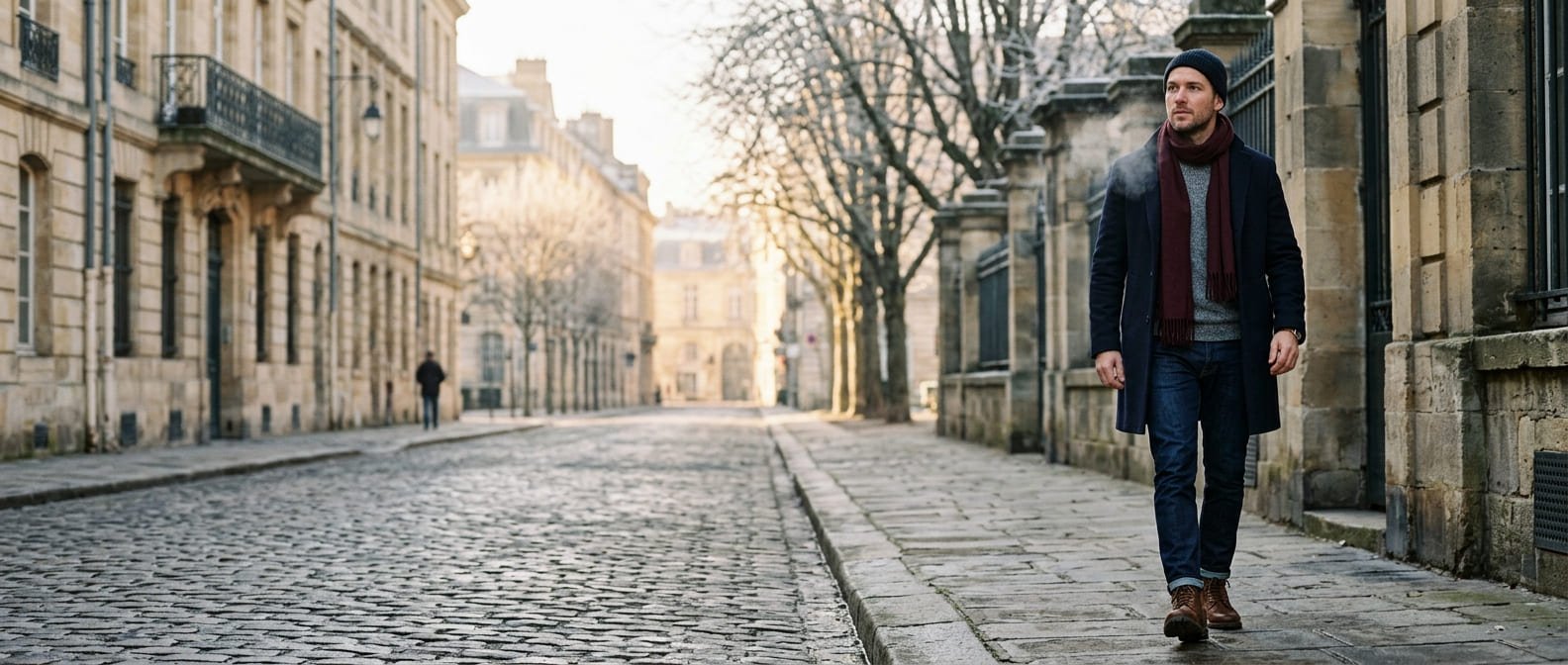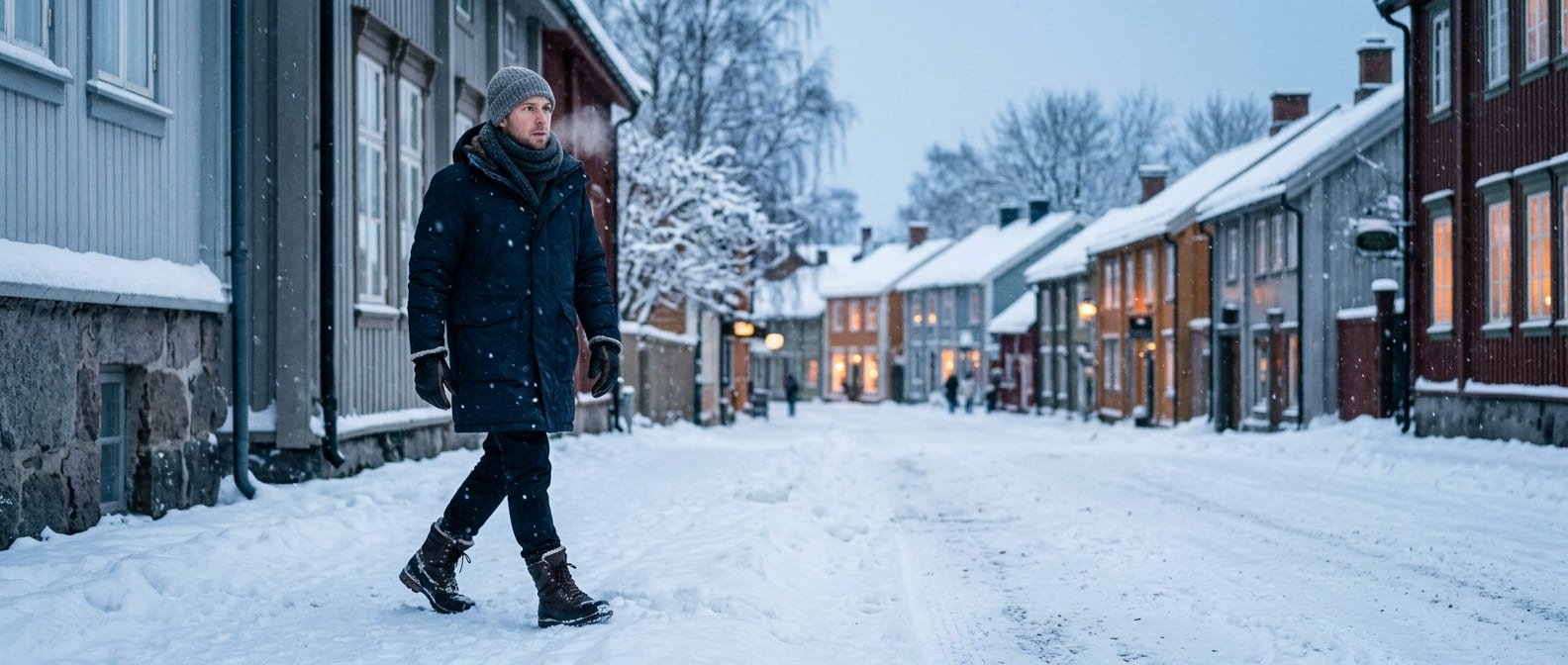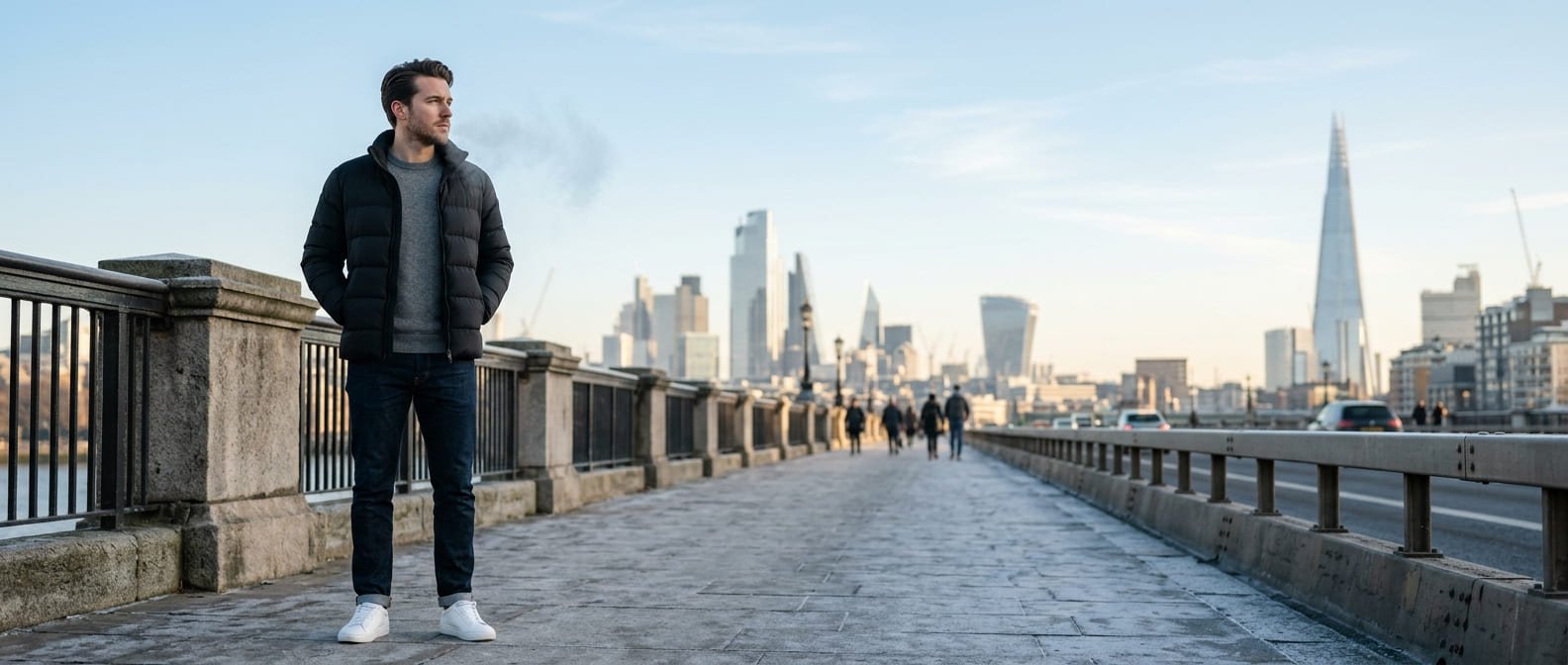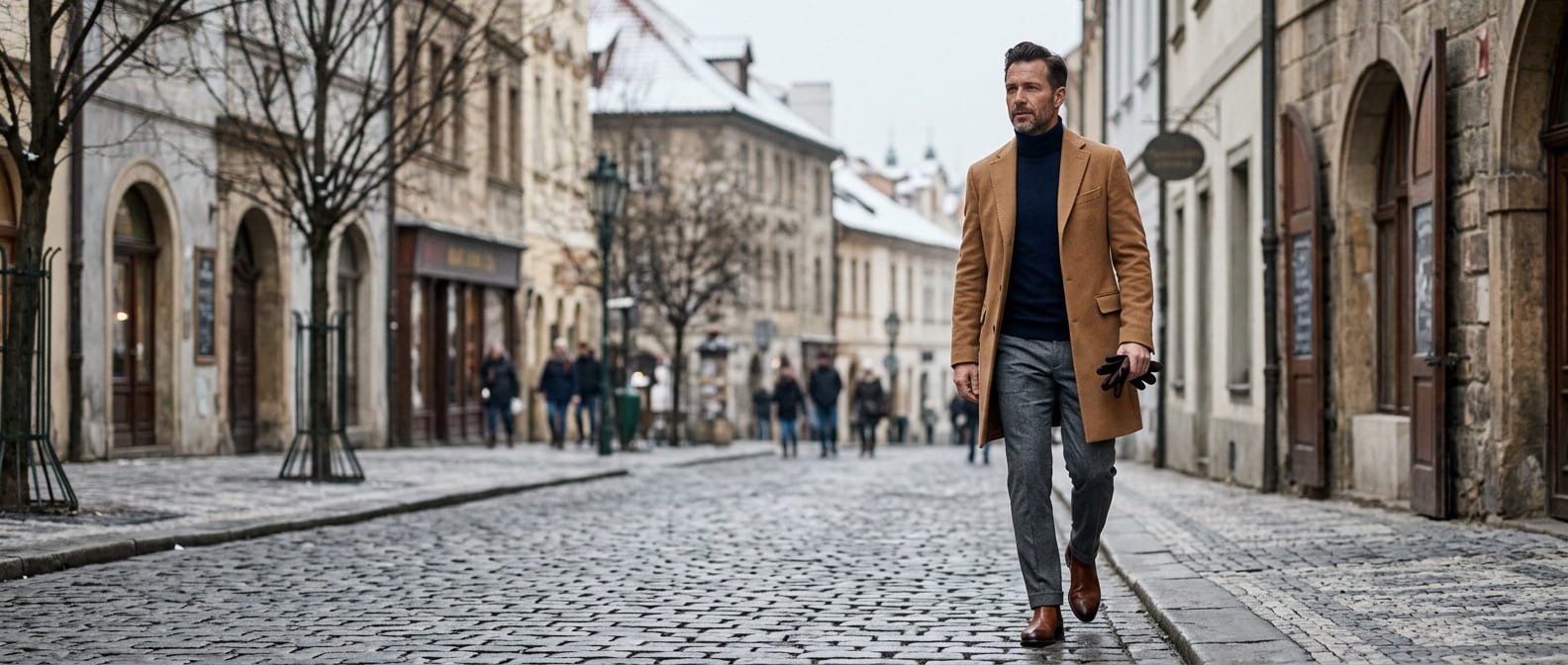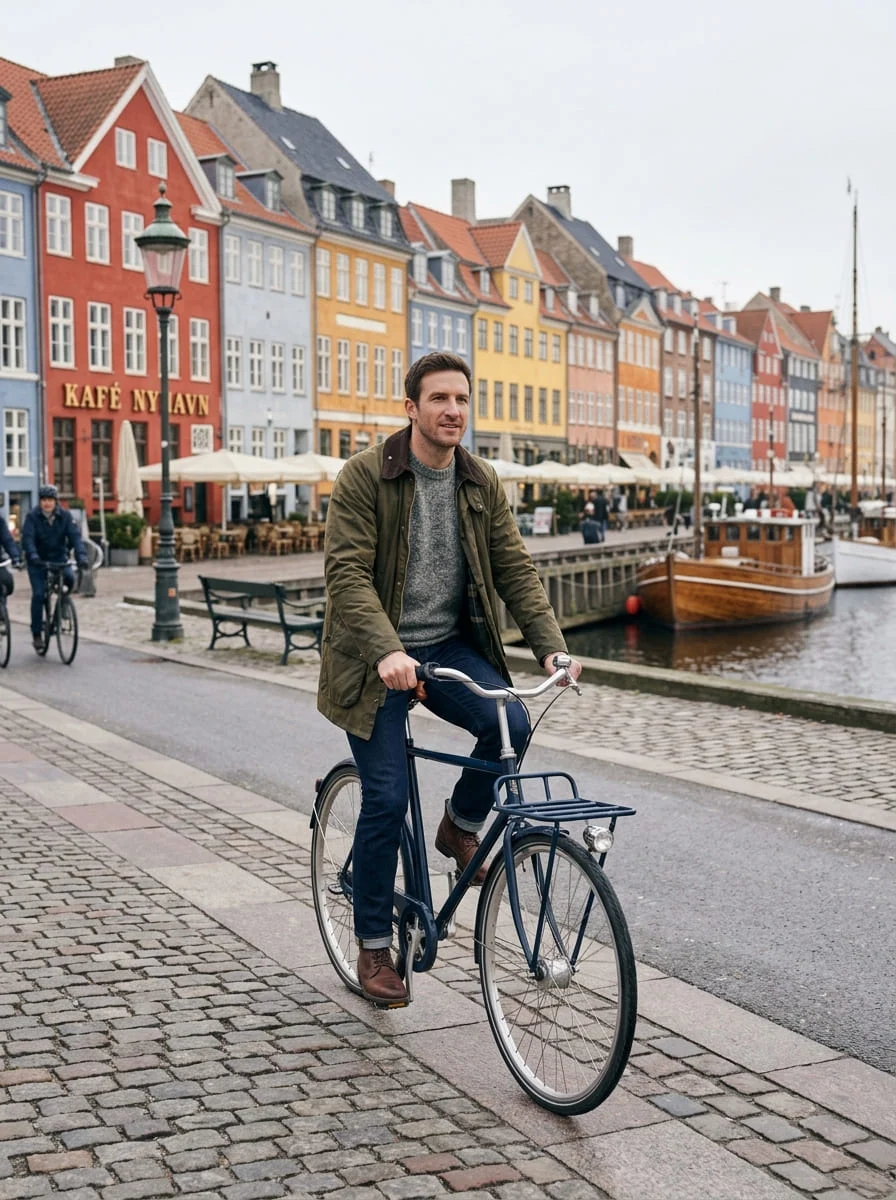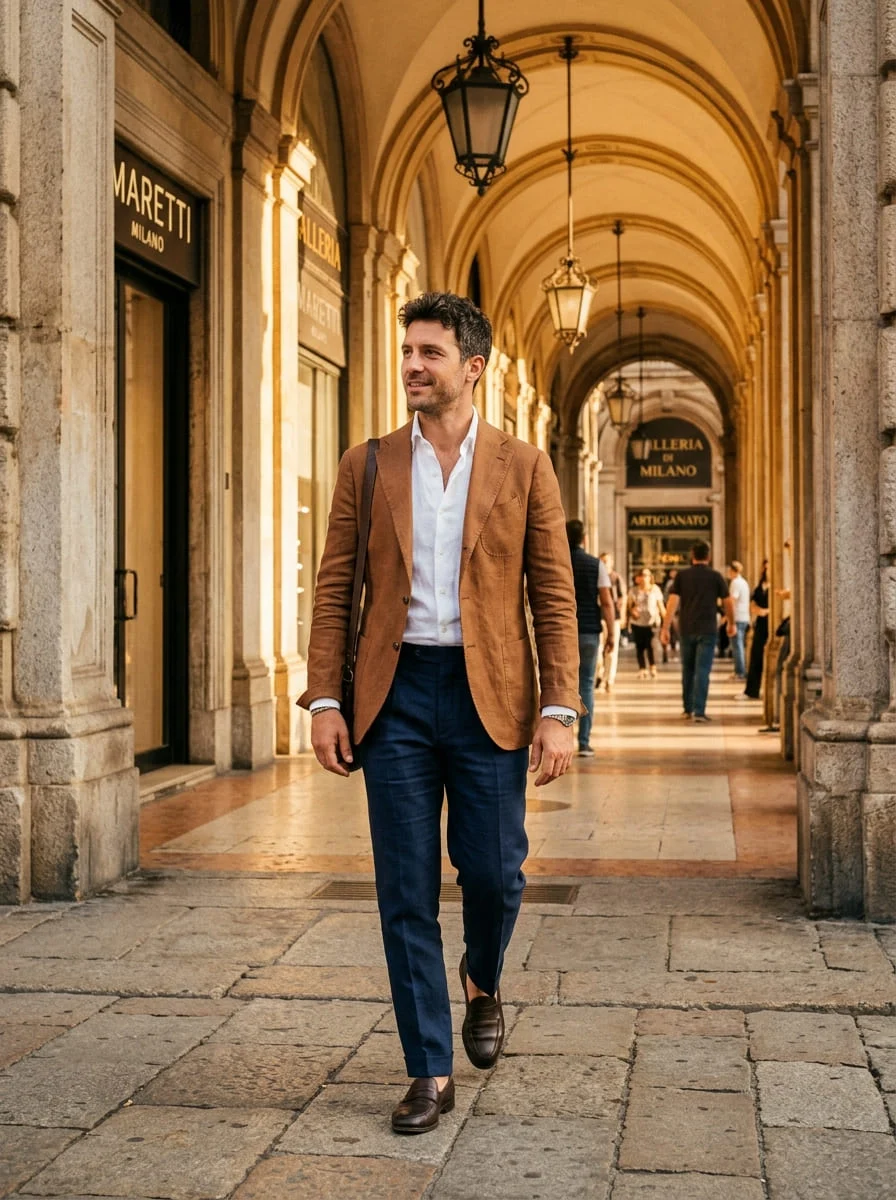
Swedish fashion has an influence far greater than the size of the country. A nation of about ten and a half million people gave the world one of its largest clothing retailers, some of its most admired designer labels, the “Stockholm style” that fills social media, and a way of dressing that puts function and restraint first. On the street, Swedish fashion is clean, muted, well cut and built for a climate that swings from dark, frozen winters to bright summers when the sun barely sets. Behind it lies a much older tradition of folk costume, wool and handcraft. This guide explains how people dress in Sweden, what Stockholm style means, what to wear each month, traditional Swedish clothing, the brands and designers to know, sizes, shopping and dress codes, for men, boys and kids.
Swedish fashion at a glance
- Minimalist. Clean lines, plain fabrics and very little decoration.
- Muted colours. Black, navy, grey, beige, white and camel, with the odd bright accent.
- Functional. Clothes have to work in rain, snow, wind and on a bicycle.
- Layered. Indoors is warm and outdoors is cold, so layers come on and off all day.
- Lagom. A Swedish word meaning “just the right amount”: not too much, not too little.
- Equal and relaxed. Offices are casual, and men’s and women’s clothes often share the same shapes.
- Well made. People buy fewer, better things and wear them for years.
- Sustainable. Second-hand shopping and repair are normal.
- Outdoorsy. Hiking jackets, backpacks and rain gear are everyday wear, in the city too.
How people dress in Sweden
Everyday clothes
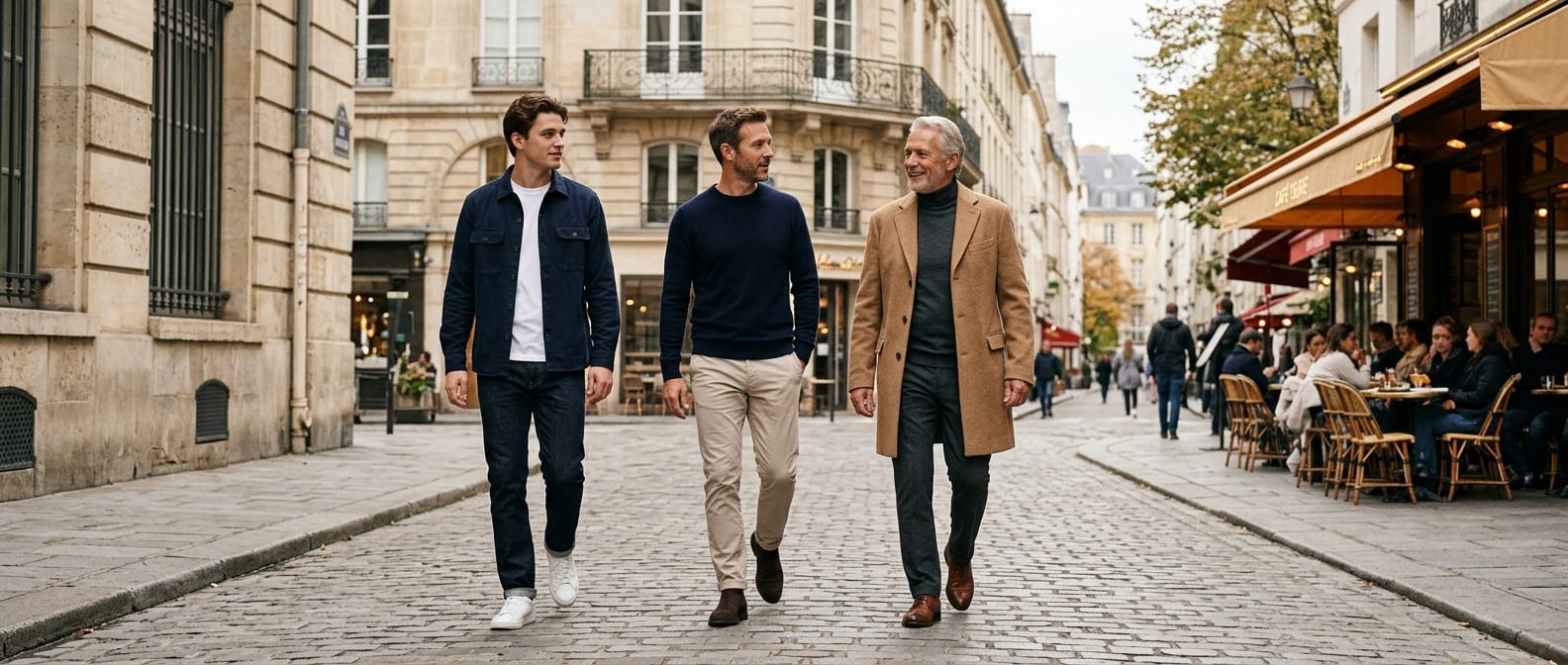
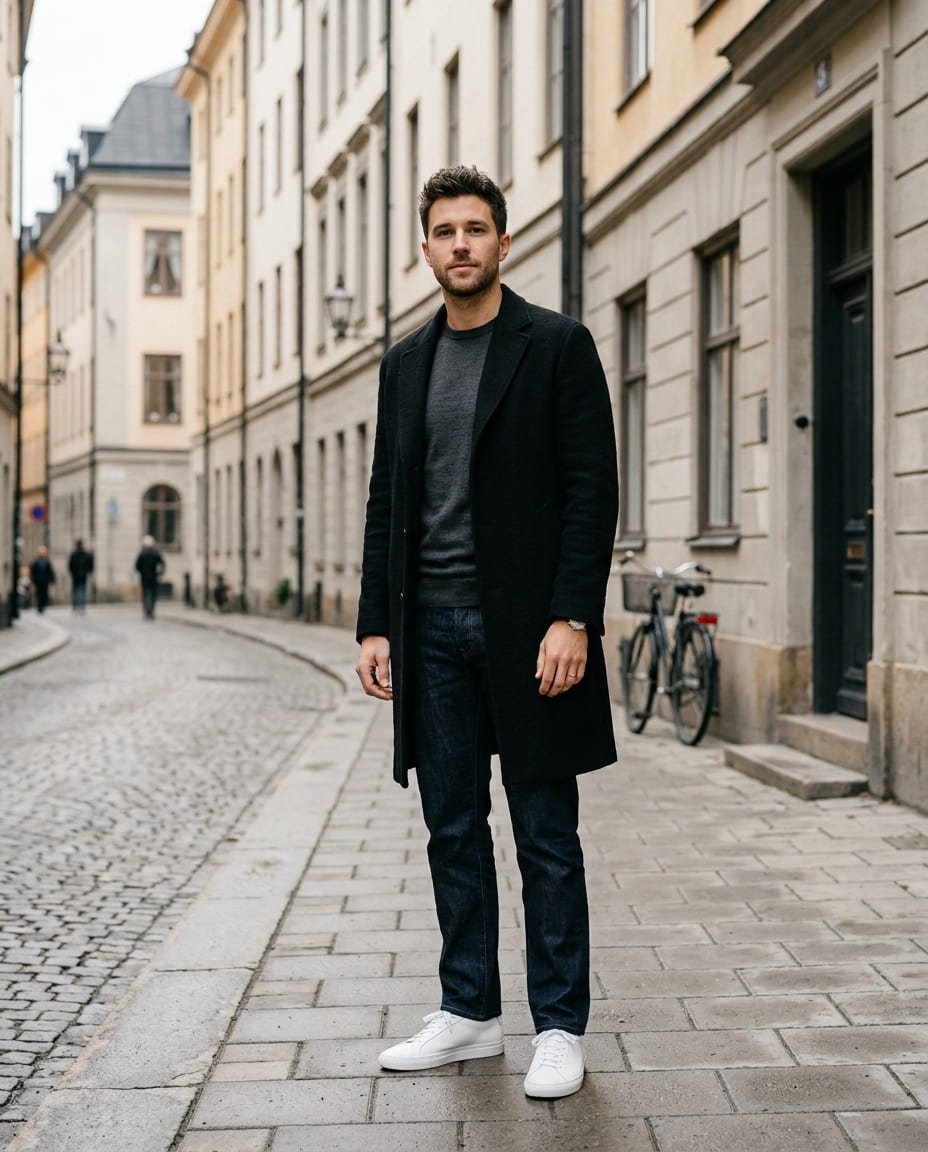
What do people wear in Sweden on an ordinary day? Dark or straight-cut jeans, a plain knit or shirt, a wool coat or padded jacket, a scarf and clean leather trainers or boots. Outfits look simple at first glance. The care is in the fit, the fabric and the proportions.
Lagom and the quiet approach
Swedish clothing style is guided by *lagom*, the idea of moderation. Showing off wealth through logos or flashy clothes is frowned upon, an attitude linked to the Scandinavian “law of Jante”, which discourages standing out. The result is a country where a chief executive and a student may wear much the same jacket and trainers.
Function first
A favourite Swedish saying is that there is no bad weather, only bad clothes. People cycle, walk and take public transport in all conditions, so waterproof jackets, warm boots, backpacks and reflective details are part of normal dress.
Shoes off indoors
In Swedish homes, you take off your shoes at the door. Guests often bring indoor shoes to a dinner party. Wear good socks.
Dark winters, bright summers
In December, Stockholm gets about six hours of daylight. In June, it gets about eighteen. Winter wardrobes are dark and practical. In summer, Swedes switch to white, pale blue, linen and bare ankles the moment the sun appears.
Generations
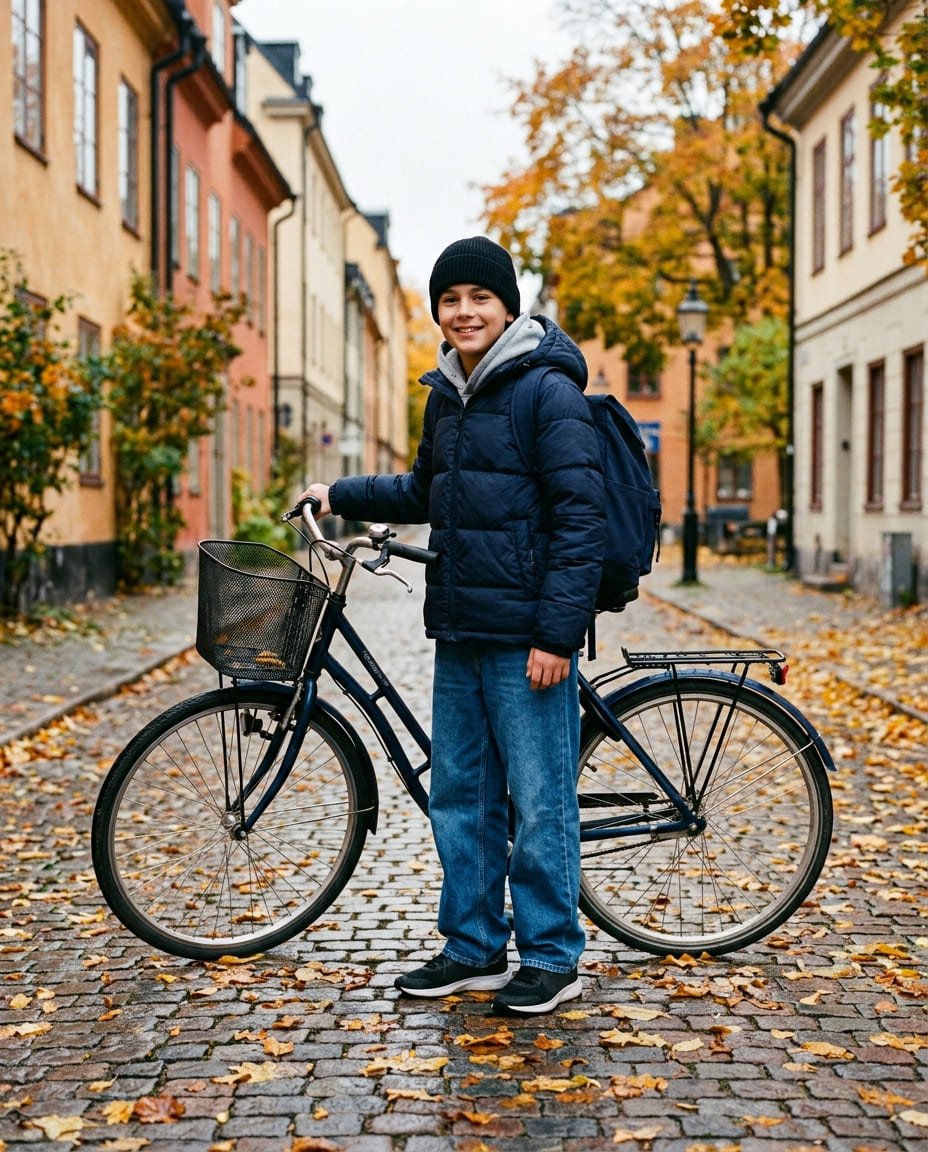
- Teenagers and students: wide jeans, hoodies, puffer jackets, retro trainers and plenty of second-hand finds.
- Young adults: the minimalist “Stockholm” look, with oversized coats and tailoring.
- Adults: smart casual in neutral colours, with good knitwear and outerwear.
- Older Swedes: classic and practical, with quilted jackets, sturdy shoes and bright accents.
What is Stockholm style?
Stockholm style is the polished, minimalist way of dressing associated with the Swedish capital. The term spread widely through social media, where “Stockholm style” and “Stockholm aesthetic” describe a recognisable look.
- A neutral palette: black, grey, beige, cream, navy and brown.
- Oversized outerwear: long wool coats, trench coats, leather jackets and padded jackets.
- Relaxed tailoring: loose blazers and wide or straight trousers.
- Straight or wide jeans in mid-blue, black or ecru.
- Fine knitwear: crew necks, roll necks and cardigans.
- A large scarf, wrapped generously.
- Clean trainers, loafers or leather boots.
- Simple accessories: a leather bag, sunglasses, a cap and small jewellery.
- Neat, natural grooming.
Stockholm style for women
Stockholm style for women centres on an oversized blazer or long coat, straight jeans or tailored trousers, a fine knit, loafers or trainers and hair worn sleek. It mixes masculine tailoring with soft knitwear.
Stockholm style for men
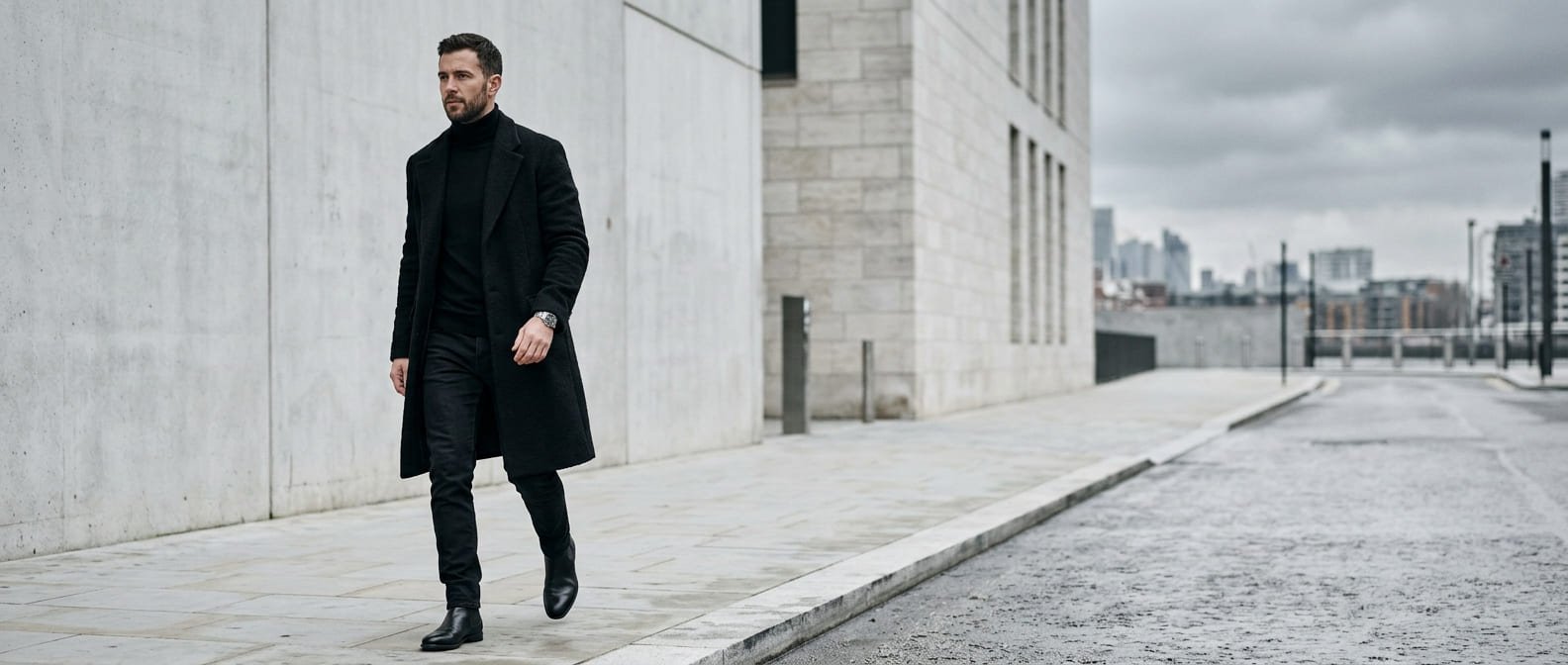
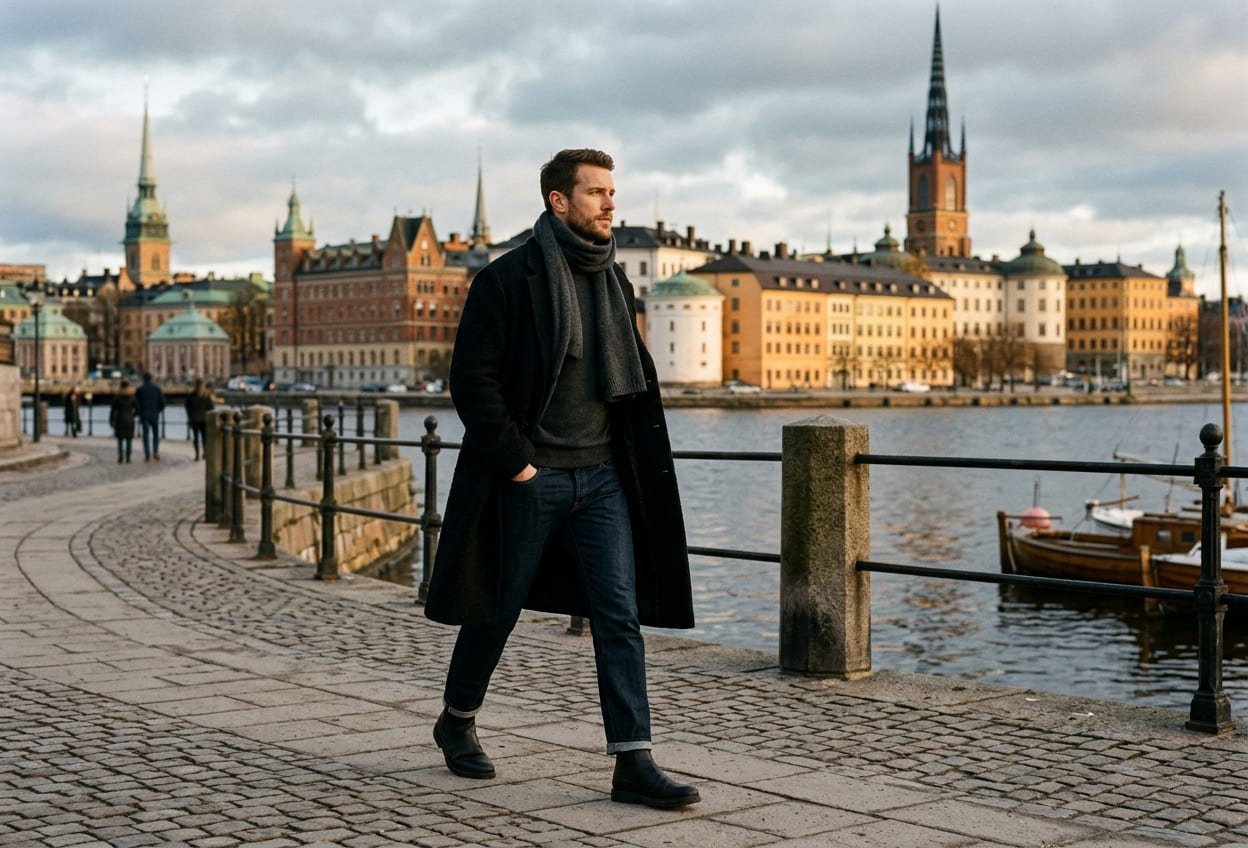
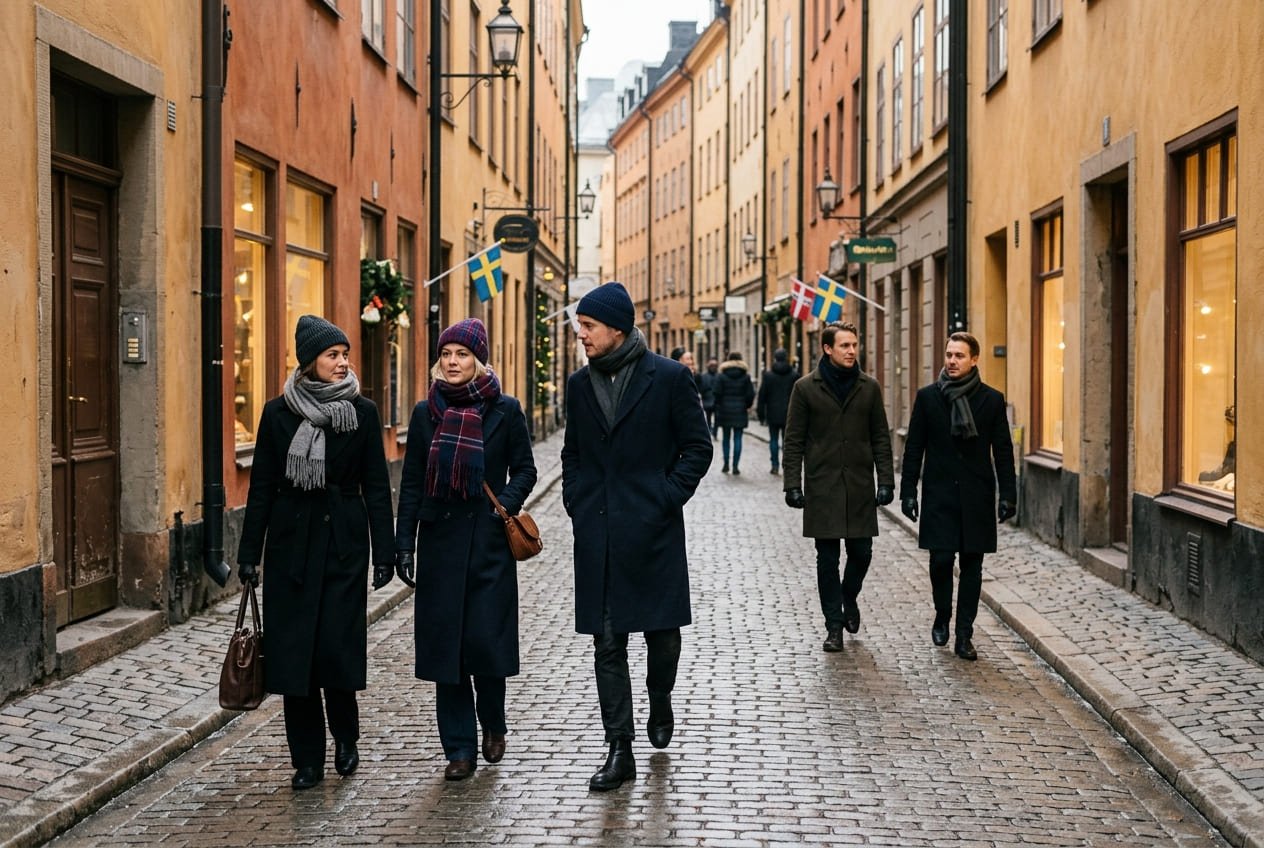
For men, it means a wool overcoat or cropped jacket, a heavy T-shirt or fine knit, straight trousers with a clean hem and minimal trainers or boots, nearly always in dark, plain colours.
- Black wool overcoat Coat
- Grey merino crew neck Knit
- Dark straight jeans Trousers
- Black leather boots Shoes
- Grey wool scarf Accessory
Stockholm street style by district
- Södermalm: the creative district. Vintage, workwear, wide trousers and independent labels, especially in the streets known as SoFo.
- Östermalm: polished and expensive. Tailoring, cashmere, loafers and designer bags.
- Norrmalm: the commercial centre, with department stores and high-street chains.
- Gamla Stan: the old town, full of visitors in comfortable shoes.
- Kungsholmen and Vasastan: residential, relaxed and well dressed.
Swedish men’s fashion
Swedish men’s fashion is one of the easiest national styles to copy, because it relies on a small number of good, plain pieces. Scandinavian men’s style in general follows the same rules.
- A dark wool overcoat for winter.
- A technical or padded jacket for bad weather.
- A navy or grey suit with a slim, natural shoulder, often worn without a tie.
- Merino and lambswool knitwear in grey, navy, black and oatmeal.
- An Oxford shirt or overshirt.
- Heavy plain T-shirts in white, grey and black.
- Straight jeans in raw indigo or black.
- Tailored wool trousers.
- Minimal white or black leather trainers.
- Leather boots with a rubber sole.
- A beanie, scarf and gloves.
- A backpack for commuting.
See our guides to European men’s fashion, smart casual for men and all-black outfits for men.
Swedish style by region
Stockholm
The fashion capital. Sleek, minimalist and dark, with the strongest designer presence in the country.
Gothenburg
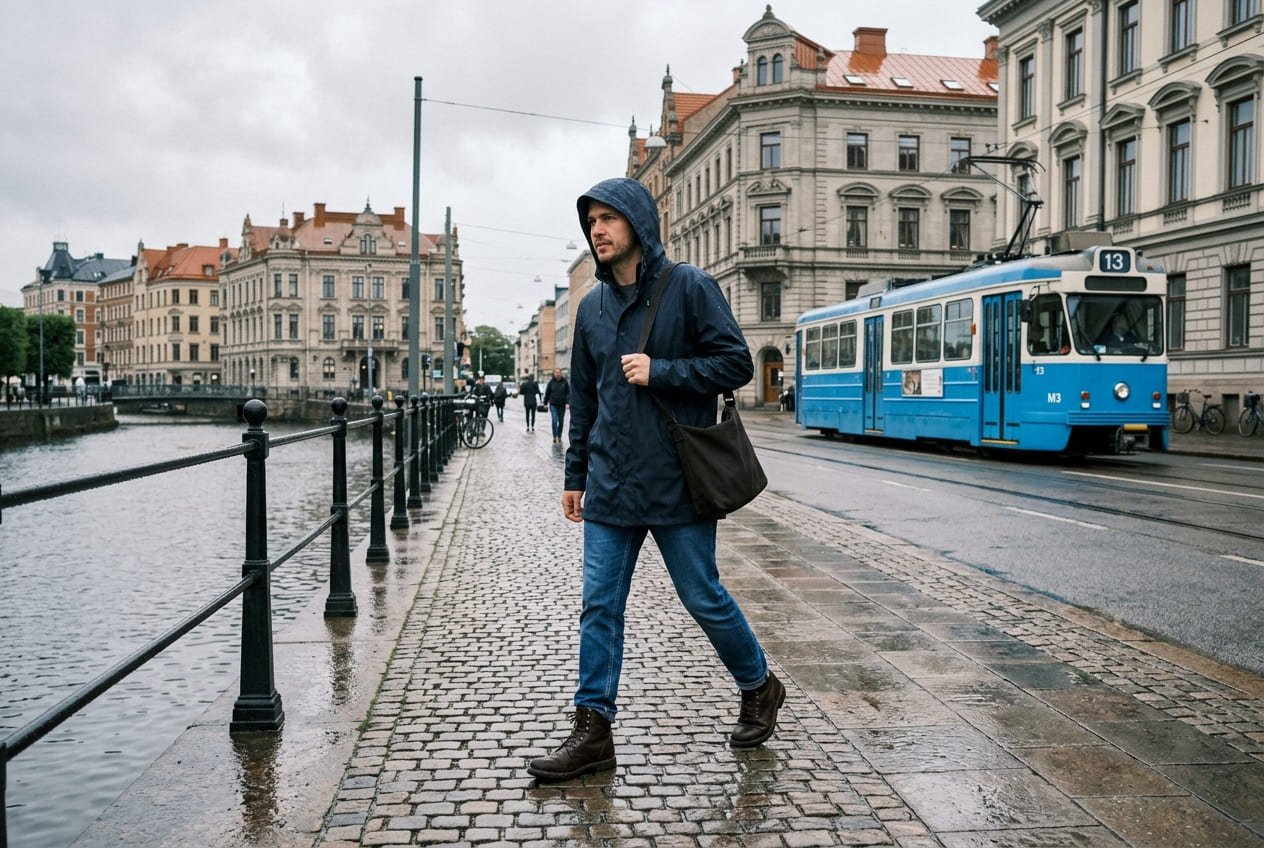
Sweden’s second city, on the west coast, is more relaxed and a little rougher round the edges. It’s the home of Swedish denim, music-scene style and rainproof outerwear, because it rains often.
Malmö and Skåne
Close to Copenhagen, the south is more colourful and continental, with a strong vintage and streetwear scene.
Borås and the textile country
The town of Borås, east of Gothenburg, has been the centre of Swedish textiles and mail order for more than a century. It’s home to the Swedish School of Textiles and a textile museum.
Dalarna
The heartland of Swedish folk culture. Folk costumes are still worn here at Midsummer, and the region is known for red wooden houses and painted horses.
Norrland and Swedish Lapland
The far north is about function: down parkas, wool base layers, insulated boots and snowmobile suits. It’s also part of Sápmi, the homeland of the Sami people.
The islands and the west coast
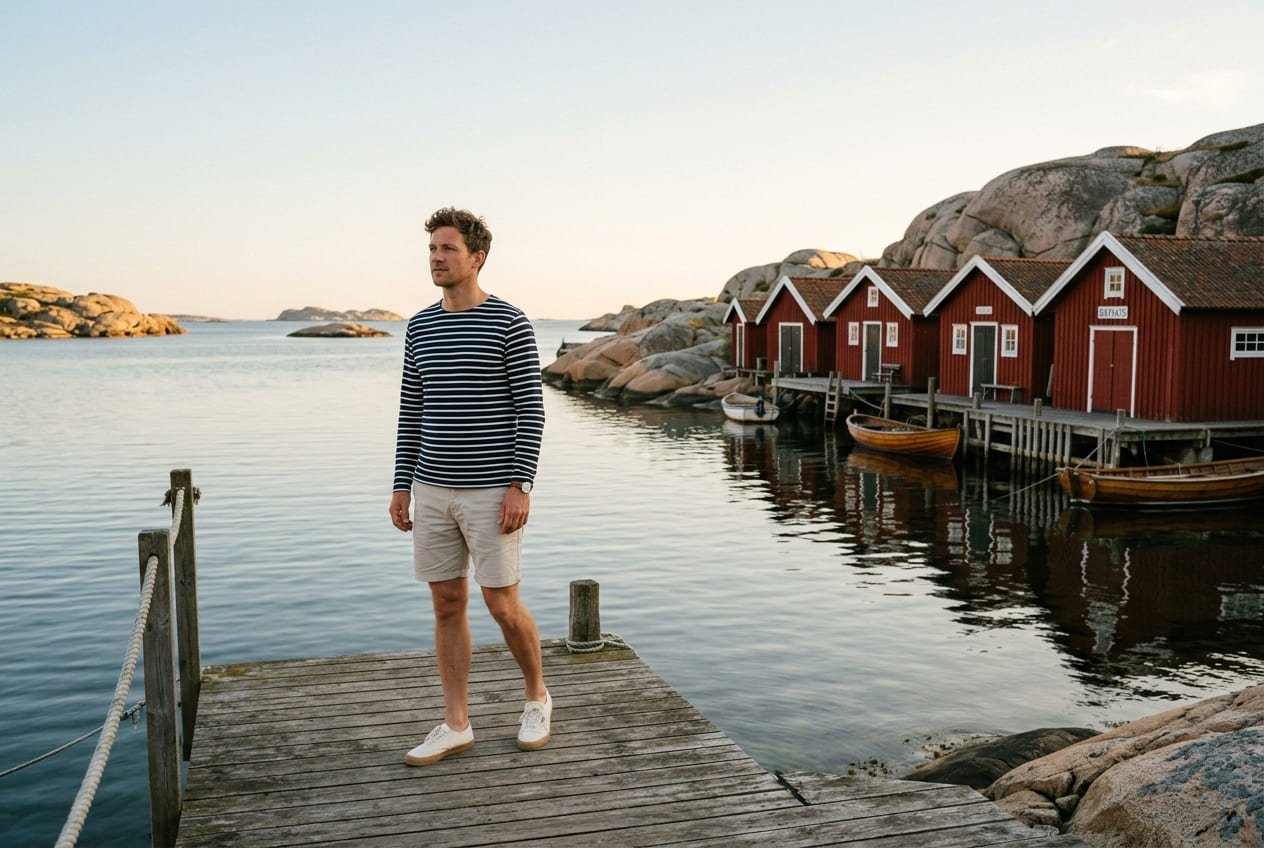
Gotland, Öland and the Bohuslän coast have a summer style of striped tops, shorts, deck shoes, raincoats and knitwear for cool evenings.
What to wear in Sweden, month by month
The table gives typical daytime highs for Stockholm. Gothenburg and Malmö are a little milder and wetter. The north is far colder in winter: Kiruna often sits between minus 10 and minus 20 °C, and can drop lower.
| Month | Stockholm | Daylight | What to wear |
|---|---|---|---|
| January | about 0 °C | about 7 hours | Down or wool coat, thermal layer, jumper, lined boots, beanie, scarf and gloves |
| February | about 0 °C | about 9 hours | As January. Often the snowiest month |
| March | about 4 °C | about 12 hours | Winter coat, knitwear and waterproof boots. Slush underfoot |
| April | about 10 °C | about 14 hours | Lighter coat or padded jacket, jumper and scarf |
| May | about 16 °C | about 17 hours | Light jacket, shirt or knit and trainers. Cool evenings |
| June | about 21 °C | about 18 hours | T-shirts, light trousers, a jumper and a rain jacket |
| July | about 23 °C | about 18 hours | Summer clothes, a light jacket for evenings, swimwear and sunglasses |
| August | about 22 °C | about 15 hours | As July, with a knit for the evening |
| September | about 17 °C | about 13 hours | Jacket, knitwear, long trousers and a rain layer |
| October | about 10 °C | about 10 hours | Coat, jumper, scarf and waterproof shoes |
| November | about 5 °C | about 8 hours | Winter coat, hat, gloves and boots. Dark and damp |
| December | about 1 °C | about 6 hours | Full winter clothing, plus reflectors for the dark |
What to wear in Sweden in summer
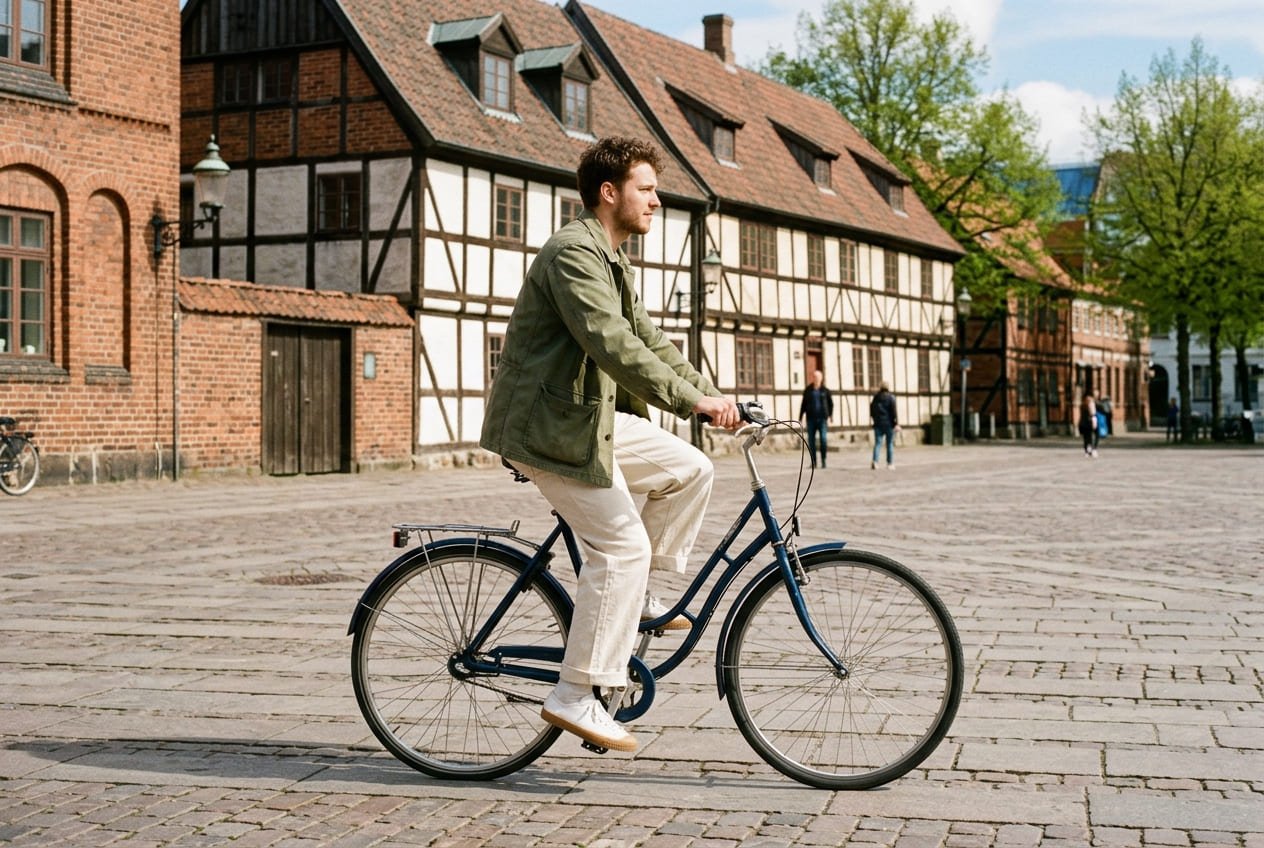
What to wear in Stockholm in July is simpler than many visitors expect: T-shirts, shirts, light trousers or shorts, trainers and sunglasses. Always add a jumper and a light rain jacket, because evenings by the water are cool and showers are common. Pack swimwear, as Swedes swim in lakes and the sea, and an eye mask if you sleep lightly in the midnight light. See European summer outfits for men.
- Navy and white striped long-sleeve top Top
- Stone cotton shorts Shorts
- White canvas trainers Shoes
- Yellow rain jacket Layer
What to wear in Sweden in winter
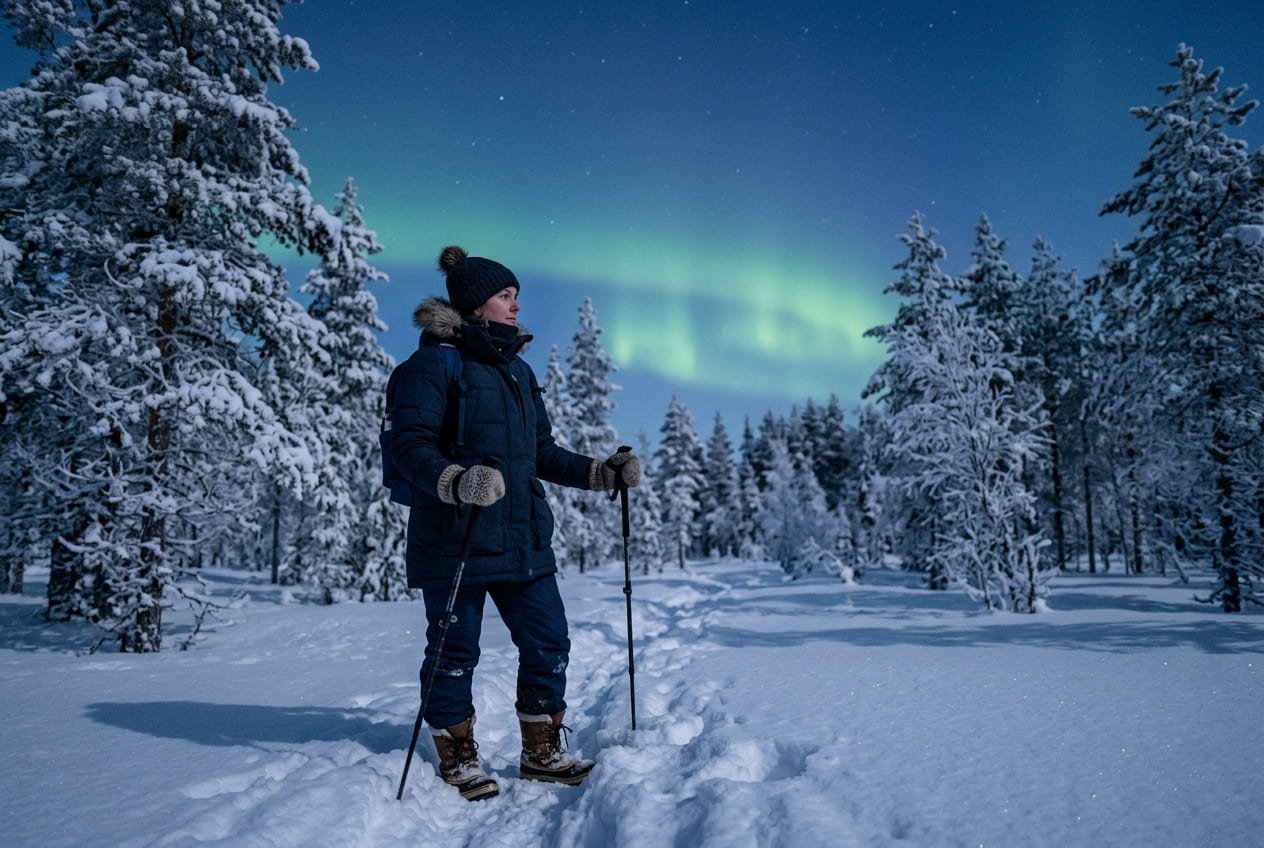
Swedish winter wear follows the three-layer principle.
- Base layer: thin merino wool or thermal underwear next to the skin. Swedes call it *underställ*.
- Mid layer: a wool jumper or fleece.
- Outer layer: a down, padded or wool coat that blocks wind and covers the hips.
Add lined, waterproof boots with a grippy sole, wool socks, a beanie, a scarf and gloves or mittens. Because buildings are very well heated, each layer should be easy to remove. For the Arctic north, add a down parka rated for deep cold, insulated trousers, and mittens over thin gloves. See winter outfits for men, cold-weather clothing and puffer jackets for men.
- Navy down parka Coat
- Oatmeal wool jumper Knit
- Black lined trousers Trousers
- Brown lined leather boots Shoes
- Grey wool beanie Accessory
Spring and autumn
These are the layering seasons. A trench coat or padded jacket, a knit, a scarf and waterproof shoes cover most days. See spring outfits for men and fall outfits for men.
What to wear for Swedish places and occasions
Sightseeing in Stockholm
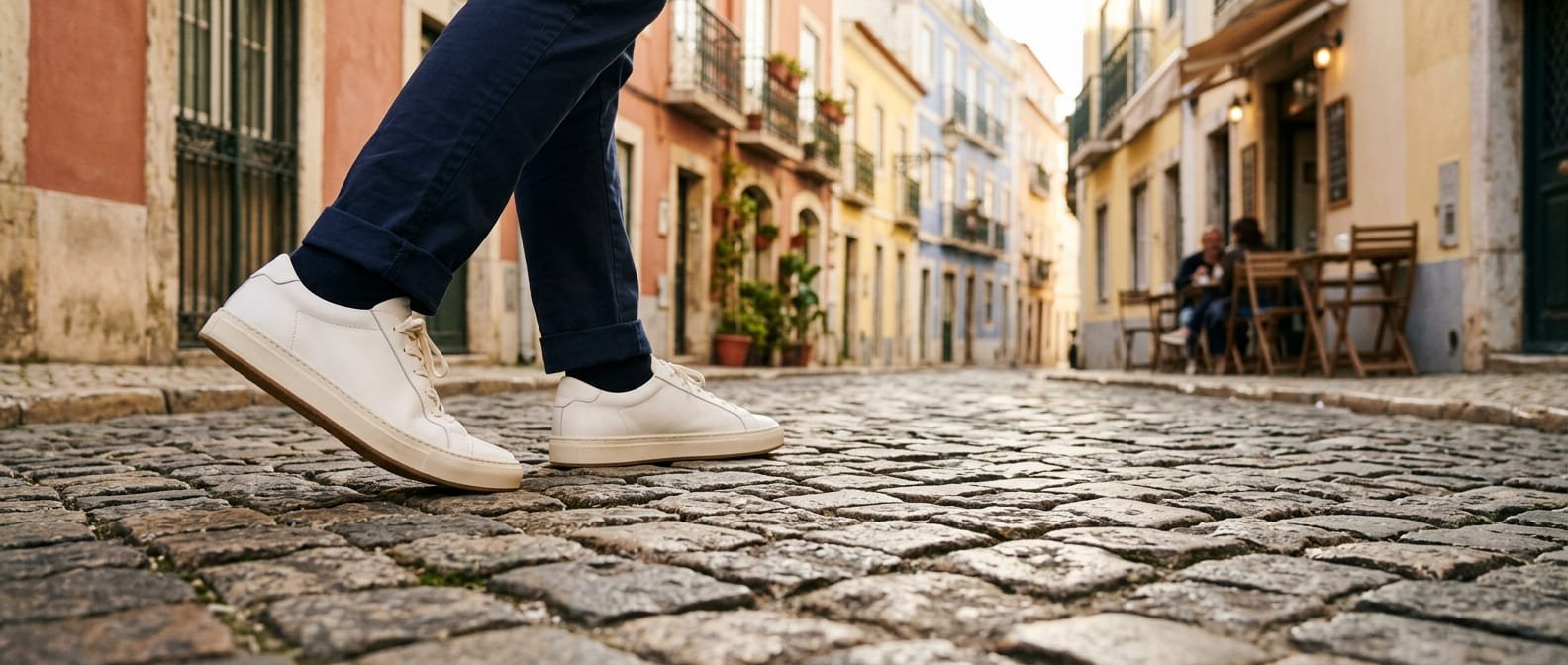
The city is spread over islands, with cobbles in the old town and wind off the water. Wear comfortable shoes and a windproof layer. See walking shoes for Europe.
The archipelago and the coast
Boat trips are breezy, even in July. Take a windproof jacket, a jumper, shoes with grip and swimwear.
Northern lights and Lapland
Standing still at night in deep cold demands serious clothing: a thermal base, fleece, down parka, insulated trousers, winter boots, a hat that covers the ears and mittens. Many tour operators lend thermal overalls.
Hiking and the right to roam
Sweden’s “right of public access” lets everyone walk and camp in nature. Wear walking boots, quick-drying trousers, a waterproof shell and, in summer, long sleeves against mosquitoes.
Sauna and swimming
Bring swimwear and a towel. In public saunas, rules vary, so check the signs.
Restaurants and nightlife
Smart casual is enough almost everywhere. In Stockholm’s smartest clubs, dress sharply: a shirt, dark trousers and leather shoes.
Midsummer
At Midsummer in late June, Swedes wear light summer clothes and flower crowns, and some wear folk costume. Bring a jumper and a rain jacket. It’s an outdoor party whatever the weather.
Crayfish parties and Christmas
August crayfish parties call for casual clothes, paper hats and bibs. For December, see Christmas outfits for men.
Swedish traditional dress
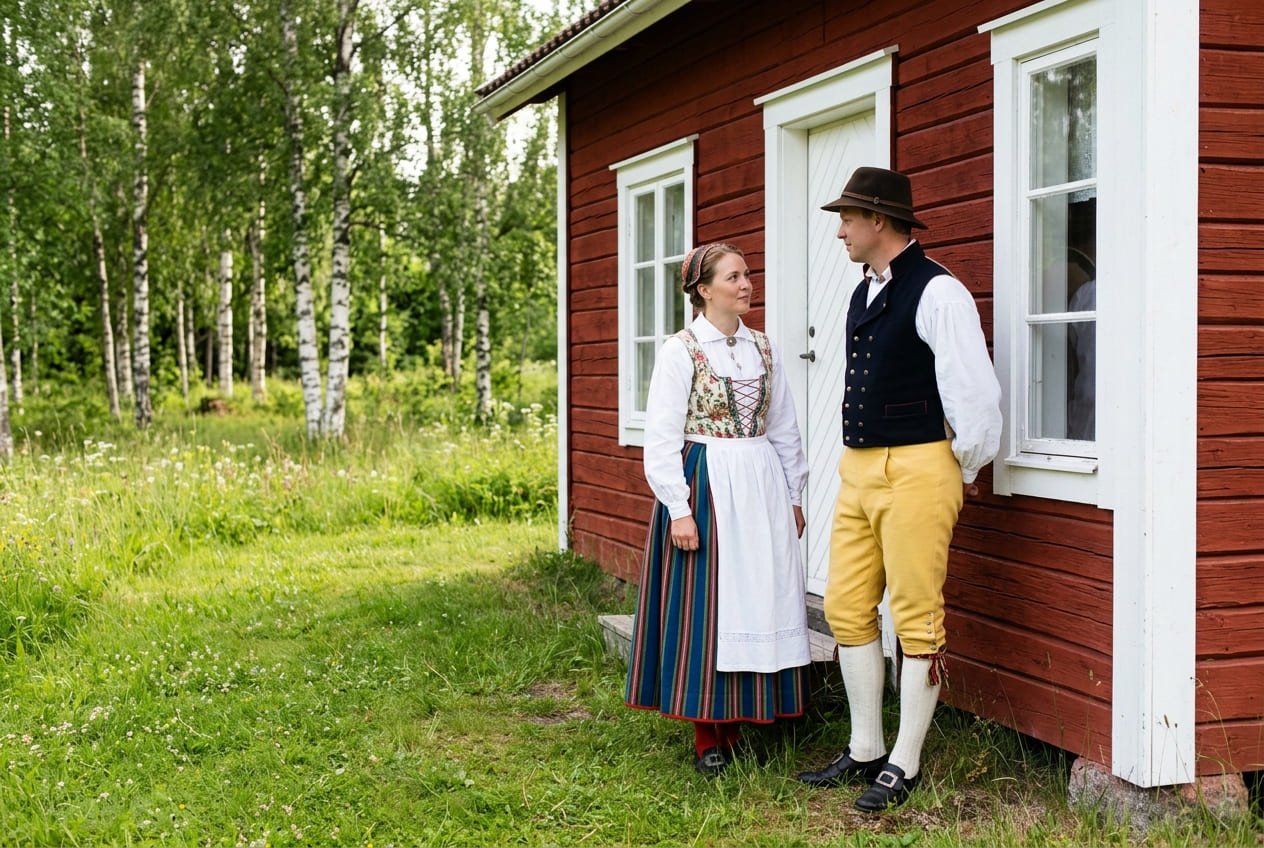
Swedish traditional dress means the *folkdräkt*, the folk costume of a particular parish or province. Traditional clothing in Sweden developed among farming communities from the 1600s to the 1800s, and several hundred local versions exist. The strongest living tradition is in Dalarna, in villages such as Leksand, Rättvik and Mora.
| Garment | Worn by | Description |
|---|---|---|
| Sverigedräkten | Women and men | The national costume, in blue and yellow |
| Folkdräkt | Women and men | Regional folk costume, different in each parish |
| Bodice and skirt | Women | A laced or hooked wool bodice with a full, often striped skirt |
| Apron | Women | Striped, embroidered or plain, sometimes showing the church season |
| Bonnet or cap | Women | Traditionally showed whether a woman was married |
| Knee breeches | Men | In yellow chamois leather or dark wool |
| Waistcoat | Men | Wool, often red, blue or striped, with metal buttons |
| Long coat | Men | A dark wool coat for church and formal occasions |
| Gákti (kolt) | Sami people | The traditional Sami tunic, blue with red and yellow bands |
The national costume of Sweden
The Swedish national costume, called *Sverigedräkten*, was designed in 1903 by Märta Jörgensen. The women’s version has a blue skirt or dress with a yellow apron and a white blouse, in the colours of the flag. It became widely recognised as the national dress in 1983, when Queen Silvia wore it on Sweden’s National Day, 6 June. The royal women still wear it on that day each year. A men’s version exists too, in blue and yellow.
Traditional Swedish clothing for men
Traditional Swedish clothing for men usually consists of these pieces.
- A white linen shirt with a standing collar.
- Knee breeches in yellow leather or dark wool.
- A waistcoat in red, blue, green or stripes.
- A long or short wool coat.
- Knitted stockings in white, blue or red, held with woven garters and tassels.
- Black buckled shoes.
- A hat or knitted cap.
- A neckerchief.
Sami clothing
The Sami are the Indigenous people of northern Scandinavia. Their traditional garment, the *gákti* (called *kolt* in Swedish), is a wool or cotton tunic, usually blue, trimmed with bands of red, yellow and green. Its cut and decoration show where the wearer’s family comes from. It’s worn with a belt, a shawl or collar, and reindeer-skin boots with curled toes. The gákti is living cultural dress, not a costume, and it shouldn’t be worn as fancy dress.
Lucia, graduation and other traditions
- Lucia, 13 December: children and choirs wear long white gowns with a red sash. Lucia wears a crown of candles, and “star boys” wear tall pointed hats decorated with stars.
- Graduation: school leavers celebrate in June in a white peaked student cap. Boys wear a suit, and girls traditionally wear white.
- Walpurgis Night, 30 April: university students put on their white caps to welcome spring.
When Swedes wear folk costume
Folk costume appears at Midsummer, on National Day, at weddings, christenings and folk dance and music festivals. It also counts as formal dress, so it can be worn to events that require white tie.
Swedish crafts worn today
- Clogs (*träskor*), with a wooden sole and leather upper.
- Lovikka mittens, thick brushed-wool mittens from the far north.
- Bohus knitting, fine patterned jumpers first made in western Sweden from the 1930s to the 1960s.
- Fishermen’s jumpers and striped tops from the west coast.
- Sami handicraft, including pewter-thread bracelets on reindeer leather.
For the wider region, traditional Scandinavian clothing follows similar lines: the Norwegian *bunad* and Danish folk dress share the bodices, breeches and wool of the Swedish costume.
The Swedish fashion industry
- Size. Fashion is one of Sweden’s larger consumer exports, led by a handful of global retail groups.
- Democratic fashion. Swedish companies built their success on affordable, well-designed clothes for everyone.
- Design culture. The same principles that shaped Swedish furniture and glass, simplicity and usefulness, shaped its clothes.
- Denim. In the 2000s, Swedish labels made slim, dark, raw jeans fashionable around the world.
- Outdoor expertise. Swedish outdoor brands are known worldwide for jackets, backpacks and base layers.
- Sustainability. Swedish companies were early to invest in organic cotton, repair services, rental and resale.
- Fashion week. Stockholm Fashion Week was paused in 2019 on sustainability grounds, and has since returned in a new form.
- Education. The Swedish School of Textiles in Borås and Beckmans College of Design in Stockholm train many of the country’s designers.
Swedish brands and designers
This section lists well-known Swedish clothing brands and designers for reference. StyleGauge is independent: the names are not ranked, recommended or linked, and we earn nothing from any of them.
Swedish clothing brands
| Brand | Founded | Known for |
|---|---|---|
| H&M | 1947, Västerås | Affordable high-street fashion. The group also owns COS, Arket, Weekday, Monki and & Other Stories |
| Acne Studios | 1996, Stockholm | Designer denim, leather jackets and oversized scarves |
| Filippa K | 1993, Stockholm | Minimalist everyday clothing |
| Tiger of Sweden | 1903, Uddevalla | Slim tailoring and suits |
| J.Lindeberg | 1996, Stockholm | Fashion, golf and ski wear |
| Our Legacy | 2005, Stockholm | Relaxed, textured menswear |
| Gant | 1949, United States | Preppy shirts and knitwear, with American roots and a Stockholm headquarters |
| Nudie Jeans | 2001, Gothenburg | Organic denim with free repairs |
| Oscar Jacobson | 1903, Borås | Classic menswear and tailoring |
| Eton | 1928, Gånghester | Men’s shirts |
| Stenströms | 1899, Helsingborg | Men’s shirts and knitwear |
| Toteme | 2014 | Minimalist womenswear and scarf jackets |
| Lindex, KappAhl and Gina Tricot | 1950s to 1990s | High-street chains for women and families |
| Gudrun Sjödén | 1976, Stockholm | Colourful, patterned womenswear |
Other Swedish fashion labels you’ll see include Hope, Rodebjer, House of Dagmar, Stand Studio, Asket, Boomerang, Morris, Elvine and Dedicated.
Swedish sportswear and outdoor brands
| Brand | Founded | Known for |
|---|---|---|
| Fjällräven | 1960, Örnsköldsvik | Hiking trousers, parkas and the square Kånken backpack |
| Haglöfs | 1914, Dalarna | Outdoor jackets and backpacks |
| Peak Performance | 1986, Åre | Ski and active wear |
| Houdini | 1993 | Base layers and shells with a focus on recycling |
| Klättermusen and Lundhags | 1975 and 1932 | Mountaineering clothing and boots |
| Craft | 1977, Borås | Running, cycling and cross-country ski wear |
| Björn Borg | 1980s | Underwear and sportswear named after the tennis champion |
| Didriksons | 1913, Grundsund | Raincoats and children’s outerwear |
| Stutterheim | 2010, Stockholm | Rubberised raincoats |
| Woolpower | Östersund | Merino base layers made in Sweden |
| Hestra | 1936, Hestra | Gloves |
| Tretorn | 1891, Helsingborg | Rubber boots and canvas trainers |
Swedish coat, jacket and knitwear brands
For coats and jackets, the names above cover most needs: wool overcoats from the tailoring houses, raincoats from Stutterheim and Didriksons, and down and shell jackets from the outdoor brands. For knitwear, look at the shirtmakers and at small makers working with Swedish wool.
Swedish shoes, bags and accessories
- Axel Arigato: minimalist trainers from Gothenburg.
- Eytys: chunky-soled shoes and jeans from Stockholm.
- Sandqvist: backpacks and bags.
- Happy Socks: bright patterned socks.
- Kavat and Icebug: children’s shoes and winter boots with grip.
- Swedish Hasbeens and Troentorp: clogs.
Famous Swedish fashion designers
| Designer | Known for |
|---|---|
| Jonny Johansson | Co-founder and creative director of Acne Studios |
| Filippa Knutsson | Founder of Filippa K |
| Johan Lindeberg | Founder of J.Lindeberg |
| Lars Wallin | Couture and bridal gowns |
| Pär Engsheden | Evening wear, and the wedding dress of Crown Princess Victoria in 2010 |
| Ann-Sofie Back | Conceptual, deconstructed fashion |
| Carin Rodebjer | Relaxed, flowing womenswear |
| Elin Kling | Co-founder of Toteme |
| Ellen Hodakova Larsson | Clothes made from salvaged garments and textiles, under the Hodakova label |
| Gudrun Sjödén | Colourful prints inspired by nature |
| Katja Geiger | “Katja of Sweden”, who brought Swedish design abroad in the mid-twentieth century |
| Bea Szenfeld | Sculptural garments made of paper |
Swedish kidswear brands
- Polarn O. Pyret: striped unisex basics since 1976, made to be handed down.
- Mini Rodini: playful prints and organic cotton.
- Newbie: soft, vintage-inspired baby clothes.
- Villervalla and Maxomorra: bright, practical playwear.
- Didriksons and Kavat: rainwear, winter overalls and boots for outdoor play.
Swedish online shops and crossword clues
Several Swedish fashion retailers sell mainly online, including NA-KD and Bubbleroom. And if you came here from a puzzle: the usual answer to “Swedish clothing brand, abbreviated” is H&M, and a three-letter answer is often COS.
Shopping for clothes in Sweden
Where to shop in Stockholm
- Biblioteksgatan and Bibliotekstan: designer and Swedish labels.
- Drottninggatan: the main pedestrian high street.
- Hamngatan: department stores, including NK, a grand store opened in 1915.
- Södermalm and SoFo: independent boutiques, denim and vintage.
- Mood and Sturegallerian: smart shopping galleries.
Gothenburg and Malmö
In Gothenburg, try Magasinsgatan and the Haga district for independent shops, and Nordstan for chains. In Malmö, look around Davidshall and Södergatan.
Second-hand and vintage
Second-hand shopping is a national habit. Charity chains have shops in every town, vintage stores cluster in Södermalm, and flea markets, called *loppis*, pop up all summer. The town of Eskilstuna even has a shopping centre devoted to reused goods.
Opening hours and paying
Shops usually open from 10 am to 6 or 7 pm on weekdays, with shorter hours at weekends. Most open on Sundays. Sweden is close to cashless, and many shops don’t accept notes or coins, so bring a card.
Sales and tax-free shopping
Sales are marked *rea*. The biggest are after Christmas and in midsummer. Prices include 25% VAT. Visitors who live outside the EU can claim a refund on larger purchases, so ask for a tax-free form.
Sizes
Sweden uses European sizes, with a few local habits.
| Item | Swedish system | Example |
|---|---|---|
| Men’s suits and jackets | “C” sizes for regular builds | C50 is roughly a UK 40 |
| Men’s suits, shorter and broader | “D” sizes | D104 |
| Shirts | Collar in centimetres | 39, 40, 41 |
| Jeans | Waist and leg in inches | 32/32 |
| Children’s clothes | Height in centimetres | 92, 104, 116, 128 |
| Shoes | European sizes | 42, 43, 44 |
Swedish clothes are cut for tall, slim builds, so sleeves and legs run long.
Clothing words in Swedish
| Swedish | English |
|---|---|
| Kläder | Clothes |
| Jacka | Jacket |
| Kappa or rock | Coat |
| Tröja | Jumper or sweater |
| Skjorta | Shirt |
| Byxor | Trousers |
| Klänning | Dress |
| Kjol | Skirt |
| Kostym | Suit |
| Skor | Shoes |
| Stövlar or kängor | Boots |
| Mössa | Beanie |
| Halsduk | Scarf |
| Vantar | Mittens |
| Handskar | Gloves |
| Strumpor | Socks |
| Underställ | Thermal base layer |
| Regnjacka | Rain jacket |
| Herr, dam, barn | Men, women, children |
| Storlek | Size |
| Provrum | Fitting room |
| Rea | Sale |
| Kvitto | Receipt |
The Swedish word for fashion is *mode*.
Dress codes in Sweden
Swedish invitations state the dress code clearly, using set terms.
| Swedish term | Meaning | What men wear |
|---|---|---|
| Frack or högtidsdräkt | White tie | Tailcoat, white waistcoat and bow tie. Folk costume is also accepted |
| Smoking | Black tie | Dinner jacket and black bow tie |
| Mörk kostym | Dark suit | Dark grey, navy or black suit with a tie |
| Kavaj | Lounge suit | Suit or jacket and trousers, tie optional |
| Udda kavaj | Smart casual | Blazer with contrasting trousers |
| Sommarfint | Summer smart | Light suit or linen, in pale colours |
- Office: casual to smart casual. Ties are rare outside law and finance. See business casual for men.
- Weddings: follow the invitation. *Mörk kostym* is the most common. See dressy casual for men.
- Funerals: a dark suit, with a white tie for close family by tradition, and black for others.
- The Nobel banquet: white tie, or national costume.
- Schools: no uniforms.
Swedish fashion for boys and kids
Swedish children’s clothes are designed for play, in any weather.
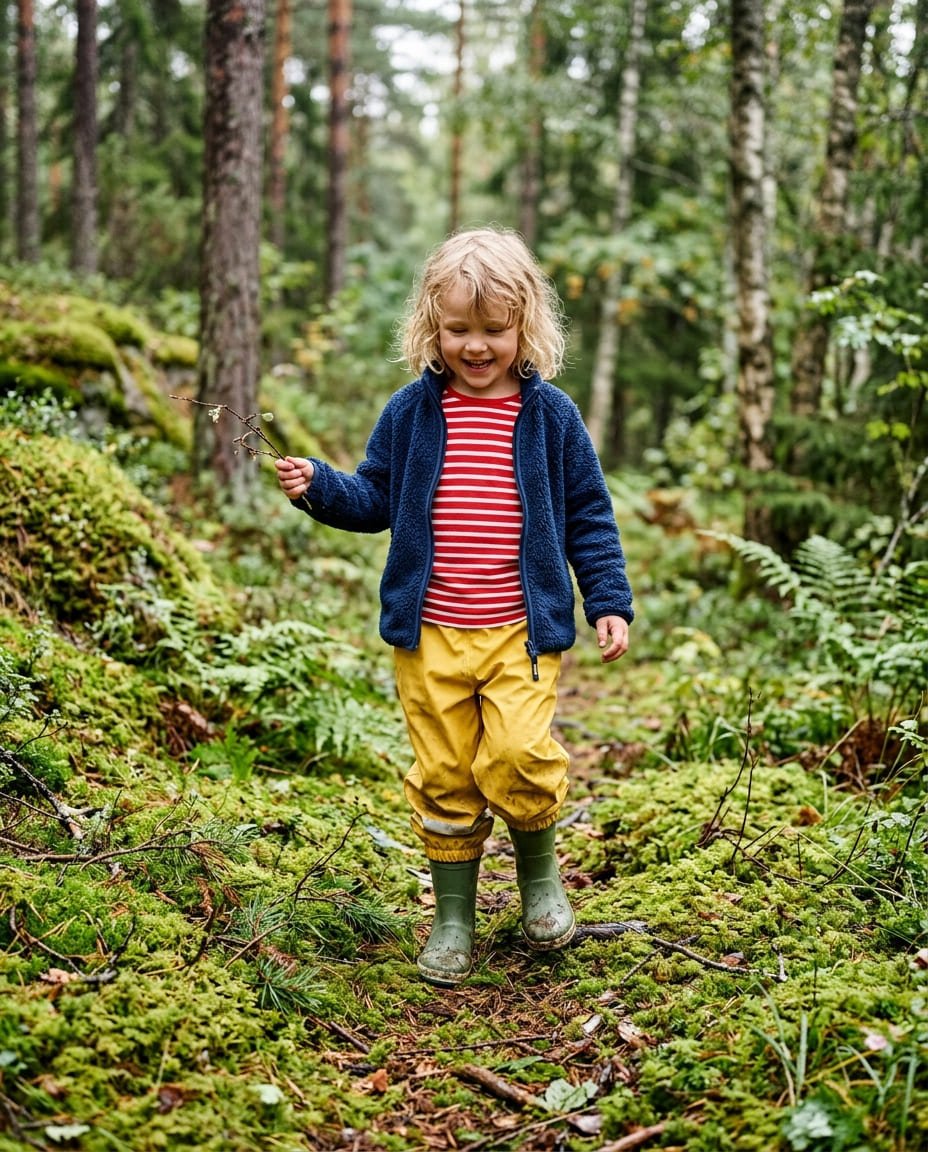
- Outdoors every day. Nurseries and schools send children outside in rain and snow, so every child has rain trousers, rubber boots and a winter overall.
- Layers. A wool base layer, a fleece and a waterproof shell or padded overall.
- Unisex colours and prints. Stripes, animals and bright shades, with no strict split between boys’ and girls’ clothes.
- Reflectors. In the dark months, children and adults wear reflective tags and vests.
- Height-based sizes, which makes buying simple.
- Hand-me-downs. Good children’s clothes are passed on and resold.
- Teenagers: hoodies, wide jeans, puffer jackets, beanies and trainers. See clothes for teenage boys.
- Red and white striped top Top
- Navy fleece jacket Layer
- Yellow rain trousers Trousers
- Green rubber boots Shoes
Swedish fashion trends
- Quiet minimalism: plain, well-cut clothes in neutral colours.
- Oversized outerwear: long coats, scarf jackets and leather.
- Wide and straight trousers.
- Outdoor clothing in the city: shells, fleeces and hiking shoes.
- Wool: merino base layers and Swedish-grown wool.
- Second-hand and repair.
- Brown, grey and cream alongside black.
- Clogs and loafers.
For the wider picture, see men’s fashion trends 2026 and Gen Z fashion.
Swedish and Scandinavian fashion compared
Scandinavian fashion shares minimalism and function, but the countries differ.
| Country | Character |
|---|---|
| Sweden | Sleek, dark, minimalist and tailored |
| Denmark | Playful and colourful, with relaxed shapes and bicycles in mind |
| Norway | Sporty and outdoor-led, with patterned knitwear |
| Finland | Bold prints and practical design |
For the more colourful side of the region, see our guide to Danish fashion.
How to dress like a Swede: a capsule wardrobe
- Black or navy wool overcoat
- Padded or waterproof jacket
- Grey merino crew-neck jumper
- Navy or black roll neck
- White and grey heavy T-shirts
- Light-blue Oxford shirt
- Dark straight jeans
- Charcoal wool trousers
- Minimal white leather trainers
- Black leather boots
- Wool scarf and beanie
- Backpack or plain leather bag
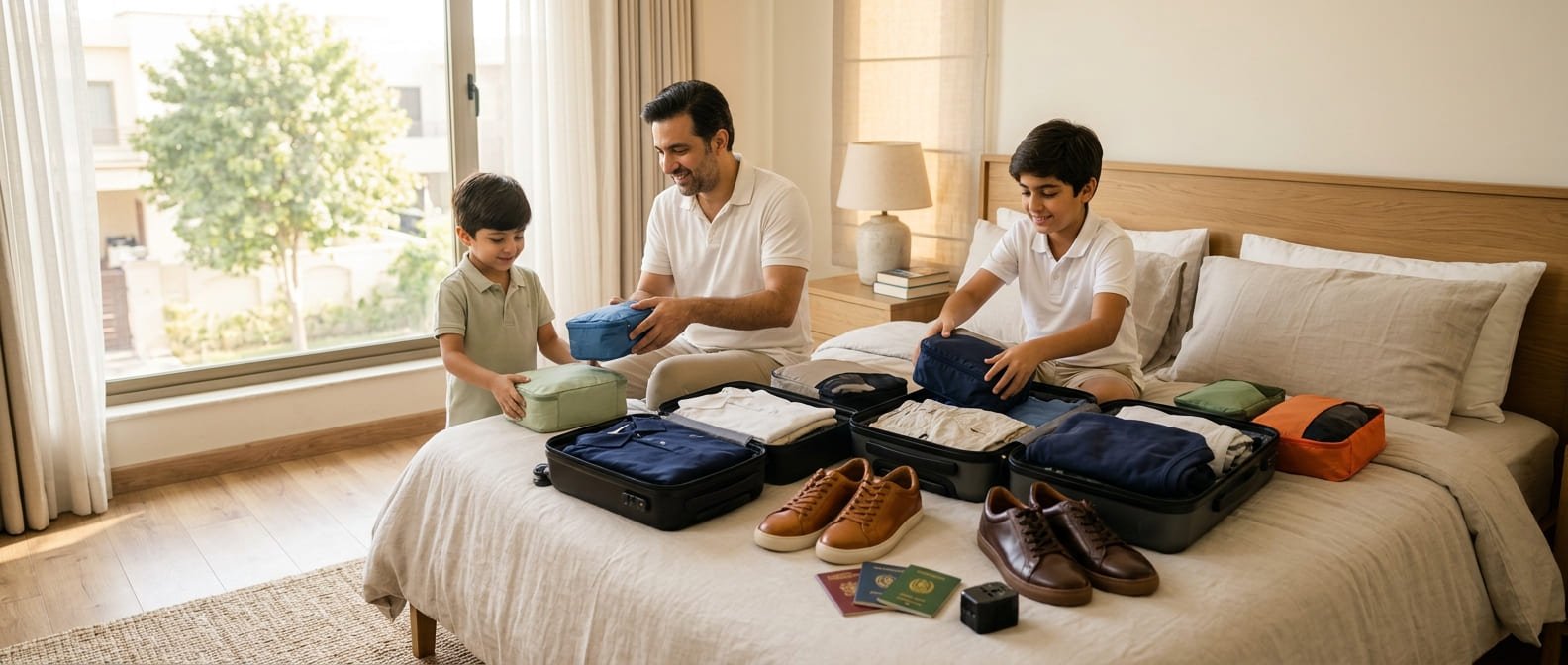
Stay within black, navy, grey, white and beige, and everything will work together. To test combinations with your own clothes, use our Outfit Generator. For a packing list, see what to pack for a Europe trip.
Mistakes visitors make
| Mistake | Why it’s a problem | Do this instead |
|---|---|---|
| Packing for the calendar, not the weather | June can be 12 °C and wet | Bring layers and a rain jacket |
| One thick layer in winter | Too hot indoors, too cold outside | Wear three thinner layers |
| Smooth-soled shoes | Ice and wet cobbles are slippery | Choose boots with grip |
| Cotton next to the skin in winter | It holds moisture and chills | Wear wool |
| Loud logos and flashy outfits | They stand out against Swedish restraint | Keep it plain |
| Holes in your socks | Shoes come off indoors | Pack good socks |
| Bringing only cash | Many shops don’t take it | Carry a card |
| No reflector in winter | Drivers can’t see you in the dark | Clip one to your coat |
Frequently asked questions
Swedish fashion is known for minimalism, muted colours, clean cuts, function and sustainability. It's also known for global high-street chains, designer denim and outdoor clothing.
Dark jeans or tailored trousers, plain knitwear, a wool coat or padded jacket, a scarf and clean trainers or boots. In summer, people switch to light colours, linen and shorts.
Stockholm style is a polished, minimalist look built on neutral colours, oversized coats and blazers, straight jeans, fine knitwear, large scarves and clean trainers or loafers.
The folkdräkt, a regional folk costume. Women wear a bodice, skirt, apron, blouse and cap. Men wear knee breeches, a waistcoat, a white shirt, stockings and buckled shoes.
Sverigedräkten, designed in 1903 in the blue and yellow of the flag. The Swedish royal family wears it on National Day, 6 June.
At Midsummer, on National Day, at weddings, christenings and folk festivals. Folk costume is also accepted as formal dress.
A wool or thermal base layer, a jumper or fleece, a down or wool coat, lined waterproof boots with grip, wool socks, a beanie, a scarf and gloves.
T-shirts, shirts, light trousers or shorts and trainers, plus a jumper and a rain jacket for cool evenings and showers. Bring swimwear.
H&M, Acne Studios, Filippa K, Tiger of Sweden, J.Lindeberg, Our Legacy, Nudie Jeans, Gant and, for outdoor clothing, Fjällräven, Haglöfs and Peak Performance.
Jonny Johansson, Filippa Knutsson, Johan Lindeberg, Lars Wallin, Pär Engsheden, Ann-Sofie Back, Carin Rodebjer, Gudrun Sjödén and Ellen Hodakova Larsson.
Lagom is a Swedish word meaning "just the right amount". In clothing, it means moderation: nothing too flashy, too tight or too much.
Rarely. Offices are casual, and ties are uncommon. Formal events state a dress code on the invitation, from "kavaj" (lounge suit) to "frack" (white tie).
Yes. Shoes come off at the door in almost every Swedish home, so wear good socks or bring indoor shoes.
Swedish style is sleeker, darker and more tailored. Danish style is more colourful and playful, with looser shapes.
Practical layers for outdoor play: a wool base layer, fleece, rain trousers, rubber boots and a padded winter overall, often in stripes and bright colours.