
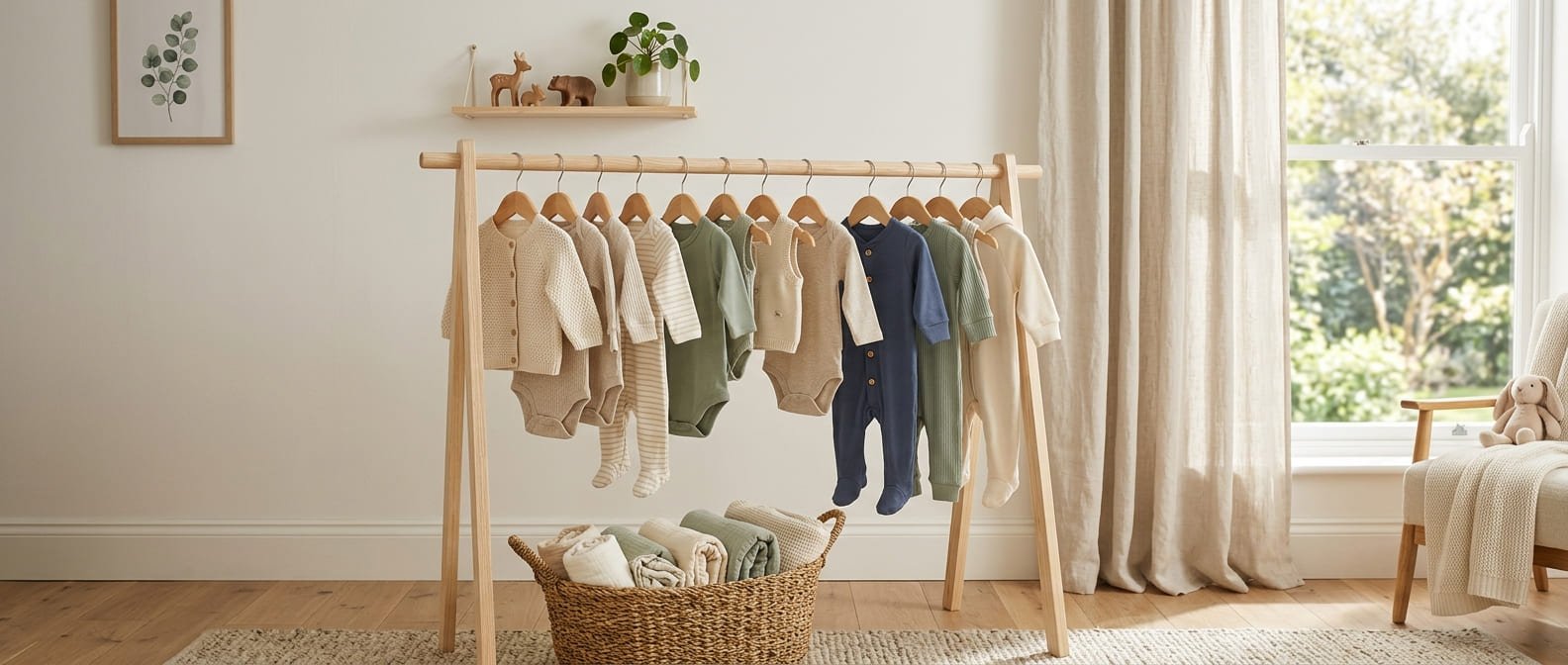
Organic cotton baby clothes have moved from a niche choice to something many parents look for first. Babies spend almost every hour of the day in cotton, from bodysuits and sleepsuits to muslins and blankets, so it’s natural to ask how that cotton was grown and processed. Organic cotton baby clothes are made from cotton grown without synthetic pesticides and fertilisers, and the best are certified across the whole journey from field to finished garment. They aren’t magic, and they aren’t the only good choice, but they’re soft, breathable and kinder to the land and the people who grow them. This guide explains what organic cotton actually is, what certifications such as GOTS and OEKO-TEX mean, the real benefits and the limits, which baby clothes are most worth buying organic, how to care for them, and how to build a small, sensible organic wardrobe for a baby boy without overspending.
Organic cotton baby clothes: the quick answer
- What it is: cotton grown without synthetic pesticides or fertilisers, from non-genetically modified seed.
- Look for: a GOTS label, which covers growing, processing and the finished garment.
- Benefits: soft, breathable, fewer chemical residues from processing, and lower environmental impact.
- Limits: organic doesn’t mean hypoallergenic, and it still needs water to grow.
- Buy organic first: bodysuits, sleepsuits and pyjamas, which sit next to the skin all day and night.
- Care: wash cool with a mild detergent and line-dry to make it last.
- Budget: buy fewer, better pieces, and buy second-hand organic, which is often barely worn.
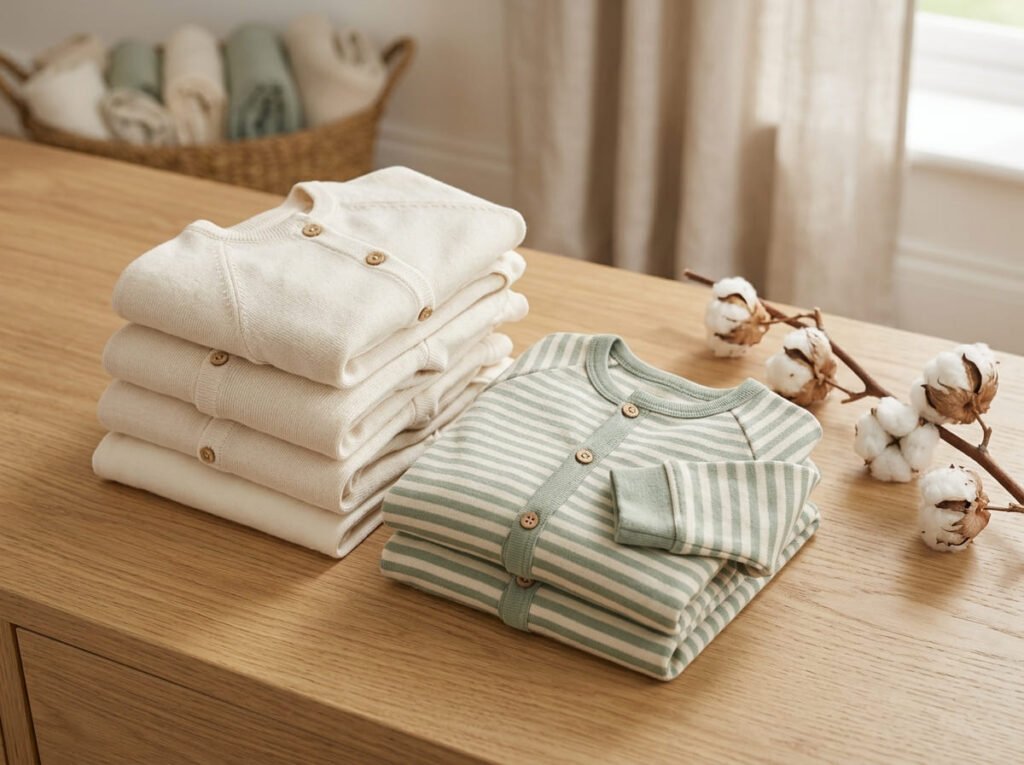
What is organic cotton?
Conventional cotton is one of the world’s most chemically intensive crops. Organic cotton is grown differently.
- No synthetic pesticides or fertilisers. Farmers use crop rotation, compost and natural pest control instead.
- No genetically modified seed.
- Healthier soil, which holds water better.
- Often rain-fed, depending on where it’s grown.
Organic farming describes how the cotton is grown. What happens next (spinning, dyeing, printing and finishing) matters too, which is why certification is so important.
Certifications explained
| Label | What it covers | What it tells you |
|---|---|---|
| GOTS (organic) | Fibre, processing, chemicals, social criteria | At least 95% certified organic fibre, strict limits on processing chemicals |
| GOTS (made with organic) | As above | At least 70% certified organic fibre |
| OCS 100 | Organic content only | Contains organic fibre, but processing isn’t covered |
| OEKO-TEX Standard 100 | The finished product | Tested for harmful substances, but not organic |
| Fairtrade cotton | Farmer pay and conditions | Fair prices for cotton farmers, not necessarily organic |
GOTS
The Global Organic Textile Standard is the most complete label for organic clothing. It covers the whole supply chain: the organic status of the fibre, which chemicals can be used in dyeing and finishing, wastewater treatment and minimum social criteria for workers. It’s a voluntary, independent standard, and certified products should carry a licence number you can check.
OEKO-TEX
OEKO-TEX Standard 100 tests finished textiles for a long list of harmful substances. It doesn’t mean the cotton is organic, but it’s a useful sign of safety for conventional cotton baby clothes.
“Organic” without a label
Some products say organic without any certification. That might be true, but you can’t check it. If organic matters to you, look for a recognised label.
The real benefits
- Softness: organic cotton baby clothes are often made from good-quality, long fibres and soft finishes, though softness depends on the maker as much as the farming.
- Fewer processing chemicals: GOTS restricts harsh dyes, chlorine bleaching and certain finishes.
- Breathability: like all cotton, organic cotton lets air move and absorbs moisture, which helps babies stay comfortable.
- Environmental impact: no synthetic pesticides and fertilisers, healthier soil and, in many regions, less irrigation.
- Farmer health: farmers aren’t exposed to synthetic pesticides.
The honest limits
- Not automatically hypoallergenic. Babies with eczema or sensitive skin may do as well in any soft, smooth cotton. Fabric finish, seams and washing powder matter too.
- Still uses water. Organic cotton generally needs less irrigation, but it isn’t a water-free crop.
- Lower yields mean more land for the same amount of cotton, and higher prices.
- Durability varies. A cheaply made organic garment won’t last longer than a well-made conventional one.
For babies with skin conditions, follow the advice of your health visitor, GP or paediatrician.
How to check a label
Labels can be confusing. A few quick checks help.
- Look for the certification logo, not just the word organic.
- Check the percentage. “100% organic cotton” with a GOTS logo is the strongest claim. “Made with organic” means at least 70%.
- Find the licence or certificate number on the label or product page. GOTS-certified products can be checked in the public database.
- Read the full fibre content. Some garments mix organic cotton with elastane for stretch, which is normal.
- Watch for vague words such as natural, eco or green, which have no fixed meaning.
Organic cotton and the environment
Choosing organic cotton baby clothes is often as much about the planet as about the baby.
- Soil: organic farming builds healthier soil that holds more water and carbon.
- Water quality: no synthetic pesticides or fertilisers running into rivers.
- Biodiversity: more insects, birds and wildlife around organic farms.
- Processing: GOTS limits harmful dyes and requires wastewater treatment at factories.
The most sustainable choice, though, is buying less and keeping clothes in use for longer. A well-made conventional bodysuit handed down to three babies may have a smaller footprint than several organic ones bought new and barely worn.
Which baby clothes are most worth buying organic?
| Item | Why | Priority |
|---|---|---|
| Bodysuits (vests) | Next to the skin all day | High |
| Sleepsuits | Worn day and night | High |
| Pyjamas | Next to the skin overnight | High |
| Muslins and bibs | Go in the mouth | High |
| Hats and scratch mittens | Touch the face | Medium |
| Leggings and trousers | Mostly over a bodysuit | Medium |
| Cardigans and knitwear | Outer layer | Lower |
| Coats and pramsuits | Outer layer, other fabrics | Lower |
If budget is limited, put your money into the pieces that sit next to his skin: bodysuits, sleepsuits and pyjamas.
Organic baby clothes for a baby boy
Baby boy clothes 0 to 3 months
Baby boy clothes for 0 to 3 months are worn hardest, washed most often and outgrown fastest.
- Six to eight organic cotton bodysuits with envelope necks.
- Six to eight sleepsuits with poppers or a two-way zip.
- Two cardigans in organic cotton or wool.
- Two hats for outdoors.
- A handful of muslins.
See newborn baby boy outfits for a full newborn checklist.
- Undyed organic cotton bodysuit Base
- Sage striped organic sleepsuit Sleepsuit
- Oatmeal knitted cardigan Layer
Baby clothes for boys from 3 to 12 months
As he starts rolling, sitting and crawling, he’ll need more daytime clothes.
- Organic cotton leggings and joggers with soft waistbands.
- Long-sleeve tops to wear with dungarees.
- Organic cotton dungarees with poppers at the crotch.
- Knitwear in organic cotton or wool.
Baby clothes for boys don’t have to be blue. Natural, undyed and earthy tones (oatmeal, sage, rust and navy) look lovely, hide marks and mix easily.
Organic cotton children’s pyjamas
Organic cotton children’s pyjamas are one of the most popular organic buys, because children wear them for ten or more hours a night.
- Choose snug-fitting styles. Close-fitting nightwear is safer around heat sources than loose styles.
- Check the fire-safety label. Children’s nightwear sold in Britain and the EU must carry fire-safety information, and some items must pass flammability tests.
- Untreated cotton is common in organic pyjamas, which is another reason snug fit matters.
- Buy the right size, not a size up, so they stay close-fitting.
See boys’ pyjamas for more on fit, fabrics and safety.
Organic baby clothes as gifts
Organic baby clothes make thoughtful gifts for new parents.
- Choose 3 to 6 months or 6 to 12 months, because parents usually have plenty of newborn sizes.
- Pick neutral, undyed or soft colours that go with everything.
- Bodysuit and sleepsuit sets are always useful.
- Organic muslins and swaddle blankets are practical, popular gifts.
- Include a gift receipt so parents can swap sizes.
Colours and dyes
- Undyed cotton avoids dyes altogether and has a soft, natural colour.
- Low-impact dyes are used in GOTS-certified clothing.
- Plain colours are easier to mix and hand down than bold prints.
Organic cotton compared with other fabrics
| Fabric | Feel | Breathability | Notes |
|---|---|---|---|
| Organic cotton | Soft, smooth | High | The everyday choice |
| Conventional cotton | Soft, smooth | High | Look for OEKO-TEX for tested safety |
| Bamboo viscose | Very soft, silky | High | Heavily processed, despite natural marketing |
| Merino wool | Soft, warm | High | Great for winter base layers |
| Linen | Crisp, cool | Very high | Summer, softens with washing |
| Polyester | Smooth | Low | Avoid next to the skin |
See the best fabrics for kids’ clothes.
Organic cotton for toddlers and older children
Organic cotton isn’t only for babies. The same benefits apply to toddler and children’s clothes, especially pieces worn next to the skin.
- T-shirts and long-sleeve tops in organic cotton jersey.
- Pyjamas, which children wear for ten or more hours a night.
- Underwear and socks.
- Leggings and joggers.
For toddlers, see toddler boy outfits.
How to care for organic baby clothes
- Wash before the first wear.
- Wash at 30 to 40 °C for everyday loads, and hotter only when needed.
- Use a mild, fragrance-free detergent.
- Skip fabric softener, which coats the fibres.
- Line-dry where possible. Organic cotton may shrink a little in a hot tumble dryer.
- Treat stains early with cold water and soap.
- Store clean and dry for the next baby.
Questions to ask before buying
- Is it certified? Look for the logo and licence number.
- Will he wear it often? Everyday basics are a better use of money than special outfits.
- Is it well made? Check the seams, poppers and fabric weight.
- Will it wash well? Read the care label.
- Can it be handed down? Neutral colours and good quality last for several babies.
Making organic affordable
- Buy fewer pieces. A small, well-chosen wardrobe is enough.
- Prioritise the next-to-skin basics.
- Buy second-hand. Baby clothes are often worn for a few weeks only, and good organic cotton lasts.
- Ask for organic basics as gifts.
- Choose neutral colours that can be handed down.
- Look for multipacks of bodysuits.
A small organic wardrobe for the first year
| Size | Bodysuits | Sleepsuits | Other |
|---|---|---|---|
| 0 to 3 months | 7 | 7 | 2 cardigans, 2 hats |
| 3 to 6 months | 6 | 6 | 2 leggings, 1 cardigan |
| 6 to 12 months | 6 | 5 | 4 leggings or trousers, 2 tops, 1 knit |
Buy the next size as he grows, rather than all at once. See our kids’ clothes size guide.
Organic baby clothes for each season
- Spring: organic cotton bodysuits and light sleepsuits, with a cardigan.
- Summer: short-sleeved organic bodysuits and rompers, a sun hat and a muslin for shade.
- Autumn: long-sleeved bodysuits, organic cotton dungarees and knitwear. See fall outfits for boys, toddlers and babies.
- Winter: organic cotton or merino base layers under knitwear and a pramsuit. See baby winter clothes.
Organic cotton in Europe
Europe has a strong market for organic baby clothes, especially in the north.
- Scandinavia: organic cotton and merino are standard for many children’s clothes, often in natural colours. See Swedish fashion and Danish fashion.
- Germany: organic and eco-labelled clothing is widely available. See German fashion.
- Netherlands: a growing focus on circular, second-hand and rental baby clothing. See Dutch fashion.
- Portugal: one of Europe’s main producers of quality cotton knitwear and baby clothes. See Portuguese fashion.
Second-hand and organic: a good match
Second-hand baby clothes are often almost new, because babies grow so quickly. Second-hand organic cotton has an extra advantage: it has already been washed many times, so it’s soft and any shrinkage has already happened.
- Check seams, poppers and elastic.
- Look for stains in good light.
- Wash before use with a mild detergent.
- Pass them on again when he outgrows them.
Mistakes to avoid
| Mistake | Why it’s a problem | Do this instead |
|---|---|---|
| Trusting “organic” without a label | You can’t check it | Look for GOTS |
| Buying too much newborn size | Outgrown in weeks | A few newborn, more 0 to 3 months |
| Assuming organic cures eczema | Many factors affect skin | Follow medical advice |
| Hot washes and tumble drying | Shrinkage | Wash cool, line-dry |
| Buying everything organic at once | Expensive | Next-to-skin pieces first |
| Loose organic pyjamas | Less safe around heat | Snug-fitting styles |
Frequently asked questions
They're soft and breathable, use fewer processing chemicals and have a lower environmental impact. If budget is limited, buy organic for next-to-skin pieces first.
The Global Organic Textile Standard. It certifies organic fibre content and sets rules for processing chemicals, wastewater and working conditions.
Not necessarily. Any soft, smooth cotton may suit sensitive skin. Follow medical advice for skin conditions.
Often, because it's usually made from good-quality fibres with gentle finishes, but softness depends on the maker.
Bodysuits, sleepsuits, pyjamas and muslins, which touch his skin or mouth for hours every day.
Pyjamas made from certified organic cotton. Choose snug-fitting styles and check the fire-safety label.
About seven bodysuits, seven sleepsuits, two cardigans and two hats, plus muslins.
It can shrink slightly in hot washes and tumble dryers. Wash cool and line-dry.
No. OEKO-TEX tests finished products for harmful substances, while organic labels cover how the cotton is grown and processed.
Bamboo viscose is very soft but heavily processed. Organic cotton is the simpler, more transparent choice.
Look for a recognised label such as GOTS, check the percentage of organic fibre and find the licence number.
Yes. They're often barely worn, already soft and pre-shrunk. Check seams and poppers and wash before use.
Yes. Organic cotton T-shirts, pyjamas, underwear and leggings bring the same benefits for toddlers and older children.
Certification, quality of seams and poppers, care instructions and whether the piece will be worn often.