




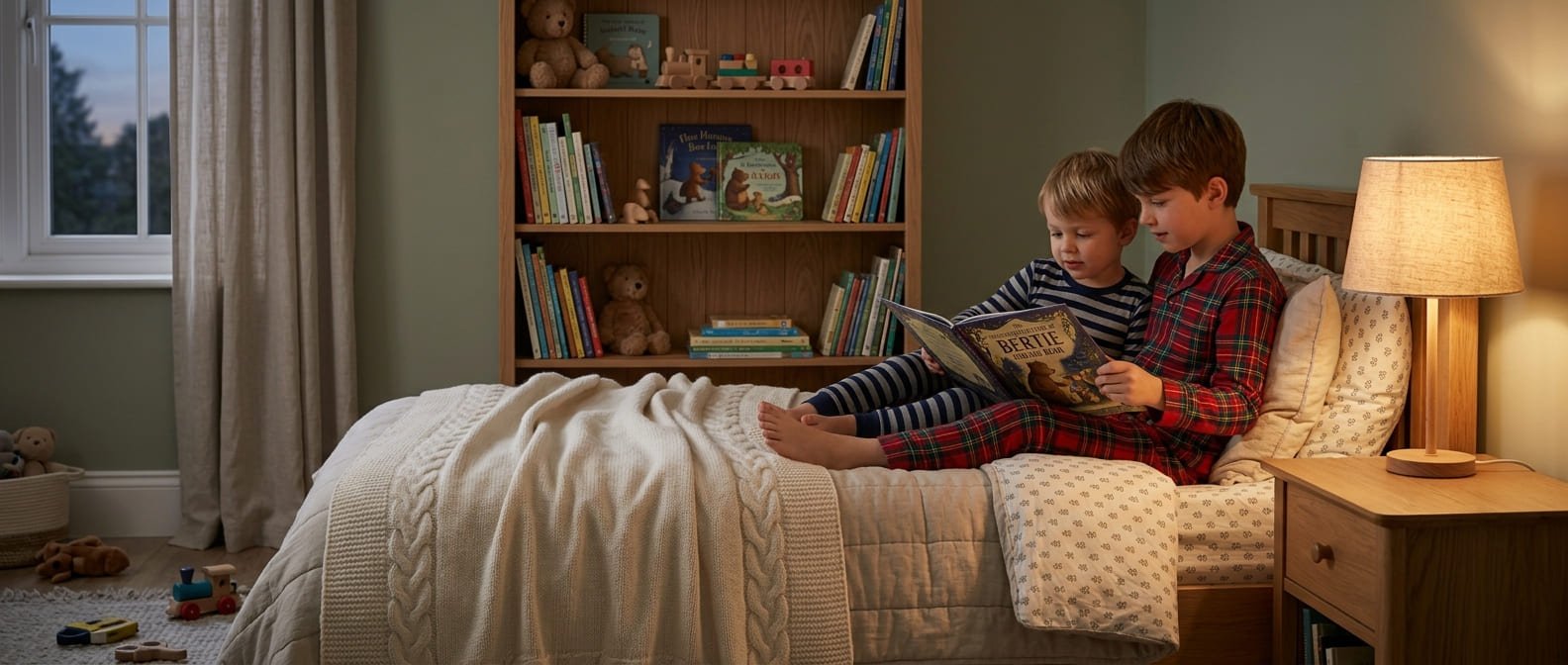
Pajamas for boys (or pyjamas, as they’re spelled in Britain) are the clothes he wears longest, often ten or more hours a night, plus lazy weekend mornings and Christmas Day. Good boys’ pyjamas are soft, the right size, suited to the season and safe. That last point matters more than most parents realise: children’s nightwear has its own fire-safety rules, and the fit of pyjamas affects how safe they are around heaters, candles and fires. This guide covers pajamas for boys from toddlers to teenagers: the main styles, the best fabrics (and why cotton pyjamas should fit snugly), pyjamas for each season, fire safety and labels, sizes and fit, how many pairs he needs, matching family pyjamas, bedtime routines, dressing gowns and slippers, and how to wash pyjamas so they stay soft.
Pajamas for boys: the quick answer
- Fabric: soft cotton for most of the year, brushed cotton or flannel for winter, and light jersey for summer.
- Fit: snug-fitting styles are safer, especially for cotton pyjamas.
- Safety: check the fire-safety label and keep children away from open flames and heaters.
- Styles: long-sleeve sets, short sets, all-in-ones for toddlers.
- How many: four to six pairs for most boys.
- Size: buy the right size, not a size up.
- Care: wash cool, inside out, and skip fabric softener on flame-resistant fabrics.
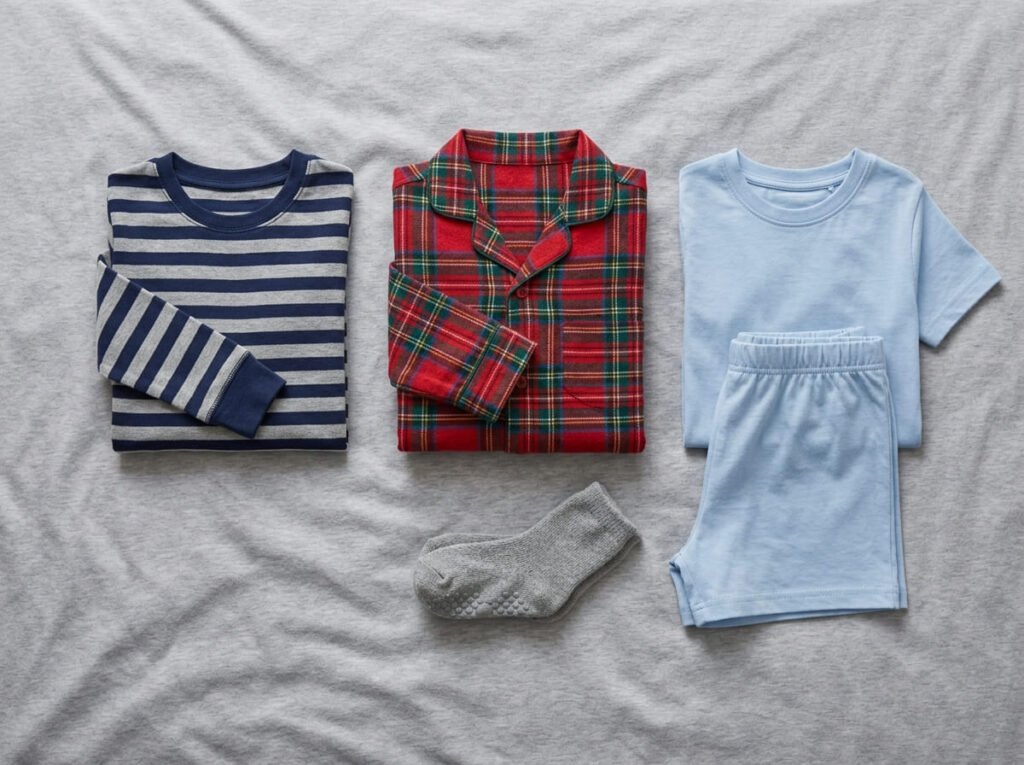
Pyjama styles for boys
| Style | What it is | Best for |
|---|---|---|
| Long-sleeve set | Top and full-length bottoms | Autumn, winter and spring |
| Short set | T-shirt and shorts | Summer and warm rooms |
| Mixed set | Long-sleeve top and shorts, or the reverse | In-between weather |
| All-in-one or onesie | One piece with a zip | Toddlers and cold nights |
| Footed sleepsuit | All-in-one with feet | Babies and toddlers |
| Button-front set | Collared shirt and trousers | Older boys, a classic look |
| Jogger set | Sweatshirt-style top and cuffed bottoms | Teens, lounging |
Toddler pjs
Toddler pjs (pyjamas for children aged one to four) need to be quick to put on and easy for potty training.
- Two-piece sets are easier for toilet trips than all-in-ones.
- Snug-fitting cotton jersey.
- Cuffed ankles and wrists so they don’t ride up.
- Fun prints: dinosaurs, vehicles and animals make bedtime easier.
- Footed all-in-ones for very cold nights, before potty training.
- Navy and grey striped snug pyjama top Top
- Grey snug pyjama bottoms Bottoms
- Navy knitted slipper socks Feet
Toddler pjs and potty training
When toddlers start potty training, pyjamas need to change too.
- Switch from all-in-ones to two-piece sets, so he can get to the toilet quickly at night.
- Choose elastic waists he can pull down himself.
- Keep spare pyjamas by the bed for night-time accidents.
- Use a waterproof mattress protector.
- Choose darker colours or prints that hide marks.
Fire safety and labels
Children’s nightwear has stricter safety rules than everyday clothes.
- Fit matters. Loose garments with wide sleeves or flowing hems can catch fire more easily than close-fitting ones. Snug-fitting pyjamas are safer.
- Cotton burns. Cotton and cotton blends catch fire more easily than many synthetic fibres, which is why cotton pyjamas are usually snug-fitting.
- Check the label. In Britain and the EU, children’s nightwear must carry fire-safety information. Many pyjamas carry a “Keep away from fire” warning.
- US rules require children’s sleepwear from nine months to size 14 to be either flame-resistant or tight-fitting.
- Don’t size up loose cotton pyjamas. Extra room reduces the safety benefit of a snug fit.
- Keep children away from open fires, heaters and candles, whatever they’re wearing.
Regular clothes such as T-shirts and joggers aren’t tested as nightwear. Proper pyjamas are the safer choice for sleep.
Boys’ cotton pajamas
Boys’ cotton pajamas are the most popular choice, because cotton is soft, breathable and easy to wash.
- Cotton jersey: stretchy, soft and snug. The most common pyjama fabric for children.
- Brushed cotton: a slightly fluffy surface that feels warmer, for winter.
- Cotton flannel: warm, soft and traditional, often in checks.
- Cotton poplin or woven cotton: cooler and crisper, for button-front sets and summer.
- Organic cotton: grown without synthetic pesticides. See organic cotton baby clothes.
Remember to choose snug-fitting cotton pyjamas, and check the fire-safety label.
Pyjamas for hot sleepers
Some children sleep hot and wake up sweaty, even in winter.
- Choose light cotton jersey or bamboo viscose rather than brushed cotton or fleece.
- Try a short set or mixed set, even in cooler months.
- Use lighter bedding instead of heavier pyjamas.
- Keep the bedroom cool, with fresh air before bedtime.
Pyjamas for cold sleepers
Other children kick off their covers and wake up cold.
- Choose brushed cotton or merino pyjamas.
- Try a long-sleeve set with cuffed ankles, so legs stay covered.
- Add slipper socks if his feet get cold.
- Use a children’s sleeping bag for younger boys who kick off duvets.
Other pyjama fabrics
| Fabric | Feel | Warmth | Notes |
|---|---|---|---|
| Cotton jersey | Soft, stretchy | Medium | The everyday choice |
| Brushed cotton | Fluffy, soft | High | Cosy winter pyjamas |
| Flannel | Soft, warm | High | Often checked, traditional |
| Merino | Soft, breathable | Medium to high | Regulates temperature well |
| Fleece | Very warm | Very high | Can make children sweat |
| Bamboo viscose | Silky, cool | Low to medium | Popular for hot sleepers |
Kids’ pajamas by season
Spring
Long-sleeve cotton jersey sets, or a long-sleeve top with shorts.
Summer
Short sets in light cotton, or a T-shirt and shorts. A light sheet or summer sleeping bag is enough on hot nights.
Autumn
Long-sleeve cotton jersey or brushed cotton sets as the heating comes on.
Winter
Brushed cotton, flannel or merino pyjamas, with a dressing gown and slippers for cold mornings. Avoid piling on layers: a warm duvet with standard pyjamas is often enough.
| Room temperature | Pyjamas | Bedding |
|---|---|---|
| Above 24 °C | Short set or light cotton | A sheet |
| 20 to 24 °C | Light long-sleeve or mixed set | Light duvet |
| 16 to 20 °C | Long-sleeve cotton set | Standard duvet |
| Below 16 °C | Brushed cotton or flannel set | Warm duvet |
Pajamas kids sleep well in are the ones that keep them comfortable, not hot. If he wakes up sweaty, use lighter pyjamas or bedding.
Pyjamas for sleepovers and travel
- Pack a comfortable, plain set for sleepovers. Older boys may prefer pyjama bottoms with a T-shirt.
- Bring a dressing gown or hoodie for cold mornings in other people’s houses.
- For camping and cold holidays, pack warm, snug pyjamas and thick socks.
- For hot holidays, pack light cotton short sets.
See what to pack for a Europe trip.
Kids’ pajamas: what to look for
When buying kids’ pajamas, run through this checklist.
- A clear fire-safety label.
- Snug fit for cotton and cotton-blend styles.
- Soft, flat seams that don’t rub.
- Tag-free or printed labels at the neck.
- Cuffed wrists and ankles so they don’t ride up.
- Comfortable elastic at the waist.
- Fabric suited to the season.
- Machine-washable.
Size and fit
- Buy by height, and check the label for snug-fit guidance.
- Snug styles should fit close without restricting movement.
- Sleeves and legs should reach the wrist and ankle.
- Elastic waists should be comfortable, not tight.
- Don’t buy too big. Loose pyjamas are less safe and twist in bed.
See our kids’ clothes size guide.
How many pairs does a boy need?
- Toddlers: five to seven, because accidents and spills happen.
- Boys aged 4 to 12: four to six.
- Teens: three to five.
Pajamas for boys by age
| Age | Best styles | Tips |
|---|---|---|
| 1 to 3 | Two-piece snug sets, footed all-in-ones | Easy for potty training, cuffed ankles |
| 3 to 6 | Snug two-piece sets with fun prints | Let him choose the print |
| 6 to 10 | Snug sets, button-front sets | Darker colours and stripes |
| 10 to 14 | Jogger sets, plain or striped sets | More grown-up designs |
| 14 and over | Lounge sets, T-shirt and joggers | Check labels for nightwear |
For teenagers, see clothes for teenage boys.
Organic and sustainable pyjamas
Organic cotton pyjamas are a popular choice for children, as they’re worn next to the skin for so long.
- Look for GOTS certification for organic cotton.
- Choose snug-fitting styles, since organic cotton is rarely flame-treated.
- Buy fewer, better pairs that last and can be handed down.
- Choose plain colours or stripes that won’t date.
See organic cotton baby clothes.
Christmas and matching family pyjamas
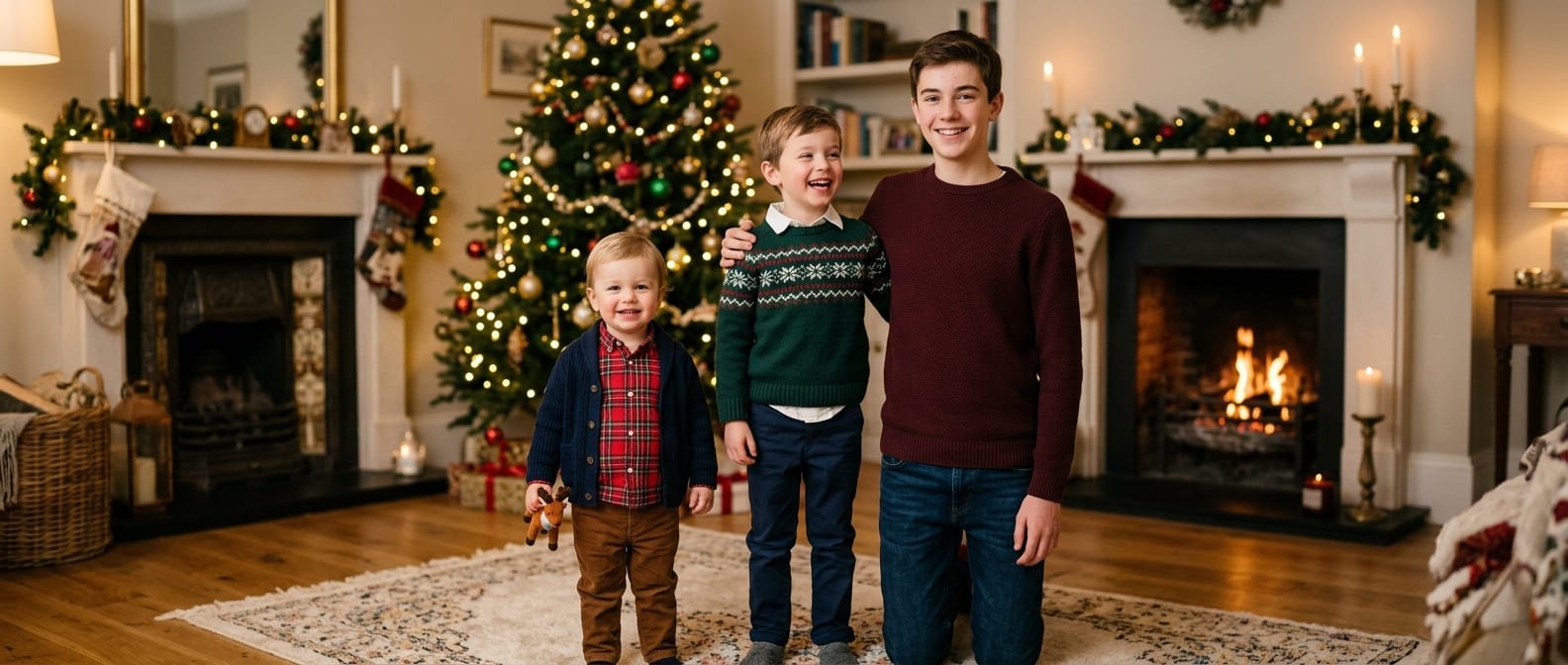
Christmas pyjamas are a tradition in many families, often opened on Christmas Eve.
- Choose a shared pattern, such as tartan or stripes, in snug styles for children.
- Buy the right size, because loose pyjamas aren’t safer just because they’re festive.
- Plain red or green with a small festive detail lasts beyond Christmas.
- Red and green tartan snug pyjama set Pyjamas
- Navy fleece dressing gown Layer
- Grey slipper socks Feet
Dressing gowns and slippers
- Dressing gowns keep him warm on winter mornings. Choose close-fitting styles that aren’t too long, and check the fire-safety label.
- Slipper socks or slippers with grip on the soles prevent slips on stairs and wooden floors.
- Avoid long, trailing belts for young children.
Pyjamas and bedtime routines
- Change into pyjamas after bath time, so he knows bedtime is coming.
- Let him choose between two pairs.
- Keep pyjamas just for sleep, so they signal bedtime.
- Lay out pyjamas before bath time to save time.
Building a pyjama drawer
A simple plan keeps pyjamas organised through the year.
| Season | Sets | Fabric |
|---|---|---|
| Summer | 3 to 4 short or mixed sets | Light cotton jersey |
| Spring and autumn | 3 to 4 long-sleeve sets | Cotton jersey |
| Winter | 3 to 4 warm sets | Brushed cotton, flannel or merino |
| All year | 1 dressing gown, 1 pair of slippers | Fleece or towelling, non-slip soles |
Swap summer and winter pyjamas when the clocks change in spring and autumn, and check sizes at the same time.
Colours and prints
Darker colours and stripes hide marks. Younger boys often love prints of animals, dinosaurs, space and vehicles.
Signs it’s time for new pyjamas
- Sleeves and legs end well above the wrists and ankles.
- The waist leaves red marks.
- Elastic has gone, so bottoms fall down.
- Fabric has thinned or pilled heavily.
- Snug styles have stretched and become loose, which reduces their safety benefit.
Check pyjamas at the start of each season, when you switch between summer and winter sets.
Pajamas for boys who don’t want to wear them
Some older boys prefer to sleep in a T-shirt and shorts. Proper nightwear is designed and tested for sleep, so it’s worth finding pyjamas he likes.
- Let him choose plain or grown-up designs, such as stripes, checks or a plain jogger set.
- Try a T-shirt-style top with lounge shorts or joggers.
- Choose soft, relaxed-looking fabrics that still meet nightwear rules.
How to wash pyjamas
- Wash inside out at 30 to 40 °C.
- Use a mild detergent.
- Skip fabric softener, which can affect flame-resistant finishes and reduces absorbency.
- Line-dry or tumble dry low if the label allows.
- Replace pyjamas that have shrunk too tight or stretched loose.
Pyjama traditions in Europe
- Britain: matching Christmas pyjamas and new pyjamas on Christmas Eve. See British fashion.
- Scandinavia: merino and organic cotton nightwear for children, in natural colours. See Swedish fashion.
- France: classic striped and button-front pyjamas. See French fashion.
- Portugal: a long tradition of quality cotton jersey and knit nightwear. See Portuguese fashion.
Quick buying guide
| If you want | Choose |
|---|---|
| Year-round comfort | Snug cotton jersey long-sleeve sets |
| Extra warmth in winter | Brushed cotton, flannel or merino |
| Cool nights in summer | Short sets in light cotton |
| Easy potty training | Two-piece sets with elastic waists |
| Fewer arguments at bedtime | Let him choose from two prints you’re happy with |
| Organic fabric | GOTS-certified, snug-fitting cotton |
Whatever you choose, check the fire-safety label, buy the right size and keep a spare pair handy for night-time spills and accidents.
Mistakes to avoid
| Mistake | Why it’s a problem | Do this instead |
|---|---|---|
| Loose cotton pyjamas | Less safe near heat | Snug-fitting styles |
| Buying a size up | Loose fit and twisting | Buy the right size |
| Sleeping in daywear | Not tested as nightwear | Proper pyjamas |
| Fleece in a warm room | Overheating and sweating | Lighter cotton |
| Long trailing dressing gowns | Trips and safety risk | Close-fitting, correct length |
| Fabric softener | Can affect flame-resistant finishes | Skip it |
Frequently asked questions
Snug-fitting cotton pyjamas for most of the year, with brushed cotton or flannel for winter and short sets for summer.
Yes, when they fit snugly and carry the right fire-safety label. Keep children away from open flames and heaters.
Close-fitting garments are less likely to catch fire than loose ones, which is why snug fit matters for cotton pyjamas.
Snug two-piece cotton sets with cuffed ankles, which are easier for potty training than all-in-ones.
Four to six pairs for most children, and five to seven for toddlers.
No. Buy the right size, because loose pyjamas are less safe and twist in bed.
Usually cotton jersey, brushed cotton, flannel or woven cotton poplin.
Brushed cotton, flannel or merino pyjamas, with a dressing gown and slippers for cold mornings.
A short set or light cotton pyjamas, with a sheet or light duvet.
Both are correct. Pyjamas is the British spelling and pajamas is the American spelling.
Light cotton jersey or bamboo viscose short sets, with lighter bedding and a cool room.
When potty training starts, so they can get to the toilet quickly at night.
A fire-safety label, snug fit for cotton, soft seams, cuffed wrists and ankles and a fabric suited to the season.
When sleeves and legs are too short, the elastic has gone, or snug styles have stretched loose.
When the clocks change in spring and autumn, checking sizes at the same time.
Soft, snug cotton jersey sets for most of the year, with brushed cotton or flannel for winter.