




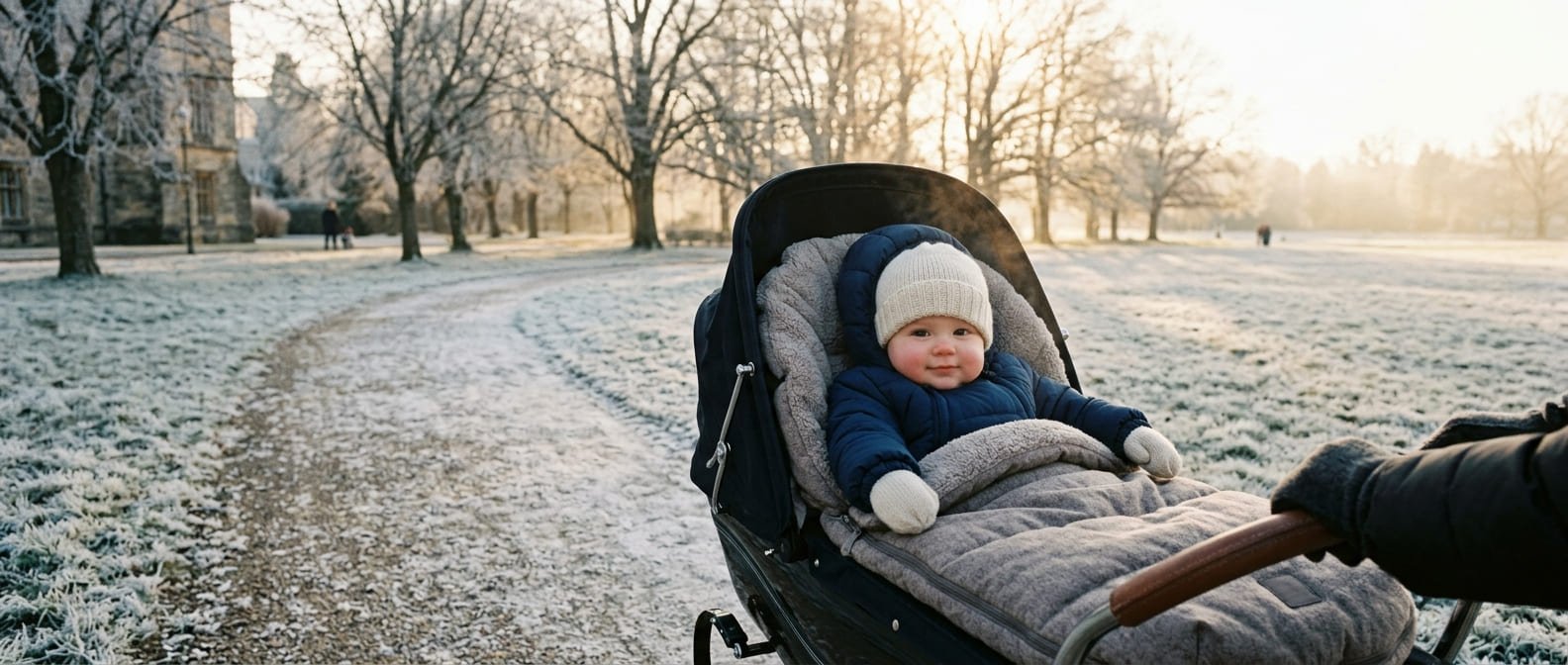
Baby winter clothes need to do two things that can feel like opposites: keep a small baby warm on a freezing walk, and stop him overheating the moment you step into a warm shop, bus or grandparent’s living room. Babies lose heat quickly, can’t move about to warm up and can’t tell you when they’re too hot. The answer isn’t one thick outfit. It’s a simple system of thin layers that you can add and remove in seconds. This guide covers baby winter clothes from birth to two years: how to layer, what each layer should be made of, the essentials list, outfits for indoors, walks, the pram and the car, how to tell if a baby is too hot or cold, safe sleep in winter, winter clothes for infants by temperature, sizes, and how to save money on clothes he’ll only wear for one season.
Baby winter clothes: the quick answer
- Layer: a base layer, a warm middle layer and a windproof outer layer.
- Rule of thumb: one more layer than you’d be comfortable in.
- Base: cotton or merino bodysuits.
- Middle: a sleepsuit, knitwear or fleece.
- Outer: a pramsuit or snowsuit, with a hat, mittens and booties.
- Check warmth at the back of the neck or the tummy, not the hands.
- Indoors: take off hats and outer layers straight away.
- Car seats: no pramsuits or thick coats under the harness.
- Sleep: no hats, and follow your local safe-sleep guidance.
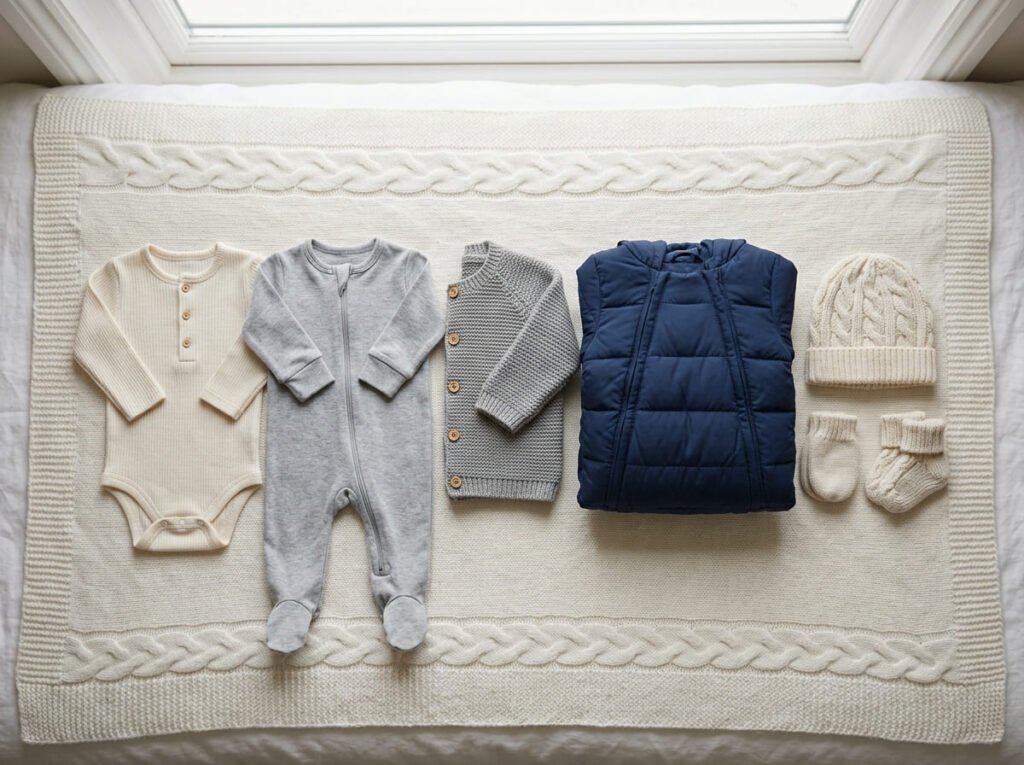
How to layer baby winter clothes
Warmth comes from air trapped between layers, so several thin layers work better than one bulky one.
| Layer | What it does | Examples |
|---|---|---|
| Base | Sits next to the skin, keeps him dry | Cotton or merino bodysuit |
| Middle | Holds warmth | Sleepsuit, fleece, knitted cardigan or jumper |
| Outer | Blocks wind, rain and snow | Pramsuit, snowsuit, padded coat |
| Extras | Protect head, hands and feet | Hat, mittens, booties, footmuff |
Base layer
A long-sleeved bodysuit in soft cotton or fine merino wool. Merino is especially good in cold weather because it stays warm even when slightly damp, and it’s soft enough for baby skin. See organic cotton baby clothes.
Middle layer
A footed sleepsuit, soft trousers with a knitted jumper, or a fleece all-in-one. This is the layer you adjust most.
Outer layer
A pramsuit or snowsuit for walks, with a hood, fold-over mittens and feet. For babies who travel mostly in a pram, a footmuff or thick blanket can replace a snowsuit.
Baby winter clothes: the essentials
| Item | How many | Notes |
|---|---|---|
| Long-sleeved bodysuits | 7 to 8 | Cotton or merino |
| Sleepsuits | 6 to 8 | Footed, with poppers or a two-way zip |
| Knitted cardigans or jumpers | 2 to 3 | Wool or cotton |
| Soft trousers or leggings | 3 to 4 | With feet, or worn with socks |
| Pramsuit or snowsuit | 1 | Hooded, with mitten cuffs |
| Hats | 2 | One warm knit with ear cover |
| Mittens | 2 pairs | Babies lose them |
| Booties or thick socks | 3 to 4 pairs | Soft soles |
| Sleeping bag | 2 | Correct tog for the room |
| Blanket | 1 to 2 | For the pram and car seat |
Winter clothes for infants by temperature
| Room or outdoor temperature | What he needs |
|---|---|
| Indoors, 20 to 22 °C | Bodysuit and sleepsuit |
| Indoors, 16 to 19 °C | Bodysuit, sleepsuit and cardigan |
| Outdoors, 5 to 10 °C | Bodysuit, sleepsuit, cardigan, pramsuit, hat, mittens |
| Outdoors, 0 to 5 °C | As above, with merino base layer, footmuff or blanket |
| Outdoors, below 0 °C | Warmest layers, short trips, cover the face from wind |
These are rough guides. Every baby is different, so check him often. In very cold, windy weather, keep outings short with young babies.
Baby winter clothes by age
| Age | What changes | Winter wardrobe focus |
|---|---|---|
| 0 to 3 months | Sleeps most of the time, can’t regulate temperature well | Sleepsuits, cardigans, a pramsuit, sleeping bag |
| 3 to 6 months | More time awake, starts reaching and rolling | Bodysuits and sleepsuits, knitwear, a snowsuit |
| 6 to 12 months | Sits, crawls and plays on the floor | Soft trousers, jumpers, warm socks, padded suit |
| 12 to 24 months | Walks and explores outdoors | Waterproof all-in-one, boots, mittens on a clip |
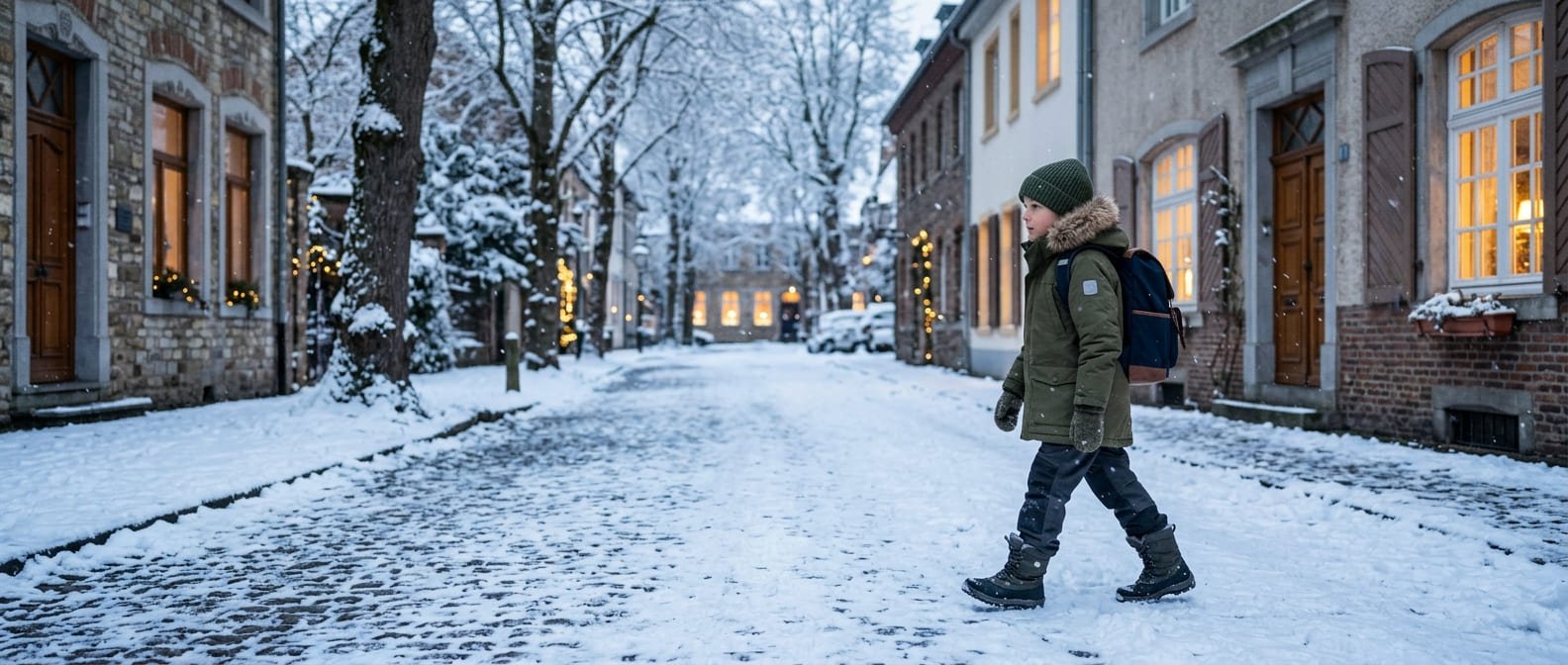
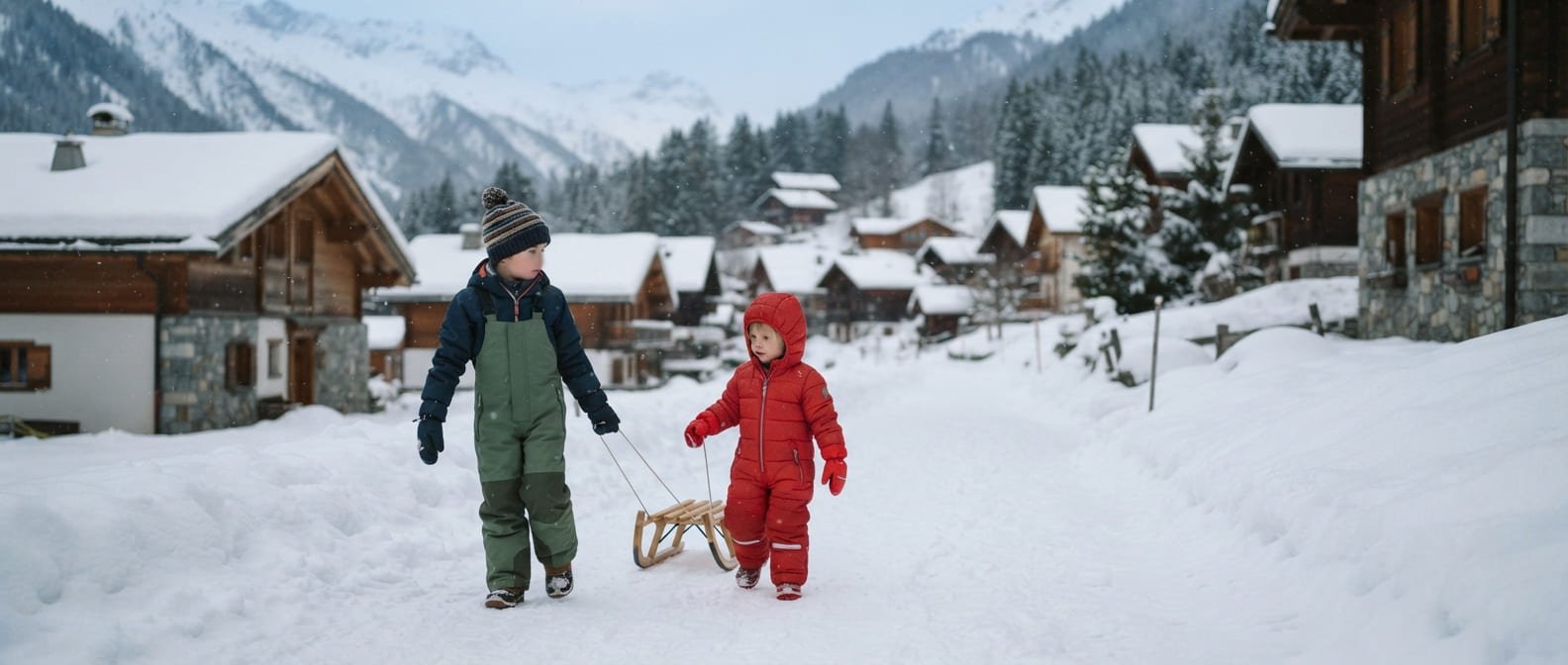
Once he starts walking, he’ll need warm, waterproof clothes for outdoor play: a padded all-in-one or snowsuit, waterproof boots and mittens on a clip. See toddler boy outfits.
How to tell if a baby is too hot or too cold
- Feel the back of his neck or his tummy. Warm and dry is right.
- Too hot: sweaty neck, damp hair, flushed cheeks, fast breathing. Take a layer off.
- Too cold: cool tummy or chest, pale or mottled skin. Add a layer, or go inside.
- Hands and feet are naturally cooler, so they’re not a reliable guide.
Baby boy winter clothes: outfits
Indoors
- Bodysuit and sleepsuit, with a cardigan in a cool room.
- Bodysuit, soft trousers and a knitted jumper for visitors.
- A knitted romper over a bodysuit.
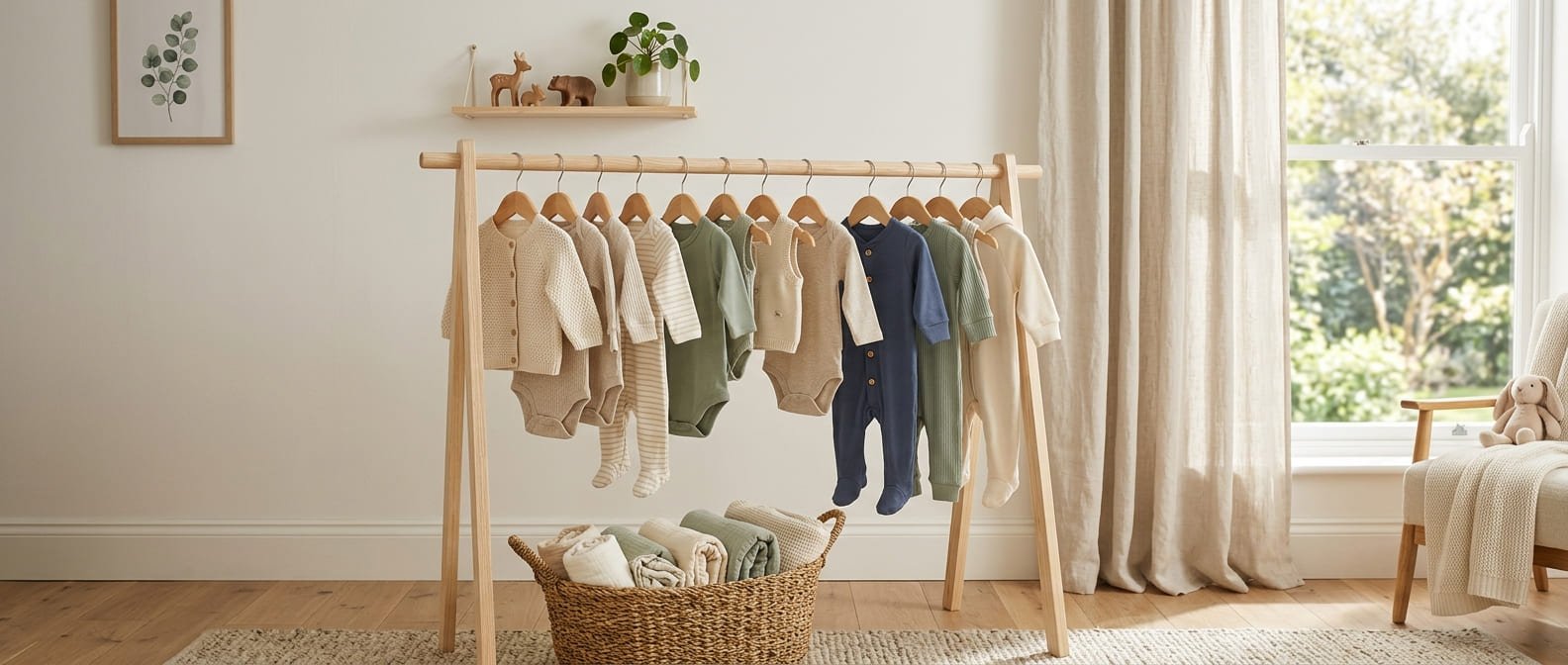
- Cream merino bodysuit Base
- Navy striped sleepsuit Sleepsuit
- Grey knitted cardigan Layer
Walks in the pram
- Bodysuit, sleepsuit, pramsuit, hat and mittens, with a footmuff.
- Bodysuit, sleepsuit, cardigan and a warm blanket in a pram with a cover.
- Merino bodysuit Base
- Grey footed sleepsuit Sleepsuit
- Navy padded pramsuit Outer
- Cream knitted hat Accessory
In a sling or carrier
Your body heat warms him, so he needs fewer layers. Use a carrier cover or wear a coat that zips around both of you. Make sure his face is visible and his airway is clear.
Visiting family
Dress him in a smart, warm outfit indoors (a knitted jumper and soft trousers or a knitted romper) and remove the pramsuit and hat as soon as you arrive.
Baby boy sweaters and knitwear
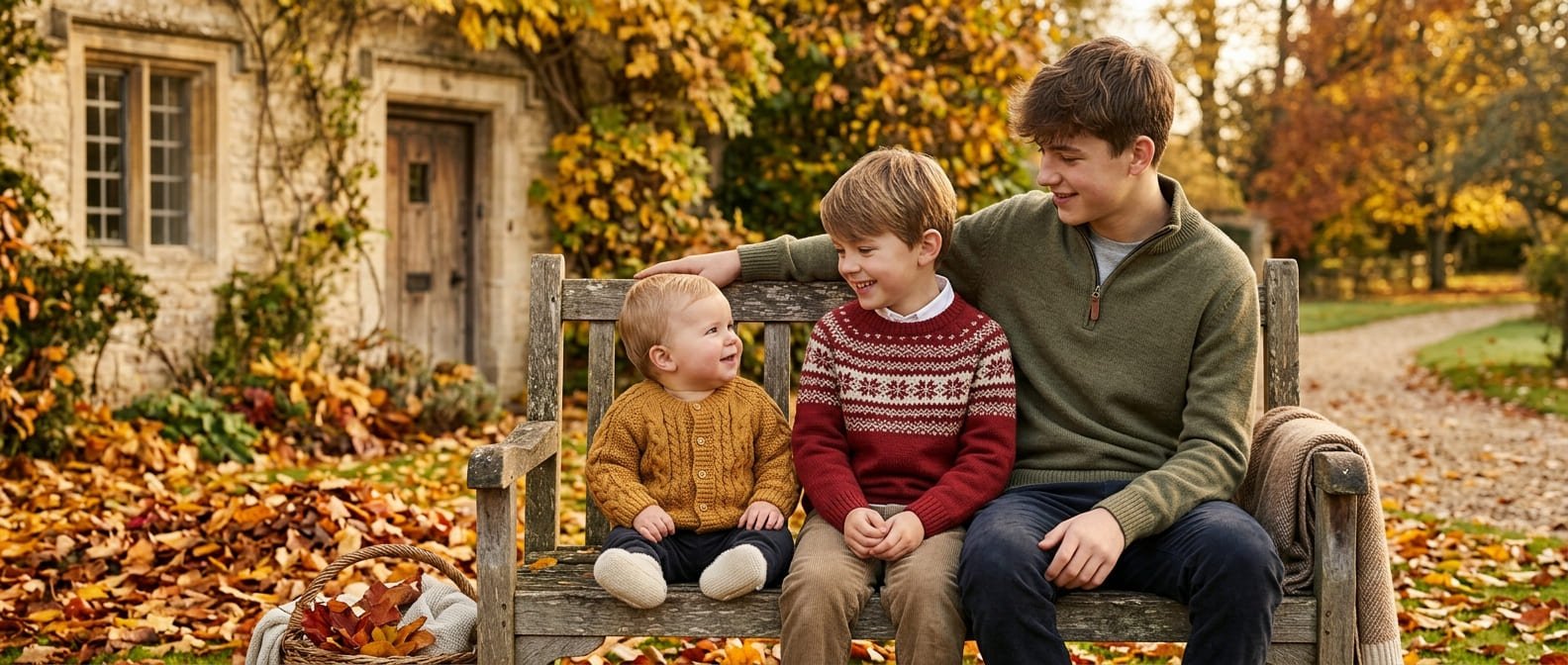
Baby boy sweaters and cardigans are the most useful middle layer.
- Cardigans are easier than jumpers, because they don’t go over his head.
- Wide or button-shoulder necks help with jumpers.
- Merino and soft lambswool are warm and breathable.
- Cotton knits suit babies with sensitive skin.
- Avoid long loose fibres such as mohair, which can shed.
- Check buttons are secure.
See boys’ sweaters for older children.
Winter clothes for newborns
Newborn babies need extra care in winter, because they’re tiny and spend most of their time asleep.
- Keep the home comfortably warm, not hot.
- Dress in a bodysuit and sleepsuit, adding a cardigan in a cool room.
- Use a pramsuit or snowsuit outdoors, with a hat, and keep trips short in very cold weather.
- Bring him home from hospital in thin layers with a blanket over the car seat harness.
- Watch for signs of illness. Cold hands are normal, but if he’s unusually floppy, sleepy or won’t feed, get medical advice.
Pramsuits and snowsuits
- Fit: room for a sleepsuit underneath, but not so big that he slides around.
- Features: a two-way zip, fold-over mitten and foot cuffs, and a hood.
- Fabric: a water-resistant shell for wet climates.
- Use: for walks and outdoor time, not for car seats or sleep.
For older toddlers, see boys’ winter coats.
For pramsuits, toddler snowsuits and snow pants, see our guide to kids’ snowsuits and snow pants.
Footmuffs, blankets and pram covers
For babies who spend most walks in a pram, accessories can do the work of a snowsuit.
- Footmuffs zip around the baby inside the pram, keeping legs and body warm. Use the pram’s harness through the footmuff slots.
- Blankets tucked firmly around the lower body are easy to remove indoors.
- Rain covers keep wind and rain off. Remove them indoors, because they trap heat.
- Avoid covering the pram completely with a blanket, which blocks air flow and can cause overheating.
With a good footmuff, a bodysuit, sleepsuit, cardigan and hat are usually enough on a cold walk.
Car seat safety in winter
- Remove pramsuits and thick coats before strapping him in.
- Dress him in thin layers, fasten the harness snugly, then put a blanket over the top.
- Warm the car before the journey if you can.
- Take the blanket off once the car is warm.
A bulky layer under the harness compresses in a crash, leaving the straps too loose.
Safe sleep in winter
- No hats while sleeping indoors.
- Use a baby sleeping bag with the right tog rating for the room, or thin, firmly tucked blankets.
- Don’t overdress for sleep. Overheating is a known risk.
- Keep the room at a comfortable temperature. Many health services suggest around 16 to 20 °C.
- Follow the safe-sleep advice from your local health service.
Hats, mittens and booties
- Hats: a knitted hat that covers the ears, with a soft lining. Remove it indoors.
- Mittens: fold-over cuffs on sleepsuits or pramsuits, or mittens on a clip.
- Booties: soft, warm booties that stay on, or thick socks under footed sleepsuits.
Indoor play in winter
Many winter days are spent indoors, where heating can make homes warm and dry.
- Dress for the room, not for the weather outside.
- Bodysuit, soft trousers and socks are enough in a warm home.
- Non-slip socks help crawlers and early walkers on wooden floors.
- Let him crawl and play freely, without bulky layers.
- Keep the air comfortable, and open a window briefly if the room gets stuffy.
Christmas and winter celebrations
For family gatherings over Christmas and New Year, a soft knitted romper or a festive cardigan over a bodysuit looks lovely without overheating him. Take off outer layers as soon as you arrive, because houses full of people get warm quickly. See boys’ Christmas outfits for festive ideas from babies to teens.
Sizes for winter babies
- Buy for his size in the coldest months, not his size now. A baby born in October may be in the next size by January.
- Pramsuits can be one size up, with cuffs folded back.
- Base layers should fit closely.
See our kids’ clothes size guide and newborn baby boy outfits.
Wool for babies: is it scratchy?
Many parents worry that wool will irritate a baby’s skin. Fine merino wool is very different from the coarse wool of a traditional jumper. Its fibres are thin and soft, so most babies find it comfortable even next to the skin. It also regulates temperature, keeping babies warm without overheating, and stays warm when slightly damp. If your baby has very sensitive skin or eczema, try a cotton bodysuit under a merino layer, and follow your health visitor’s advice.
Fabrics for winter babies
| Fabric | Why | Best for |
|---|---|---|
| Merino wool | Warm, breathable, soft | Base layers, knitwear |
| Cotton | Soft, breathable, easy to wash | Bodysuits, sleepsuits |
| Fleece | Warm, light, quick-drying | Middle layers, all-in-ones |
| Lambswool | Warm and soft | Cardigans and jumpers |
| Padded nylon shell | Wind- and water-resistant | Pramsuits, snowsuits |
See the best fabrics for kids’ clothes.
Colours for winter
Winter baby care in Europe
- Scandinavia: babies often nap outdoors in prams in winter, wrapped in wool layers and sleeping bags, following local health advice. See Swedish fashion.
- Britain and the Netherlands: wet, windy winters call for water-resistant pramsuits and pram covers.
- Central Europe and the Alps: cold, dry winters with snow, needing well-insulated snowsuits.
- Southern Europe: milder winters, where a padded jacket and knitwear are often enough.
A winter outfit checklist for leaving the house
- Bodysuit and sleepsuit, with a cardigan in cold weather.
- Pramsuit or footmuff.
- Hat that covers the ears.
- Mittens and booties.
- Blanket for the car seat.
- Spare bodysuit and sleepsuit in the changing bag.
- Muslin for spills.
Saving money on baby winter clothes
- Buy second-hand pramsuits and snowsuits, which are often barely worn.
- Borrow from friends with older babies.
- Choose neutral colours to hand down.
- Buy merino base layers in the next size, as they’re expensive and worth wearing longer.
- Don’t buy too much. He’ll grow quickly.
Signs of a happy, comfortable baby in winter
- Warm, dry neck and tummy.
- Normal skin colour, not flushed or pale.
- Settled sleep without sweating.
- Feeding well and alert when awake.
If he seems unusually sleepy, floppy or cold to the touch on his tummy, warm him up and seek medical advice.
Mistakes to avoid
| Mistake | Why it’s a problem | Do this instead |
|---|---|---|
| One thick layer | Hard to adjust, overheating | Several thin layers |
| Hats indoors | Overheating | Remove hats inside |
| Pramsuits in car seats | Harness can’t fit closely | Thin layers, blanket over harness |
| Checking hands for warmth | Hands are naturally cool | Check the neck or tummy |
| Overdressing for sleep | Overheating risk | Sleeping bag with the right tog |
| Buying too far ahead | Wrong size at the wrong time | Buy for the coldest months |
Frequently asked questions
Long-sleeved bodysuits, sleepsuits, cardigans, soft trousers, a pramsuit, warm hats, mittens, booties and two sleeping bags.
A cotton or merino bodysuit, a sleepsuit or knit, and a pramsuit or blanket outdoors, with a hat and mittens.
Roughly one more layer than you're comfortable in. Check the back of his neck to adjust.
Merino or cotton bodysuits, striped or plain sleepsuits, knitted cardigans and a navy or grey pramsuit.
No. Remove hats indoors and never use them for sleep, because babies can overheat.
No. Remove snowsuits and thick coats, fasten the harness over thin layers, then add a blanket.
Yes, with secure buttons, soft yarns that don't shed and wide necks. Cardigans are easiest to put on.
Merino wool, which is warm, breathable and soft, with fleece for middle layers.
His tummy or chest feels cool, or his skin looks pale or mottled. Add a layer or go inside.
A bodysuit and sleepsuit with a sleeping bag of the right tog for the room, and no hat.
Yes. Dress for the room, not the weather, with a bodysuit, soft trousers and non-slip socks in a warm home.
A bodysuit and sleepsuit indoors, a cardigan in a cool room, and a pramsuit, hat and mittens for short trips outside.
For pram walks, a footmuff is easier, because you can open it indoors without undressing him. Snowsuits suit carriers and older babies.
Fine merino is soft enough for most babies. For very sensitive skin, put a cotton bodysuit underneath.
A warm, dry neck and tummy, normal skin colour, settled sleep and good feeding.