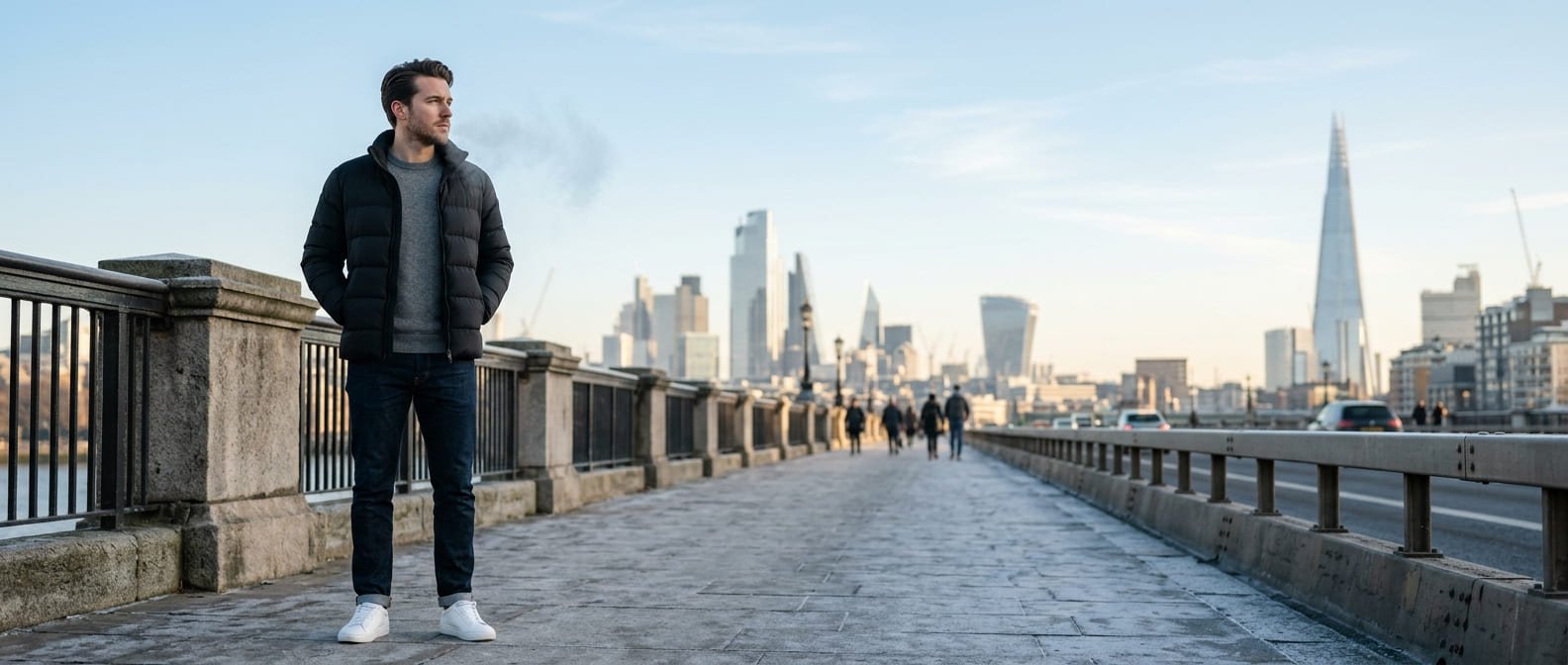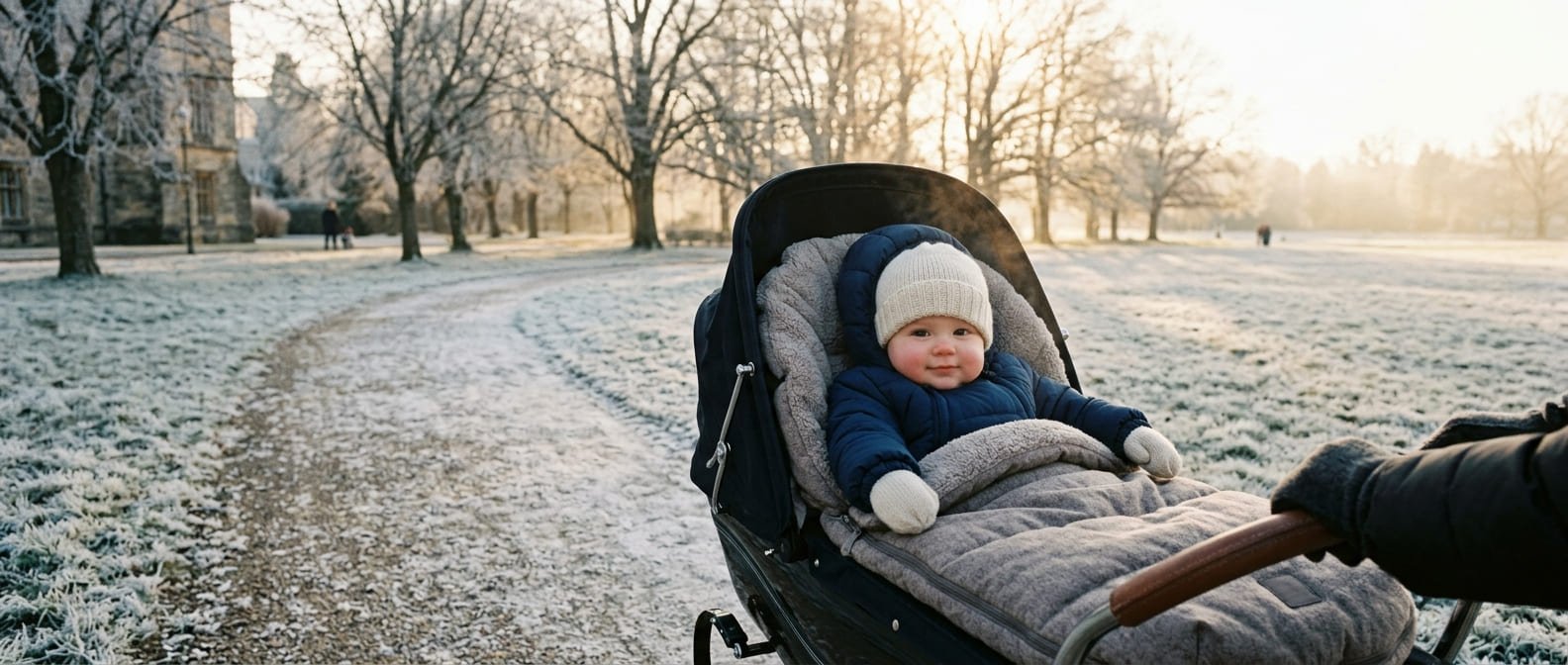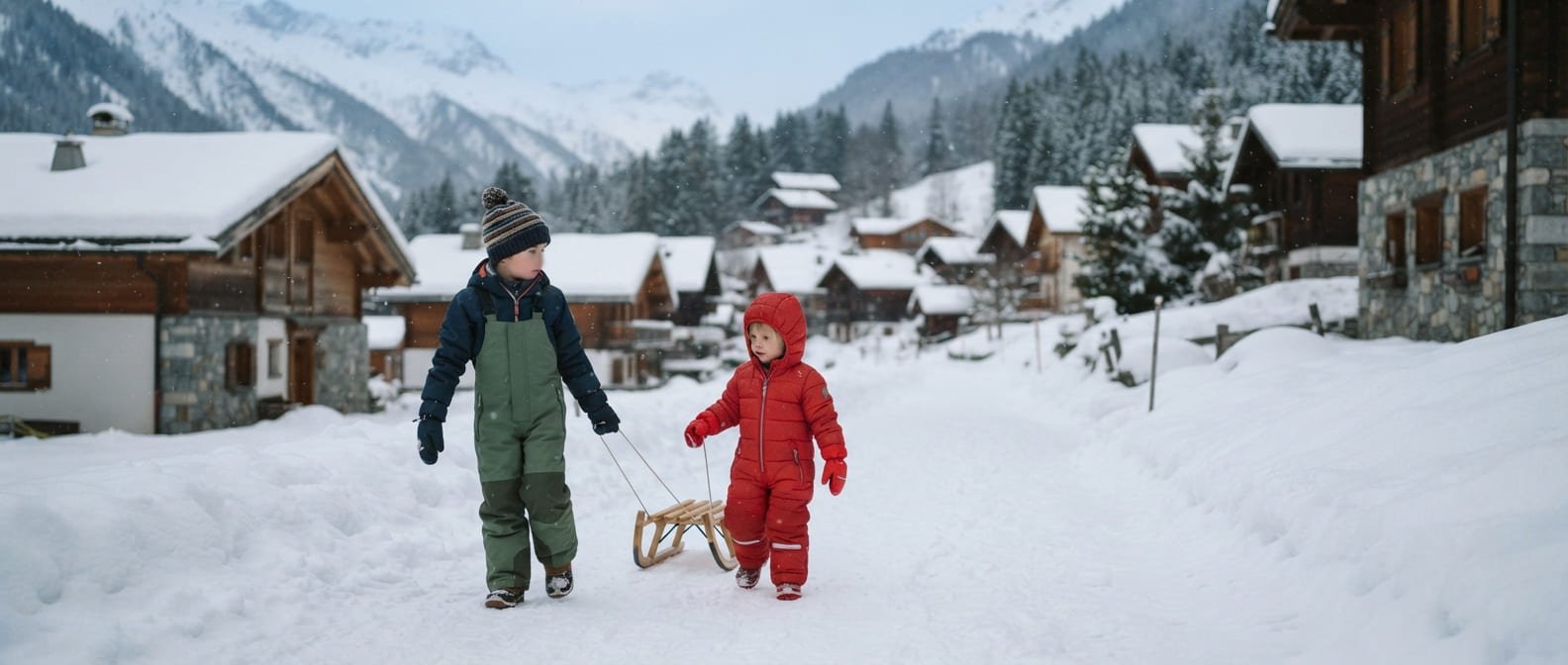



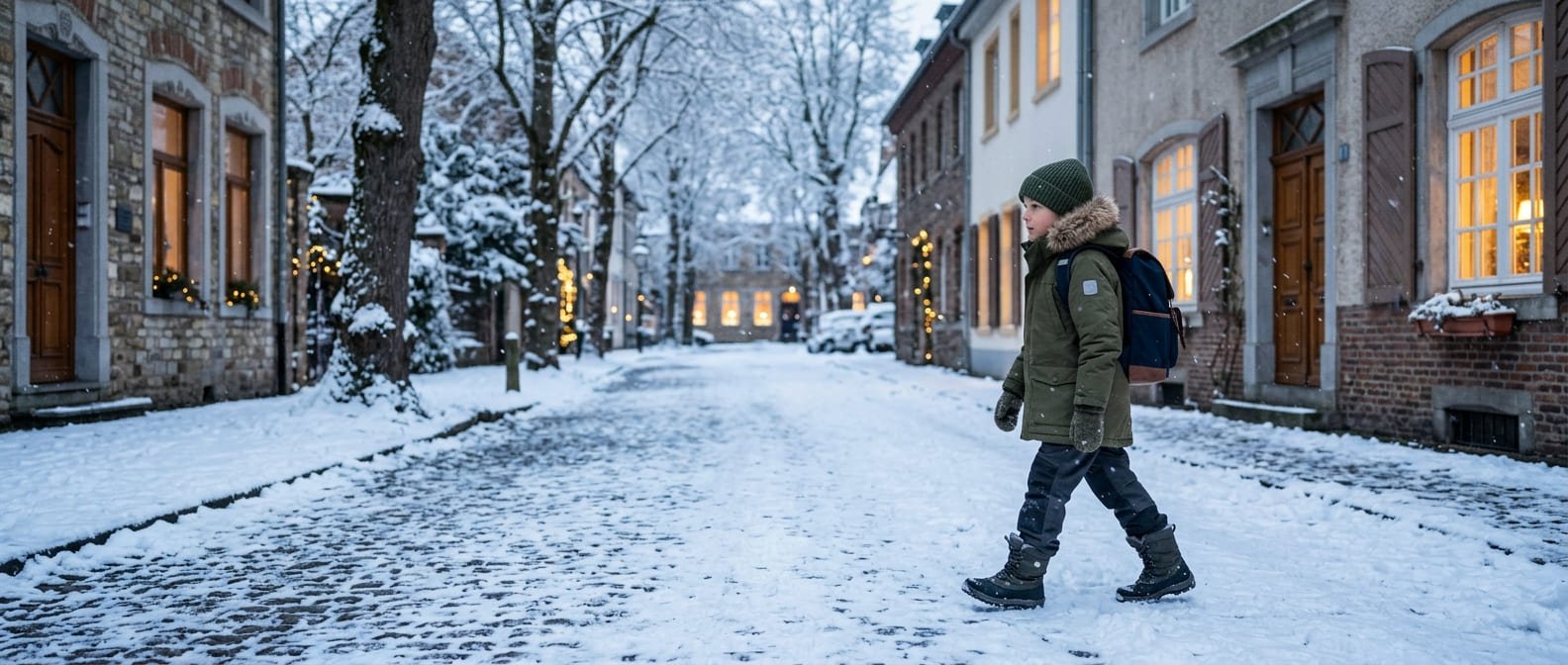
A good boys’ winter coat is the single most important piece of clothing he’ll wear between November and March. It has to keep him warm at the bus stop, dry in the rain, comfortable in a classroom cloakroom and intact after a term of football at break. Choosing a boys’ winter coat isn’t hard once you know what to look for: the right insulation, a waterproof outer, a fit with room for layers, and details such as a good hood, reflectors and fastenings he can manage in gloves. This guide covers how to choose a boys’ winter coat, comparing the main types (puffer jackets, parkas, padded coats, wool coats and snowsuits), down against synthetic insulation, waterproof ratings, fit and sizing, coats by age and climate, safety, and how to wash and store a coat so it lasts for a younger brother.
Boys’ winter coats: the quick answer
- Most boys need: a hooded, water-resistant padded coat or puffer jacket that covers the hips.
- For wet climates: a waterproof parka with taped seams.
- For deep cold: a down or heavily insulated coat, with a snowsuit for small children.
- Fit: room for a jumper underneath and about one size of growing room, no more.
- Must-haves: a hood, cuffs that seal, a zip with a chin guard, reflectors.
- Fastenings: zips and poppers he can do up alone.
- Wash it gently and store it uncompressed.
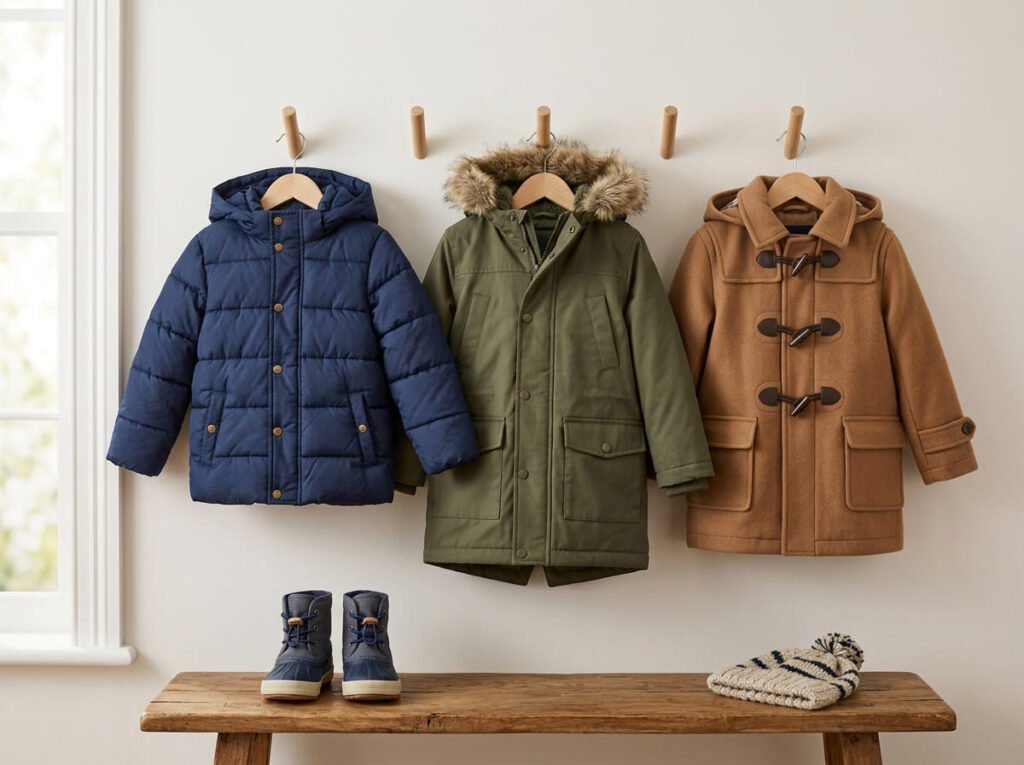
Types of boys’ winter coats
| Coat | Warmth | Weather protection | Best for |
|---|---|---|---|
| Puffer jacket | High | Water-resistant, sometimes waterproof | Cold, dry or showery days |
| Parka | High | Usually waterproof, longer cut | Wet and windy winters, school |
| Padded coat | Medium to high | Water-resistant | Everyday school wear |
| Down jacket | Very high for its weight | Needs a water-resistant shell | Very cold, dry weather |
| Waterproof shell with fleece | Medium | Fully waterproof | Rain, layered systems |
| Wool coat or duffle | Medium | Sheds light rain | Smart occasions, church, family events |
| Snowsuit or overall | Very high | Waterproof | Babies and toddlers, snow |
| Ski jacket | High | Waterproof and breathable | Snow and winter sports |
Puffer jackets
The most popular boys’ winter jacket. Quilted baffles hold insulation in place. They’re light, warm and pack small. Check whether the shell is water-resistant or fully waterproof: most puffers are only water-resistant.
Kids’ puffer jacket or boys’ puffer jacket?
Search for a kids’ puffer jacket and you’ll find unisex styles in a wide range of colours. A boys’ puffer jacket is often cut slightly straighter and longer, with more muted colours. The warmth is the same, so choose by fit, length and the colour he likes. Unisex coats are also easier to hand down to a younger brother or sister.
Parkas
Longer than a puffer, covering the hips and often the thighs, with a hood and deep pockets. The best choice for wet, windy European winters and long waits at the school gate.
Padded coats
A simpler, often cheaper option with an even layer of padding. Fine for most school days in mild winters.
Down jackets
Down gives the most warmth for the least weight. It loses warmth when soaked, so it needs a water-resistant shell, and it costs more.
Kids’ down jackets: what to check
A kids’ down jacket is the warmest option for its weight, but check a few details before you buy.
- Fill power: a higher number means loftier, warmer down. For children, a mid-range fill is plenty.
- Down and feather ratio: more down, less feather, means lighter warmth.
- Shell: water-resistant at least, so the down stays dry.
- Washability: some down coats can go in the washing machine, others can’t.
- Baffles: smaller baffles keep the down evenly spread.
Wool coats and duffles
For church, family celebrations and smart occasions. Warm, but less practical for play. See long coats for men for the adult version.
Snowsuits
All-in-one suits are the warmest option for babies and toddlers, and keep snow out of the gap between coat and trousers.
For sizes, warmth and car seat safety, see our guide to kids’ snowsuits and snow pants.
Down or synthetic insulation?
| Insulation | Warmth for weight | When wet | Care | Cost |
|---|---|---|---|---|
| Down | Highest | Loses warmth | Gentle wash, careful drying | Higher |
| Synthetic | Good | Keeps much of its warmth | Easy to wash and dry | Lower |
| Fleece lining | Moderate | Dries quickly | Easy | Low |
| Wool | Moderate | Stays warm when damp | Dry clean or gentle wash | Varies |
For most boys in Western Europe, where winters are wet more than freezing, synthetic insulation is the practical choice. For dry, very cold winters in Scandinavia, the Alps or Central Europe, down earns its price.
Responsibly sourced down: if you choose down, look for certification that the down was sourced without harm to the birds.
Waterproof or water-resistant?
They aren’t the same.
| Term | What it means | Good for |
|---|---|---|
| Water-repellent | Sheds light drizzle for a short time | Dry, cold climates |
| Water-resistant | Resists light rain | Short walks, mild winters |
| Waterproof | Keeps rain out, often with a stated rating | Wet climates and long walks |
| Waterproof with taped seams | Seams sealed against leaks | Heavy rain and outdoor play |
- Waterproof ratings are often given in millimetres (a “hydrostatic head”). Higher means more waterproof. Around 10,000 mm suits most wet winter weather, and outdoor brands go higher for heavy rain.
- Breathability matters for active boys. A breathable coat lets sweat escape, so he doesn’t get cold and damp from the inside.
- Re-proof the coat each winter with a wash-in or spray-on treatment if water stops beading.
What to look for: a checklist
- Length: covers the hips at least. Longer parkas protect the thighs.
- Hood: fixed or detachable, deep enough to cover the forehead, with a peak or adjuster. Avoid drawstrings at the neck and hood for young children.
- Zip: a full-length zip with a storm flap and a chin guard so it doesn’t pinch.
- Cuffs: elasticated inner cuffs or adjustable straps to keep snow and wind out.
- Hem: an adjustable or elasticated hem to trap warmth.
- Pockets: fleece-lined hand-warmer pockets and a zipped inside pocket.
- Reflectors: reflective strips or tabs for dark mornings and afternoons.
- Fastenings he can manage: large zip pulls he can grip in gloves.
- A name label area inside.
- Washable: check the care label before you buy.
How a boys’ winter coat should fit
- Try it on over a jumper or hoodie, the thickest layer he’ll wear.
- Shoulders: the seams should sit at or just past his shoulders, not halfway down the arm.
- Sleeves: long enough to cover his wrists when he reaches forward. Up to 2 cm extra is fine.
- Body: he should be able to cross his arms and bend down without the coat pulling across his back.
- Length: covering his bottom when he crouches.
- Hood: he should be able to turn his head and see to the side.
How much growing room?
One size up is usually right: it fits over jumpers and lasts two winters. Two sizes up makes sleeves hang over his hands and the hem flap around his knees, which lets cold air in. See our kids’ clothes size guide.
Boys’ winter jacket or winter coat?
The terms overlap. A boys’ winter jacket usually means a shorter style, ending at the hip or just below, such as a puffer or padded bomber. A boys’ winter coat often means something longer, such as a parka or wool coat. Jackets give more freedom for play and cycling. Coats give more warmth and protection from rain. Many boys own one of each: a coat for school and a jacket for weekends.
Boys’ bomber jackets
A padded bomber with ribbed cuffs and hem is a popular choice for older boys. It looks smart and keeps wind out, but it’s short, so it suits drier, milder days rather than a long wet walk.
Coats by age
| Age | Best choice | Notes |
|---|---|---|
| 0 to 1 | Padded pramsuit or snowsuit | Remove in the car and indoors |
| 1 to 3 | Snowsuit or padded coat with waterproof trousers | Easy zips and mitten clips |
| 3 to 6 | Waterproof padded parka | Reflectors, a hood and a name label |
| 6 to 10 | Puffer or parka | Something he likes, so he’ll wear it |
| 10 to 14 | Puffer, parka or padded jacket | Style matters. Let him choose within your rules |
| 14 and over | Adult-style puffer, parka or wool coat | See adult sizing |
For teenagers, see puffer jackets for men and clothes for teenage boys.
Coats by climate
| Climate | Where in Europe | Choose |
|---|---|---|
| Mild and wet | Britain, Ireland, the Netherlands, Belgium, northern France | Waterproof parka, synthetic fill |
| Cold and changeable | Germany, Denmark, central France | Waterproof padded coat, warm layers |
| Very cold and snowy | Scandinavia, the Alps, Central and Eastern Europe | Down or heavy insulation, snowsuit for small children |
| Mild and dry | Spain, Portugal, Italy, southern France | Light padded jacket or fleece-lined coat |
See our guides to Swedish, Dutch and British fashion, where children’s outdoor clothing is especially well developed.
Layering under a winter coat
A coat works best over the right layers.
- Base: a long-sleeve T-shirt or thermal top.
- Middle: a fleece, sweatshirt or wool jumper.
- Outer: the coat.
Add a hat, a snood or scarf, and gloves or mittens. A snood is safer than a long scarf for young children, because it can’t get caught. See how to layer clothes and cold-weather clothing.
Safety
- Car seats: take off thick coats before strapping a child in. A bulky coat stops the harness fitting closely. Put the coat on backwards over the harness, or use a blanket.
- Cords: avoid drawstrings in the hood and neck for young children.
- Visibility: reflectors, or a bright colour, for winter mornings.
- Overheating: take the coat off indoors, in shops and on public transport.
Accessories that complete a winter coat
- Hats: a fleece-lined beanie or a hat with ear flaps.
- Snoods: safer than scarves for younger children.
- Gloves and mittens: waterproof mittens for toddlers, gloves for older boys. Mitten clips stop them getting lost.
- Boots: waterproof, insulated and with good grip.
- Waterproof trousers: for nursery and playground days.
When to buy a winter coat
- Early autumn brings the widest choice of sizes.
- End-of-season sales in January and February are cheaper, but buy one size up to fit next winter.
- Second-hand coats are easiest to find at the start of autumn, when families clear out outgrown sizes.
Colours
- Navy, black and grey hide dirt and suit school.
- Olive, red, yellow and blue are easy to spot in a playground.
- Bright colours with reflectors are the safest for dark walks.
Getting a boy to wear his coat
Many parents know the problem: the perfect coat stays on the peg. A few things help.
- Let him choose the colour from two or three you’re happy with.
- Check it isn’t too hot. A coat that’s too warm for running about gets left behind.
- Make it easy to put on, with a zip he can start himself.
- Choose pockets he likes, because boys keep everything in them.
Caring for a winter coat
- Read the label before washing.
- Wash on a gentle, cool cycle with a mild or technical detergent.
- Skip fabric softener on waterproof and down coats.
- Dry down coats on low heat with clean tennis balls or dryer balls to restore the loft, if the label allows.
- Re-proof waterproof coats when water stops beading.
- Store clean, uncompressed and dry at the end of winter.
- Repair small tears with repair tape before they spread.
Buying second-hand and handing down
Good children’s coats often outlast the child. Look for:
- Working zips and poppers.
- No flat, lumpy insulation: shake it and check it’s evenly spread.
- Waterproofing that still beads, or plan to re-proof it.
- Clean, intact seams and cuffs.
Signs a coat no longer fits
- Sleeves end above his wrists when he stretches his arms forward.
- The zip strains over a jumper.
- The hem rides up above his hips.
- The hood won’t cover his forehead.
- He complains he’s cold in a coat that used to keep him warm. The insulation may have flattened.
Mistakes to avoid
| Mistake | Why it’s a problem | Do this instead |
|---|---|---|
| Buying two sizes up | Cold gets in, and he trips | One size up at most |
| A short jacket in a wet climate | Wet trousers and cold hips | A parka that covers the hips |
| Water-resistant in heavy rain | He’ll be soaked | Waterproof with taped seams |
| A coat he hates | He won’t wear it | Let him choose within your rules |
| Thick coat in the car seat | The harness can’t fit closely | Coat off, blanket over the harness |
| No reflectors | Hard to see in winter darkness | Reflective details or tabs |
| Washing down with softener | Ruins the loft | Use a down-specific wash |
Frequently asked questions
For most European winters, a hooded, waterproof or water-resistant padded coat or puffer that covers the hips. For very cold, dry climates, a down jacket.
Yes, for most winter days, with a jumper underneath. Check whether it's waterproof, as many puffers are only water-resistant.
A parka is longer, often waterproof and has a deep hood. A puffer jacket is quilted, lighter and usually shorter.
Synthetic insulation keeps much of its warmth when wet and is easier to wash. Down is warmer for its weight and suits very cold, dry weather.
One size up, so it fits over a jumper and lasts two winters. Try it on over his thickest layer.
Look for the word waterproof, taped seams and a waterproof rating. Water-resistant coats only handle light rain.
No. Take thick coats off before fastening the harness, then put the coat on backwards over the harness or use a blanket.
On a gentle, cool cycle with mild or down-specific detergent, no fabric softener, then dry on low heat with dryer balls if the label allows.
A snowsuit or a padded coat with waterproof trousers, plus a hat, mittens on a clip and warm boots.
Navy, black and grey hide dirt. Brighter colours with reflectors are easier to see on dark mornings.
A winter jacket is usually shorter, ending at the hip, and gives more freedom to move. A winter coat is longer and gives more protection from cold and rain.
For very cold, dry winters, yes, because down is the warmest for its weight. In wet climates, a synthetic puffer is often more practical.