



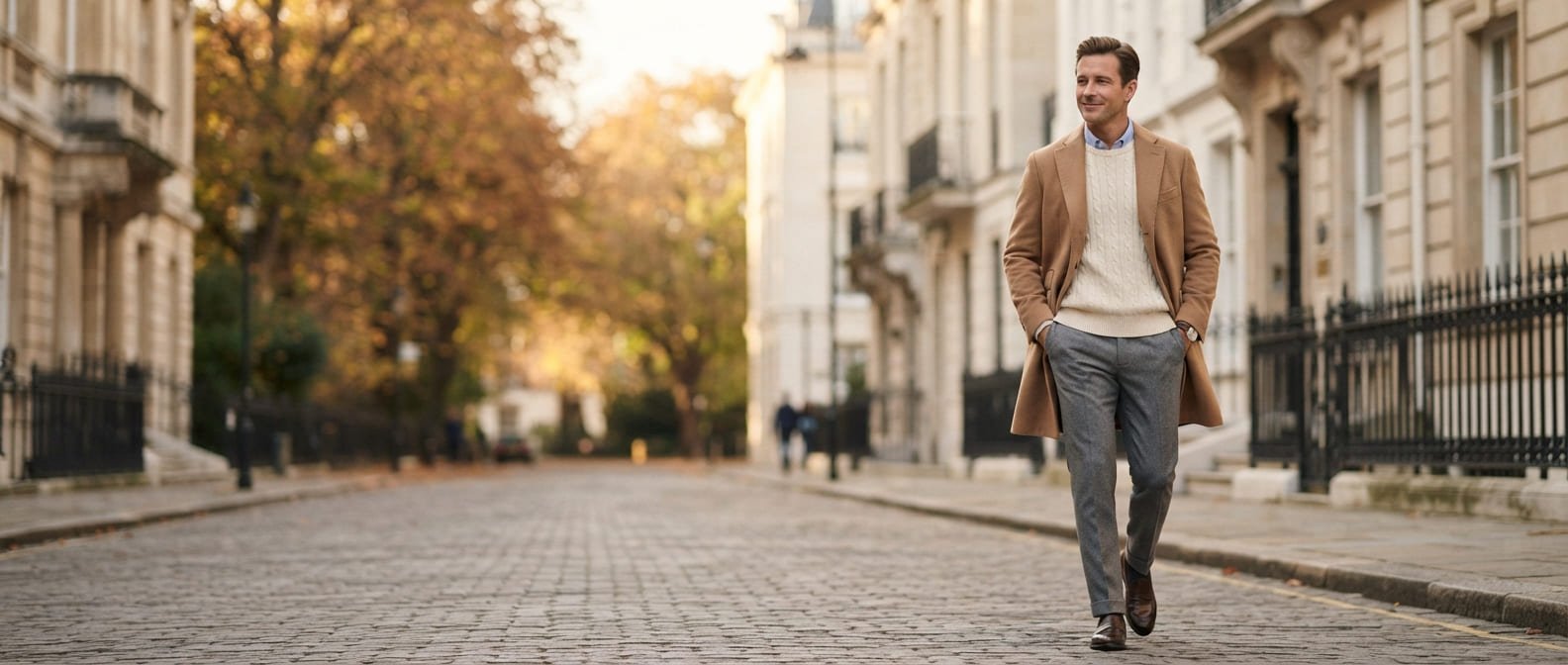
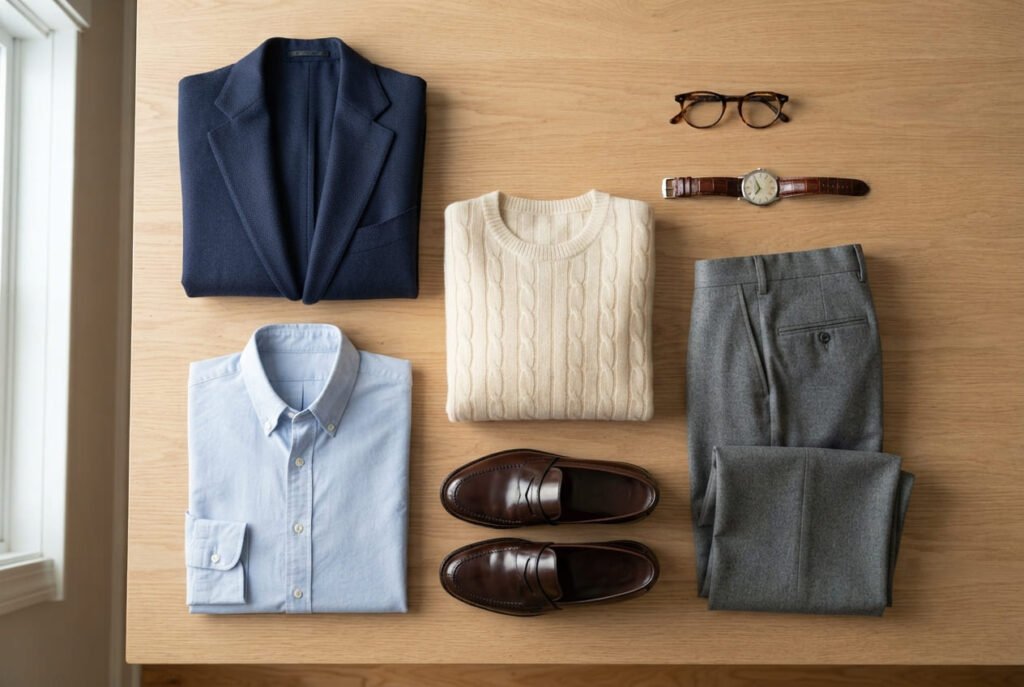
Old money style for men is the opposite of showing off. There are no logos, no loud colours and nothing that looks brand new. Instead, the look is built from well-made classics in natural fabrics, chosen to fit well and worn for years: a navy blazer, an oxford shirt, grey flannel trousers, a cashmere crew neck and leather loafers that have been resoled more than once. The term comes from families whose wealth is inherited rather than earned, and who traditionally felt no need to advertise it. You don’t need that kind of money to dress this way. You need patience, a small palette and a good tailor. This guide explains where the old money aesthetic comes from, its core rules, the essential pieces, the colours and fabrics, outfits for the city, the country, summer and evenings, how it compares with quiet luxury and preppy style, and how to build the look on a normal budget.
Where the old money look comes from
The style borrows from three traditions that grew up side by side in the twentieth century.
- British country and city dressing: tweed jackets, waxed cotton, flannel trousers, brogues and well-worn knitwear for the country, and dark Savile Row tailoring for town.
- American Ivy League style: the soft-shouldered sack jacket, button-down oxford shirts, chinos and penny loafers worn by students at Harvard, Yale and Princeton in the 1950s. See 1950s men’s fashion.
- The Italian and French Riviera: linen shirts, light tailoring, knitted polos, boat shoes and loafers without socks, worn with an easy elegance the Italians call sprezzatura.
Film and television keep the image alive, from classic Hollywood leading men to recent series about wealthy families, which is why the look trends again every few years.
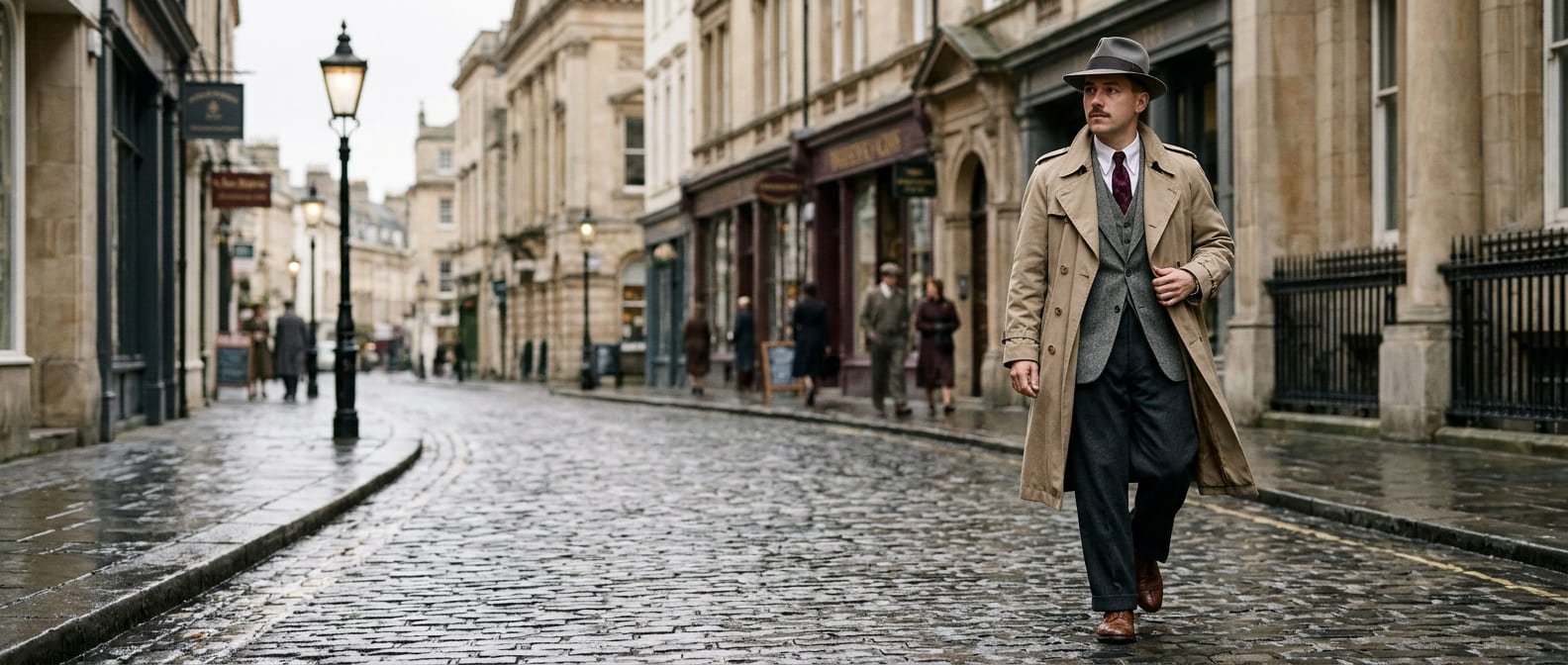
Much of the look borrows from mid-century tailoring; see our guide to 1940s men’s fashion.
The core rules of old money style
- Quality over quantity: fewer pieces, better made, in wool, cotton, linen, cashmere and leather.
- Fit is everything: clothes should follow your body without being tight. Sleeves, trouser length and shoulders matter more than the label. See how clothes should fit.
- No visible logos: if you can read the brand from across the room, it isn’t old money.
- A quiet palette: navy, grey, cream, white, camel, brown, olive and soft blue, with very occasional colour.
- Classic shapes: nothing extreme, oversized or very slim. The silhouette should look right in photos from 1960 and today.
- Worn in, not worn out: softened leather, faded oxford cloth and a well-loved knit are part of the charm. Holes and stains are not.
- Care and repair: resole shoes, mend jumpers, press shirts. Looking after clothes is the habit behind the look.
The essential old money wardrobe
| Piece | Best version | Why it matters |
|---|---|---|
| Navy blazer | Single-breasted, wool, natural shoulders | Goes with everything from jeans to grey flannels |
| Oxford shirt | White and light blue, button-down collar | The everyday shirt, with or without a tie |
| Knitwear | Cashmere or merino crew neck, cable knit, cardigan | Adds softness and warmth over shirts |
| Trousers | Grey flannel, stone or navy chinos, cream linen | The foundation of most outfits |
| Polo shirt | Knitted or piqué, plain, no large logo | Summer and weekend smart casual |
| Outerwear | Camel or navy overcoat, waxed or quilted jacket | Finishes outfits in cold weather |
| Shoes | Penny loafers, suede loafers, brogues, plain derbies | Leather and suede, never flashy trainers |
| Suit | Navy or charcoal, two-piece | Weddings, interviews and formal dinners |
Start with a navy blazer, two oxford shirts, grey and stone trousers, a navy knit and brown loafers. That small set already makes a dozen outfits. See our capsule wardrobe for men for how to plan it.
Fabrics that look expensive
The quickest way to look old money is to choose natural fabrics with texture.
- Wool flannel and tweed: soft, matte and warm, ideal for trousers and jackets in autumn and winter.
- Cashmere and lambswool: light, warm knitwear that ages well if you care for it.
- Oxford cloth: a thicker cotton weave that softens with every wash.
- Linen: creases naturally, which is part of the relaxed summer look.
- Suede and leather: for shoes, belts and the occasional jacket.
Shiny synthetics, heavy branding and very thin fabrics work against the look.
Old money colours
The rule is simple: build each outfit from two neutrals and, at most, one soft colour such as light blue, burgundy or forest green. For pairing ideas, see colour combinations for clothes.
Old money outfits for every occasion
In the city
- Navy wool blazer Jacket
- Light blue oxford shirt Shirt
- Grey flannel trousers Trousers
- Dark brown penny loafers Shoes
Add a camel overcoat and a grey cashmere scarf when it gets cold. A tie is optional: a navy or burgundy knitted tie keeps the look relaxed.
A weekend in the country
- Olive quilted jacket Jacket
- Cream cable-knit sweater Knit
- Brown corduroy trousers Trousers
- Brown leather brogue boots Shoes
Summer on the coast
- Navy knitted polo Top
- Cream linen trousers Trousers
- Brown woven leather belt Belt
- Tan suede loafers Shoes
A white linen shirt with sleeves rolled, or a light cotton crew-neck sweater for the evening, completes a summer wardrobe. See summer outfits for men.
Evening and formal events
For dinners, a navy or charcoal suit with a white shirt and a plain silk tie, or a navy blazer with grey trousers and polished loafers. For weddings and black tie, see our guide to wedding guest outfits for men.
- Charcoal wool suit Suit
- White poplin shirt Shirt
- Burgundy silk tie Tie
- Black leather oxford shoes Shoes
Accessories: less is more
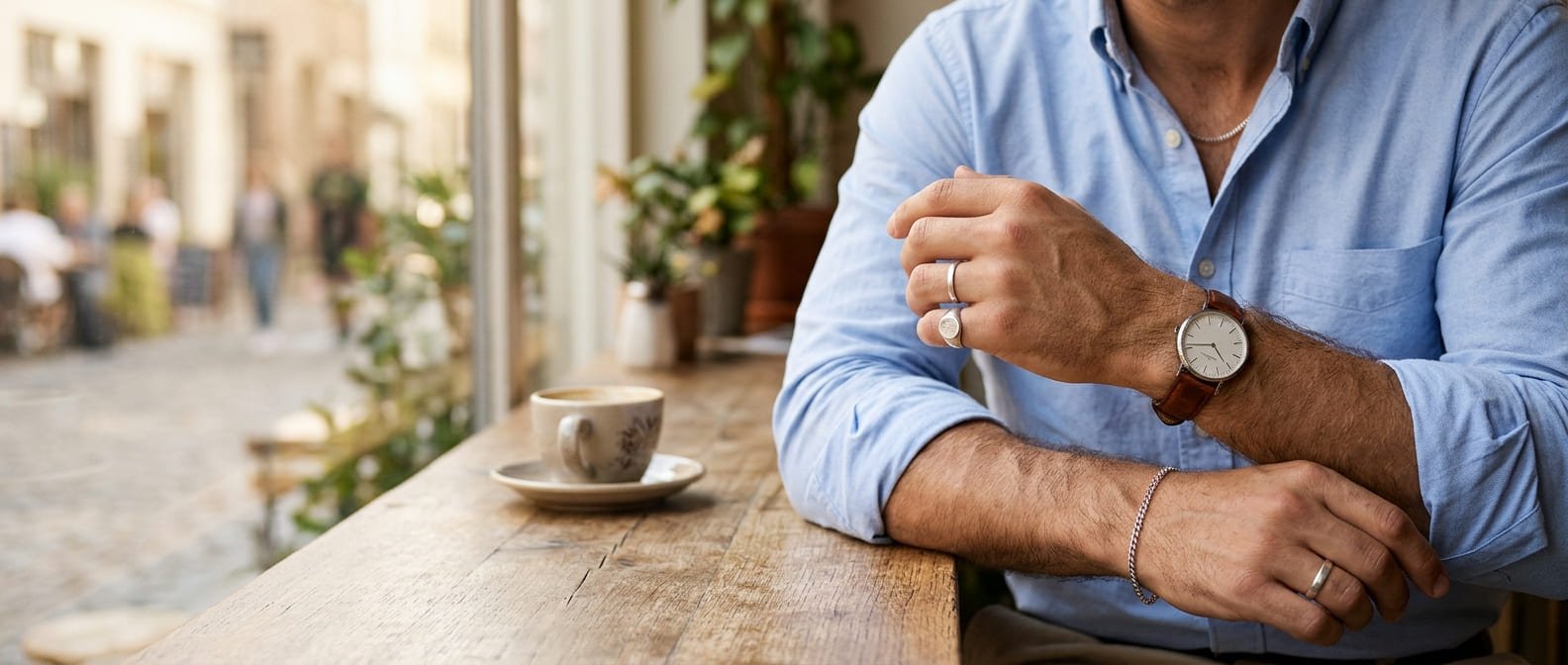
- Watch: a plain dress watch or a simple steel watch on a leather or fabric strap. Large, flashy watches go against the look.
- Belt: a leather belt in brown or black matching the shoes, or a woven or ribbon belt in summer.
- Glasses: tortoiseshell, black or thin metal frames in classic shapes. See men’s eyeglasses.
- Bags: a leather briefcase, a canvas and leather weekend bag, nothing covered in logos.
- Scarves and gloves: cashmere or wool scarves, leather gloves. See winter accessories for men.
- Jewellery: keep it minimal, such as a wedding band or a simple signet ring.
For rings, cufflinks and other pieces beyond the watch, see our guide to men’s jewellery.
Old money, quiet luxury and preppy style compared
| Style | What it looks like | Key difference |
|---|---|---|
| Old money | Classic, slightly worn, inherited feel | Tradition and patina matter more than price |
| Quiet luxury | Expensive basics in perfect condition, minimal shapes | Newer and more polished, often very costly |
| Preppy | Ivy League basics with more colour and pattern | Younger and brighter: madras, stripes, bold chinos |
| Classic menswear | Timeless tailoring and staples | The wider category old money belongs to |
For other styles and how to mix them, see our guide to styles of dressing.
Old money style on a budget
The look is about choices, not price tags.
- Buy second-hand: charity shops, vintage stores and resale sites are full of wool blazers, cashmere knits and leather shoes.
- Spend on fit: a tailor can shorten sleeves and trousers and take in a waist for much less than a new jacket.
- Invest in shoes: a pair of Goodyear-welted loafers or brogues can be resoled for decades.
- Choose natural fibres: a lambswool or merino knit costs far less than cashmere and looks just as classic.
- Look after everything: use wooden hangers, cedar blocks, a clothes brush and shoe trees.
Old money style for younger men
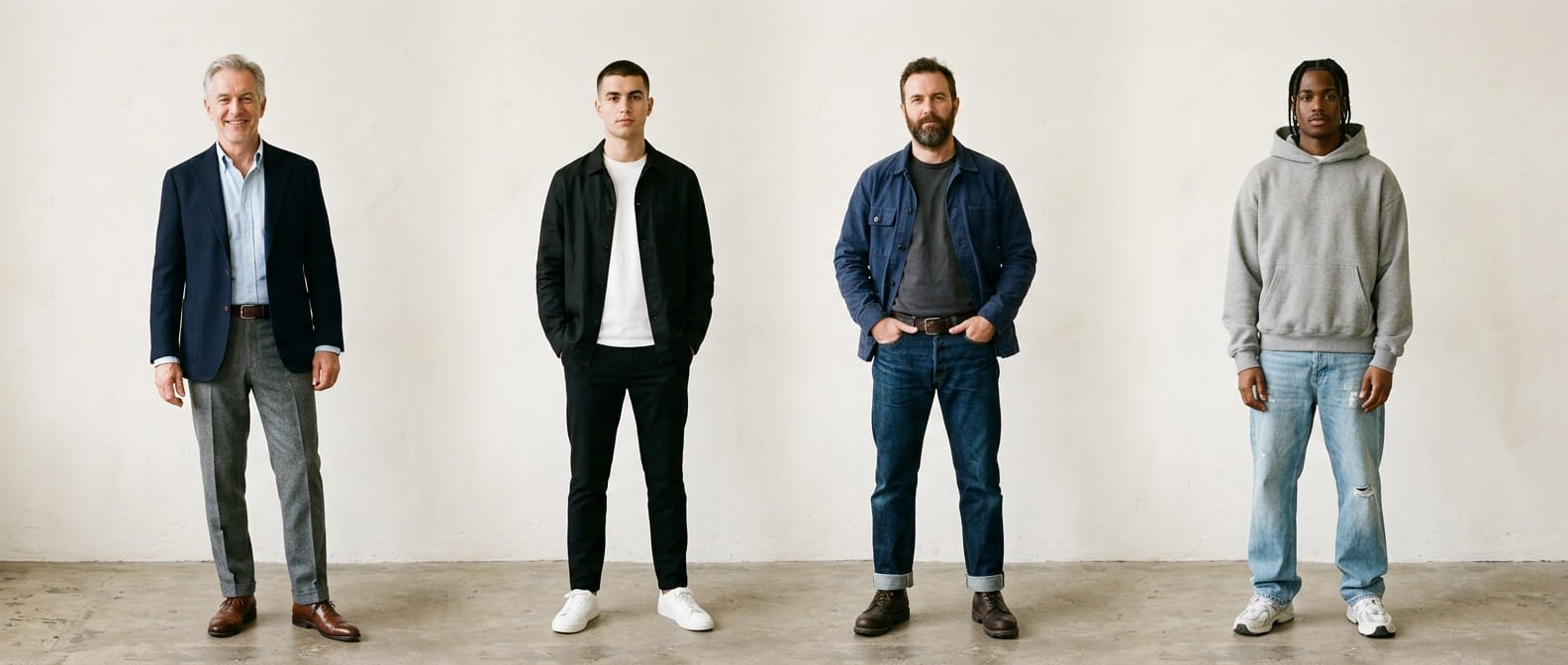
Students and men in their twenties can wear the look without seeming older than they are. Swap the blazer for an overshirt or a cotton jacket, wear an oxford shirt open over a white T-shirt, and choose chinos or straight, dark jeans with loafers or clean leather trainers in plain white. Keep the palette and the quality, and relax the formality. See also cardigans for men and sweater outfits for men.
Common mistakes
| Mistake | Why it doesn’t work | Better choice |
|---|---|---|
| Large logos | The opposite of the old money idea | Plain pieces with no visible branding |
| Sweater tied over the shoulders every day | Looks like a costume | Wear the sweater, or carry it |
| Everything brand new and shiny | Looks bought for the photo | Mix in softened, well-worn pieces |
| Tight, very slim tailoring | Not classic | Clean, comfortable fit with natural shoulders |
| Too many colours at once | Loses the calm effect | Two neutrals and one soft colour |
| Ignoring shoe care | Scuffed shoes ruin a good outfit | Polish, use shoe trees, resole |
Frequently asked questions
A classic, understated way of dressing built on well-made, well-fitting pieces in natural fabrics and quiet colours, with no visible logos. Think navy blazers, oxford shirts, flannel trousers, knitwear and leather loafers.
A navy blazer, white and blue oxford shirts, grey flannel and stone chino trousers, a cashmere or merino knit, a knitted polo, a camel or navy overcoat, loafers and a navy or charcoal suit.
Navy, grey, white, cream, camel, brown, olive and soft blue, with occasional burgundy or forest green.
Not quite. Both avoid logos, but quiet luxury focuses on expensive, perfect basics, while old money values tradition and pieces that look worn in.
Preppy style is the younger, brighter cousin, with more colour, stripes and pattern. Old money is quieter and more traditional.
Penny loafers, suede loafers, brogues, plain derbies and, in summer, boat shoes or unlined loafers. Plain white leather trainers work for younger, casual versions.
Yes. Buy second-hand wool and cashmere, pay for tailoring, choose shoes that can be resoled and look after your clothes.
Swap the blazer for an overshirt or knit, wear an oxford shirt open over a T-shirt, and choose chinos or dark jeans with loafers.
A plain, slim dress watch or a simple steel watch on a leather or fabric strap.