


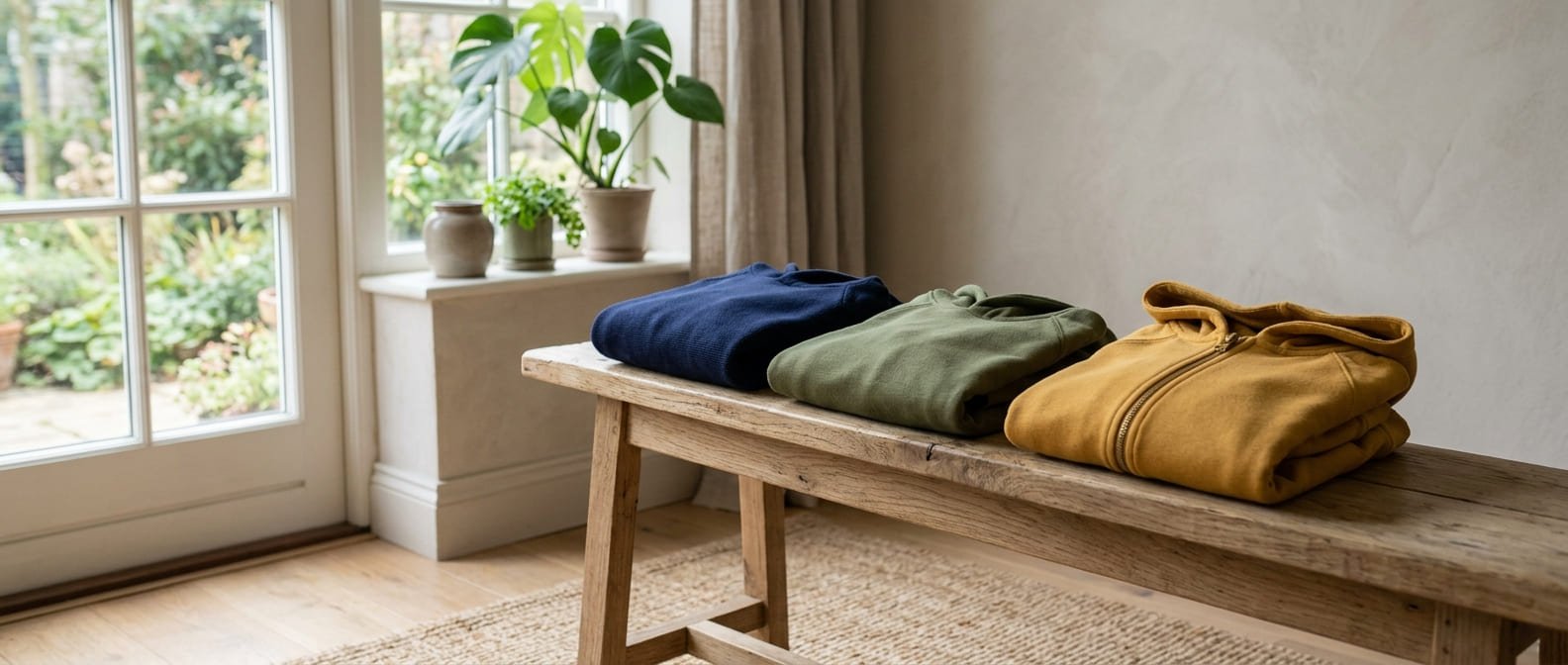
Boys’ hoodies are the closest thing most boys have to a uniform outside school. They go on over a T-shirt on cold mornings, under a coat in winter, to football practice, to sleepovers and on long car journeys, and many boys would wear the same one every day if you let them. A good hoodie is soft, warm, easy to pull on and tough enough for the washing machine every few days. This guide covers boys’ hoodies from toddlers to teenagers: pullover or zip-up, the best fabrics and weights, how a hoodie should fit, safety points such as drawstrings, kids’ hoodies by age, outfit ideas for school, weekends and sport, colours and prints, and how to wash a hoodie so it stays soft and doesn’t bobble.
Boys’ hoodies: the quick answer
- Most versatile: a plain pullover hoodie in navy, grey or olive, in cotton-rich sweatshirt fleece.
- Easiest for toddlers: a zip-up hoodie, which doesn’t go over the head.
- For school and sport: a mid-weight hoodie he can layer under a coat.
- Warmest: a brushed fleece or sherpa-lined hoodie.
- Fit: room to move, sleeves to the wrist, hem at the hip.
- Safety: no drawstrings in the hood for young children.
- Care: wash inside out at 30 °C and skip the tumble dryer where you can.

Pullover or zip-up?
| Style | Pros | Best for |
|---|---|---|
| Pullover hoodie | Warm, simple, a front pocket for hands | Older boys, weekends, layering under a coat |
| Zip-up hoodie | Easy on and off, adjusts to temperature | Toddlers, school, warm classrooms |
| Half-zip hoodie | Sporty, a little smarter | Older boys and teens |
| Hooded sweatshirt jacket | Structured, often lined | Autumn and spring as a light jacket |
| Sherpa-lined hoodie | Very warm | Cold days and outdoor play |
Pullover hoodies
The classic pullover hoodie, with a kangaroo pocket on the front, is the everyday choice for most boys over five. It’s warm, has no zip to break and looks relaxed over jeans or joggers.
Boys’ zip-up hoodies
A boys’ zip-up hoodie is easier to put on and take off, which matters for toddlers, for school and for boys who run hot. He can open it in a warm classroom and zip it up at break. Look for a fabric guard at the top of the zip so it doesn’t pinch his chin, and a zip pull big enough to grip.
Kids’ hoodies by age
| Age | Best styles | What to look for |
|---|---|---|
| 0 to 2 | Zip-up, soft cotton | Envelope or zip opening, no cords, poppers on babies’ styles |
| 2 to 5 | Zip-up, light pullovers | Easy zips, wide neck, machine-washable |
| 5 to 8 | Pullover and zip-up | Reinforced cuffs, a pocket, plain or simple prints |
| 8 to 12 | Pullover, half-zip | Mid-weight fabric, a deeper hood, colours he chooses |
| 12 and over | Any style, oversized fits | Heavier fabric, adult cuts and colours |
Toddler boy hoodies
Toddler boy hoodies should be quick to put on and safe to wear all day.
- Choose zip-ups or pullovers with a wide neck.
- No cords or toggles in the hood or at the neck.
- Soft cotton jersey or light fleece, not heavy, stiff fabric.
- Sleeves that fit, so he can use his hands. Roll-back cuffs are fine for a little growing room.
- Machine-washable, because toddlers are messy.
- Mustard zip-up hoodie Layer
- Grey long-sleeve top Top
- Navy stretch joggers Trousers
- White velcro trainers Shoes
For more ideas, see toddler boy outfits.
Hoodies for boys aged 5 to 12
At this age, boys’ hoodies take the most wear: school, clubs, parks and sleepovers. Choose a mid-weight cotton-rich fabric that survives frequent washing, and buy two or three so there’s always a clean one.
Hoodies for teens
Teenagers usually want adult styles: heavier fabric, boxy or oversized fits, muted colours and small logos or no logos at all. A plain, heavyweight hoodie in grey, black, cream or olive goes with almost everything. See clothes for teenage boys.
For older teens, our guide to zip-up hoodies for men covers adult fits, fabrics and outfits.
Hoodie safety: drawstrings and cords
Drawstrings around the hood and neck can catch on playground equipment, bus doors and furniture. European safety standards for children’s clothing don’t allow drawstrings or functional cords in the hood and neck area of clothes for young children, and limit them on clothes for older children.
- For children under about seven, choose hoodies with no cords in the hood or neck.
- For older children, any cord at the neck should be short and fixed, with no toggles or knots on the ends.
- Remove loose cords from second-hand hoodies before he wears them.
- Take the hood down on climbing frames and slides.
Fabrics and weights
| Fabric | Feel | Warmth | Best for |
|---|---|---|---|
| Cotton sweatshirt fleece | Soft, brushed inside | Medium | Everyday wear, school |
| Loopback cotton | Smooth, looped inside | Light to medium | Spring, autumn, warm classrooms |
| Cotton and polyester blend | Soft, holds shape | Medium | Frequent washing, sport |
| Polar fleece | Fluffy, light | High | Cold days, outdoors |
| Sherpa-lined | Thick, cosy | Very high | Winter play |
| Organic or recycled cotton | Soft | Medium | Lower-impact everyday wear |
Cotton-rich fabrics breathe better and suit sensitive skin. Blends with some polyester keep their shape and dry faster. Pure polyester fleece is warm but can feel sweaty indoors. See the best fabrics for kids’ clothes.
How a boy’s hoodie should fit
- Shoulders: the seams sit at or just past his shoulders. Oversized styles drop lower by design.
- Sleeves: reaching the wrist, with ribbed cuffs that stay up when he washes his hands.
- Body: room to move and to layer a T-shirt underneath.
- Length: the hem sits at the hip, covering his waistband when he reaches up.
- Hood: big enough to cover his head, not so big that it falls over his eyes.
Buying one size up works for hoodies, because cuffs can be turned back. Don’t go two sizes up: long sleeves get wet and dirty, and a hood that’s too big blocks his view. See our kids’ clothes size guide.
How many hoodies does a boy need?
| Age | Hoodies | Suggested mix |
|---|---|---|
| 0 to 2 | 2 | Two soft zip-ups |
| 2 to 5 | 2 to 3 | Two zip-ups and one pullover |
| 5 to 12 | 3 | Two everyday hoodies and one warmer or sporty one |
| 12 and over | 3 to 4 | A mix of styles he likes |
Outfit ideas with hoodies
- School day (no uniform): a navy pullover hoodie, a grey T-shirt, straight jeans and trainers.
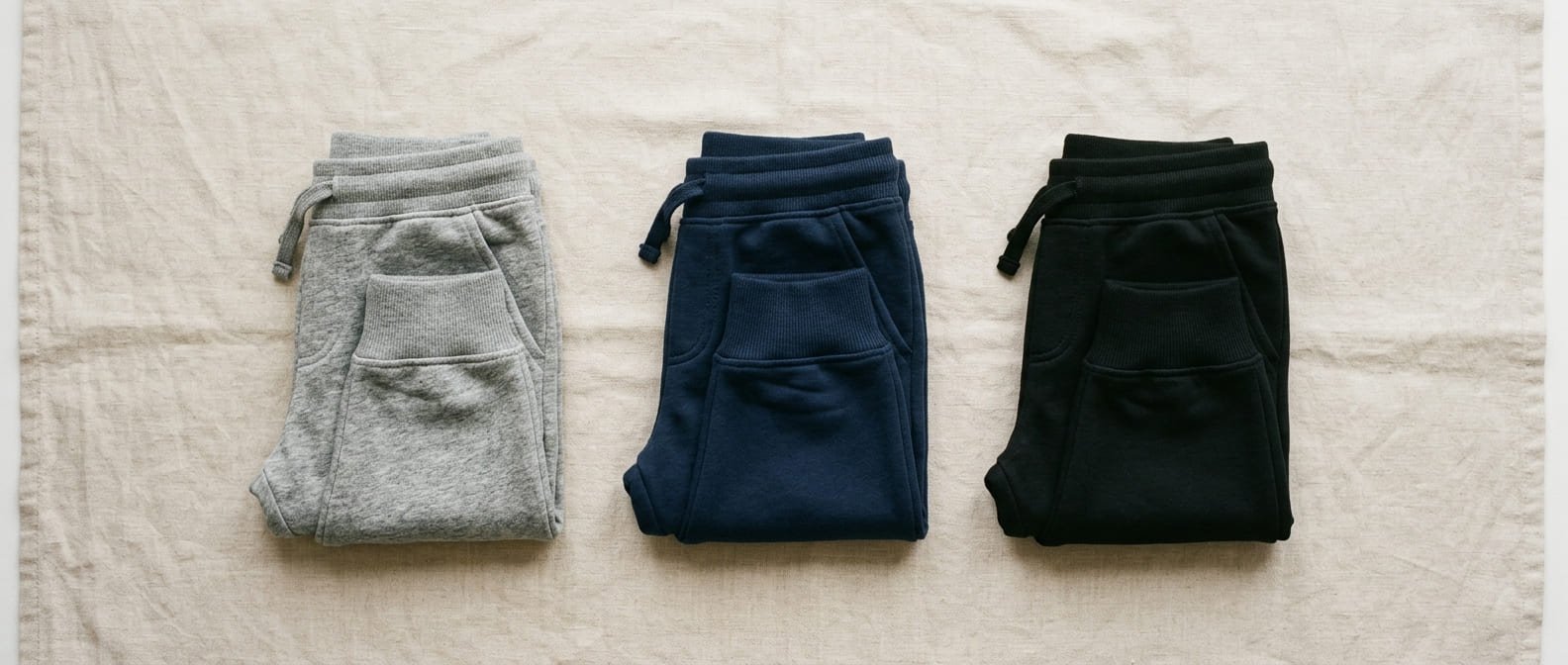
- Weekend: an olive hoodie, black joggers and chunky trainers. See boys’ sweatpants and joggers.
- Sport and clubs: a zip-up hoodie over a sports T-shirt, track pants and running shoes.
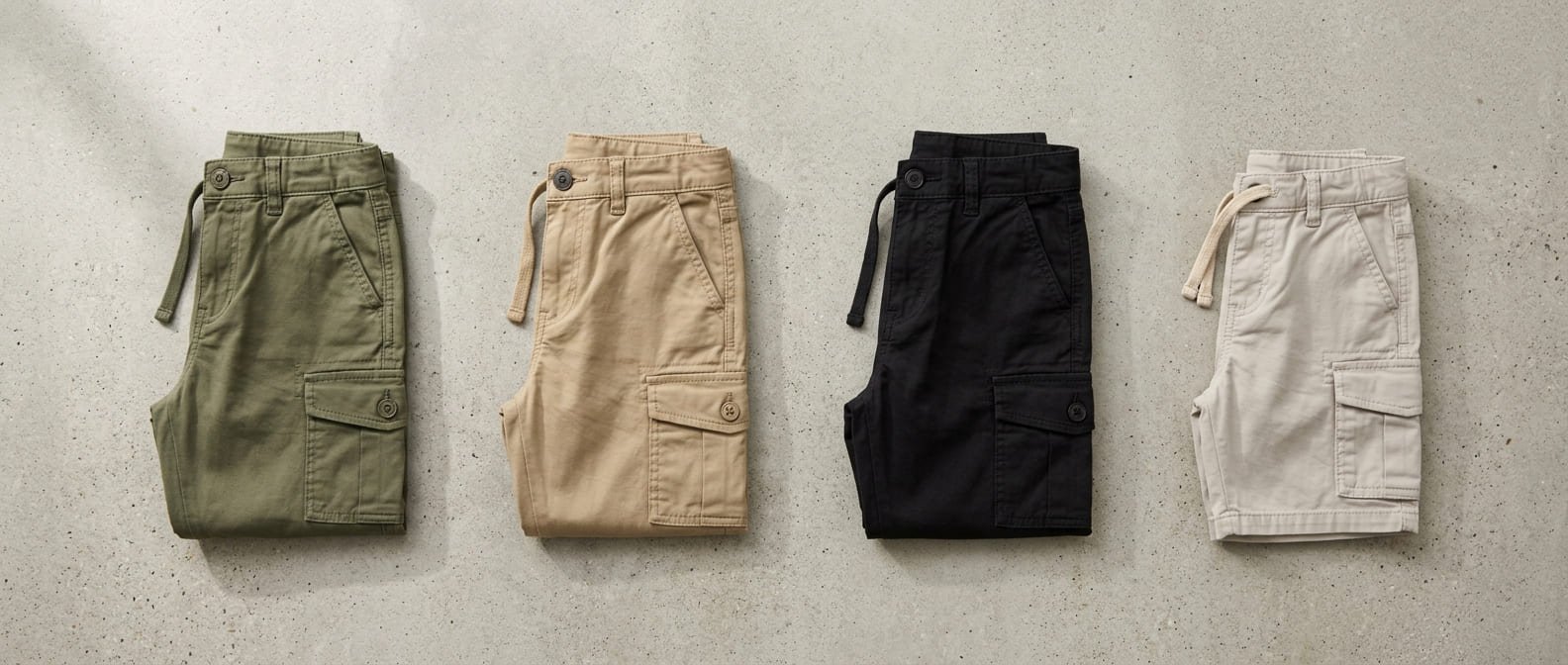
- Autumn walk: a hoodie under a quilted jacket, cargo trousers and boots. See boys’ cargo pants.
- Smarter casual: a plain hoodie under a denim or corduroy jacket, with dark jeans.
- Winter: a fleece-lined hoodie under a padded coat. See boys’ winter coats.
- Navy pullover hoodie Layer
- Grey T-shirt Top
- Dark straight jeans Trousers
- White leather trainers Shoes
- Olive heavyweight hoodie Layer
- Cream T-shirt Top
- Black cargo trousers Trousers
- Chunky trainers Shoes
See jeans for boys for the right fit to pair with a hoodie.
Hoodie or sweater?
| Wear | When |
|---|---|
| A hoodie | Weekends, sport, play, travel, casual school days |
| A sweater | Family events, photographs, smarter school days |
| A hooded knit | When he wants the hoodie look with knitwear warmth |
A hoodie is the relaxed choice. For family occasions and photographs, a knit usually looks better. See boys’ sweaters.
Colours and prints
- Navy, grey, black and olive go with every pair of trousers and hide marks.
- Mustard, red and cobalt blue add colour and are easy to spot in a playground.
- Cream and white look fresh but show dirt quickly.
- Small logos or plain fronts last longer than big character prints, which boys outgrow in taste before size.
- Graphic hoodies are popular with older boys. Let him choose one or two.
See colour combinations for clothes.
Hoodies for school
Some schools allow a plain hoodie on non-uniform days or in sport kit, and many secondary schools in Europe have no uniform at all.
- Choose plain colours for school and avoid big slogans.
- Label it inside, because hoodies are easy to lose.
- A zip-up is easier in a warm classroom.
- Pack a second layer for PE in cold weather.
Layering a hoodie
- Under a coat: a hoodie is a warm middle layer. Pull the hood out over the coat collar, or tuck it in under a hooded coat.
- Under a denim or corduroy jacket: a classic autumn look.
- Over a long-sleeve T-shirt: for cold mornings that warm up later.
See how to layer clothes.
Caring for boys’ hoodies
- Wash inside out at 30 °C to protect prints and reduce bobbling.
- Close the zip before washing so it doesn’t snag other clothes.
- Wash with similar fabrics, not with towels that shed lint.
- Skip fabric softener on fleece, as it flattens the brushed side.
- Line-dry or dry flat where you can. Tumble drying shrinks cotton and wears out prints.
- Remove bobbles with a fabric shaver.
Buying and handing down
- Two or three good hoodies are enough for most boys.
- Buy second-hand: hoodies are easy to find in good condition.
- Choose plain colours that can be handed down to brothers and cousins.
- Check cuffs and zips on second-hand hoodies before buying.
Hoodies around Europe
- Scandinavia: plain, muted hoodies, often in organic cotton, layered under shell jackets. See Swedish fashion.
- Britain: hoodies are everyday wear and part of many sports kits. See British fashion.
- Netherlands: hoodies under waterproof jackets for cycling to school. See Dutch fashion.
- Italy and Spain: a hoodie is weekend wear, with a knit or shirt for family occasions. See Italian fashion.
Mistakes to avoid
| Mistake | Why it’s a problem | Do this instead |
|---|---|---|
| Drawstrings for young children | Can catch and pull | Cord-free hoods and necks |
| Buying two sizes up | Sleeves drag, hood blocks his view | One size up at most |
| Thick polyester for indoors | Sweaty in warm classrooms | Cotton-rich, mid-weight fabric |
| Tumble drying | Shrinks and cracks prints | Line-dry inside out |
| Pullovers for toddlers | Hard to get on | Zip-ups or wide necks |
Frequently asked questions
A plain mid-weight pullover hoodie in cotton-rich fleece suits most boys. Toddlers are best in zip-ups.
For toddlers and young children, yes, because they're easier to put on and take off and adjust to the temperature.
A fabric guard at the top of the zip, a large zip pull, ribbed cuffs and no cords in the hood.
Not for young children. Choose cord-free hoods for children under about seven, and short fixed cords at most for older children.
One size up works, because cuffs can be turned back. Avoid going two sizes up.
Usually three: two everyday hoodies and one warmer or sporty one.
Soft zip-ups or wide-neck pullovers in cotton or light fleece, with no cords or toggles.
Cotton sweatshirt fleece or a cotton-rich blend: soft, breathable and easy to wash.
Wash inside out on a cool, gentle cycle with similar fabrics and avoid the tumble dryer.
On mild dry days, yes. In cold or wet weather, wear it under a coat.
It depends on the school. Many allow plain hoodies on non-uniform days or in sport kit.
Navy, grey, black and olive go with almost every pair of trousers.
Heavyweight, boxy or oversized hoodies in muted colours with small logos or none.
A hoodie for weekends, sport and play, and a sweater for family events and photos.
Inside out at 30 °C, without fabric softener, and line-dry so the fleece stays soft.