




Boys’ dress shoes finish a smart outfit, but they’re also the piece most likely to cause tears at a wedding, a christening or the first day at a new school. Stiff leather, the wrong size and a long day on hard floors make for unhappy feet. The right pair of boys’ dress shoes is comfortable from the first wear, fits his feet now (not in six months), suits the occasion and goes with more than one outfit. This guide covers how to choose boys’ dress shoes: the main styles (Oxfords, derbies, loafers, monk straps, Chelsea boots and smart school shoes), toddler boy dress shoes and first smart shoes, colours and when to wear black or brown, how dress shoes should fit, materials and soles, matching shoes to outfits and occasions, caring for leather, and how to make a pair last.
Boys’ dress shoes: the quick answer
- Most versatile: brown leather derby shoes, which go with suits, chinos and jeans.
- Most formal: black leather Oxfords, for black-tie weddings and formal events.
- Easiest to wear: loafers or shoes with a hook-and-loop strap, for younger boys.
- For toddlers: soft leather shoes with a strap and a flexible sole.
- Fit: about 1 cm of space beyond the longest toe, a snug heel and enough width.
- Comfort: worn in at home before the big day.
- Care: polish, a shoe tree or stuffed paper, and dry naturally when wet.
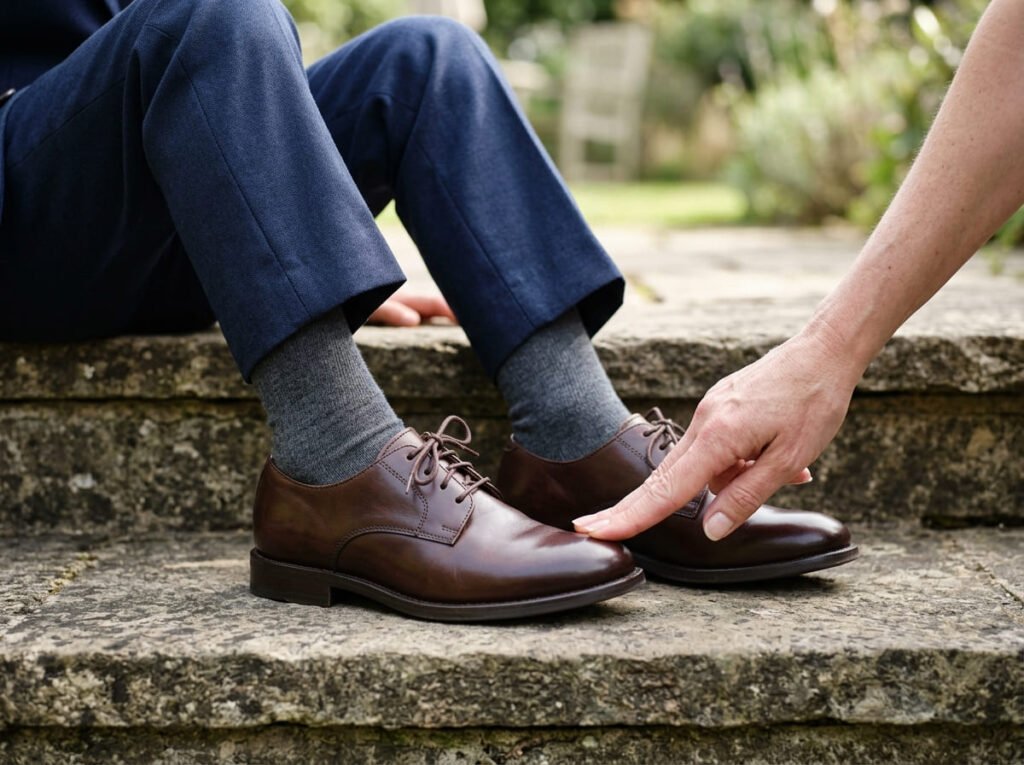
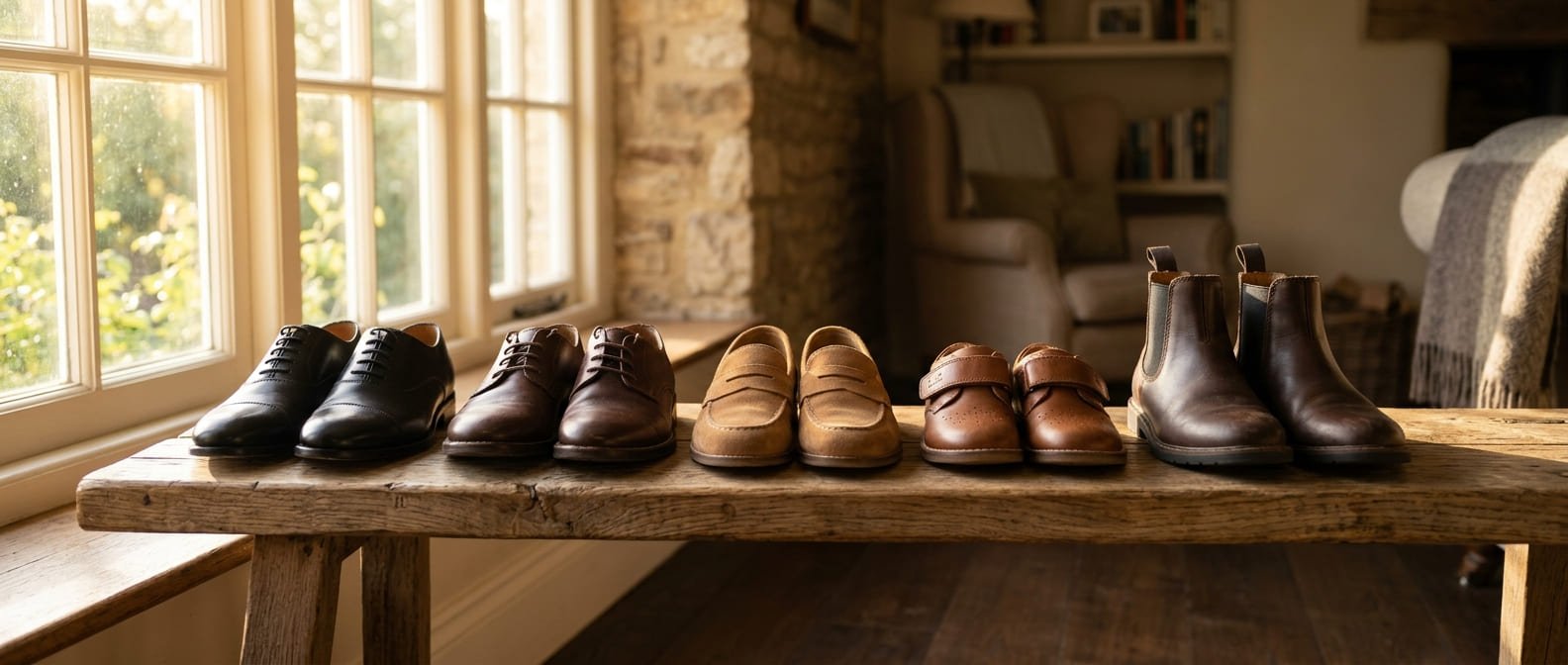
The main styles of boys’ dress shoes
| Style | What it is | Formality | Best for |
|---|---|---|---|
| Oxford | Closed lacing, sleek shape | High | Weddings, formal events, black tie |
| Derby | Open lacing, roomier fit | Medium to high | Suits, school, smart casual |
| Loafer | Slip-on, no laces | Medium | Summer weddings, smart casual |
| Monk strap | Buckle instead of laces | Medium to high | Suits and smart outfits |
| Chelsea boot | Ankle boot with elastic sides | Medium | Winter occasions, smart casual |
| Brogue | Decorative perforations | Medium | Tweed, autumn and winter outfits |
| Strap shoe | Hook-and-loop or buckle strap | Medium | Toddlers and young boys |
Oxfords
The most formal choice, with laces sewn under the front of the shoe. Oxfords suit dark suits and tuxedos, but the closed lacing gives less room for wider feet.
Derbies
The best all-rounder. The open lacing adjusts to different foot shapes, so derbies are often more comfortable for children. Many school shoes are derbies.
Loafers
Slip-on shoes that boys can put on themselves. Suede loafers suit summer weddings and smart casual outfits. Choose a pair that holds the heel well, or they’ll slip off when he runs.
Monk straps
A buckle strap instead of laces. Smart and easy for boys who can’t yet tie laces.
Chelsea boots
Smart enough for a winter wedding or Christmas lunch, warm, and easy to pull on.
Strap shoes
Shoes with a hook-and-loop strap or buckle are the best choice for toddlers and young boys. They fasten securely and he can manage them himself.
Smart trainers
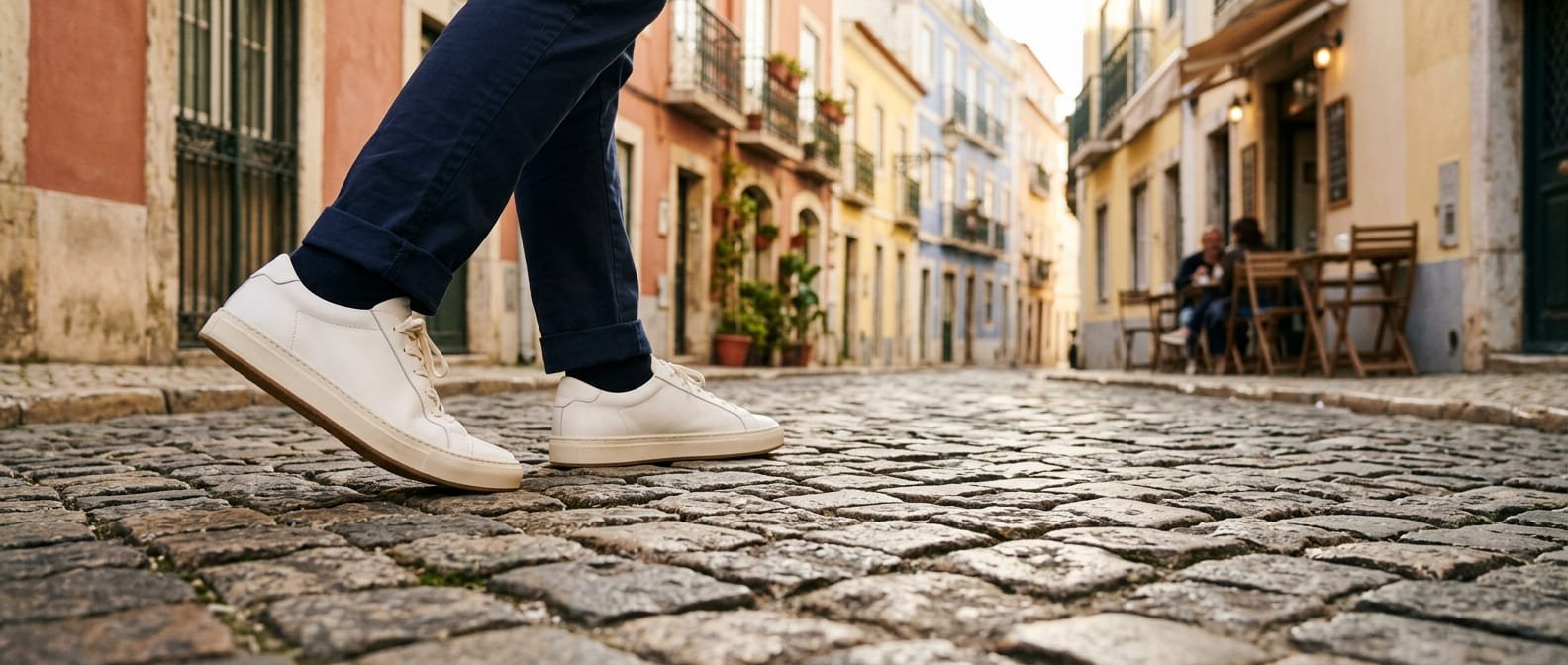
At relaxed parties and smart casual events, many families now choose clean leather trainers in white, black or navy. They’re comfortable and easy, but aren’t formal enough for most weddings, christenings or funerals. Check the dress code, or ask the hosts if you’re unsure.
Toddler boy dress shoes
Toddler boy dress shoes need to be different from older boys’ shoes. Toddler feet are still developing, and many toddlers are still finding their balance.
- Flexible soles that bend at the ball of the foot.
- Lightweight construction.
- Soft leather uppers that mould to the foot.
- A secure strap that holds the heel.
- A wide toe box so toes can spread.
- Non-slip soles, because party and church floors are often polished.
- Navy knitted cardigan Layer
- White cotton shirt Shirt
- Grey soft trousers Trousers
- Tan leather strap shoes Shoes
Toddler loafers
Toddler loafers are popular for summer weddings and family photographs. Choose soft suede or leather with a flexible sole and a snug fit at the heel. If he walks out of them, a strap shoe is safer.
First smart shoes
Many children’s shoe shops recommend having a child’s feet measured before buying first shoes. Choose shoes in the right length and width, and check the fit every few months, because toddler feet grow quickly. See our kids’ shoe size guide.
Kids’ dress shoes by age
| Age | Best style | Fastening | Notes |
|---|---|---|---|
| 1 to 3 | Soft leather strap shoe | Hook-and-loop strap | Flexible sole, wide toe box |
| 3 to 6 | Strap shoe, loafer or monk strap | Strap or buckle | Non-slip sole |
| 6 to 10 | Derby, loafer or Chelsea boot | Laces or strap | Good school shoe doubles as dress shoe |
| 10 to 14 | Derby, Oxford, loafer | Laces | Closer to adult styles |
| 14 and over | Oxford, derby, loafer, monk strap | Laces or buckle | Adult sizing |
When boys need dress shoes
Most boys only need dress shoes a few times a year, which is why fit and versatility matter more than fashion.
- Weddings and christenings: the main occasions for dress shoes.
- Religious festivals and services: Christmas, Easter, Eid, Diwali, bar mitzvahs and first communions.
- Formal school events: concerts, prize-givings and graduations. See graduation outfit ideas.
- Funerals and memorial services.
- Family photographs and celebrations.
- School uniform: many schools require black leather shoes every day.
If he only needs dress shoes once or twice, a single pair of dark brown or black leather derbies covers almost every occasion.
Black or brown?
| Colour | Wear with | Best for |
|---|---|---|
| Black | Black, charcoal and navy suits | Formal and evening events, black tie |
| Dark brown | Navy, grey and green suits, chinos | Weddings, christenings, parties |
| Tan | Light grey, beige and blue, linen | Summer weddings and smart casual |
| Burgundy | Navy, grey and charcoal | Autumn and winter occasions |
| Navy suede | Grey, beige and white | Summer smart casual |
Boys’ black dress shoes
Boys’ black dress shoes are the most formal option, and they’re required by many school uniforms. Wear them with black, charcoal or navy suits, and with a black-tie or evening outfit. Black shoes look heavy with light summer colours.
Boys’ brown dress shoes
Brown dress shoes are the most versatile. They suit navy and grey suits, chinos and jeans, and look softer and more relaxed than black. For a summer wedding, a lighter tan or suede pair works beautifully.
See how to match belt and shoes for matching leathers.
How boys’ dress shoes should fit
- Measure both feet standing up, later in the day when feet are slightly larger.
- Fit to the larger foot.
- Check length: about 1 cm (roughly a finger’s width) between the longest toe and the end of the shoe.
- Check width: he should be able to wiggle his toes, and the sides shouldn’t bulge.
- Check the heel: it should stay in place when he walks, without slipping more than a little.
- Walk around the shop on a hard floor.
- Wear the socks he’ll wear on the day.
Don’t buy too big
Shoes that are too big make children trip, cause blisters and change the way they walk. Buying a size up for growth is a common mistake. For a special occasion, buy shoes that fit now.
Width, arches and comfort
Children’s feet vary widely in width and shape.
- Wide feet: choose derbies, monk straps or strap shoes, which adjust more easily than Oxfords. Some makers offer width fittings.
- Narrow feet: laces or straps hold the foot better than slip-on loafers.
- High arches: shoes with laces or straps across the top let you adjust the fit.
- Flat feet: look for supportive soles and a firm heel counter. Ask a shoe fitter for advice.
- Sensitive feet: soft leather linings, padded collars and seam-free insides help.
If he complains of pain, check for red marks after wearing. Persistent pain is worth checking with a shoe fitter or doctor.
Materials and soles
- Leather: breathable, mould to the foot and last well. The best choice for dress shoes.
- Suede: soft and comfortable, but marks easily in rain.
- Patent leather: very shiny and formal, but can crease and feel stiff.
- Synthetic: cheaper and wipe-clean, but less breathable.
- Rubber soles: grip on polished floors and give comfort.
- Leather soles: smart and traditional, but slippery for young children.
- Cushioned insoles: help on long days.
Matching shoes to outfits and occasions
| Occasion | Outfit | Shoes |
|---|---|---|
| Wedding (formal) | Dark suit, shirt and tie | Black Oxfords or brown derbies |
| Wedding (summer) | Linen shirt, light trousers | Tan loafers or suede shoes |
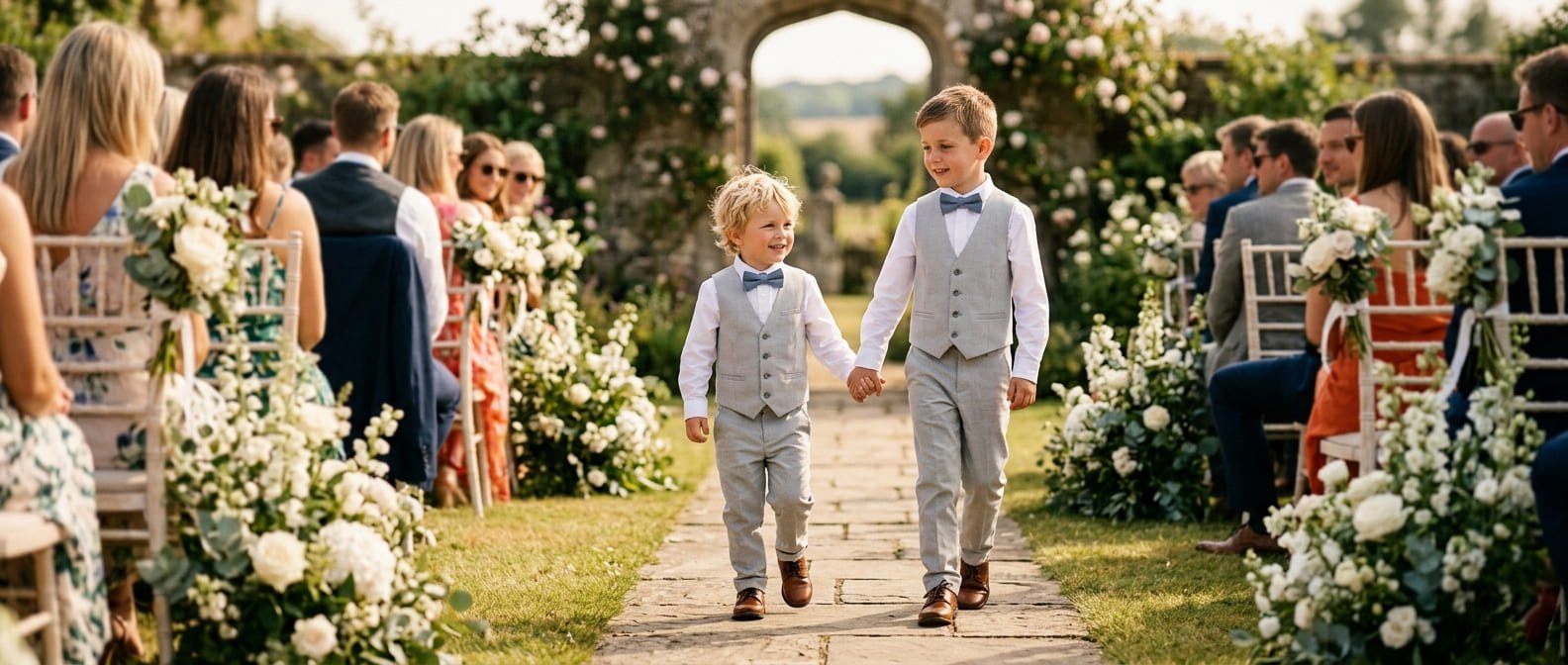
| Christening | Shirt, waistcoat, trousers | Brown leather strap shoes or derbies |
| Christmas lunch | Knit, shirt, cords | Brown Chelsea boots or brogues |
| School | Uniform | Black derbies or strap shoes |
| Party | Shirt and chinos | Loafers or clean leather trainers |
| Funeral or formal service | Dark suit or trousers | Black Oxfords or derbies |
| Photographs | Shirt, knit, chinos | Brown leather shoes |
For wedding ideas, see boys’ wedding outfits. For festive outfits, see boys’ Christmas outfits.
School shoes as dress shoes
A good pair of black leather school shoes can double as dress shoes for formal occasions, especially for boys who grow quickly. Polish them the night before and they’ll look smart enough for most events. For a summer wedding or a brown-toned outfit, a separate pair of brown shoes or loafers is worth having.
Outfit formulas with dress shoes
- Navy two-piece suit Suit
- White cotton shirt Shirt
- Grey knitted tie Tie
- Dark brown leather derbies Shoes
- Light blue linen shirt Shirt
- Beige chinos Trousers
- Tan suede loafers Shoes
- Charcoal wool trousers Trousers
- White shirt Shirt
- Burgundy V-neck knit Layer
- Black leather Oxfords Shoes
Socks with dress shoes
- Match socks to trousers, not shoes, for a smooth look.
- Long socks with shorts for younger boys at summer weddings.
- Thin cotton or wool socks rather than thick sports socks.
- A fun pattern is fine for parties.
Breaking in new dress shoes
- Buy at least two weeks before the event.
- Wear them at home for short periods.
- Bend the soles gently with your hands.
- Check for red marks on his heels and toes.
- Add blister plasters in his bag on the day.
Caring for boys’ dress shoes
- Clean off dirt with a damp cloth after wearing.
- Polish leather regularly with a matching cream or wax.
- Brush suede with a suede brush, and use a protector spray.
- Stuff with newspaper or use shoe trees to keep their shape.
- Dry wet shoes naturally, away from radiators.
- Replace laces when they fray.
How often to check the fit
Children’s feet grow in spurts, so a pair that fitted at Easter may be too small by the summer wedding.
| Age | How often to check |
|---|---|
| 1 to 3 | Every 6 to 8 weeks |
| 3 to 5 | Every 2 to 3 months |
| 5 to 12 | Every 3 to 4 months |
| 12 and over | Every 4 to 6 months |
Check the fit a week or two before any big event, and press gently at the toe to feel where his longest toe sits. If he says his shoes hurt, or he walks differently, check sooner.
Saving money on dress shoes
- Buy one versatile pair: brown derbies go with almost everything.
- Use school shoes for formal occasions.
- Buy second-hand dress shoes that are barely worn, but check the fit carefully and avoid shoes that have moulded to another child’s foot.
- Hand down dress shoes worn only a few times.
Buying boys’ dress shoes: a step-by-step plan
- Check the occasion and dress code first, so you know whether he needs black, brown or a lighter summer shoe.
- Measure his feet a few weeks before, or have them measured in a shop.
- Choose the style that suits his age: a strap shoe for toddlers, a derby or loafer for older boys.
- Try them on with the right socks, later in the day.
- Walk around on a hard floor and check the heel, toes and width.
- Break them in at home for at least a week.
- Polish them the night before the event.
Dress shoes around Europe
- Britain: brogues, derbies and black school shoes are classic. See British fashion.
- Italy: fine leather loafers and smart shoes, even for children. See Italian fashion.
- Spain: leather shoes and espadrilles for summer family occasions. See Spanish fashion.
- Portugal: a long tradition of quality leather footwear. See Portuguese fashion.
Mistakes to avoid
| Mistake | Why it’s a problem | Do this instead |
|---|---|---|
| Buying a size up | Trips and blisters | Buy shoes that fit now |
| New shoes on the day | Pain and tears | Break them in at home |
| Leather soles for toddlers | Slippery floors | Rubber soles with grip |
| Black shoes with summer linen | Look heavy | Tan or suede |
| Laces for young children | Come undone, trip hazard | Straps or buckles |
| Drying on a radiator | Cracks the leather | Dry naturally |
Frequently asked questions
Brown leather derbies are the most versatile. Black Oxfords are the most formal. Younger boys are best in shoes with a strap.
Soft leather shoes with a hook-and-loop strap, a flexible non-slip sole and a wide toe box.
Black for formal and evening weddings with dark suits, and brown for daytime weddings and navy or grey suits.
About 1 cm of space beyond the longest toe, room to wiggle the toes and a heel that stays in place.
No. Shoes that are too big cause trips and blisters. Buy shoes that fit now.
Yes, for summer and smart casual occasions, as long as they hold the heel well.
Usually leather or suede, sometimes synthetic. Leather is the most breathable and comfortable.
Yes. Polished black leather school shoes are smart enough for most formal occasions.
Buy at least two weeks early, wear them at home for short spells and check for red marks.
Soft leather strap shoes or toddler loafers with rubber soles that grip on polished floors.
Black, charcoal and navy suits, and formal or evening outfits.
Wipe clean, polish regularly, stuff with paper to keep their shape and dry naturally if wet.
Usually not. Clean leather trainers suit relaxed parties, but most weddings and christenings call for leather shoes.
Derbies, monk straps and strap shoes, which adjust more easily than Oxfords. Some makers offer width fittings.
Every two to four months for most children, more often for toddlers, and always a week or two before a big event.
At least two weeks before, so he can break them in at home and you can check the fit.