

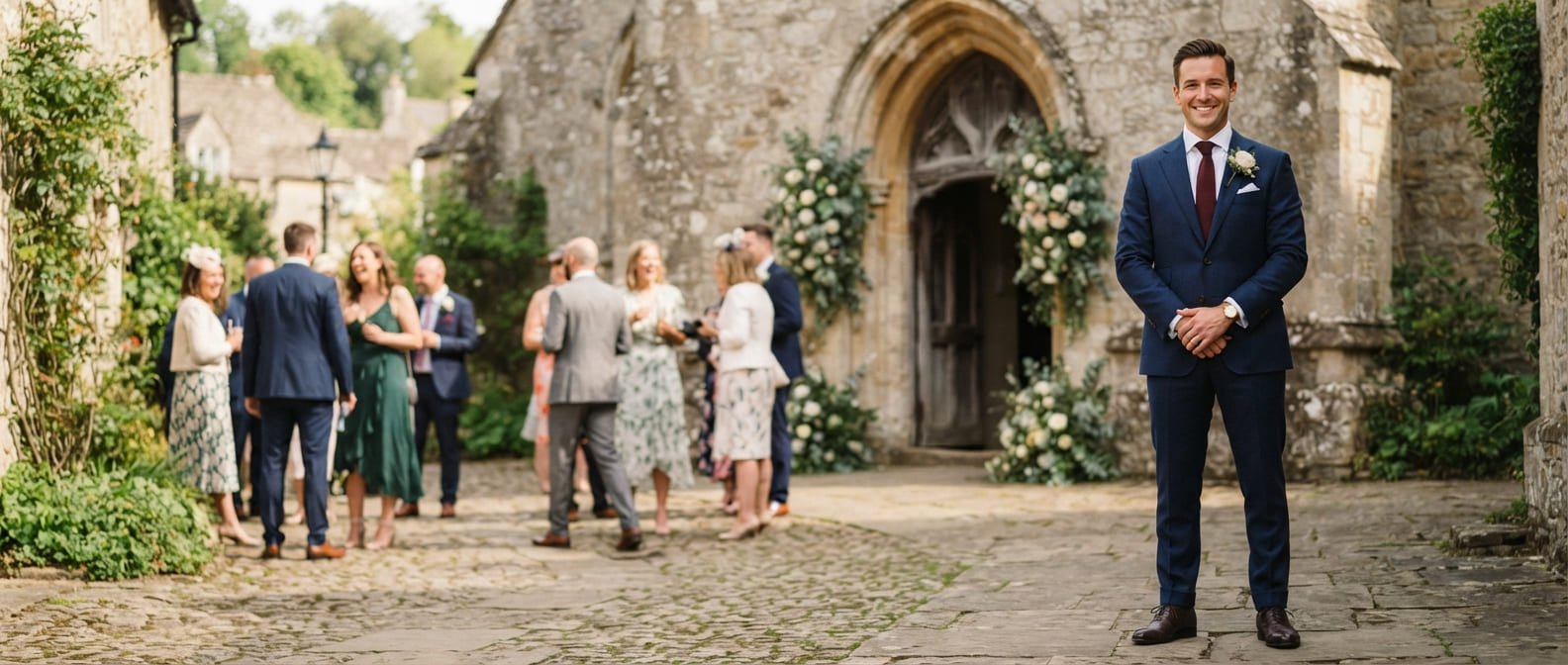
Choosing wedding guest outfits for men is mostly about reading the invitation. The couple has already told you how formal the day will be, through the dress code, the venue and the time of day. Your job is to match that level, look as if you made an effort, and never compete with the groom. Get those three things right and almost any well-fitting outfit works. This guide explains men’s wedding attire as a guest for every dress code, from black tie to beach, what to wear by season and venue, the safest colours, shirts, ties and shoes, how wedding customs differ across Europe, and what to wear to the rehearsal dinner, with four complete outfits you can copy.
Start with the dress code
If the invitation names a dress code, follow it. If it doesn’t, the venue and the start time tell you most of what you need: an evening ceremony in a city hotel is formal, a midday ceremony in a garden is usually lounge suit or smart casual.
| Dress code | What it means for male guests | Safe choice |
|---|---|---|
| White tie | The most formal: tailcoat, white waistcoat and white bow tie | Hire a full white tie outfit from a formalwear shop |
| Black tie | Dinner jacket (tuxedo) with a black bow tie | Black or midnight navy dinner jacket, white dress shirt, black patent or polished shoes |
| Black tie optional | A dinner jacket is welcome, a dark suit is fine | Charcoal or navy suit, white shirt, dark tie |
| Formal or cocktail | A dark suit and tie | Navy or charcoal suit, light shirt, silk tie, oxfords |
| Lounge suit or semi-formal | A suit, with more freedom in colour and fabric | Navy, grey or mid-blue suit, tie usually expected |
| Smart casual or dressy casual | Tailoring without the full suit | Blazer, trousers, shirt, loafers, tie optional |
| Casual or beach | Relaxed, but still neat | Linen shirt, light trousers, loafers or suede shoes |
When in doubt, dress one step up rather than down. You can always take off a tie and jacket; you can’t add them. For more detail on each level, see our guide to dress codes explained.
The rules every male guest should follow
- Don’t outshine the groom: avoid anything that looks like a groom’s outfit, such as a morning coat at a lounge suit wedding, or an all-white or cream suit.
- Avoid white and ivory suits: white shirts are fine, but a white suit draws the eye away from the couple.
- Check the wedding colours: if the groomsmen wear a particular colour, choose something different so you aren’t mistaken for one of them.
- Fit beats price: a modest suit that fits well looks better than an expensive one that doesn’t. Get trousers and sleeves shortened if needed. See how a jacket should fit.
- Plan for a long day: many weddings last ten hours or more, so choose shoes you can stand and dance in and fabrics that breathe.
- Bring a layer: churches can be cold, evenings outdoors get cool, and photos often happen outside.
The suit: the backbone of men’s wedding wear
For most weddings, a well-fitted suit is the right answer. If you only own one, it should be navy or charcoal, because both work from morning to night and in every season.
- Navy: the most versatile wedding suit. It looks fresh in daylight and smart at night.
- Charcoal and mid-grey: slightly more formal and very safe for church and city weddings.
- Mid-blue, light grey and stone: good for daytime, spring and summer weddings.
- Black: traditionally an evening colour. A plain black suit can work at an evening wedding, but at a daytime ceremony it can look severe.
- Brown, green and textured wool: good for autumn, country and rustic weddings, but less suitable for formal events.
A two-piece suit is right for almost every wedding. A three-piece suit with a waistcoat adds warmth and polish in winter. See our guide to the two-piece suit.
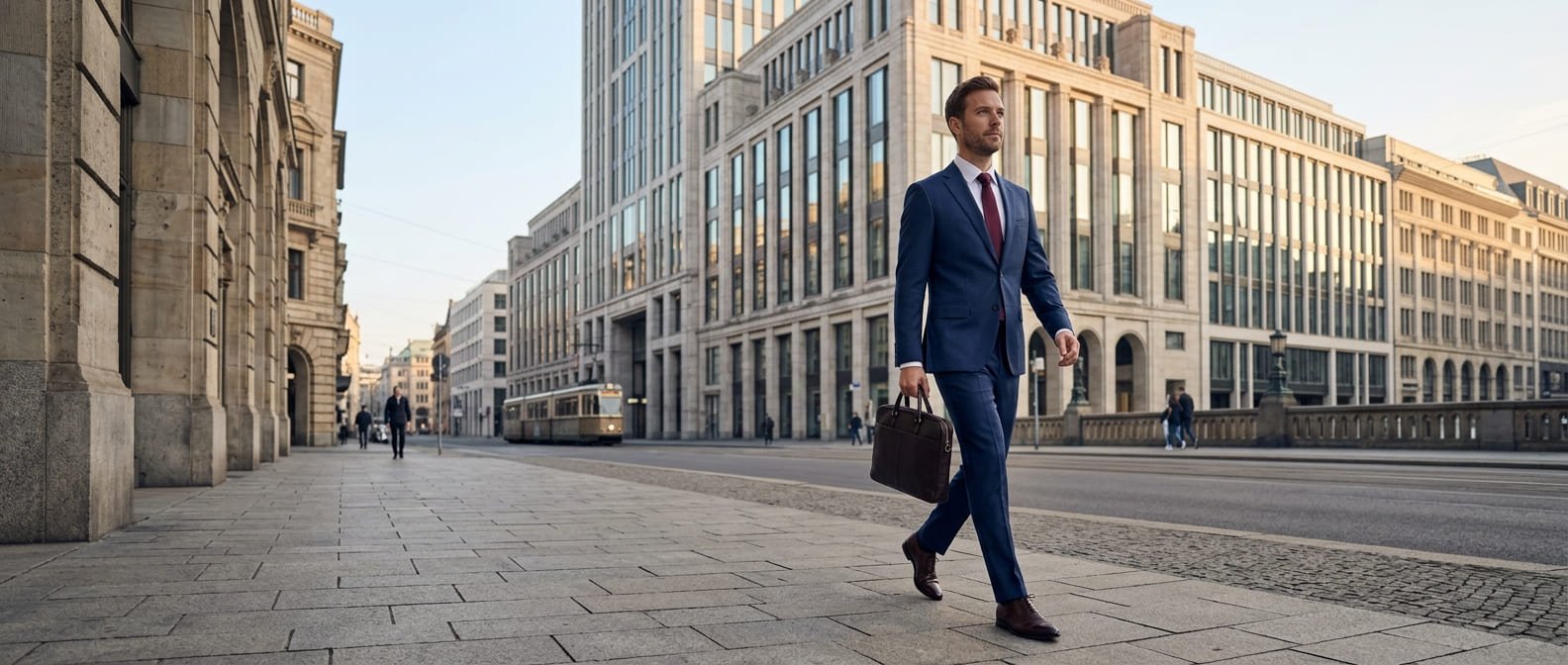
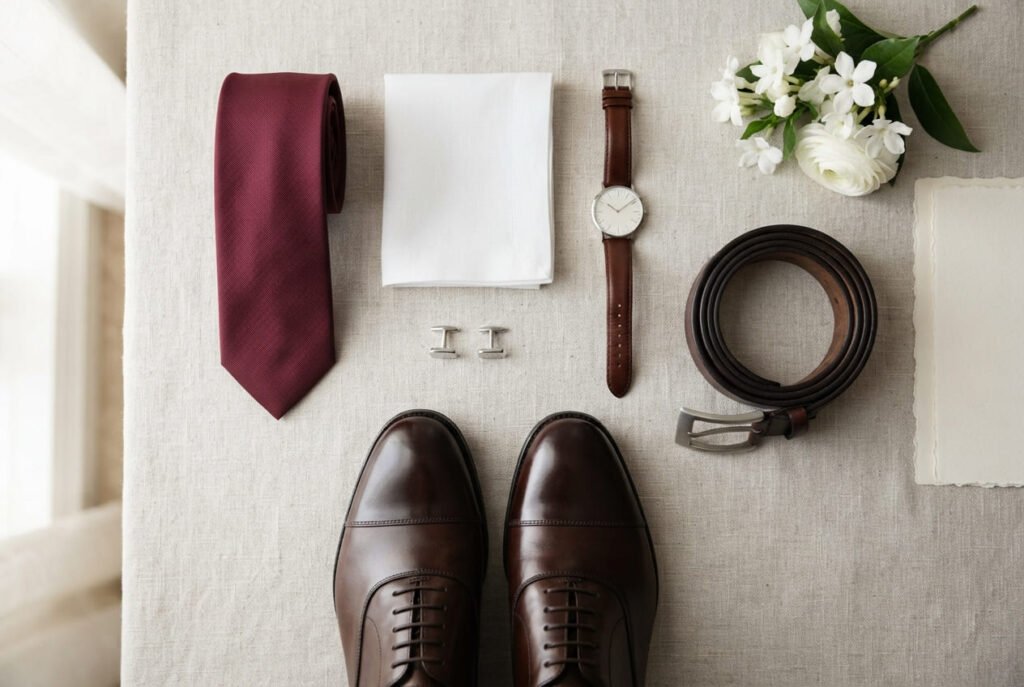
- Navy wool suit Suit
- White poplin shirt Shirt
- Burgundy silk tie Tie
- Dark brown oxford shoes Shoes
Shirts, ties and pocket squares
- Shirt: white or light blue is always correct. Pale pink and fine stripes work for daytime and lounge suit weddings. Avoid black shirts with a suit, which can look like a nightclub outfit.
- Collar: a semi-spread or point collar for ties, a button-down collar for smart casual weddings.
- Tie: silk in a mid or dark colour, plain or with a small pattern. Knitted ties suit relaxed summer and country weddings.
- Bow tie: essential with black tie, optional and fun at a lounge suit wedding.
- Pocket square: white linen in a simple flat fold is the safest. A patterned silk square should pick up a colour from your tie without matching it exactly.
Shoes and accessories
| Dress code | Best shoes | Belt and accessories |
|---|---|---|
| Black tie | Black patent or highly polished black oxfords | Braces instead of a belt, simple cufflinks |
| Formal and lounge suit | Black or dark brown oxfords, derbies or monk straps | Leather belt matching the shoes, a slim watch |
| Smart casual | Brown suede loafers, derbies or brogues | Brown belt, optional pocket square |
| Summer and beach | Suede loafers, unlined loafers or espadrilles | Woven belt or no belt with side-adjuster trousers |
Match your belt to your shoes in colour and finish. Keep the watch simple: a dress watch or a plain steel watch on a leather strap. See our guide on how to match belt and shoes.
What to wear by season
Spring and summer weddings
Mens summer wedding fashion is about staying cool without looking casual. Choose lightweight wool, linen-blend or cotton suits in mid-blue, light grey, stone or sand. Unlined or half-lined jackets breathe better. A white or pale blue linen-blend shirt and suede loafers keep the look relaxed but still dressy. For more warm-weather pieces, see summer outfits for men.
- Light grey linen-blend suit Suit
- Pale blue cotton shirt Shirt
- Navy knitted tie Tie
- Tan suede loafers Shoes
Autumn and winter weddings
Cooler months suit heavier fabrics and richer colours: flannel, tweed, wool in charcoal, navy, brown or deep green. A waistcoat or a fine merino knit under the jacket adds warmth. For the walk between church and reception, bring a dark overcoat in navy, charcoal or camel. See long coats for men.
What to wear by venue
- Church or cathedral: traditional and usually formal. A dark suit and tie, shoulders covered, nothing too flashy.
- Town hall or registry office: often shorter and smaller. A suit is still the norm, although a smart blazer and trousers can be fine for a small civil ceremony.
- City hotel or restaurant: usually formal, especially in the evening. Dark suit, polished black shoes.
- Garden, barn or countryside: expect grass and gravel. Wear a lighter or textured suit with brown leather or suede shoes, and leave fragile shoes at home.
- Beach: a linen or cotton suit, or a blazer with light trousers. Loafers or espadrilles instead of formal shoes, and no tie unless asked.
- Destination wedding: check the climate and the dress code, pack a crease-resistant suit and bring a second shirt.
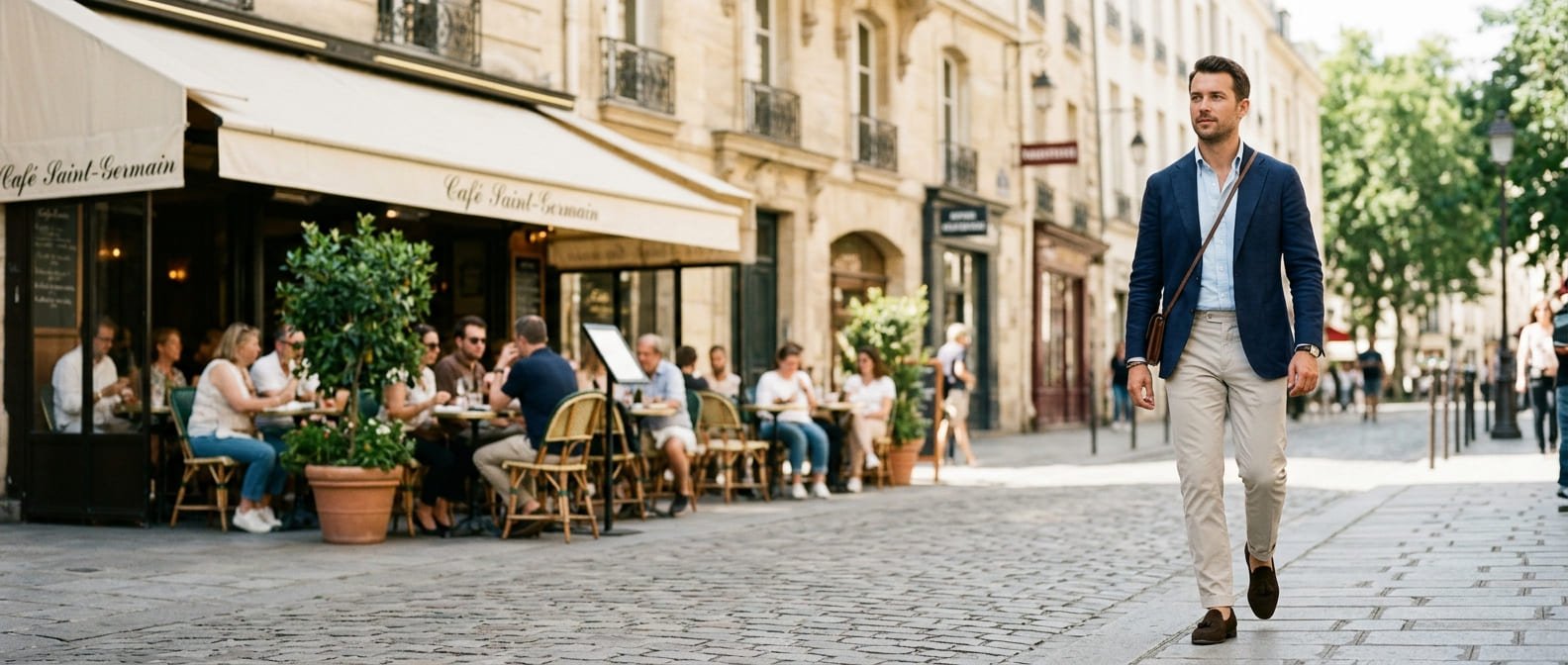
- Sand linen blazer Jacket
- White linen shirt Shirt
- Navy cotton trousers Trousers
- Brown suede espadrilles Shoes
Colours for male wedding guests
A good wedding outfit uses one or two calm colours and one accent. The palettes below are easy to follow and work with most suits.
Colours to be careful with: white and ivory suits (too close to the couple), very bright red (often worn by the bride in some cultures), and colours that match the groomsmen. For more pairing ideas, see what colours go with navy.
Wedding customs across Europe
- United Kingdom: formal daytime church weddings sometimes call for morning dress, with a tailcoat, waistcoat and striped trousers. Guests can wear a lounge suit unless the invitation says otherwise.
- Italy: expect stylish, well-cut tailoring. Summer weddings often feature lighter suits in blue and grey, worn with loafers. Avoid black at a daytime ceremony.
- Spain: weddings often start late and run into the night. A suit and tie is standard, and evening weddings can be quite dressy. Avoid white.
- France: many couples have a civil ceremony at the mairie and a separate reception. A suit is normal; a tie depends on the formality of the day.
- Germany: the civil ceremony at the Standesamt is often small and smart. A suit, sometimes without a tie for younger couples, is typical.
- Eastern Europe: weddings can be long, lively and formal, often with an evening banquet. A dark suit and comfortable shoes are a wise choice.
For a wider view of how style differs between countries, see our guide to European men’s fashion.
Cultural and religious weddings
At an Indian, Jewish, Muslim, Greek Orthodox or other religious wedding, the couple or their families will often share guidance. Follow it, and ask if you are unsure. Guests are sometimes invited to wear traditional clothing, such as a kurta at an Indian wedding: only do so if the hosts suggest it, and choose something respectful rather than costume-like. Some religious venues ask men to cover their heads or shoulders, and in some cultures certain colours, such as white or black, are associated with mourning, so it’s worth checking.
The rehearsal dinner and the day after
The mens rehearsal dinner outfit is usually one step less formal than the wedding itself. A blazer or sport coat with wool trousers or chinos, an open-collar shirt and loafers works for most dinners. If it’s held in a formal restaurant, add a tie. For a morning-after brunch, a polo or knitted shirt, chinos and suede shoes is enough. See smart casual for men and dressy casual for men.
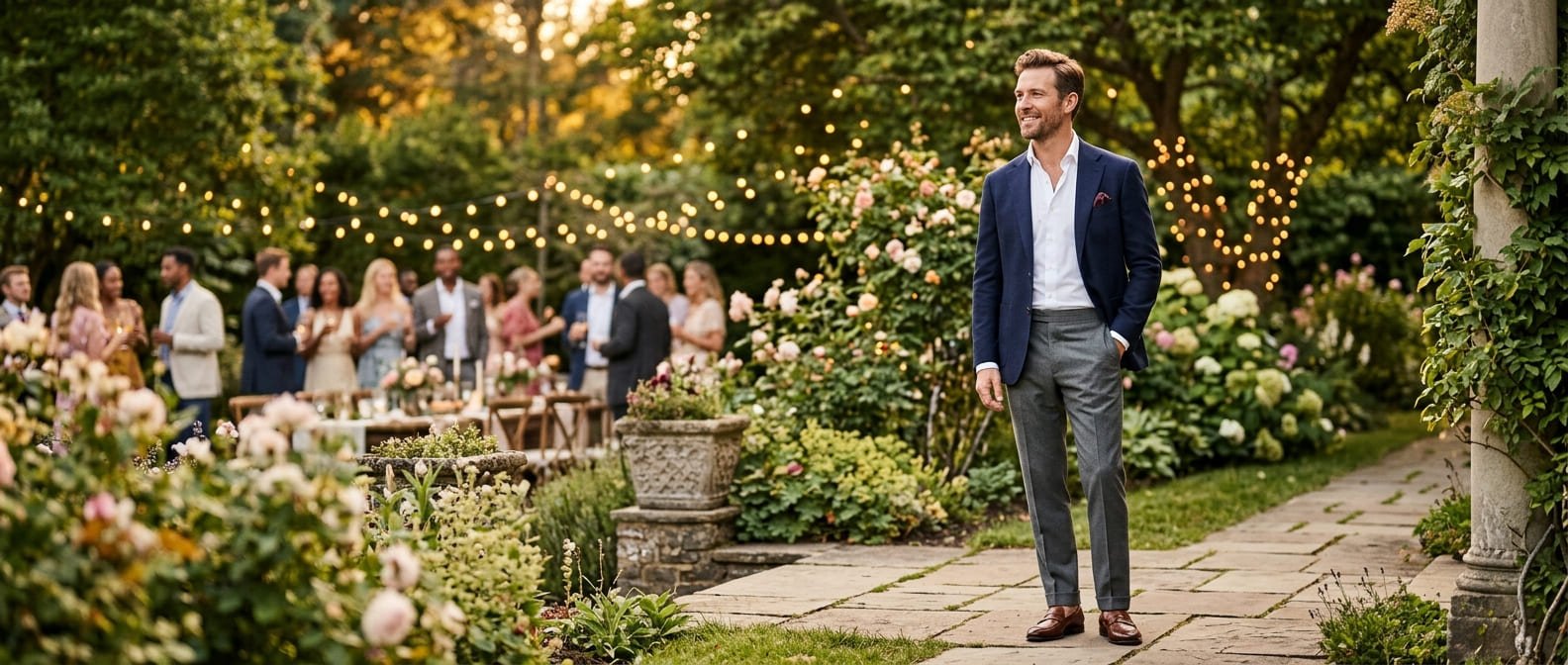
- Navy wool blazer Jacket
- White oxford shirt Shirt
- Grey wool trousers Trousers
- Brown suede loafers Shoes
Wedding outfits for boys
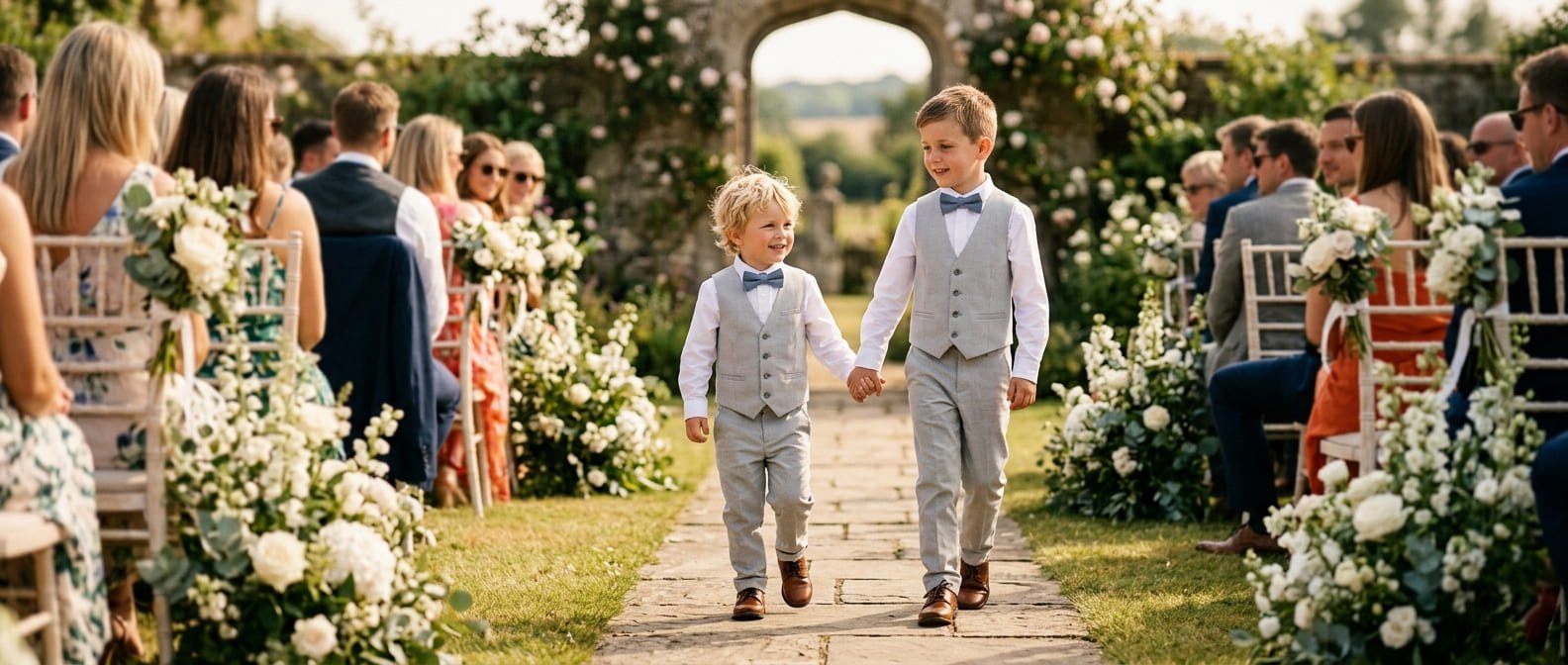
Boys usually follow the same dress code as the adults, in a simpler form: a suit or blazer with trousers for formal weddings, a shirt and smart trousers with a waistcoat or knitted top for relaxed ones. Comfortable shoes matter even more than for adults. See our guide to boys’ wedding outfits.
Common mistakes
| Mistake | Why it’s a problem | Do this instead |
|---|---|---|
| Ignoring the dress code | You look out of place in photos | Follow the invitation, and dress up if in doubt |
| Wearing a white or cream suit | Competes with the couple | Choose navy, grey, blue or stone |
| Matching the groomsmen | Guests mistake you for the wedding party | Ask about the wedding colours |
| Brand-new, untested shoes | Painful after a few hours | Break them in before the day |
| Suit that doesn’t fit | Looks borrowed | Get trousers and sleeves tailored |
| Novelty ties and socks at a formal wedding | Too casual for the occasion | Save them for relaxed weddings |
| Forgetting a coat | Cold for photos and between venues | Bring a plain dark overcoat |
Frequently asked questions
Follow the dress code. For most weddings, a navy or charcoal suit, a white or light blue shirt, a silk tie and leather shoes is the safest choice.
Yes, at an evening wedding. A black suit can look severe at a daytime ceremony, so navy or charcoal is usually better before 5 pm.
At formal, black tie and most church weddings, yes. At smart casual, beach and many summer weddings, a tie is optional. When unsure, wear one and take it off later.
A lightweight wool, linen-blend or cotton suit in a light colour, a breathable shirt and suede loafers. Unlined jackets keep you cooler.
Only if the couple says the wedding is casual. Even then, dark, clean jeans with a blazer and leather shoes look best.
White and ivory suits, the colour the groomsmen are wearing, and anything very loud. Check for cultural colour rules at religious weddings.
Usually a blazer, wool trousers or chinos, an open-collar shirt and loafers. Add a tie in a formal restaurant.
A business-style suit with a shirt and usually a tie. It's less formal than black tie but more formal than smart casual.
Black or dark brown oxfords or derbies for formal weddings, loafers for summer and smart casual weddings. Make sure they are comfortable for a long day.